Product
Supplier
Encyclopedia
Inquiry
Sucralose CAS:56038-13-2 buy - large image1
Sucralose CAS:56038-13-2 buy - image1
Sucralose CAS:56038-13-2 buy - image2
Sucralose CAS:56038-13-2 buy - image3
Sucralose CAS:56038-13-2 buy - image4
Sucralose CAS:56038-13-2 buy - image5
Sucralose CAS:56038-13-2 buy - image6

Sucralose CAS:56038-13-2

TDS 55 Inquiries

Unit Price: Get Latest Price
CAS No.:

56038-13-2

Grade:

Industrial Grade

Content:

98%

Port:

SHANGHAI

Brand:

Orient

Packaging:

1KG, 25KG, 200KG, 1000KG, customized

Price valid (until):

2026-01-09

Company Type:
Trader
Location:
China
Qualification:
Main Products:

pharmaceutical intermediates,peptides,electronic chemicals

  • Product Description

  • Seller Information

  • Inquiry History

  • Description

    Focusing on innovative research, development, and production in the field of fine chemicals, we prioritize technology, quality, and market orientation. We collaborate with global partners to build a high-tech chemical industry chain and promote sustainable development in the industry.

    The company's main products include pharmaceutical intermediates, food additives, essence, spices and plant extracts. The products have passed international certification and are exported to Europe, America, Japan, South Korea and Southeast Asia.

    Sucralose Basic information
    Product Name: Sucralose
    Synonyms: 1,6-dichloro-1,6-dideoxy-beta-d-fructofuranosyl4-chloro-4-deoxy-alpha-d-gala;4,1’,6’-trichloro-4,1’,6’-trideoxy-galacto-sucrose;alpha-d-galactopyranoside,1,6-dichloro-1,6-dideoxy-beta-d-fructofuranosyl4-ch;ctopyranoside;Sucralose in stock GMP Factory;1,6-dichloro-1;4,1',6'-trichlorogalactosucrose;loro-4-deoxy-
    CAS: 56038-13-2
    MF: C12H19Cl3O8
    MW: 397.63
    EINECS: 259-952-2
    Product Categories: Food & Flavor Additives;Ring Systems;Food Ingredients;HISTOSTAT;Food addive,sweeteners;Food additives;Miscellaneous Biochemicals;pharmacetical;Oligosaccharide Compounds;Nutritional Supplements;Sweeteners;Oligosaccharides;56038-13-2
    Mol File: 56038-13-2.mol
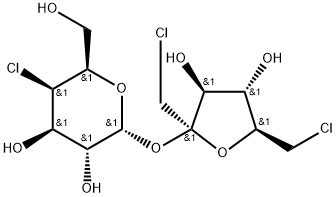
    Shop Sucralose CAS:56038-13-2-Detailed Image 1

    Sucralose Chemical Properties
    Melting point  115-1018°C
    alpha  D +68.2° (c = 1.1 in ethanol)
    Boiling point  104-107 C
    density  1.375 g/cm
    vapor pressure  0Pa at 25℃
    refractive index  1.604
    storage temp.  2-8°C
    solubility  DMF: 30 mg/ml
    DMSO: 30 mg/mlPBS (pH 7.2): 1 mg/ml
    form  Powder
    pka 12.52±0.70(Predicted)
    color  White
    PH 6-8 (100g/l, H2O, 20°C)
    Odor wh. cryst. powd., odorless, sweet taste
    Optical Rotation [α]/D 86.0±2.0°, c = 1 in H2O
    Water Solubility  Soluble in Water.
    Merck  14,8880
    BRN  3654410
    Stability: Hygroscopic
    LogP -0.51 at 20℃
    CAS DataBase Reference 56038-13-2(CAS DataBase Reference)
    EPA Substance Registry System .alpha.-D-Galactopyranoside, 1,6-dichloro-1,6-dideoxy-.beta.-D-fructofuranosyl 4-chloro-4-deoxy- (56038-13-2)

    Safety Information
    Hazard Codes  Xi
    Risk Statements  36/37/38
    Safety Statements  26-37/39-24/25
    WGK Germany  3
    RTECS  LW5440140
    HS Code  2932 14 00
    Hazardous Substances Data 56038-13-2(Hazardous Substances Data)
    Toxicity LD50 orally in Rabbit: > 10000 mg/kg
    MSDS Information


    Sucralose Usage And Synthesis
    Description Sucralose is the only non-caloric sweetener made from sugar. It is in fact the latest non nutritive sweetener to have been approved by US FDA and other regulatory bodies and have hit the markets .
    Sucralose is derived from sugar through a multi-step patented manufacturing process that selectively substitutes three atoms of chlorine for three hydroxyl groups on the sugar molecule. This change produces a sweetener that has no calories, yet is 600 times sweeter than sucrose, making it roughly twice as sweet as saccharin and four times as sweet as aspartame.
    Chemical Properties Sucralose is a white to off-white colored, free-flowing, crystalline powder.
    History In 1975, sucralose was discovered by scientists from Tate & Lyle, working with researchers Leslie Hough and Shashikant Phadnis at Queen Elizabeth College (now part of King's College London). While looking for ways to use sucrose as a chemical intermediate, mixing sulfuryl chloride with sugar, Phadnis was told to "test" a chlorinated sugar compound. According to an anecdotal account, Phadnis thought Hough asked him to "taste" it, so he did and found the compound to be exceptionally sweet.
    Sucralose was first approved for use in Canada in 1991. Subsequent approvals came in Australia in 1993, in New Zealand in 1996, in the United States in 1998, and in the European Union in 2004. By 2008, it had been approved in over 80 countries, including Mexico, Brazil, China, India, and Japan. In 2006, the FDA amended the regulations for foods to include sucralose as a "non-nutritive sweetener" in food.
    Uses A low-calorie artificial sweetener
    Uses antiprotozoal
    Uses High intensity sweetener manufactured by replacing three hydroxyl groups on the sucrose molecule with three chlorine atoms. The results are a sweetener of 0 cal that is not digested. It is 600 times as sweet as sugar with a similar flavor profile. It is heat stable, readily soluble, and maintains its stability at elevated temperatures. It has been approved for use in specific categories that include baked products, beverages, confectioneries, and certain desserts and toppings.
    Uses Sucralose (1,6-dichloro-1,6-dideoxy-p-fructofuranosyl-4-chloro-oc- D-galactopyra- noside) is a nonnutritive sweetener based on sucrose. It is selectively chlorinated and the glycoside link between the two rings is resistant to hydrolysis by acid or enzymes, so it is not metabolized. It has 400 to 800 times the sweetness of sucrose, is very soluble in water, and is stable in heat. It can be used in food products that are baked or fried.
    Sucralose is produced by the selective chlorination of the sucrose molecule using a patented process by Tate and LyIe that replaces the three hydroxyl groups (OH) with three chlorine (Cl) atoms.
    This modified sugar is minimally absorbed by the body and passes out unchanged. It was approved for use in foods and beverages in 1999 in the United States.
    Production Methods Sucralose may be prepared by a variety of methods that involve the selective substitution of three sucrose hydroxyl groups by chlorine. Sucralose can also be synthesized by the reaction of sucrose (or an acetate) with thionyl chloride.
    Definition ChEBI: A disaccharide derivative consisting of 4-chloro-4-deoxy-alpha-D-galactopyranose and 1,6-dichloro-1,6-dideoxy-beta-D-fructofuranose units linked by a glycosidic bond.
    General Description Certified pharmaceutical secondary standards for application in quality control provide pharma laboratories and manufacturers with a convenient and cost-effective alternative to pharmacopeia primary standards.
    Sucralose is a polar, chlorinated sugar synthesized from saccharose precursor. It is widely used as a sweetener in a number of food and beverage products.
    Pharmaceutical Applications Sucralose is used as a sweetening agent in beverages, foods, and pharmaceutical applications. It has a sweetening power approximately 300–1000 times that of sucrose and has no aftertaste. It has no nutritional value, is noncariogenic, does not promote dental caries, and produces no glycemic response.
    Biochem/physiol Actions A synthetic sweet tastant detectable by humans. Activates T1R2/T1R3 sweet taste receptors on enteroendocrine cells and elicits increased hormonal secretion of glucagon-like peptide-1 and glucose-dependent insulinotrophic peptide.
    Safety Sucralose is generally regarded as a nontoxic and nonirritant material and is approved, in a number of countries, for use in food products. Following oral consumption, sucralose is mainly unabsorbed and is excreted in the feces.
    The WHO has set an acceptable daily intake for sucralose of up to 15 mg/kg body-weight.
    LD50 (mouse, oral): > 16 g/kg
    LD50 (rat, oral): > 10 g/kg

    First aid measures

    General advice
    Consult a physician. Show this material safety data sheet to the doctor in attendance.
    If inhaled
    If breathed in, move person into fresh air. If not breathing, give artificial respiration. Consult a physician.
    In case of skin contact
    Wash off with soap and plenty of water. Consult a physician.
    In case of eye contact
    Rinse thoroughly with plenty of water for at least 15 minutes and consult a physician.
    If swallowed
    Never give anything by mouth to an unconscious person. Rinse mouth with water. Consult a physician.

    Firefighting measures


    Suitable extinguishing media
    Use water spray, alcohol-resistant foam, dry chemical or carbon dioxide.
    Special hazards arising from the substance or mixture

    Carbon oxides Nitrogen oxides (NOx)

    Advice for firefighters

    Wear self-contained breathing apparatus for firefighting if necessary.

    Accidental release measures


    Personal precautions, protective equipment and emergency procedures

    Use personal protective equipment. Avoid dust formation. Avoid breathing vapors, mist or gas. Ensure adequate ventilation. Evacuate personnel to safe areas. Avoid breathing dust. For personal protection see section 8.

    Environmental precautions

    Do not let product enter drains.

    Methods and materials for containment and cleaning up

    Pick up and arrange disposal without creating dust. Sweep up and shovel. Keep in suitable, closed containers for disposal.


    Shop Diethyl oxalacetate sodium salt 40876-98-0-Detailed Image 2

    Shop Trimellitic Anhydride  C9H4O5 552-30-7-Detailed Image 2

    Shop Trimellitic Anhydride  C9H4O5 552-30-7-Detailed Image 3


    Shop Trimellitic Anhydride  C9H4O5 552-30-7-Detailed Image 4

    Shop Trimellitic Anhydride  C9H4O5 552-30-7-Detailed Image 5

    Shop Trimellitic Anhydride  C9H4O5 552-30-7-Detailed Image 6


    Shop Trimellitic Anhydride  C9H4O5 552-30-7-Detailed Image 7


    Shop Trimellitic Anhydride  C9H4O5 552-30-7-Detailed Image 8

    Shop Trimellitic Anhydride  C9H4O5 552-30-7-Detailed Image 9

    Shop Trimellitic Anhydride  C9H4O5 552-30-7-Detailed Image 10

    Shop Trimellitic Anhydride  C9H4O5 552-30-7-Detailed Image 11

    Shop Trimellitic Anhydride  C9H4O5 552-30-7-Detailed Image 12

    ——  Q&A  ——

    Q1:Do you provide sample?

    A: Yes, we can provide free sample, you only need pay the shipping cost.

    Q2: What is the lead time?

    A: For stock goods, it usually take about 5-7 days by air, 15-30 days by sea,For customized products, the delivery time needs to be confirmed based on the actual situation.

    Q3: How can I buy? What is the payment method?

    A: You can contract us through Email or you can browse our website:orientchem.cc, we have bank transfer,

    A:We attach great importance to after-sales service of our products. If there are any quality issues, please contact us within 30 days of receiving the goods and we will handle returns and exchanges for you.


    Certificates

    Basic Info
    Product Name:

    Sucralose

    Other Name:

    α-D-Galactopyranoside,1,6-dichloro-1,6-dideoxy-β-D-fructofuranosyl 4-chloro-4-deoxy-;1,6-Dichloro-1,6-dideoxy-β-D-fructofuranosyl 4-chloro-4-deoxy-α-D-galactopyranoside;1′,4,6′-Trichlorogalactosucrose;4,1′,6′-Trichloro-4,1′,6′-trideoxygalactosucrose;Sucralose;Splenda;Aspasvit;Sansweet SU 100;TGS;Acucar Light;San Sweet SA 8020;Sucrazit;Sansweet;Predillon SU 600;Sansweet SU 200;1450725-31-1

    CAS No.:

    56038-13-2

    Molecular Formula:

    C12H19Cl3O8

    InChIKeys:

    InChIKey=BAQAVOSOZGMPRM-QBMZZYIRSA-N

    Molecular Weight:

    397.633

    Exact Mass:

    397.63

    EC Number:

    259-952-2

    UNII:

    96K6UQ3ZD4

    NSC Number:

    759272

    DSSTox ID:

    DTXSID1040245

    Color/Form:

    White to off white, crystalline powder|Anhydrous crystalline form: orthorhombic, needle-like crystals|Syrup

    HScode:

    2932999099

    Characteristics
    PSA:

    128.84

    XLogP3:

    -1.5

    Appearance:

    White crystal powder

    Density:

    1.375 g/cm

    Melting Point:

    130 °C

    Boiling Point:

    104-107 C

    Flash Point:

    358.7ºC

    Refractive Index:

    1.604

    Water Solubility:

    In water, 2.27X10+4 mg/L at 25 deg C (est)

    Storage Conditions:

    Hygroscopic, -20ºC Freezer, Under Inert Atmosphere

    Vapor Pressure:

    3.25X10⁻¹⁴ mm Hg at 25 deg C (est)

    Toxicity:

    LD50 orally in Rabbit: > 10000 mg/kg

    Taste:

    Intensely sweet taste

    Henrys Law Constant:

    Henry's Law constant = 3.99X10⁻¹⁹ atm-cu m/mol at 25 °C (est)

    Collision Cross Section:

    177.2 Ų [M+Na]+ [CCS Type: TW, Method: calibrated with polyalanine and drug standards]|179.16 Ų [M-H]-

    Experimental Properties:

    Sugar equivalence value relative to sucrose = 600|In water ... stable to heat over a wide range of pH|Hydroxyl radical reaction rate constant = 5.42X10⁻¹¹ cu cm/molec-sec at 25 °C (est)

    Hazard Identification

    Classification of the substance or mixture

    Not classified.

    GHS label elements, including precautionary statements

    Pictogram(s) No symbol.
    Signal word

    No signal word

    Hazard statement(s)

    none

    Precautionary statement(s)
    Prevention

    none

    Response

    none

    Storage

    none

    Disposal

    none

    Other hazards which do not result in classification

    no data available

    Handling and Storage

    Precautions for safe handling

    Handling in a well ventilated place. Wear suitable protective clothing. Avoid contact with skin and eyes. Avoid formation of dust and aerosols. Use non-sparking tools. Prevent fire caused by electrostatic discharge steam.

    Conditions for safe storage, including any incompatibilities

    Store the container tightly closed in a dry, cool and well-ventilated place. Store apart from foodstuff containers or incompatible materials.

  • Seller Information
    Business Type:

    Trader

    Main Products:

    pharmaceutical intermediates,peptides,electronic chemicals

    Location:

    Room 102, 1st Floor, East Office Building, No. 45 Pengwan Road, Qianwan Bonded Port Area, Qingdao Zone, China (Shandong) Pilot Free Trade Zone

    Payment Terms:

    100% TT in advance

    Average lead Time:

    10

    Total Annual Revenue:

    $10 million-$25 million

    Total Employees:

    51-100

    Year of Establishment:

    2024

    A reliable supplier is like insurance.

    We are mainly specilized in supply of pharmaceutical intermediates, electronic chemicals,food additives, and other fine chemical products.
    Integrity is the foundation, quality is life. We would like to work together with you to build a greener and brighter future.

    Website: orientchem.cc
    Email: scarlett@orientchem.cc
    WhatsApp: +86 17753254221

  • Inquiry History
    55 Inquiries
    Country Product Purchase Quantity Date Posted
    South Korea

    Sucralose

    500 G Feb 19, 2025
    Tunisia

    Sucralose

    1.00 MT Dec 3, 2024
    Kenya

    Sucralose

    1 20' Fcl Apr 21, 2026
    United Kingdom

    Sucralose

    1 20' Fcl Mar 20, 2026
    Pakistan

    Sucralose E955

    1 20' Fcl Feb 3, 2026
    Austria

    Sucralose

    50 MG Jan 19, 2026
    Italy

    Sucralose

    1 MT Sep 28, 2025
    South Korea

    Sucralose

    1.00 KG Sep 16, 2025
    China

    sucralose

    1 MT Sep 16, 2025
    China

    sucralose

    20 MT Sep 8, 2025
    China

    sucralose

    1 20' Fcl Aug 21, 2025
    China

    sucralose

    1 20' Fcl Aug 19, 2025
    Brazil

    Sucralose

    100 KG Aug 19, 2025
    Panama

    SUCRALOSE

    1 MT Aug 13, 2025
    China

    Sucralose

    1 MT Aug 5, 2025
    Pakistan

    SUCRALOSE

    500.00 KG Aug 2, 2025
    Kenya

    Sucralose

    1 20' Fcl Jul 7, 2025
    Thailand

    sucralose

    1 20' Fcl Jul 2, 2025
    Zimbabwe

    sucralose

    25 KG May 13, 2025
    Kenya

    Sucralose

    0.1 MT Mar 20, 2025
    Post an enquiry for this product
pic ×

Scan the QR Code to Share

All products displayed on this website are only for non-medical purposes such as industrial applications or scientific research, and cannot be used for clinical diagnosis or treatment of humans or animals. They are not medicinal or edible.

According to relevant laws and regulations and the regulations of this website, units or individuals who purchase hazardous materials should obtain valid qualifications and qualification conditions.

The information shown above is provided by the enterprise itself, and the authenticity, accuracy and legitimacy of the content are the responsibility of the publishing company. ECHEMI does not bear any guarantee responsibility for this. Please be aware that risks in internet transactions objectively exist.

Feedback & Suggestions
Send Message

Thank you for your feedback. If you require further assistance, please contact us by email at info@echemi.com or call us at +86-532-55729510.