




Chromocene
-
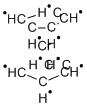
Chromocene
structure -
-
CAS No:
1271-24-5
-
Formula:
C10H10Cr
-
Chemical Name:
Chromocene
-
Synonyms:
Chromocene;Chromium,di-π-cyclopentadienyl-;Chromium,dicyclopentadienyl-;Chromium,bis(η5-2,4-cyclopentadien-1-yl)-;Bis(cyclopentadiene)chromium(II);Bis(cyclopentadienyl)chromium(II);Dicyclopentadienylchromium;Bis(cyclopentadiene)chromium;Bis(cyclopentadienyl)chromium;Di(η5-cyclopentadienyl)chromium;Bis(η5-cyclopentadienyl)chromium
-
CAS No:
Description
bordeaux crystalline powderRed needles or reddish-purple solid.
Bis(cyclopentadienyl)chromium appears as red needles or reddish-purple solid. (NTP, 1992)
Bis(cyclopentadienyl)chromium appears as red needles or reddish-purple solid. (NTP, 1992)
Characteristics
0 Ų
2.04300
scarlet crystal
170-172 °C
41.5ºC at 760 mmHg
Insoluble in water.Chromocene is very sensitive to exposure to air and moisture (decomposition is not vigorous). Decomposes in water .
Store below +30°C.
This compound is very sensitive to exposure to air and moisture (decomposition is not vigorous). Decomposes in water (NTP, 1992).
Organometallics
Known Catalytic Activity
BIS(CYCLOPENTADIENYL)CHROMIUM reacts with water and alcohols. (NTP, 1992). Its reaction with alcohols produces pyrophoric metal alkoxides (dialkoxychromium and cyclopentadiene).
Safety Information
I
4.2
1325
3
20/21/22-36/37/38
26-37/39
GB7600000
Xn,Xi
P261-P280-P305 + P351 + P338
H302-H312-H315-H319-H332-H335
Literature sources indicate that this chemical is flammable. (NTP, 1992)
Fires involving this compound can be controlled using a dry chemical, carbon dioxide or Halon extinguisher. (NTP, 1992)
Excerpt from ERG Guide 133 [Flammable Solids]: As an immediate precautionary measure, isolate spill or leak area for at least 25 meters (75 feet) in all directions. LARGE SPILL: Consider initial downwind evacuation for at least 100 meters (330 feet). FIRE: If tank, rail car or tank truck is involved in a fire, ISOLATE for 800 meters (1/2 mile) in all directions; also, consider initial evacuation for 800 meters (1/2 mile) in all directions. (ERG, 2016)
SMALL SPILLS AND LEAKAGE: If a spill of this chemical occurs, FIRST REMOVE ALL SOURCES OF IGNITION, then you should dampen the solid spill material with acetone and transfer the dampened material to a suitable container. Use absorbent paper dampened with acetone to pick up any remaining material. Seal your contaminated clothing and the absorbent paper in a vapor-tight plastic bag for eventual disposal. Solvent wash all contaminated surfaces with acetone followed by washing with a soap and water solution. Do not reenter the contaminated area until the Safety Officer (or other responsible person) has verified that the area has been properly cleaned. STORAGE PRECAUTIONS: You should keep this material in a tightly closed container under an inert atmosphere, and store it in a freezer. All handling of this compound should done under an inert atmosphere. STORE AWAY FROM SOURCES OF IGNITION. (NTP, 1992)
RECOMMENDED RESPIRATOR: Where the neat test chemical is weighed and diluted, wear a NIOSH-approved half face respirator equipped with an organic vapor/acid gas cartridge (specific for organic vapors, HCl, acid gas and SO2) with a dust/mist filter. (NTP, 1992)
Drug Information
Excerpt from ERG Guide 133 [Flammable Solids]: Fire may produce irritating and/or toxic gases. Contact may cause burns to skin and eyes. Contact with molten substance may cause severe burns to skin and eyes. Runoff from fire control may cause pollution. (ERG, 2016)
EYES: First check the victim for contact lenses and remove if present. Flush victim's eyes with water or normal saline solution for 20 to 30 minutes while simultaneously calling a hospital or poison control center. Do not put any ointments, oils, or medication in the victim's eyes without specific instructions from a physician. IMMEDIATELY transport the victim after flushing eyes to a hospital even if no symptoms (such as redness or irritation) develop. SKIN: IMMEDIATELY flood affected skin with water while removing and isolating all contaminated clothing. Gently wash all affected skin areas thoroughly with soap and water. If symptoms such as redness or irritation develop, IMMEDIATELY call a physician and be prepared to transport the victim to a hospital for treatment. INHALATION: IMMEDIATELY leave the contaminated area; take deep breaths of fresh air. IMMEDIATELY call a physician and be prepared to transport the victim to a hospital even if no symptoms (such as wheezing, coughing, shortness of breath, or burning in the mouth, throat, or chest) develop. Provide proper respiratory protection to rescuers entering an unknown atmosphere. Whenever possible, Self-Contained Breathing Apparatus (SCBA) should be used; if not available, use a level of protection greater than or equal to that advised under Protective Clothing. INGESTION: Some heavy metals are VERY TOXIC POISONS, especially if their salts are very soluble in water (e.g., lead, chromium, mercury, bismuth, osmium, and arsenic). IMMEDIATELY call a hospital or poison control center and locate activated charcoal, egg whites, or milk in case the medical advisor recommends administering one of them. Also locate Ipecac syrup or a glass of salt water in case the medical advisor recommends inducing vomiting. Usually, this is NOT RECOMMENDED outside of a physician's care. If advice from a physician is not readily available and the victim is conscious and not convulsing, give the victim a glass of activated charcoal slurry in water or, if this is not available, a glass of milk, or beaten egg whites and IMMEDIATELY transport victim to a hospital. If the victim is convulsing or unconscious, do not give anything by mouth, assure that the victim's airway is open and lay the victim on his/her side with the head lower than the body. DO NOT INDUCE VOMITING. IMMEDIATELY transport the victim to a hospital. (NTP, 1992)