In Cl-, the “HOMO” of the ion itself are the p orbitals; the two pi-bonding p orbitals act as a pi bonding (weak field) ligand.
In NH3, the HOMO is the 3a1 bonding MO (sigma donor) and the LUMO is the 4a1 antibonding MO. The LUMO+1 are the antibonding 2e orbitals (which involve the p orbitals). As the LUMO can’t act as a pi acceptor, it’s a sigma donor only.
In PR3, the HOMO is again a bonding MO similar to the 3a1 is NH3, BUT the antibonding “e” orbitals involving the p orbitals are lower in energy than the “a1” antibonding. As the LUMO is hence a pi acceptor, it’s strong field.
In H-, the case is similar to NH3, where the p orbitals are too high in energy.
In Cl-, the “HOMO” of the ion itself are the p orbitals; the two pi-bonding p orbitals act as a pi bonding (weak field) ligand.
In NH3, the HOMO is the 3a1 bonding MO (sigma donor) and the LUMO is the 4a1 antibonding MO. The LUMO+1 are the antibonding 2e orbitals (which involve the p orbitals). As the LUMO can’t act as a pi acceptor, it’s a sigma donor only.
In PR3, the HOMO is again a bonding MO similar to the 3a1 is NH3, BUT the antibonding “e” orbitals involving the p orbitals are lower in energy than the “a1” antibonding. As the LUMO is hence a pi acceptor, it’s strong field.
In H-, the case is similar to NH3, where the p orbitals are too high in energy.
Like $\ce{PR3}$, $\ce{NH3}$ or $\ce{NR3}$ are π-acceptor ligands because they have an unoccupied σ* orbital, which can accept electrons from the metal's d-orbitals. For both phosphine and ammona, there is a backbonding $n_{M}$$\ce{->}$$σ^*_{N/P}$ interaction. These ligands can act as π-acceptors in much the same way as $\ce{CO}$, except that they have unoccupied σ* orbitals rather than π* orbitals. $\ce{NH3}$ is, however, a weaker π-acceptor than $\ce{PH3}$, but it is still a fairly high field-ligand. By electronegativity, you would expect the nitrogen ligand to hold the metal's d electrons more strongly, but in the case of ammonia vs. phosphine based ligands, the phosphorus ligand has bigger p-orbitals, which have better overlap with the metal's d-orbitals, so the $n_{M}$$\ce{->}$$σ^*_{P}$ interaction is stronger than $n_{M}$$\ce{->}$$σ^*_{N}$.
$\ce{H^-}$ is $1s^2$, so it has no low-energy p-orbitals to π-bond with. It is neither a π-acceptor or a π-donor. It is only a σ-donor.
Like $\ce{PR3}$, $\ce{NH3}$ or $\ce{NR3}$ are π-acceptor ligands because they have an unoccupied σ* orbital, which can accept electrons from the metal's d-orbitals. For both phosphine and ammona, there is a backbonding $n_{M}$$\ce{->}$$σ^*_{N/P}$ interaction. These ligands can act as π-acceptors in much the same way as $\ce{CO}$, except that they have unoccupied σ* orbitals rather than π* orbitals. $\ce{NH3}$ is, however, a weaker π-acceptor than $\ce{PH3}$, but it is still a fairly high field-ligand. By electronegativity, you would expect the nitrogen ligand to hold the metal's d electrons more strongly, but in the case of ammonia vs. phosphine based ligands, the phosphorus ligand has bigger p-orbitals, which have better overlap with the metal's d-orbitals, so the $n_{M}$$\ce{->}$$σ^*_{P}$ interaction is stronger than $n_{M}$$\ce{->}$$σ^*_{N}$.
$\ce{H^-}$ is $1s^2$, so it has no low-energy p-orbitals to π-bond with. It is neither a π-acceptor or a π-donor. It is only a σ-donor.
By looking at ammonias placing in the spectrochemical series, it is logical to deduce that the interaction with the N-H antibonding MO is rather weak since it is actually placed together with most of the sigma donors, instead of being placed with the other pi acceptors. I agree that this is likely due to the difference in size relative to the metal d orbitals.More
Upvote
VOTE
Downvote
$\ce{PR3}$ is π-acceptor (from metal d orbital to phosphorous d orbital electron cloud is transferred).
$\ce{Cl-}$ is π-donor (minus charge form σ bond with the metal orbitals, $\mathrm{e_g}$, $\mathrm{t_{1u}}$ and $\mathrm{a_{1g}}$ orbitals in $O_\mathrm{h}$ field. The lone pair of electron on $\ce{Cl}$ will try to form π-bonding with $\mathrm{t_{2g}}$ orbitals of metal, electron cloud is transferred from $\ce{Cl}$ to metal d orbitals).
$\ce{NH3}$ is σ-donor. The lone pair is used to form sigma bond with metal. No extra electron to give to metal and also no d orbital to accept electron from metal. $\ce{P}$ and $\ce{N}$ belong to same group but differ here.
$\ce{PR3}$ is π-acceptor (from metal d orbital to phosphorous d orbital electron cloud is transferred).
$\ce{Cl-}$ is π-donor (minus charge form σ bond with the metal orbitals, $\mathrm{e_g}$, $\mathrm{t_{1u}}$ and $\mathrm{a_{1g}}$ orbitals in $O_\mathrm{h}$ field. The lone pair of electron on $\ce{Cl}$ will try to form π-bonding with $\mathrm{t_{2g}}$ orbitals of metal, electron cloud is transferred from $\ce{Cl}$ to metal d orbitals).
$\ce{NH3}$ is σ-donor. The lone pair is used to form sigma bond with metal. No extra electron to give to metal and also no d orbital to accept electron from metal. $\ce{P}$ and $\ce{N}$ belong to same group but differ here.


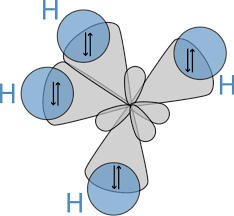


Alright; let me try.
In Cl-, the “HOMO” of the ion itself are the p orbitals; the two pi-bonding p orbitals act as a pi bonding (weak field) ligand.
In NH3, the HOMO is the 3a1 bonding MO (sigma donor) and the LUMO is the 4a1 antibonding MO. The LUMO+1 are the antibonding 2e orbitals (which involve the p orbitals). As the LUMO can’t act as a pi acceptor, it’s a sigma donor only.
In PR3, the HOMO is again a bonding MO similar to the 3a1 is NH3, BUT the antibonding “e” orbitals involving the p orbitals are lower in energy than the “a1” antibonding. As the LUMO is hence a pi acceptor, it’s strong field.
In H-, the case is similar to NH3, where the p orbitals are too high in energy.
Alright; let me try.
In Cl-, the “HOMO” of the ion itself are the p orbitals; the two pi-bonding p orbitals act as a pi bonding (weak field) ligand.
In NH3, the HOMO is the 3a1 bonding MO (sigma donor) and the LUMO is the 4a1 antibonding MO. The LUMO+1 are the antibonding 2e orbitals (which involve the p orbitals). As the LUMO can’t act as a pi acceptor, it’s a sigma donor only.
In PR3, the HOMO is again a bonding MO similar to the 3a1 is NH3, BUT the antibonding “e” orbitals involving the p orbitals are lower in energy than the “a1” antibonding. As the LUMO is hence a pi acceptor, it’s strong field.
In H-, the case is similar to NH3, where the p orbitals are too high in energy.
More
VOTE
Like $\ce{PR3}$, $\ce{NH3}$ or $\ce{NR3}$ are π-acceptor ligands because they have an unoccupied σ* orbital, which can accept electrons from the metal's d-orbitals. For both phosphine and ammona, there is a backbonding $n_{M}$$\ce{->}$$σ^*_{N/P}$ interaction. These ligands can act as π-acceptors in much the same way as $\ce{CO}$, except that they have unoccupied σ* orbitals rather than π* orbitals. $\ce{NH3}$ is, however, a weaker π-acceptor than $\ce{PH3}$, but it is still a fairly high field-ligand. By electronegativity, you would expect the nitrogen ligand to hold the metal's d electrons more strongly, but in the case of ammonia vs. phosphine based ligands, the phosphorus ligand has bigger p-orbitals, which have better overlap with the metal's d-orbitals, so the $n_{M}$$\ce{->}$$σ^*_{P}$ interaction is stronger than $n_{M}$$\ce{->}$$σ^*_{N}$.
$\ce{H^-}$ is $1s^2$, so it has no low-energy p-orbitals to π-bond with. It is neither a π-acceptor or a π-donor. It is only a σ-donor.
Like $\ce{PR3}$, $\ce{NH3}$ or $\ce{NR3}$ are π-acceptor ligands because they have an unoccupied σ* orbital, which can accept electrons from the metal's d-orbitals. For both phosphine and ammona, there is a backbonding $n_{M}$$\ce{->}$$σ^*_{N/P}$ interaction. These ligands can act as π-acceptors in much the same way as $\ce{CO}$, except that they have unoccupied σ* orbitals rather than π* orbitals. $\ce{NH3}$ is, however, a weaker π-acceptor than $\ce{PH3}$, but it is still a fairly high field-ligand. By electronegativity, you would expect the nitrogen ligand to hold the metal's d electrons more strongly, but in the case of ammonia vs. phosphine based ligands, the phosphorus ligand has bigger p-orbitals, which have better overlap with the metal's d-orbitals, so the $n_{M}$$\ce{->}$$σ^*_{P}$ interaction is stronger than $n_{M}$$\ce{->}$$σ^*_{N}$.
$\ce{H^-}$ is $1s^2$, so it has no low-energy p-orbitals to π-bond with. It is neither a π-acceptor or a π-donor. It is only a σ-donor.
More
VOTE
VOTE
$\ce{PR3}$ is π-acceptor (from metal d orbital to phosphorous d orbital electron cloud is transferred).
$\ce{Cl-}$ is π-donor (minus charge form σ bond with the metal orbitals, $\mathrm{e_g}$, $\mathrm{t_{1u}}$ and $\mathrm{a_{1g}}$ orbitals in $O_\mathrm{h}$ field. The lone pair of electron on $\ce{Cl}$ will try to form π-bonding with $\mathrm{t_{2g}}$ orbitals of metal, electron cloud is transferred from $\ce{Cl}$ to metal d orbitals).
$\ce{NH3}$ is σ-donor. The lone pair is used to form sigma bond with metal. No extra electron to give to metal and also no d orbital to accept electron from metal. $\ce{P}$ and $\ce{N}$ belong to same group but differ here.
$\ce{H-}$ is σ-donor; reason same as above.
$\ce{PR3}$ is π-acceptor (from metal d orbital to phosphorous d orbital electron cloud is transferred).
$\ce{Cl-}$ is π-donor (minus charge form σ bond with the metal orbitals, $\mathrm{e_g}$, $\mathrm{t_{1u}}$ and $\mathrm{a_{1g}}$ orbitals in $O_\mathrm{h}$ field. The lone pair of electron on $\ce{Cl}$ will try to form π-bonding with $\mathrm{t_{2g}}$ orbitals of metal, electron cloud is transferred from $\ce{Cl}$ to metal d orbitals).
$\ce{NH3}$ is σ-donor. The lone pair is used to form sigma bond with metal. No extra electron to give to metal and also no d orbital to accept electron from metal. $\ce{P}$ and $\ce{N}$ belong to same group but differ here.
$\ce{H-}$ is σ-donor; reason same as above.
More
VOTE
VOTE
VOTE
VOTE