Home >
Community >
Do Grignard reagents deprotonate amines?
Upvote
26
Downvote
+ Amines
+ Synthesis
Posted by
Michael Peterson
Do Grignard reagents deprotonate amines?
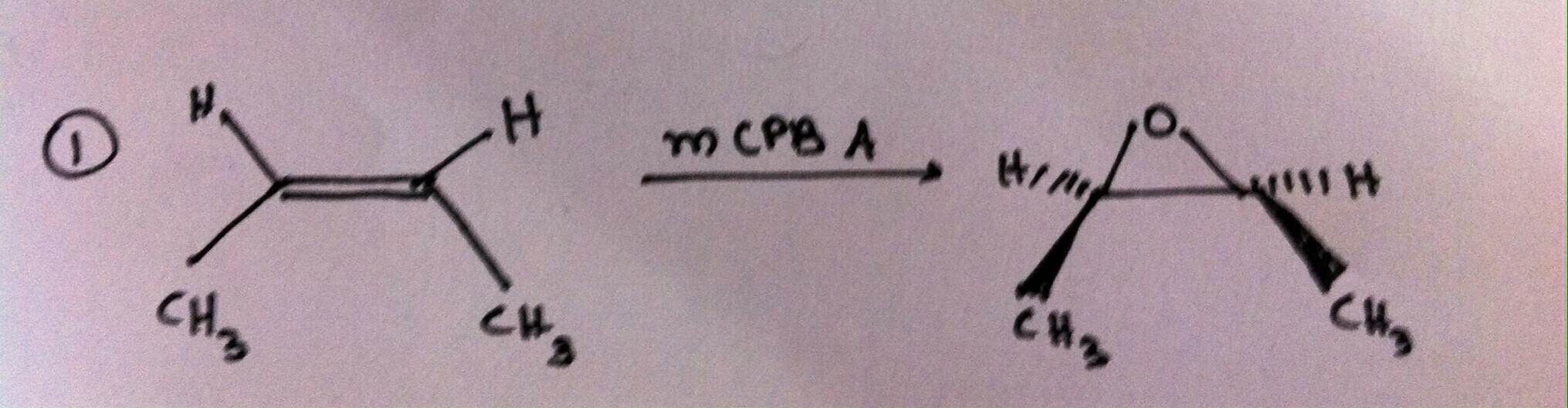
If you really wanted to start with the substituted aniline, you could probably oxidize, deuterate, reduce to get the product if you indeed want the amine and not the amide, but the yield would be poor. Various peroxides and peroxybenzoic acids will do this for you. Lui, Li, et al. indicated that oxidation of substituted anilines would work best in dichloroethane or THF with 4-5 equivalents of m-CPBA, with little difference produced by electronic effects. Then you could use your metal reagent, deuterate, and reduce using a method of your choice.
Of course it's probably easier to just nitrate your 1,3,5-tribromobenzene directly with nitric acid.
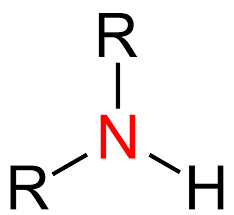
If this is a question from a book, they're probably trying to make sure you notice that you can't use organometal chemistry when you have acidic protons, so yes, grignard reagents do deprotonate amines.
If you really wanted to start with the substituted aniline, you could probably oxidize, deuterate, reduce to get the product if you indeed want the amine and not the amide, but the yield would be poor. Various peroxides and peroxybenzoic acids will do this for you. Lui, Li, et al. indicated that oxidation of substituted anilines would work best in dichloroethane or THF with 4-5 equivalents of m-CPBA, with little difference produced by electronic effects. Then you could use your metal reagent, deuterate, and reduce using a method of your choice.
Of course it's probably easier to just nitrate your 1,3,5-tribromobenzene directly with nitric acid.
If this is a question from a book, they're probably trying to make sure you notice that you can't use organometal chemistry when you have acidic protons, so yes, grignard reagents do deprotonate amines.
α-hydrogens are not that acidic (pka = 20-30) and Grignard reagents are strong nucleophiles, so if a carbonyl is present in the molecule, nucleophilic attack will be preferred over proton-abstraction.More


If you really wanted to start with the substituted aniline, you could probably oxidize, deuterate, reduce to get the product if you indeed want the amine and not the amide, but the yield would be poor. Various peroxides and peroxybenzoic acids will do this for you. Lui, Li, et al. indicated that oxidation of substituted anilines would work best in dichloroethane or THF with 4-5 equivalents of m-CPBA, with little difference produced by electronic effects. Then you could use your metal reagent, deuterate, and reduce using a method of your choice.
Of course it's probably easier to just nitrate your 1,3,5-tribromobenzene directly with nitric acid.
If this is a question from a book, they're probably trying to make sure you notice that you can't use organometal chemistry when you have acidic protons, so yes, grignard reagents do deprotonate amines.
If you really wanted to start with the substituted aniline, you could probably oxidize, deuterate, reduce to get the product if you indeed want the amine and not the amide, but the yield would be poor. Various peroxides and peroxybenzoic acids will do this for you. Lui, Li, et al. indicated that oxidation of substituted anilines would work best in dichloroethane or THF with 4-5 equivalents of m-CPBA, with little difference produced by electronic effects. Then you could use your metal reagent, deuterate, and reduce using a method of your choice.
Of course it's probably easier to just nitrate your 1,3,5-tribromobenzene directly with nitric acid.
If this is a question from a book, they're probably trying to make sure you notice that you can't use organometal chemistry when you have acidic protons, so yes, grignard reagents do deprotonate amines.
More
VOTE
VOTE
VOTE