Home >
Community >
How are reactivity and dipole moment related?
Upvote
21
Downvote
+ Reactivity
+ Dipole
Posted by
Leolynn Cauthron
How are reactivity and dipole moment related?
The reactivity of amines is generally based on how nucleophilic they are. In turn, their nucleophilicity is dependent upon how much of the nitrogen lone pair of electrons really exists on the nitrogen atom (e.g. the lone pair electron density on nitrogen). In ammonia ($\ce{NH3}$), the lone pair electron density on nitrogen is very high making ammonia quite nucleophilic, quite reactive. In the case of nitrogen trifluoride ($\ce{NF3}$), the three extremely electronegative fluorine atoms inductively remove much of the electron density from nitrogen; therefore $\ce{NF3}$ is less reactive than ammonia in a nucleophilic sense.
The reactivity of amines is generally based on how nucleophilic they are. In turn, their nucleophilicity is dependent upon how much of the nitrogen lone pair of electrons really exists on the nitrogen atom (e.g. the lone pair electron density on nitrogen). In ammonia ($\ce{NH3}$), the lone pair electron density on nitrogen is very high making ammonia quite nucleophilic, quite reactive. In the case of nitrogen trifluoride ($\ce{NF3}$), the three extremely electronegative fluorine atoms inductively remove much of the electron density from nitrogen; therefore $\ce{NF3}$ is less reactive than ammonia in a nucleophilic sense.
Yashbhatt - interesting question, but I think that this question is too vague. Reactivity is a very broad term.
Are we talking about reactivity in the context of proton transfer? In that case NH3 will be more reactive than NF3 as a proton donor (Brønsted acid) since it actually has protons to donate.
In the context of Brønsted basicity, again, NH3 will likely be more reactive than NF3 because in NF3 the electron-withdrawing fluorines reduces affinity for positive charges.
In the context of nucleophilicity, a lot of factors come into play. In a protic solvent, it's hard to tell a priori whether NH3 is more or less nucleophilic than NF3. NH3 has a greater partial negative charge on its central nitrogen atom. But this may also mean greater hydrogen bonding and therefore reduced nucleophilicity versus NF3, which doesn't exhibit hydrogen bonding (due to its lack of hydrogens).
Yashbhatt - interesting question, but I think that this question is too vague. Reactivity is a very broad term.
Are we talking about reactivity in the context of proton transfer? In that case NH3 will be more reactive than NF3 as a proton donor (Brønsted acid) since it actually has protons to donate.
In the context of Brønsted basicity, again, NH3 will likely be more reactive than NF3 because in NF3 the electron-withdrawing fluorines reduces affinity for positive charges.
In the context of nucleophilicity, a lot of factors come into play. In a protic solvent, it's hard to tell a priori whether NH3 is more or less nucleophilic than NF3. NH3 has a greater partial negative charge on its central nitrogen atom. But this may also mean greater hydrogen bonding and therefore reduced nucleophilicity versus NF3, which doesn't exhibit hydrogen bonding (due to its lack of hydrogens).
@Yashbhatt I think that a higher DM does not necessarily translate to a higher reactivity. Its a vague rule of thumb. What are you guys studying right now?More
We were studying chemical bonding. VSEPR, VBT and MOT. This specific case was mentioned as to why despite the same structure, they have different DPs. There was no mention of reactivity in the book.More
You are right. But I was asked this question in a test plainly as which is more reactive and was given an explanation that NH3 is more reactive because it has a higher dipole moment and so it will strongly attract other molecules and something like that.More


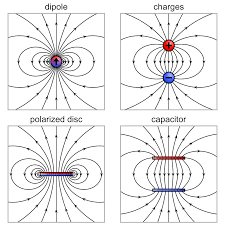
The reactivity of amines is generally based on how nucleophilic they are. In turn, their nucleophilicity is dependent upon how much of the nitrogen lone pair of electrons really exists on the nitrogen atom (e.g. the lone pair electron density on nitrogen). In ammonia ($\ce{NH3}$), the lone pair electron density on nitrogen is very high making ammonia quite nucleophilic, quite reactive. In the case of nitrogen trifluoride ($\ce{NF3}$), the three extremely electronegative fluorine atoms inductively remove much of the electron density from nitrogen; therefore $\ce{NF3}$ is less reactive than ammonia in a nucleophilic sense.
The reactivity of amines is generally based on how nucleophilic they are. In turn, their nucleophilicity is dependent upon how much of the nitrogen lone pair of electrons really exists on the nitrogen atom (e.g. the lone pair electron density on nitrogen). In ammonia ($\ce{NH3}$), the lone pair electron density on nitrogen is very high making ammonia quite nucleophilic, quite reactive. In the case of nitrogen trifluoride ($\ce{NF3}$), the three extremely electronegative fluorine atoms inductively remove much of the electron density from nitrogen; therefore $\ce{NF3}$ is less reactive than ammonia in a nucleophilic sense.
More
VOTE
Yashbhatt - interesting question, but I think that this question is too vague. Reactivity is a very broad term.
Are we talking about reactivity in the context of proton transfer? In that case NH3 will be more reactive than NF3 as a proton donor (Brønsted acid) since it actually has protons to donate.
In the context of Brønsted basicity, again, NH3 will likely be more reactive than NF3 because in NF3 the electron-withdrawing fluorines reduces affinity for positive charges.
In the context of nucleophilicity, a lot of factors come into play. In a protic solvent, it's hard to tell a priori whether NH3 is more or less nucleophilic than NF3. NH3 has a greater partial negative charge on its central nitrogen atom. But this may also mean greater hydrogen bonding and therefore reduced nucleophilicity versus NF3, which doesn't exhibit hydrogen bonding (due to its lack of hydrogens).
Yashbhatt - interesting question, but I think that this question is too vague. Reactivity is a very broad term.
Are we talking about reactivity in the context of proton transfer? In that case NH3 will be more reactive than NF3 as a proton donor (Brønsted acid) since it actually has protons to donate.
In the context of Brønsted basicity, again, NH3 will likely be more reactive than NF3 because in NF3 the electron-withdrawing fluorines reduces affinity for positive charges.
In the context of nucleophilicity, a lot of factors come into play. In a protic solvent, it's hard to tell a priori whether NH3 is more or less nucleophilic than NF3. NH3 has a greater partial negative charge on its central nitrogen atom. But this may also mean greater hydrogen bonding and therefore reduced nucleophilicity versus NF3, which doesn't exhibit hydrogen bonding (due to its lack of hydrogens).
More
VOTE
VOTE
VOTE
VOTE
VOTE
VOTE