Home >
Community >
What is the linear range of Quinine Sulphate Quantum Yield?
Upvote
26
Downvote
+ Quantum
+ Photochemistry
+ Photophysics
+ Photochemical processes
Posted by
Ahmed Moawed
What is the linear range of Quinine Sulphate Quantum Yield?
First one of these fluorescence standers; Quinine sulphate, Fluorescein and Tryptophan with excitation wavelength 350 nm, 475 nm and 280 nm, respectively chose as a reference. Almost the Quinine sulfate (QS) with a fluorescence quantum yield of 0.54 was chosen as the standard fluorescent agent because of the similar excitation and emission wavelength with the prepared carbon dots were prepared in ultra pure water at 25 °C). The UV-Vis absorption spectrum and fluorescence spectra of carbon dots are kept less than 0.1 to avoid deviation line of absorbance and the molar concentration. Varying absorbance of different concentrations of C-dot were recorded. Then, the integrated photoluminescence intensities were plotted against correspthe onding absorbance. The slopes of the linear plots were used to calculate QY using the following expression: QYsample = QYstd [(m)sample/(m)std](η2sample/ η2std) where (m)sample and mstd are the slopes obtained from linear plots, ηsample is the refractive index of solvent used for carbon dots (i.e., water), and ηstd is the refractive index of the solvent used for dissolving QS. Moreover, the quantum yield (QYstd) of standard quinine sulphate was taken as 0.54 and the refractive index (ηstd) of QS solution, prepared in 0.1 M H2SO4 was taken as 1.33.
First one of these fluorescence standers; Quinine sulphate, Fluorescein and Tryptophan with excitation wavelength 350 nm, 475 nm and 280 nm, respectively chose as a reference. Almost the Quinine sulfate (QS) with a fluorescence quantum yield of 0.54 was chosen as the standard fluorescent agent because of the similar excitation and emission wavelength with the prepared carbon dots were prepared in ultra pure water at 25 °C). The UV-Vis absorption spectrum and fluorescence spectra of carbon dots are kept less than 0.1 to avoid deviation line of absorbance and the molar concentration. Varying absorbance of different concentrations of C-dot were recorded. Then, the integrated photoluminescence intensities were plotted against correspthe onding absorbance. The slopes of the linear plots were used to calculate QY using the following expression: QYsample = QYstd [(m)sample/(m)std](η2sample/ η2std) where (m)sample and mstd are the slopes obtained from linear plots, ηsample is the refractive index of solvent used for carbon dots (i.e., water), and ηstd is the refractive index of the solvent used for dissolving QS. Moreover, the quantum yield (QYstd) of standard quinine sulphate was taken as 0.54 and the refractive index (ηstd) of QS solution, prepared in 0.1 M H2SO4 was taken as 1.33.
According to book C.A. Parker Photoluminescence of solutions Quinine sulphate has very large concentration range in which the fluorescence signal can be linear.This possibility is a result of weak energy transfer between excited and unexcited molecules that realized only at very small distances. In this case a decrease of signal due to difusing self-quenching and energy transfer can be realized at concentration of quinine about 0.001 M. So, I think that the signal could be linear in the range 10(-6) - 10(-3) M or 0.1 - 400 microgram/mL.
According to book C.A. Parker Photoluminescence of solutions Quinine sulphate has very large concentration range in which the fluorescence signal can be linear.This possibility is a result of weak energy transfer between excited and unexcited molecules that realized only at very small distances. In this case a decrease of signal due to difusing self-quenching and energy transfer can be realized at concentration of quinine about 0.001 M. So, I think that the signal could be linear in the range 10(-6) - 10(-3) M or 0.1 - 400 microgram/mL.
you can use 0.1M solution of quinine sulfate (QS) as standard for Q.Y calculations for the samples having emission wavelength ~400-600nm. I think it will be good for micro molar concentration of the sample but you have to fixed the absorbance of the QS solution 0.1 at the particular excitation wavelength ( what ever may be 300, 310,330.....etc) and same sample you have to use for fluorescence measurement. for details please refer J. Phys. Chem., 1961, 65, 229
you can use 0.1M solution of quinine sulfate (QS) as standard for Q.Y calculations for the samples having emission wavelength ~400-600nm. I think it will be good for micro molar concentration of the sample but you have to fixed the absorbance of the QS solution 0.1 at the particular excitation wavelength ( what ever may be 300, 310,330.....etc) and same sample you have to use for fluorescence measurement. for details please refer J. Phys. Chem., 1961, 65, 229
In case you are using the relative methode in dilute solutions from Parker & Rees (C. A. Parker, W. T. Rees. Analyst 85, 587 (1960) ), the following holds true: With respect to optical density, it is constant up to fairly high values, but only if corrected for inner filter effects. With respect to wavelength, it is also constant over the complete range (think about Kasha rule...), but only if you correct the fluorescence spectra for excitation intensity. Please us perchloric acid als solvent, as irregularities have been observed with quinine sulphate dissolved in sulfuric acid. In general, the 1971 review on fluorescence quantum yield determination from Crosby and Demas is still worth reading: http://pubs.acs.org/doi/abs/10.1021/j100678a001?journalCode=jpchax Of course there are also newer reviews on this topic, please have a look for articles from Knut Rurack and Ute Resch-Genger
In case you are using the relative methode in dilute solutions from Parker & Rees (C. A. Parker, W. T. Rees. Analyst 85, 587 (1960) ), the following holds true: With respect to optical density, it is constant up to fairly high values, but only if corrected for inner filter effects. With respect to wavelength, it is also constant over the complete range (think about Kasha rule...), but only if you correct the fluorescence spectra for excitation intensity. Please us perchloric acid als solvent, as irregularities have been observed with quinine sulphate dissolved in sulfuric acid. In general, the 1971 review on fluorescence quantum yield determination from Crosby and Demas is still worth reading: http://pubs.acs.org/doi/abs/10.1021/j100678a001?journalCode=jpchax Of course there are also newer reviews on this topic, please have a look for articles from Knut Rurack and Ute Resch-Genger



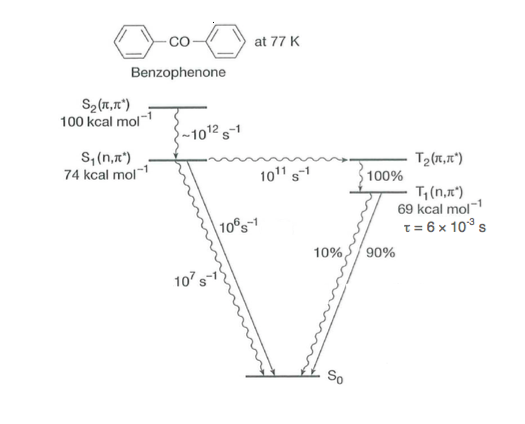
First one of these fluorescence standers; Quinine sulphate, Fluorescein and Tryptophan with excitation wavelength 350 nm, 475 nm and 280 nm, respectively chose as a reference. Almost the Quinine sulfate (QS) with a fluorescence quantum yield of 0.54 was chosen as the standard fluorescent agent because of the similar excitation and emission wavelength with the prepared carbon dots were prepared in ultra pure water at 25 °C).
The UV-Vis absorption spectrum and fluorescence spectra of carbon dots are kept less than 0.1 to avoid deviation line of absorbance and the molar concentration.
Varying absorbance of different concentrations of C-dot were recorded. Then, the integrated photoluminescence intensities were plotted against correspthe onding absorbance. The slopes of the linear plots were used to calculate QY using the following expression:
QYsample = QYstd [(m)sample/(m)std](η2sample/ η2std)
where (m)sample and mstd are the slopes obtained from linear plots, ηsample is the refractive index of solvent used for carbon dots (i.e., water), and ηstd is the refractive index of the solvent used for dissolving QS. Moreover, the quantum yield (QYstd) of standard quinine sulphate was taken as 0.54 and the refractive index (ηstd) of QS solution, prepared in 0.1 M H2SO4 was taken as 1.33.
First one of these fluorescence standers; Quinine sulphate, Fluorescein and Tryptophan with excitation wavelength 350 nm, 475 nm and 280 nm, respectively chose as a reference. Almost the Quinine sulfate (QS) with a fluorescence quantum yield of 0.54 was chosen as the standard fluorescent agent because of the similar excitation and emission wavelength with the prepared carbon dots were prepared in ultra pure water at 25 °C).
The UV-Vis absorption spectrum and fluorescence spectra of carbon dots are kept less than 0.1 to avoid deviation line of absorbance and the molar concentration.
Varying absorbance of different concentrations of C-dot were recorded. Then, the integrated photoluminescence intensities were plotted against correspthe onding absorbance. The slopes of the linear plots were used to calculate QY using the following expression:
QYsample = QYstd [(m)sample/(m)std](η2sample/ η2std)
where (m)sample and mstd are the slopes obtained from linear plots, ηsample is the refractive index of solvent used for carbon dots (i.e., water), and ηstd is the refractive index of the solvent used for dissolving QS. Moreover, the quantum yield (QYstd) of standard quinine sulphate was taken as 0.54 and the refractive index (ηstd) of QS solution, prepared in 0.1 M H2SO4 was taken as 1.33.
More
VOTE
According to book C.A. Parker Photoluminescence of solutions Quinine sulphate has very large concentration range in which the fluorescence signal can be linear.This possibility is a result of weak energy transfer between excited and unexcited molecules that realized only at very small distances. In this case a decrease of signal due to difusing self-quenching and energy transfer can be realized at concentration of quinine about 0.001 M. So, I think that the signal could be linear in the range 10(-6) - 10(-3) M or 0.1 - 400 microgram/mL.
According to book C.A. Parker Photoluminescence of solutions Quinine sulphate has very large concentration range in which the fluorescence signal can be linear.This possibility is a result of weak energy transfer between excited and unexcited molecules that realized only at very small distances. In this case a decrease of signal due to difusing self-quenching and energy transfer can be realized at concentration of quinine about 0.001 M. So, I think that the signal could be linear in the range 10(-6) - 10(-3) M or 0.1 - 400 microgram/mL.
More
VOTE
you can use 0.1M solution of quinine sulfate (QS) as standard for Q.Y calculations for the samples having emission wavelength ~400-600nm. I think it will be good for micro molar concentration of the sample but you have to fixed the absorbance of the QS solution 0.1 at the particular excitation wavelength ( what ever may be 300, 310,330.....etc) and same sample you have to use for fluorescence measurement.
for details please refer J. Phys. Chem., 1961, 65, 229
you can use 0.1M solution of quinine sulfate (QS) as standard for Q.Y calculations for the samples having emission wavelength ~400-600nm. I think it will be good for micro molar concentration of the sample but you have to fixed the absorbance of the QS solution 0.1 at the particular excitation wavelength ( what ever may be 300, 310,330.....etc) and same sample you have to use for fluorescence measurement.
for details please refer J. Phys. Chem., 1961, 65, 229
More
VOTE
Thank you very much for all the contributors. It was very useful.
Thank you very much for all the contributors. It was very useful.
More
VOTE
In case you are using the relative methode in dilute solutions from Parker & Rees (C. A. Parker, W. T. Rees. Analyst 85, 587 (1960) ), the following holds true:
With respect to optical density, it is constant up to fairly high values, but only if corrected for inner filter effects. With respect to wavelength, it is also constant over the complete range (think about Kasha rule...), but only if you correct the fluorescence spectra for excitation intensity.
Please us perchloric acid als solvent, as irregularities have been observed with quinine sulphate dissolved in sulfuric acid.
In general, the 1971 review on fluorescence quantum yield determination from Crosby and Demas is still worth reading:
http://pubs.acs.org/doi/abs/10.1021/j100678a001?journalCode=jpchax
Of course there are also newer reviews on this topic, please have a look for articles from Knut Rurack and Ute Resch-Genger
In case you are using the relative methode in dilute solutions from Parker & Rees (C. A. Parker, W. T. Rees. Analyst 85, 587 (1960) ), the following holds true:
With respect to optical density, it is constant up to fairly high values, but only if corrected for inner filter effects. With respect to wavelength, it is also constant over the complete range (think about Kasha rule...), but only if you correct the fluorescence spectra for excitation intensity.
Please us perchloric acid als solvent, as irregularities have been observed with quinine sulphate dissolved in sulfuric acid.
In general, the 1971 review on fluorescence quantum yield determination from Crosby and Demas is still worth reading:
http://pubs.acs.org/doi/abs/10.1021/j100678a001?journalCode=jpchax
Of course there are also newer reviews on this topic, please have a look for articles from Knut Rurack and Ute Resch-Genger
More
VOTE