Home >
Community >
What is the origin of the positive-to-negative convention concerning dipole moments in chemistry?
Upvote
23
Downvote
+ Dipole
Posted by
Justin Harper
What is the origin of the positive-to-negative convention concerning dipole moments in chemistry?
Just a guess:
For many years, until 1946, accurate values of dipole moments could only be derived from measurements of dielectric constants.
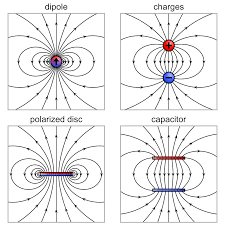
If you think of the dipole moment as weakening the electric field, it would point in the direction opposite to the electric field, and therefore from the positive to the negative end of the dipole.
(sorry, cannot comment the post due to lack of reputation)
For many years, until 1946, accurate values of dipole moments could only be derived from measurements of dielectric constants.
If you think of the dipole moment as weakening the electric field, it would point in the direction opposite to the electric field, and therefore from the positive to the negative end of the dipole.
(sorry, cannot comment the post due to lack of reputation)
I don't have a very good historical explanation, but I would point out that it actually makes a good deal of sense for chemists to think in this way. That is, chemists are almost exclusively concerned with what the electrons in any system are doing.
For instance, when I ask myself about a charge separation and hence a dipole, I want to know what is separated from what. In this case, it's some electrons separated from some space they could be in. So, I intuitively think to point my arrow towards where the electrons are, not where they could be. Of course I only think that because that's the convention. I'd also point out that chemists reverse the arrows for current as well by drawing the arrow pointing with the flow of electrons rather than the flow of positive charge which goes the opposite direction.
So at least we're self consistent!
Sorry that's not more historical, but my guess is that at least part of the true historical reason is that chemists think in terms of electrons and thus point the arrows to their negatively charged friends.
I don't have a very good historical explanation, but I would point out that it actually makes a good deal of sense for chemists to think in this way. That is, chemists are almost exclusively concerned with what the electrons in any system are doing.
For instance, when I ask myself about a charge separation and hence a dipole, I want to know what is separated from what. In this case, it's some electrons separated from some space they could be in. So, I intuitively think to point my arrow towards where the electrons are, not where they could be. Of course I only think that because that's the convention. I'd also point out that chemists reverse the arrows for current as well by drawing the arrow pointing with the flow of electrons rather than the flow of positive charge which goes the opposite direction.
So at least we're self consistent!
Sorry that's not more historical, but my guess is that at least part of the true historical reason is that chemists think in terms of electrons and thus point the arrows to their negatively charged friends.
True. Even in reaction mechanisms in organic chemistry we depict the flow of electrons by arrows pointing from higher electron density to lower electron density.More
This is certainly true. Still as a chemist I have never saw a problem or inconsistency. One thing is depicting Lewis formula and discussing reaction mechanisms, another is to calculate orientation of a molecule in an external field. And I would stress that the vector moment of electric dipole goes from negative to positive in chemistry, too. More
Upvote
VOTE
Downvote
Some sources point out the direction of the dipole moment is convention dependent. Since both conventions are mathematically correct it seems important when solving a problem to identify the convention. Both conventions seem to be derived from the bones of dead theories.
The physics convention does seem to have Franklin's work identifying negative "resinous electricity" and positive "vitreous electricity" as one step in the progression to the modern theory. In modern theory a positive to negative electric field will orient a dipole such that the field is in the same direction as a negative to positive dipole.
On the chemistry side, Peter Debye (who the unit for a dipole moment is named) developed the concept of the dipole moment in 1912 to explain anomalous dispersion. This dispersion was explained as being caused by a negative charge collecting on one side of a molecule leading to a dipole moment. This moment's magnitude explained anomalous dispersion, so direction did not seem to receive much attention. Molecules during this time where described using the Thompson, or "plum pudding," model. In this model molecules were described as positively charged spheres. (These spheres had no nucleus because the nucleus concept was in its infancy during this time period.) These spheres formed the basis of mathematical models used to describe the behavior of materials with a dipole moments. The dipole moment in this sense went from the center of a molecule to the point of highest electron density. With the center of the sphere as a pivot point, the rotation of molecules in an electric field could be explained. In this sense the positive to negative convention may be an artifact of the early spherical molecular models first used to describe dipole moments.
sources:
J. W. Williams Dipole theory and the size of molecules. Trans. Faraday Soc., 1934,30, 723-728
John W. Williams The Dielectric Constants of Binary Mixtures. VIII. The Electric Moment as a Vector Quantity, J. Am. Chem. Soc., 1928, 50 (9), pp 2350–2357 DOI: 10.1021/ja01396a005 Publication Date: September 1928
L. E. Sutton Electric dipole moments and resonance in molecules, Trans. Faraday Soc., 1934,30, 789-801
Some sources point out the direction of the dipole moment is convention dependent. Since both conventions are mathematically correct it seems important when solving a problem to identify the convention. Both conventions seem to be derived from the bones of dead theories.
The physics convention does seem to have Franklin's work identifying negative "resinous electricity" and positive "vitreous electricity" as one step in the progression to the modern theory. In modern theory a positive to negative electric field will orient a dipole such that the field is in the same direction as a negative to positive dipole.
On the chemistry side, Peter Debye (who the unit for a dipole moment is named) developed the concept of the dipole moment in 1912 to explain anomalous dispersion. This dispersion was explained as being caused by a negative charge collecting on one side of a molecule leading to a dipole moment. This moment's magnitude explained anomalous dispersion, so direction did not seem to receive much attention. Molecules during this time where described using the Thompson, or "plum pudding," model. In this model molecules were described as positively charged spheres. (These spheres had no nucleus because the nucleus concept was in its infancy during this time period.) These spheres formed the basis of mathematical models used to describe the behavior of materials with a dipole moments. The dipole moment in this sense went from the center of a molecule to the point of highest electron density. With the center of the sphere as a pivot point, the rotation of molecules in an electric field could be explained. In this sense the positive to negative convention may be an artifact of the early spherical molecular models first used to describe dipole moments.
sources:
J. W. Williams Dipole theory and the size of molecules. Trans. Faraday Soc., 1934,30, 723-728
John W. Williams The Dielectric Constants of Binary Mixtures. VIII. The Electric Moment as a Vector Quantity, J. Am. Chem. Soc., 1928, 50 (9), pp 2350–2357 DOI: 10.1021/ja01396a005 Publication Date: September 1928
L. E. Sutton Electric dipole moments and resonance in molecules, Trans. Faraday Soc., 1934,30, 789-801
The chemistry convention seems German while the physics convention seems British. I can read the original physics theory because it is in English but not German theory. The dipole theory was developed throughout the years of WWI and WWII. These wars may have contributed to the lack of unity in a single convention.More
I wouldnt be surprised if the problem was known before 2007, but I certainly never knew about it until quite recently. My first contact with the problem was when I tried to make more explicit connections between physics and stuff the students had seen in other science disciplines — which is something that a lot of physics classes have been trying to do over the past 10–15 years. Perhaps thats why the problem has become better-known.More



Just a guess:
For many years, until 1946, accurate values of dipole moments could only be derived from measurements of dielectric constants.
If you think of the dipole moment as weakening the electric field, it would point in the direction opposite to the electric field, and therefore from the positive to the negative end of the dipole.
(sorry, cannot comment the post due to lack of reputation)
Just a guess:
For many years, until 1946, accurate values of dipole moments could only be derived from measurements of dielectric constants.
If you think of the dipole moment as weakening the electric field, it would point in the direction opposite to the electric field, and therefore from the positive to the negative end of the dipole.
(sorry, cannot comment the post due to lack of reputation)
More
VOTE
I don't have a very good historical explanation, but I would point out that it actually makes a good deal of sense for chemists to think in this way. That is, chemists are almost exclusively concerned with what the electrons in any system are doing.
For instance, when I ask myself about a charge separation and hence a dipole, I want to know what is separated from what. In this case, it's some electrons separated from some space they could be in. So, I intuitively think to point my arrow towards where the electrons are, not where they could be. Of course I only think that because that's the convention. I'd also point out that chemists reverse the arrows for current as well by drawing the arrow pointing with the flow of electrons rather than the flow of positive charge which goes the opposite direction.
So at least we're self consistent!
Sorry that's not more historical, but my guess is that at least part of the true historical reason is that chemists think in terms of electrons and thus point the arrows to their negatively charged friends.
I don't have a very good historical explanation, but I would point out that it actually makes a good deal of sense for chemists to think in this way. That is, chemists are almost exclusively concerned with what the electrons in any system are doing.
For instance, when I ask myself about a charge separation and hence a dipole, I want to know what is separated from what. In this case, it's some electrons separated from some space they could be in. So, I intuitively think to point my arrow towards where the electrons are, not where they could be. Of course I only think that because that's the convention. I'd also point out that chemists reverse the arrows for current as well by drawing the arrow pointing with the flow of electrons rather than the flow of positive charge which goes the opposite direction.
So at least we're self consistent!
Sorry that's not more historical, but my guess is that at least part of the true historical reason is that chemists think in terms of electrons and thus point the arrows to their negatively charged friends.
More
VOTE
VOTE
VOTE
VOTE
Some sources point out the direction of the dipole moment is convention dependent. Since both conventions are mathematically correct it seems important when solving a problem to identify the convention. Both conventions seem to be derived from the bones of dead theories.
The physics convention does seem to have Franklin's work identifying negative "resinous electricity" and positive "vitreous electricity" as one step in the progression to the modern theory. In modern theory a positive to negative electric field will orient a dipole such that the field is in the same direction as a negative to positive dipole.
On the chemistry side, Peter Debye (who the unit for a dipole moment is named) developed the concept of the dipole moment in 1912 to explain anomalous dispersion. This dispersion was explained as being caused by a negative charge collecting on one side of a molecule leading to a dipole moment. This moment's magnitude explained anomalous dispersion, so direction did not seem to receive much attention. Molecules during this time where described using the Thompson, or "plum pudding," model. In this model molecules were described as positively charged spheres. (These spheres had no nucleus because the nucleus concept was in its infancy during this time period.) These spheres formed the basis of mathematical models used to describe the behavior of materials with a dipole moments. The dipole moment in this sense went from the center of a molecule to the point of highest electron density. With the center of the sphere as a pivot point, the rotation of molecules in an electric field could be explained. In this sense the positive to negative convention may be an artifact of the early spherical molecular models first used to describe dipole moments.
sources:
J. W. Williams Dipole theory and the size of molecules. Trans. Faraday Soc., 1934,30, 723-728
John W. Williams The Dielectric Constants of Binary Mixtures. VIII. The Electric Moment as a Vector Quantity, J. Am. Chem. Soc., 1928, 50 (9), pp 2350–2357 DOI: 10.1021/ja01396a005 Publication Date: September 1928
L. E. Sutton Electric dipole moments and resonance in molecules, Trans. Faraday Soc., 1934,30, 789-801
https://www.quora.com/Why-does-a-dipole-have-a-direction-from-negative-to-positive-while-electric-field-lines-go-from-positive-to-negative
http://goldbook.iupac.org/E01929.html
http://www.ushistory.org/franklin/info/inventions.htm
http://www.wondersandmarvels.com/2011/12/accentuate-the-vitreous-eliminate-the-resinous.html
Some sources point out the direction of the dipole moment is convention dependent. Since both conventions are mathematically correct it seems important when solving a problem to identify the convention. Both conventions seem to be derived from the bones of dead theories.
The physics convention does seem to have Franklin's work identifying negative "resinous electricity" and positive "vitreous electricity" as one step in the progression to the modern theory. In modern theory a positive to negative electric field will orient a dipole such that the field is in the same direction as a negative to positive dipole.
On the chemistry side, Peter Debye (who the unit for a dipole moment is named) developed the concept of the dipole moment in 1912 to explain anomalous dispersion. This dispersion was explained as being caused by a negative charge collecting on one side of a molecule leading to a dipole moment. This moment's magnitude explained anomalous dispersion, so direction did not seem to receive much attention. Molecules during this time where described using the Thompson, or "plum pudding," model. In this model molecules were described as positively charged spheres. (These spheres had no nucleus because the nucleus concept was in its infancy during this time period.) These spheres formed the basis of mathematical models used to describe the behavior of materials with a dipole moments. The dipole moment in this sense went from the center of a molecule to the point of highest electron density. With the center of the sphere as a pivot point, the rotation of molecules in an electric field could be explained. In this sense the positive to negative convention may be an artifact of the early spherical molecular models first used to describe dipole moments.
sources:
J. W. Williams Dipole theory and the size of molecules. Trans. Faraday Soc., 1934,30, 723-728
John W. Williams The Dielectric Constants of Binary Mixtures. VIII. The Electric Moment as a Vector Quantity, J. Am. Chem. Soc., 1928, 50 (9), pp 2350–2357 DOI: 10.1021/ja01396a005 Publication Date: September 1928
L. E. Sutton Electric dipole moments and resonance in molecules, Trans. Faraday Soc., 1934,30, 789-801
https://www.quora.com/Why-does-a-dipole-have-a-direction-from-negative-to-positive-while-electric-field-lines-go-from-positive-to-negative
http://goldbook.iupac.org/E01929.html
http://www.ushistory.org/franklin/info/inventions.htm
http://www.wondersandmarvels.com/2011/12/accentuate-the-vitreous-eliminate-the-resinous.html
More
VOTE
VOTE
VOTE
I asked that other question. Most useful to me was one of the comments, which pointed me to this page: http://av8n.com/physics/electric-dipole.htm#sec-mutations
While it does not have definitive answers, it at least shows that the problem was known in 2007.
For archiving purposes I'm posting a screenshot here (hope that is not in violation of any terms):
I asked that other question. Most useful to me was one of the comments, which pointed me to this page: http://av8n.com/physics/electric-dipole.htm#sec-mutations
While it does not have definitive answers, it at least shows that the problem was known in 2007.
For archiving purposes I'm posting a screenshot here (hope that is not in violation of any terms):
More
VOTE
VOTE