I didn't share the formation of the oxazoline because the step with the HBTU is this. I don't understand you. I know what a ketene is but, what does it have to do with the stereochemistry? Isn't racemization a thing about how much you can cover a face of the molecule with, in this case, HBTU? My question is, why is in this dipeptide the quiral atoms with the same configuration than they had in the amino acides?
Thank you for your answers!!!
P.D: I'll share you the mechanism of the formation of the oxazoline... maybe I'm confused and it is an important step for avoiding racemization. https://ibb.co/dquty0
I didn't share the formation of the oxazoline because the step with the HBTU is this. I don't understand you. I know what a ketene is but, what does it have to do with the stereochemistry? Isn't racemization a thing about how much you can cover a face of the molecule with, in this case, HBTU? My question is, why is in this dipeptide the quiral atoms with the same configuration than they had in the amino acides?
Thank you for your answers!!!
P.D: I'll share you the mechanism of the formation of the oxazoline... maybe I'm confused and it is an important step for avoiding racemization. https://ibb.co/dquty0
I didn't share the formation of the oxazoline because the step with the HBTU is this. I don't understand you. I know what a ketene is but, what does it have to do with the stereochemistry? Isn't racemization a thing about how much you can cover a face of the molecule with, in this case, HBTU? My question is, why is in this dipeptide the quiral atoms with the same configuration than they had in the amino acides?
Thank you for your answers!!!
P.D: I'll share you the mechanism of the formation of the oxazoline... maybe I'm confused and it is an important step for avoiding racemization. https://ibb.co/dquty0
Never mind, I thought you are talking abou thte oxazoline...
Anyway, the point of ketene is that ketene (or enolate) is planar and when it gets decomposed into the amino acid by protonation again, the proton can protonate both sides therefore forming enantiomers. I think the scheme by PdG3 is very spot on and exactly what you are looking for.
The exact reasons why those reagents supress reacemization.. I would think it could be combination of low alpha-H acidity with sterical hinderance.. I was looking a bit into it while ago but couldnt find any good explanations
I didn't share the formation of the oxazoline because the step with the HBTU is this. I don't understand you. I know what a ketene is but, what does it have to do with the stereochemistry? Isn't racemization a thing about how much you can cover a face of the molecule with, in this case, HBTU? My question is, why is in this dipeptide the quiral atoms with the same configuration than they had in the amino acides?
Thank you for your answers!!!
P.D: I'll share you the mechanism of the formation of the oxazoline... maybe I'm confused and it is an important step for avoiding racemization. https://ibb.co/dquty0
Never mind, I thought you are talking abou thte oxazoline...
Anyway, the point of ketene is that ketene (or enolate) is planar and when it gets decomposed into the amino acid by protonation again, the proton can protonate both sides therefore forming enantiomers. I think the scheme by PdG3 is very spot on and exactly what you are looking for.
The exact reasons why those reagents supress reacemization.. I would think it could be combination of low alpha-H acidity with sterical hinderance.. I was looking a bit into it while ago but couldnt find any good explanations
https://ibb.co/ciGry0 This is the mechanism through I get the dipeptide with the HBTU. Here is where racemization doesn't take place (or in a very little amount).
https://ibb.co/ciGry0 This is the mechanism through I get the dipeptide with the HBTU. Here is where racemization doesn't take place (or in a very little amount).
I'm really thankful for your answers. It has been of very help for me. Tomorrow, in my presentation, I'm going to explain it from the point of view of the formation of the carbanion in alpha proton, and because of its planarity, if the base protonates again that C, racemization will occur.
I'm really thankful for your answers. It has been of very help for me. Tomorrow, in my presentation, I'm going to explain it from the point of view of the formation of the carbanion in alpha proton, and because of its planarity, if the base protonates again that C, racemization will occur.
Can you please show a reaction scheme? I did some work with oxazolines so I might be able to help you but Im having hard time immagining your reaction.
Can you please show a reaction scheme? I did some work with oxazolines so I might be able to help you but Im having hard time immagining your reaction.
I think the mechanism looks good, im not exactly sure about the reason why the racemization is reduced but my guess is that the alpha proton is not acidic enough when reagents like this are used (compare to acid chloride) and ketene cant be formed.
I think the mechanism looks good, im not exactly sure about the reason why the racemization is reduced but my guess is that the alpha proton is not acidic enough when reagents like this are used (compare to acid chloride) and ketene cant be formed.
Racemization occurs mostly because of oxazolone formation, but enolate is also possible. https://ars.els-cdn.com/content/image/1-s2.0-S1319610310001584-gr8.jpg HOBt forms "active ester" with activated carboxylic moiety. This "active ester" is highly susceptible toward nucleophilic attack of amine group but isn't reactive enough to form oxazolone (unlike tetramethyuronium species).
Racemization occurs mostly because of oxazolone formation, but enolate is also possible. https://ars.els-cdn.com/content/image/1-s2.0-S1319610310001584-gr8.jpg HOBt forms "active ester" with activated carboxylic moiety. This "active ester" is highly susceptible toward nucleophilic attack of amine group but isn't reactive enough to form oxazolone (unlike tetramethyuronium species).


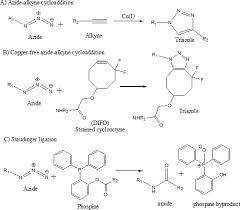


I didn't share the formation of the oxazoline because the step with the HBTU is this. I don't understand you. I know what a ketene is but, what does it have to do with the stereochemistry?
Isn't racemization a thing about how much you can cover a face of the molecule with, in this case, HBTU? My question is, why is in this dipeptide the quiral atoms with the same configuration than they had in the amino acides?
Thank you for your answers!!!
P.D: I'll share you the mechanism of the formation of the oxazoline... maybe I'm confused and it is an important step for avoiding racemization.
https://ibb.co/dquty0
I didn't share the formation of the oxazoline because the step with the HBTU is this. I don't understand you. I know what a ketene is but, what does it have to do with the stereochemistry?
Isn't racemization a thing about how much you can cover a face of the molecule with, in this case, HBTU? My question is, why is in this dipeptide the quiral atoms with the same configuration than they had in the amino acides?
Thank you for your answers!!!
P.D: I'll share you the mechanism of the formation of the oxazoline... maybe I'm confused and it is an important step for avoiding racemization.
https://ibb.co/dquty0
More
VOTE
Never mind, I thought you are talking abou thte oxazoline...
Anyway, the point of ketene is that ketene (or enolate) is planar and when it gets decomposed into the amino acid by protonation again, the proton can protonate both sides therefore forming enantiomers.
I think the scheme by PdG3 is very spot on and exactly what you are looking for.
The exact reasons why those reagents supress reacemization.. I would think it could be combination of low alpha-H acidity with sterical hinderance.. I was looking a bit into it while ago but couldnt find any good explanations
Never mind, I thought you are talking abou thte oxazoline...
Anyway, the point of ketene is that ketene (or enolate) is planar and when it gets decomposed into the amino acid by protonation again, the proton can protonate both sides therefore forming enantiomers.
I think the scheme by PdG3 is very spot on and exactly what you are looking for.
The exact reasons why those reagents supress reacemization.. I would think it could be combination of low alpha-H acidity with sterical hinderance.. I was looking a bit into it while ago but couldnt find any good explanations
More
VOTE
https://ibb.co/ciGry0
This is the mechanism through I get the dipeptide with the HBTU. Here is where racemization doesn't take place (or in a very little amount).
https://ibb.co/ciGry0
This is the mechanism through I get the dipeptide with the HBTU. Here is where racemization doesn't take place (or in a very little amount).
More
VOTE
I'm really thankful for your answers. It has been of very help for me.
Tomorrow, in my presentation, I'm going to explain it from the point of view of the formation of the carbanion in alpha proton, and because of its planarity, if the base protonates again that C, racemization will occur.
Regards!
I'm really thankful for your answers. It has been of very help for me.
Tomorrow, in my presentation, I'm going to explain it from the point of view of the formation of the carbanion in alpha proton, and because of its planarity, if the base protonates again that C, racemization will occur.
Regards!
More
VOTE
Thank you
Thank you
More
VOTE
I think the mechanism looks good, im not exactly sure about the reason why the racemization is reduced but my guess is that the alpha proton is not acidic enough when reagents like this are used (compare to acid chloride) and ketene cant be formed.
I think the mechanism looks good, im not exactly sure about the reason why the racemization is reduced but my guess is that the alpha proton is not acidic enough when reagents like this are used (compare to acid chloride) and ketene cant be formed.
More
VOTE
https://ars.els-cdn.com/content/image/1-s2.0-S1319610310001584-gr8.jpg
HOBt forms "active ester" with activated carboxylic moiety. This "active ester" is highly susceptible toward nucleophilic attack of amine group but isn't reactive enough to form oxazolone (unlike tetramethyuronium species).
https://ars.els-cdn.com/content/image/1-s2.0-S1319610310001584-gr8.jpg
HOBt forms "active ester" with activated carboxylic moiety. This "active ester" is highly susceptible toward nucleophilic attack of amine group but isn't reactive enough to form oxazolone (unlike tetramethyuronium species).
More
VOTE