Home >
Community >
Difference between Epimers and Diastereomers
Upvote
24
Downvote
+ Stereochemistry
+ Isomers
Posted by
Lai Johnny
Difference between Epimers and Diastereomers
This scheme I just drew up specifically for you should answer your question.
Diastereomers are stereoisomers that are not enantiomers of each other. That includes conformers (geometric isomers that derive from single bond rotation; usually interconverting rapidly) and atropisomers (under which I would subsume E/Z isomers; they derive from hindered rotation around a typically single bond and are separable) and anything with differeces in asymmetric carbons.
If you have exactly one asymmetric carbon with inverted stereochemistry, then the diastereomer is a special one: an epimer. Anomers (e.g. α- and β-D-glucose) should be considered special cases of epimers.
Let me use the menthol isomers (image taken from Wikipedia, where a full list of authors is available) to clarify the concept:
Two vertically aligned structures are always enantiomers. Two structures that are not vertically aligned are diastereomers.
(+)-Isomenthol is (+)-menthol’s C4-epimer, while ($-$)-neoisomenthol is (+)-menthol’s C1-epimer. And ($-$)-neomenthol is (+)-menthol’s C2-epimer. All of these are also diastereomers.
(+)-Neomenthol is not an epimer of (+)-menthol. It is still a diastereomer, however.
This scheme I just drew up specifically for you should answer your question.
Diastereomers are stereoisomers that are not enantiomers of each other. That includes conformers (geometric isomers that derive from single bond rotation; usually interconverting rapidly) and atropisomers (under which I would subsume E/Z isomers; they derive from hindered rotation around a typically single bond and are separable) and anything with differeces in asymmetric carbons.
If you have exactly one asymmetric carbon with inverted stereochemistry, then the diastereomer is a special one: an epimer. Anomers (e.g. α- and β-D-glucose) should be considered special cases of epimers.
Let me use the menthol isomers (image taken from Wikipedia, where a full list of authors is available) to clarify the concept:
Two vertically aligned structures are always enantiomers. Two structures that are not vertically aligned are diastereomers.
(+)-Isomenthol is (+)-menthol’s C4-epimer, while ($-$)-neoisomenthol is (+)-menthol’s C1-epimer. And ($-$)-neomenthol is (+)-menthol’s C2-epimer. All of these are also diastereomers.
(+)-Neomenthol is not an epimer of (+)-menthol. It is still a diastereomer, however.
Thank you so much for that great answer! I would love to accept this answer however sadly I can only accept one answer.More
Upvote
VOTE
Downvote
Yes you are correct that epimers are a subset of diastereomers.
Diastereomers are compounds that have similar configuration at some carbon and dissimilar configuration at some carbons.
Whereas epimers are compounds that differ in configuration at only one chiral carbon.
The point of difference arises in the fact that epimers have only one chiral carbon which is different in configuration whereas diastereomers can have any number of different configuration around its chiral carbons (except all being different).
Yes you are correct that epimers are a subset of diastereomers.
Diastereomers are compounds that have similar configuration at some carbon and dissimilar configuration at some carbons.
Whereas epimers are compounds that differ in configuration at only one chiral carbon.
The point of difference arises in the fact that epimers have only one chiral carbon which is different in configuration whereas diastereomers can have any number of different configuration around its chiral carbons (except all being different).
epimers as compounds which differ by configuration at only one carbon
Yes, at only one centre.
However isn't that the same thing as diastereomers?
No, not completely. Diastereomers differ at least at one, but at less than all stereocentres. If two compounds would differ at all stereocentres, they would be enantiomers.
Update
As far as epimerism in open form carbohydrates is concerned, examining the Fischer projections using a German mnemonic derived from the signal horn sounds of police cars (ta-tü-ta-ta) might help. Yes, sounds weird ;-)
Let ta and tü be $\ce{OH}$ on either side of the projection.
Then, glucose is ta-tü-ta-ta, whereas galactose is ta-tü-tü-ta. Apparently, they differ at one stereocentre. Consequently, they are epimers.
epimers as compounds which differ by configuration at only one carbon
Yes, at only one centre.
However isn't that the same thing as diastereomers?
No, not completely. Diastereomers differ at least at one, but at less than all stereocentres. If two compounds would differ at all stereocentres, they would be enantiomers.
Update
As far as epimerism in open form carbohydrates is concerned, examining the Fischer projections using a German mnemonic derived from the signal horn sounds of police cars (ta-tü-ta-ta) might help. Yes, sounds weird ;-)
Let ta and tü be $\ce{OH}$ on either side of the projection.
Then, glucose is ta-tü-ta-ta, whereas galactose is ta-tü-tü-ta. Apparently, they differ at one stereocentre. Consequently, they are epimers.
Thanks for clearing that up. What about carbohydrates in open form can have two different chirality centres and still be epimers ? Is this statement correct?More


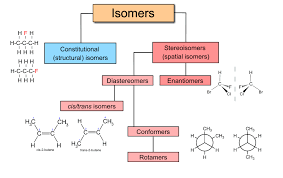

This scheme I just drew up specifically for you should answer your question.
Diastereomers are stereoisomers that are not enantiomers of each other. That includes conformers (geometric isomers that derive from single bond rotation; usually interconverting rapidly) and atropisomers (under which I would subsume E/Z isomers; they derive from hindered rotation around a typically single bond and are separable) and anything with differeces in asymmetric carbons.
If you have exactly one asymmetric carbon with inverted stereochemistry, then the diastereomer is a special one: an epimer. Anomers (e.g. α- and β-D-glucose) should be considered special cases of epimers.
Let me use the menthol isomers (image taken from Wikipedia, where a full list of authors is available) to clarify the concept:
Two vertically aligned structures are always enantiomers. Two structures that are not vertically aligned are diastereomers.
(+)-Isomenthol is (+)-menthol’s C4-epimer, while ($-$)-neoisomenthol is (+)-menthol’s C1-epimer. And ($-$)-neomenthol is (+)-menthol’s C2-epimer. All of these are also diastereomers.
(+)-Neomenthol is not an epimer of (+)-menthol. It is still a diastereomer, however.
This scheme I just drew up specifically for you should answer your question.
Diastereomers are stereoisomers that are not enantiomers of each other. That includes conformers (geometric isomers that derive from single bond rotation; usually interconverting rapidly) and atropisomers (under which I would subsume E/Z isomers; they derive from hindered rotation around a typically single bond and are separable) and anything with differeces in asymmetric carbons.
If you have exactly one asymmetric carbon with inverted stereochemistry, then the diastereomer is a special one: an epimer. Anomers (e.g. α- and β-D-glucose) should be considered special cases of epimers.
Let me use the menthol isomers (image taken from Wikipedia, where a full list of authors is available) to clarify the concept:
Two vertically aligned structures are always enantiomers. Two structures that are not vertically aligned are diastereomers.
(+)-Isomenthol is (+)-menthol’s C4-epimer, while ($-$)-neoisomenthol is (+)-menthol’s C1-epimer. And ($-$)-neomenthol is (+)-menthol’s C2-epimer. All of these are also diastereomers.
(+)-Neomenthol is not an epimer of (+)-menthol. It is still a diastereomer, however.
More
VOTE
VOTE
VOTE
VOTE
VOTE
Yes you are correct that epimers are a subset of diastereomers.
Diastereomers are compounds that have similar configuration at some carbon and dissimilar configuration at some carbons.
Whereas epimers are compounds that differ in configuration at only one chiral carbon.
The point of difference arises in the fact that epimers have only one chiral carbon which is different in configuration whereas diastereomers can have any number of different configuration around its chiral carbons (except all being different).
Yes you are correct that epimers are a subset of diastereomers.
Diastereomers are compounds that have similar configuration at some carbon and dissimilar configuration at some carbons.
Whereas epimers are compounds that differ in configuration at only one chiral carbon.
The point of difference arises in the fact that epimers have only one chiral carbon which is different in configuration whereas diastereomers can have any number of different configuration around its chiral carbons (except all being different).
More
VOTE
VOTE
VOTE
Yes, at only one centre.
No, not completely. Diastereomers differ at least at one, but at less than all stereocentres. If two compounds would differ at all stereocentres, they would be enantiomers.
Update
As far as epimerism in open form carbohydrates is concerned, examining the Fischer projections using a German mnemonic derived from the signal horn sounds of police cars (ta-tü-ta-ta) might help. Yes, sounds weird ;-)
Let ta and tü be $\ce{OH}$ on either side of the projection.
Then, glucose is ta-tü-ta-ta, whereas galactose is ta-tü-tü-ta. Apparently, they differ at one stereocentre. Consequently, they are epimers.
Yes, at only one centre.
No, not completely. Diastereomers differ at least at one, but at less than all stereocentres. If two compounds would differ at all stereocentres, they would be enantiomers.
Update
As far as epimerism in open form carbohydrates is concerned, examining the Fischer projections using a German mnemonic derived from the signal horn sounds of police cars (ta-tü-ta-ta) might help. Yes, sounds weird ;-)
Let ta and tü be $\ce{OH}$ on either side of the projection.
Then, glucose is ta-tü-ta-ta, whereas galactose is ta-tü-tü-ta. Apparently, they differ at one stereocentre. Consequently, they are epimers.
More
VOTE
VOTE