For CM of olefins with styrenes it would be good to use either cis-stilbene or trans-stilbene and the E/Z selectivity is also great. I can point you to one of my own paper "Org. Lett., 2014, 16 (1), pp 122–125" where we have used this chemistry.
For CM of olefins with styrenes it would be good to use either cis-stilbene or trans-stilbene and the E/Z selectivity is also great. I can point you to one of my own paper "Org. Lett., 2014, 16 (1), pp 122–125" where we have used this chemistry.
Z-olefin be isomerized to an E-olefin by carrying out the reaction for longer period of time, so that thermodynamically more stable olefin is obtained.
Z-olefin be isomerized to an E-olefin by carrying out the reaction for longer period of time, so that thermodynamically more stable olefin is obtained.
Hi Carlo - I am aligned with Mostafa Ismail recommendations. Please read Dow patent (US3914167) where they have converted Cis/trans 50/50 ratio to all Cis (98.7wt%)
Hi Carlo - I am aligned with Mostafa Ismail recommendations. Please read Dow patent (US3914167) where they have converted Cis/trans 50/50 ratio to all Cis (98.7wt%)
The best catalyst for isomerization Z-olefin to E-olefin is NO gas (free radical). Isomerization takes place at room temperature to give equilibrium mixture. Fractional distillation on efficient column (at least 20 theoretical plates) or chromatography on silica/AgNO3 separates the E-isomer and the Z-isomer is recycled to the isomerization stage. NO is generated by addition of 20% aq H2SO4 to a mixture of NaNO2 and FeSO4. 7H2O. The gas is passed into the flask containng the Z olefin for 10 minutes and then allowed to stand for 5 hours at room temperature under static atmosphere of the gas. See for example: US5908957 (Rhoche Vitamins)
Ru(acac)3 is also good E/Z isomerization catalyst although elevated temperature should be used:Chem. Let. 7[5] 533 (1978). For more info: https://en.wikipedia.org/wiki/Nitric_oxide
The best catalyst for isomerization Z-olefin to E-olefin is NO gas (free radical). Isomerization takes place at room temperature to give equilibrium mixture. Fractional distillation on efficient column (at least 20 theoretical plates) or chromatography on silica/AgNO3 separates the E-isomer and the Z-isomer is recycled to the isomerization stage. NO is generated by addition of 20% aq H2SO4 to a mixture of NaNO2 and FeSO4. 7H2O. The gas is passed into the flask containng the Z olefin for 10 minutes and then allowed to stand for 5 hours at room temperature under static atmosphere of the gas. See for example: US5908957 (Rhoche Vitamins)
Ru(acac)3 is also good E/Z isomerization catalyst although elevated temperature should be used:Chem. Let. 7[5] 533 (1978). For more info: https://en.wikipedia.org/wiki/Nitric_oxide


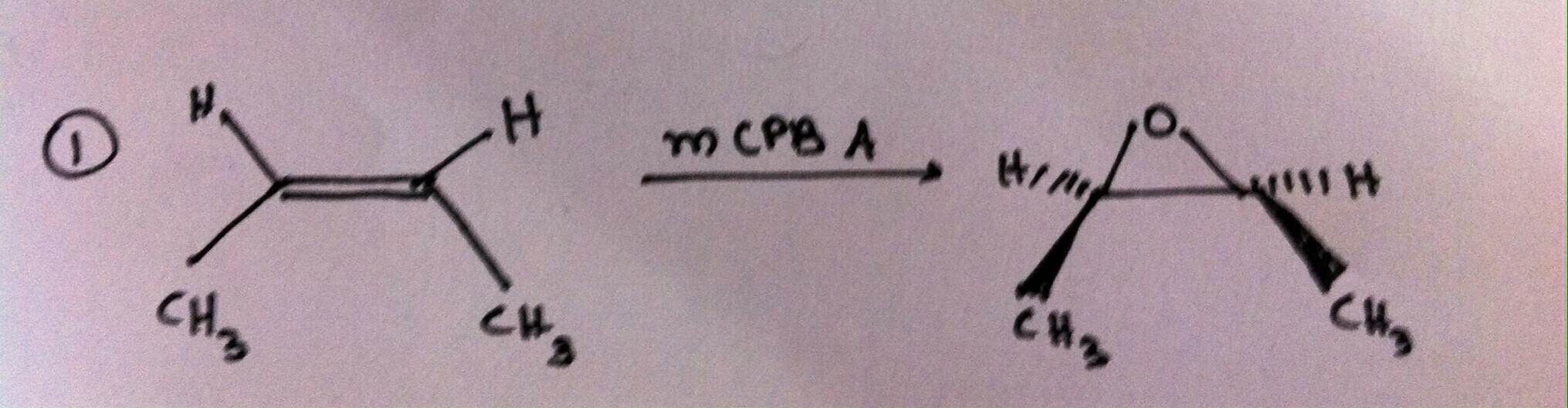
The transition metal (RhCl3•H2O) catalyst will isomerize doubles bonds to the thermomodynamically more favorable trans-olefin .
The transition metal (RhCl3•H2O) catalyst will isomerize doubles bonds to the thermomodynamically more favorable trans-olefin .
More
VOTE
For CM of olefins with styrenes it would be good to use either cis-stilbene or trans-stilbene and the E/Z selectivity is also great. I can point you to one of my own paper "Org. Lett., 2014, 16 (1), pp 122–125" where we have used this chemistry.
For CM of olefins with styrenes it would be good to use either cis-stilbene or trans-stilbene and the E/Z selectivity is also great. I can point you to one of my own paper "Org. Lett., 2014, 16 (1), pp 122–125" where we have used this chemistry.
More
VOTE
I suggest sun beam through brown bottle
The uv will take it, trust me
I suggest sun beam through brown bottle
The uv will take it, trust me
More
VOTE
Z-olefin be isomerized to an E-olefin by carrying out the reaction for longer period of time, so that thermodynamically more stable olefin is obtained.
Z-olefin be isomerized to an E-olefin by carrying out the reaction for longer period of time, so that thermodynamically more stable olefin is obtained.
More
VOTE
1. Heat the compound in toluene having catalytic amount of Iodine.
2. Treat the alkene with per-acids followed by PPh3 treatment.
1. Heat the compound in toluene having catalytic amount of Iodine.
2. Treat the alkene with per-acids followed by PPh3 treatment.
More
VOTE
Hi all, I have the opposite problem... I would like to isomerize an internal olefin from trans to cis... any suggestion? Thank you very much :)
Hi all, I have the opposite problem... I would like to isomerize an internal olefin from trans to cis... any suggestion? Thank you very much :)
More
VOTE
Hi Carlo - I am aligned with Mostafa Ismail recommendations.
Please read Dow patent (US3914167) where they have converted Cis/trans 50/50 ratio to all Cis (98.7wt%)
Hi Carlo - I am aligned with Mostafa Ismail recommendations.
Please read Dow patent (US3914167) where they have converted Cis/trans 50/50 ratio to all Cis (98.7wt%)
More
VOTE
By uv lamp
By uv lamp
More
VOTE
The best catalyst for isomerization Z-olefin to E-olefin is NO gas (free radical). Isomerization takes place at room temperature to give equilibrium mixture. Fractional distillation on efficient column (at least 20 theoretical plates) or chromatography on silica/AgNO3 separates the E-isomer and the Z-isomer is recycled to the isomerization stage. NO is generated by addition of 20% aq H2SO4 to a mixture of NaNO2 and FeSO4. 7H2O. The gas is passed into the flask containng the Z olefin for 10 minutes and then allowed to stand for 5 hours at room temperature under static atmosphere of the gas. See for example: US5908957 (Rhoche Vitamins)
NO genrator: Article Preparation of Nitric Oxide from Sodium Nitrite.
W. A. Noyes J. Am. Chem. Soc. 1925, 47, 8, 2170-2170
2 NaNO2 + 2 FeSO4 + 3 H2SO4 = Fe2(SO4)3 + 2 NaHSO4 + 2 H2O + 2 NO
Ru(acac)3 is also good E/Z isomerization catalyst although elevated temperature should be used:Chem. Let. 7[5] 533 (1978).
For more info: https://en.wikipedia.org/wiki/Nitric_oxide
The best catalyst for isomerization Z-olefin to E-olefin is NO gas (free radical). Isomerization takes place at room temperature to give equilibrium mixture. Fractional distillation on efficient column (at least 20 theoretical plates) or chromatography on silica/AgNO3 separates the E-isomer and the Z-isomer is recycled to the isomerization stage. NO is generated by addition of 20% aq H2SO4 to a mixture of NaNO2 and FeSO4. 7H2O. The gas is passed into the flask containng the Z olefin for 10 minutes and then allowed to stand for 5 hours at room temperature under static atmosphere of the gas. See for example: US5908957 (Rhoche Vitamins)
NO genrator: Article Preparation of Nitric Oxide from Sodium Nitrite.
W. A. Noyes J. Am. Chem. Soc. 1925, 47, 8, 2170-2170
2 NaNO2 + 2 FeSO4 + 3 H2SO4 = Fe2(SO4)3 + 2 NaHSO4 + 2 H2O + 2 NO
Ru(acac)3 is also good E/Z isomerization catalyst although elevated temperature should be used:Chem. Let. 7[5] 533 (1978).
For more info: https://en.wikipedia.org/wiki/Nitric_oxide
More
VOTE
You can isomerize Z olefin into E either Thermally or photochemically.
You can isomerize Z olefin into E either Thermally or photochemically.
More
VOTE