In order to get to the $\mathrm{mol\over L}$ units of molarity, you have to convert by multiplying by the solution density, $\rho$, and dividing by the molecular weight of $\mathrm X$, $M_\mathrm{X}$:
One key thing to remember is that $\rho$ is the density of the solution, not of the pure solvent. If you're working with dilute solutions (below $\sim\!100~\mathrm{mM}$ for aqueous) these two densities will be similar, but in concentrated solutions they will diverge.
In order to get to the $\mathrm{mol\over L}$ units of molarity, you have to convert by multiplying by the solution density, $\rho$, and dividing by the molecular weight of $\mathrm X$, $M_\mathrm{X}$:
One key thing to remember is that $\rho$ is the density of the solution, not of the pure solvent. If you're working with dilute solutions (below $\sim\!100~\mathrm{mM}$ for aqueous) these two densities will be similar, but in concentrated solutions they will diverge.
, $c(\ce{X}) = n(\ce{X})/V(\text{solution})$ for clarity. Then you can also easily see that the density of the solution is $\rho(\text{solution}) = m(\text{solution})/V(\text{solution})$. Your dimensional analysis works fine though. (In your first equation you need to multiply the right hand side with $100\%$, otherwise youre using mass fraction.)More
W/W% is just the same as a any percentage but now the difference is that let say that a concentrated solution contains 67% w/w ammonia that means that there is 67g of ammonia in 100g of the solution;
now let us consider a question
A concentrated solution of aqueous ammonia is $28.0\%\text{w/w }\ce{NH3}$ and has a density of $\pu{0.899 g/mL}$. What is the amount concentration of $\ce{NH3}$ in this solution?
Converting $28.0\%\text{w/w}$ to ratio form gives us $28/100$ then you multiply it with the density $\pu{0.899 g/ml}$ for ammonia and $\pu{17.04 g}$ is an equivalent of one mole.
W/W% is just the same as a any percentage but now the difference is that let say that a concentrated solution contains 67% w/w ammonia that means that there is 67g of ammonia in 100g of the solution; now let us consider a question
A concentrated solution of aqueous ammonia is $28.0\%\text{w/w }\ce{NH3}$ and has a density of $\pu{0.899 g/mL}$. What is the amount concentration of $\ce{NH3}$ in this solution?
Converting $28.0\%\text{w/w}$ to ratio form gives us $28/100$ then you multiply it with the density $\pu{0.899 g/ml}$ for ammonia and $\pu{17.04 g}$ is an equivalent of one mole.



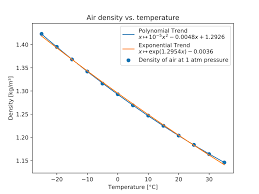
Weight percent is essentially the same as (I arbitrarily picked grams as the mass unit):
$$ \%~\mathrm{w/w~X} = \mathrm{g~X\over g~solution} $$
In order to get to the $\mathrm{mol\over L}$ units of molarity, you have to convert by multiplying by the solution density, $\rho$, and dividing by the molecular weight of $\mathrm X$, $M_\mathrm{X}$:
$$ \mathrm{g~X\over g~solution} \times \stackrel{\left(1\over M_\mathrm X\right)}{\mathrm{mol~X\over g~X}} \times \stackrel{\left(\rho\right)}{\mathrm{g~solution\over L~solution}} = \mathrm{mol~X\over L~solution} $$
One key thing to remember is that $\rho$ is the density of the solution, not of the pure solvent. If you're working with dilute solutions (below $\sim\!100~\mathrm{mM}$ for aqueous) these two densities will be similar, but in concentrated solutions they will diverge.
Weight percent is essentially the same as (I arbitrarily picked grams as the mass unit):
$$\%~\mathrm{w/w~X} = \mathrm{g~X\over g~solution}$$
In order to get to the $\mathrm{mol\over L}$ units of molarity, you have to convert by multiplying by the solution density, $\rho$, and dividing by the molecular weight of $\mathrm X$, $M_\mathrm{X}$:
$$\mathrm{g~X\over g~solution} \times \stackrel{\left(1\over M_\mathrm X\right)}{\mathrm{mol~X\over g~X}} \times \stackrel{\left(\rho\right)}{\mathrm{g~solution\over L~solution}} = \mathrm{mol~X\over L~solution}$$
One key thing to remember is that $\rho$ is the density of the solution, not of the pure solvent. If you're working with dilute solutions (below $\sim\!100~\mathrm{mM}$ for aqueous) these two densities will be similar, but in concentrated solutions they will diverge.
More
VOTE
VOTE
VOTE
VOTE
VOTE
VOTE
Molarity is relevant to our concept of chemistry and kinetics of reactions. However wt/wt% is frequently easier to use on an industrial scale.
Molarity is relevant to our concept of chemistry and kinetics of reactions. However wt/wt% is frequently easier to use on an industrial scale.
More
VOTE
W/W% is just the same as a any percentage but now the difference is that let say that a concentrated solution contains 67% w/w ammonia that means that there is 67g of ammonia in 100g of the solution; now let us consider a question
Converting $28.0\%\text{w/w}$ to ratio form gives us $28/100$ then you multiply it with the density $\pu{0.899 g/ml}$ for ammonia and $\pu{17.04 g}$ is an equivalent of one mole.
$$28/100 \times \frac{\pu{0.899 g}}{\pu{1 ml}} \times \frac{\pu{1 mol}}{\pu{17.04 g}} \times \frac{\pu{1000 ml}}{\pu{1ml}}$$
W/W% is just the same as a any percentage but now the difference is that let say that a concentrated solution contains 67% w/w ammonia that means that there is 67g of ammonia in 100g of the solution; now let us consider a question
Converting $28.0\%\text{w/w}$ to ratio form gives us $28/100$ then you multiply it with the density $\pu{0.899 g/ml}$ for ammonia and $\pu{17.04 g}$ is an equivalent of one mole.
$$28/100 \times \frac{\pu{0.899 g}}{\pu{1 ml}} \times \frac{\pu{1 mol}}{\pu{17.04 g}} \times \frac{\pu{1000 ml}}{\pu{1ml}}$$
More
VOTE