Home >
Community >
In an O-H bond, will polarity increase/decrease if some of the electron density on the oxygen atom is reduced?
Upvote
25
Downvote
+ Polarity
+ Bond
Posted by
P Lt
In an O-H bond, will polarity increase/decrease if some of the electron density on the oxygen atom is reduced?
The electron density on oxygen decreasing will result in tye polarity of the OH bond increasing. This will increase the acidic strength of phenols when comapred to to alcohols, where the OH group is attached to the sp3 carbon.
The electron density on oxygen decreasing will result in tye polarity of the OH bond increasing. This will increase the acidic strength of phenols when comapred to to alcohols, where the OH group is attached to the sp3 carbon.
The polarity on the oxygen atom will decrease. This is because of the sp2 hybridised carbon atom which is highly electronegative. This will result in a decreased polarity in the OH bond and hence it will disassociate more easily in solvents such as water. One example of this effect is the increased acidity of phenol compared to most alcohols. This is because the OH is bonded to sp2 hybridised carbon in phenol and hence will disassociate in water easily when compared to normal alcohols.
The polarity on the oxygen atom will decrease. This is because of the sp2 hybridised carbon atom which is highly electronegative. This will result in a decreased polarity in the OH bond and hence it will disassociate more easily in solvents such as water. One example of this effect is the increased acidity of phenol compared to most alcohols. This is because the OH is bonded to sp2 hybridised carbon in phenol and hence will disassociate in water easily when compared to normal alcohols.
Yes, polarity can be changed. Example, between alcohol and phenol the O-H polarity is more in phenol nd less in alcohol. It is due to the extent of attraction of electron by oxygen from hydrogen which is more in phenol.
Yes, polarity can be changed. Example, between alcohol and phenol the O-H polarity is more in phenol nd less in alcohol. It is due to the extent of attraction of electron by oxygen from hydrogen which is more in phenol.




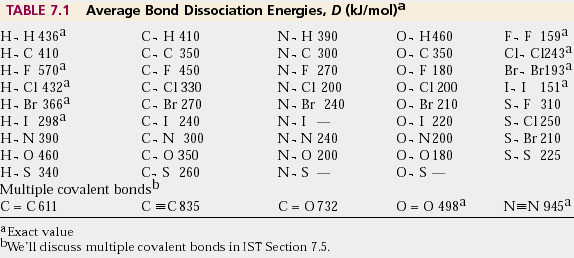


The electron density on oxygen decreasing will result in tye polarity of the OH bond increasing. This will increase the acidic strength of phenols when comapred to to alcohols, where the OH group is attached to the sp3 carbon.
The electron density on oxygen decreasing will result in tye polarity of the OH bond increasing. This will increase the acidic strength of phenols when comapred to to alcohols, where the OH group is attached to the sp3 carbon.
More
VOTE
The polarity on the oxygen atom will decrease. This is because of the sp2 hybridised carbon atom which is highly electronegative. This will result in a decreased polarity in the OH bond and hence it will disassociate more easily in solvents such as water. One example of this effect is the increased acidity of phenol compared to most alcohols. This is because the OH is bonded to sp2 hybridised carbon in phenol and hence will disassociate in water easily when compared to normal alcohols.
The polarity on the oxygen atom will decrease. This is because of the sp2 hybridised carbon atom which is highly electronegative. This will result in a decreased polarity in the OH bond and hence it will disassociate more easily in solvents such as water. One example of this effect is the increased acidity of phenol compared to most alcohols. This is because the OH is bonded to sp2 hybridised carbon in phenol and hence will disassociate in water easily when compared to normal alcohols.
More
VOTE
Yes, polarity can be changed. Example, between alcohol and phenol the O-H polarity is more in phenol nd less in alcohol. It is due to the extent of attraction of electron by oxygen from hydrogen which is more in phenol.
Yes, polarity can be changed. Example, between alcohol and phenol the O-H polarity is more in phenol nd less in alcohol. It is due to the extent of attraction of electron by oxygen from hydrogen which is more in phenol.
More
VOTE