The S holds one orbit which contains 2 electrons
The P holds three orbits which means 2×3=6 electrons
D holds five orbits 2×5=10 electrons
F holds seven orbits 2×7=14 electrons
The S holds one orbit which contains 2 electronsThe P holds three orbits which means 2×3=6 electrons D holds five orbits 2×5=10 electrons F holds seven orbits 2×7=14 electrons
First of all, I must appreciate your eagerness to learn new stuff (though it makes it harder to explain). I will try my best to explain in a way you can understand.
You might have been taught about eletron filling order like: 2 electrons in K shell, 8 electrons in L shell and so on. However, that works only up to a certain level.
Its a fact that each shell itself is composed of subshells (experiments involving spectra have shown this). The number of subshells each shell has depends on the number of the shell (like 1st shell, 2nd shell; a.k.a principal quantum number). These subshells are called as s, p, d, or f. The s-subshell can fit 2 electrons, p-subshell can fit a maximum of 6 electrons, d-subshell can fit a maximum of 10 electrons, and f-subshell can fit a maximum of 14 electrons. The first shell has only an s orbital, so its called as 1s. Since it can have either one or two electrons, its called as $1s^1$ and $1s^2$ respectively. They are also the respective "SPDF" configurations of hydrogen and helium. In this way, you would consider the electronic configuration of oxygen to be $1s^22s^22p^4$.
Another important point to note, is that the filling of electrons in subshells doenst actually fill from low to high. There is a special rule called aufbau principle (german word for 'building up'). Here is a diagrammatic representation of aufbau principle:
This infact, is the actual way of writing an electronic configurations. Schools teach to primary classes the 'configuration-per-shell' method simply because its easier and they usually dont come across geniuses like you. Now, I think you can understand the 'SPDF' configuration much better.
First of all, I must appreciate your eagerness to learn new stuff (though it makes it harder to explain). I will try my best to explain in a way you can understand.
You might have been taught about eletron filling order like: 2 electrons in K shell, 8 electrons in L shell and so on. However, that works only up to a certain level.
Its a fact that each shell itself is composed of subshells (experiments involving spectra have shown this). The number of subshells each shell has depends on the number of the shell (like 1st shell, 2nd shell; a.k.a principal quantum number). These subshells are called as s, p, d, or f. The s-subshell can fit 2 electrons, p-subshell can fit a maximum of 6 electrons, d-subshell can fit a maximum of 10 electrons, and f-subshell can fit a maximum of 14 electrons. The first shell has only an s orbital, so its called as 1s. Since it can have either one or two electrons, its called as $1s^1$ and $1s^2$ respectively. They are also the respective "SPDF" configurations of hydrogen and helium. In this way, you would consider the electronic configuration of oxygen to be $1s^22s^22p^4$.
Another important point to note, is that the filling of electrons in subshells doenst actually fill from low to high. There is a special rule called aufbau principle (german word for 'building up'). Here is a diagrammatic representation of aufbau principle:
This infact, is the actual way of writing an electronic configurations. Schools teach to primary classes the 'configuration-per-shell' method simply because its easier and they usually dont come across geniuses like you. Now, I think you can understand the 'SPDF' configuration much better.
s, p, d, f and so on are the names given to the orbitals that hold the electrons in atoms. These orbitals have different shapes (e.g. electron density distributions in space) and energies (e.g. 1s is lower energy than 2s which is lower energy than 3s; 2s is lower energy than 2p).
a hydrogen atom with one electron would be denoted as $\ce{1s^1}$ - it has one electron in its 1s orbital
a lithium atom with 3 electrons would be $\ce{1s^2~2s^1}$
fluorine has 9 electrons which would be $\ce{1s^2~2s^2~2p^5}$
Again, as we read from left to right the energy of the orbital increases and the superscript shows the number of electrons in the orbital. You can read more here.
s, p, d, f and so on are the names given to the orbitals that hold the electrons in atoms. These orbitals have different shapes (e.g. electron density distributions in space) and energies (e.g. 1s is lower energy than 2s which is lower energy than 3s; 2s is lower energy than 2p).
a hydrogen atom with one electron would be denoted as $\ce{1s^1}$ - it has one electron in its 1s orbital
a lithium atom with 3 electrons would be $\ce{1s^2~2s^1}$
fluorine has 9 electrons which would be $\ce{1s^2~2s^2~2p^5}$
Again, as we read from left to right the energy of the orbital increases and the superscript shows the number of electrons in the orbital. You can read more here.
Ya. It's good to know. Where the finding of an electron is maximum is known as orbital.The first shell contain s orbital in which two electron can be filled .The second shell contain s & p orbital ,the p orbital can have maximum 6 electrons.The third shell contain S , p & d orbital ,d orbital can have maximum 10 electrons .The forth shell contain s , p , d & f orbital, f can have maximum 14 electrons .
The p orbital have dumbbell shape , it contain subshell known as px which lies on x axis , py which lies on y axis and pz which lies on z axis . The d orbital have double dumbbell shape . it contain subshells known as dxy lies between x and y axis , dyz lies between y and z axis, dzx lies between z and x axis , dx2-y2 lies on the x and y axis & finally dz2 which lies on z axis . Here are the images of subshell
Ya. It's good to know. Where the finding of an electron is maximum is known as orbital.The first shell contain s orbital in which two electron can be filled .The second shell contain s & p orbital ,the p orbital can have maximum 6 electrons.The third shell contain S , p & d orbital ,d orbital can have maximum 10 electrons .The forth shell contain s , p , d & f orbital, f can have maximum 14 electrons . The p orbital have dumbbell shape , it contain subshell known as px which lies on x axis , py which lies on y axis and pz which lies on z axis . The d orbital have double dumbbell shape . it contain subshells known as dxy lies between x and y axis , dyz lies between y and z axis, dzx lies between z and x axis , dx2-y2 lies on the x and y axis & finally dz2 which lies on z axis . Here are the images of subshell
, each of which can hold two electrons, allowing the p subshell to hold up to 6. No orbital itself holds more than two electrons (at least not the standard hydrogen atomic orbitals, or any molecular orbital Ive encountered.)More
Upvote
VOTE
Downvote
By SPDF configuration, he meant orbital configuration. Now the basic of this concept is from very fundamental quantum chemistry formulation but I don't think you need to know that now (It is usually taught in 4th year of UG or 1st year of graduate study in Engineering discipline but i am not sure about pure science discipline). Whatever I would like to think about it from a different perspective. Are you familiar with quantum numbers? There are 4 different quantum numbers:
Principal quantum number (This is like the city you live in). There are lots of electrons in an atoms. Now if we want to distinguish between those electrons than we need to name them or there should be something to distinguish. Imagine you are living in a circular states and the cities are named as the radius it has. Like sector 1 is the city which has a mean radius of 1 unit and so on. By principal quantum number, we actually mean that the probability of finding that electron is high within that particular radius. It is named as n=1,2,3...
Azimuthal quantum number: This is like the building you live in. Now if you are living in a city that is very small and has only one building, then you don't need to specify each building of that city differently. Like for n=1, l=0 (Here l=azimuthal quantum number/building number) but if n=3, then l=0 to (n-1), that means in Sector 3 city there are 3 building named 0,1 & 2.
Magnetic quantum number: This is like apt number on that building. m=0 to (+/-)l. So, if you are living in building no. 3, you can either live in apt -3,-2,-1,0,1,2 or 3.
Spin quantum number: Each apt has two rooms (room A and room B) (This is actually unrestricted Hartree-Fock case) but if you are living with spouse than you can have a large room by breaking the wall between those two rooms (Only room A or restricted Hartree-Fock case)
Now, The building name can be rephrased as spdf orbital. If you are living in building no. 0 that means you are living in s orbital. Similarly
building no.1= p orbital
building no.2= d orbital
building no.3= f orbital
So, in your building no.0 (s orbital),
total number of room = 1apt * 2rooms/apt = 2rooms or 2 electrons
In building no.1 (p orbital),
total number of electron/room = 3apt * 2rooms/apt = 6 rooms or 6 electrons
Now if you want to know more you can read:
Hund's rule
Pauli's exclusion principle
Aufbau principle
But they all are superficial theory, they can say what is going on but they can't say why. But quantum chemistry method will give you mathematical understanding of why there is 2 rooms/apt or why building 2 has 5 apt etc.
By SPDF configuration, he meant orbital configuration. Now the basic of this concept is from very fundamental quantum chemistry formulation but I don't think you need to know that now (It is usually taught in 4th year of UG or 1st year of graduate study in Engineering discipline but i am not sure about pure science discipline). Whatever I would like to think about it from a different perspective. Are you familiar with quantum numbers? There are 4 different quantum numbers:
Principal quantum number (This is like the city you live in). There are lots of electrons in an atoms. Now if we want to distinguish between those electrons than we need to name them or there should be something to distinguish. Imagine you are living in a circular states and the cities are named as the radius it has. Like sector 1 is the city which has a mean radius of 1 unit and so on. By principal quantum number, we actually mean that the probability of finding that electron is high within that particular radius. It is named as n=1,2,3...
Azimuthal quantum number: This is like the building you live in. Now if you are living in a city that is very small and has only one building, then you don't need to specify each building of that city differently. Like for n=1, l=0 (Here l=azimuthal quantum number/building number) but if n=3, then l=0 to (n-1), that means in Sector 3 city there are 3 building named 0,1 & 2.
Magnetic quantum number: This is like apt number on that building. m=0 to (+/-)l. So, if you are living in building no. 3, you can either live in apt -3,-2,-1,0,1,2 or 3.
Spin quantum number: Each apt has two rooms (room A and room B) (This is actually unrestricted Hartree-Fock case) but if you are living with spouse than you can have a large room by breaking the wall between those two rooms (Only room A or restricted Hartree-Fock case)
Now, The building name can be rephrased as spdf orbital. If you are living in building no. 0 that means you are living in s orbital. Similarly building no.1= p orbital building no.2= d orbital building no.3= f orbital So, in your building no.0 (s orbital), total number of room = 1apt * 2rooms/apt = 2rooms or 2 electrons In building no.1 (p orbital), total number of electron/room = 3apt * 2rooms/apt = 6 rooms or 6 electrons
Now if you want to know more you can read:
Hund's rule
Pauli's exclusion principle
Aufbau principle
But they all are superficial theory, they can say what is going on but they can't say why. But quantum chemistry method will give you mathematical understanding of why there is 2 rooms/apt or why building 2 has 5 apt etc.



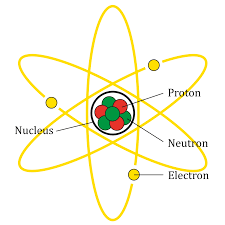
They refer to the secondary quantum numbers (L) :
The S holds one orbit which contains 2 electrons The P holds three orbits which means 2×3=6 electrons D holds five orbits 2×5=10 electrons F holds seven orbits 2×7=14 electrons
They refer to the secondary quantum numbers (L) :
The S holds one orbit which contains 2 electronsThe P holds three orbits which means 2×3=6 electrons D holds five orbits 2×5=10 electrons F holds seven orbits 2×7=14 electrons
More
VOTE
First of all, I must appreciate your eagerness to learn new stuff (though it makes it harder to explain). I will try my best to explain in a way you can understand.
You might have been taught about eletron filling order like: 2 electrons in K shell, 8 electrons in L shell and so on. However, that works only up to a certain level.
Its a fact that each shell itself is composed of subshells (experiments involving spectra have shown this). The number of subshells each shell has depends on the number of the shell (like 1st shell, 2nd shell; a.k.a principal quantum number). These subshells are called as s, p, d, or f. The s-subshell can fit 2 electrons, p-subshell can fit a maximum of 6 electrons, d-subshell can fit a maximum of 10 electrons, and f-subshell can fit a maximum of 14 electrons. The first shell has only an s orbital, so its called as 1s. Since it can have either one or two electrons, its called as $1s^1$ and $1s^2$ respectively. They are also the respective "SPDF" configurations of hydrogen and helium. In this way, you would consider the electronic configuration of oxygen to be $1s^22s^22p^4$.
Another important point to note, is that the filling of electrons in subshells doenst actually fill from low to high. There is a special rule called aufbau principle (german word for 'building up'). Here is a diagrammatic representation of aufbau principle:
This infact, is the actual way of writing an electronic configurations. Schools teach to primary classes the 'configuration-per-shell' method simply because its easier and they usually dont come across geniuses like you. Now, I think you can understand the 'SPDF' configuration much better.
First of all, I must appreciate your eagerness to learn new stuff (though it makes it harder to explain). I will try my best to explain in a way you can understand.
You might have been taught about eletron filling order like: 2 electrons in K shell, 8 electrons in L shell and so on. However, that works only up to a certain level.
Its a fact that each shell itself is composed of subshells (experiments involving spectra have shown this). The number of subshells each shell has depends on the number of the shell (like 1st shell, 2nd shell; a.k.a principal quantum number). These subshells are called as s, p, d, or f. The s-subshell can fit 2 electrons, p-subshell can fit a maximum of 6 electrons, d-subshell can fit a maximum of 10 electrons, and f-subshell can fit a maximum of 14 electrons. The first shell has only an s orbital, so its called as 1s. Since it can have either one or two electrons, its called as $1s^1$ and $1s^2$ respectively. They are also the respective "SPDF" configurations of hydrogen and helium. In this way, you would consider the electronic configuration of oxygen to be $1s^22s^22p^4$.
Another important point to note, is that the filling of electrons in subshells doenst actually fill from low to high. There is a special rule called aufbau principle (german word for 'building up'). Here is a diagrammatic representation of aufbau principle:
This infact, is the actual way of writing an electronic configurations. Schools teach to primary classes the 'configuration-per-shell' method simply because its easier and they usually dont come across geniuses like you. Now, I think you can understand the 'SPDF' configuration much better.
More
VOTE
s, p, d, f and so on are the names given to the orbitals that hold the electrons in atoms. These orbitals have different shapes (e.g. electron density distributions in space) and energies (e.g. 1s is lower energy than 2s which is lower energy than 3s; 2s is lower energy than 2p).
(image source)
So for example,
Again, as we read from left to right the energy of the orbital increases and the superscript shows the number of electrons in the orbital. You can read more here.
s, p, d, f and so on are the names given to the orbitals that hold the electrons in atoms. These orbitals have different shapes (e.g. electron density distributions in space) and energies (e.g. 1s is lower energy than 2s which is lower energy than 3s; 2s is lower energy than 2p).
(image source)
So for example,
Again, as we read from left to right the energy of the orbital increases and the superscript shows the number of electrons in the orbital. You can read more here.
More
VOTE
Ya. It's good to know.
Where the finding of an electron is maximum is known as orbital.The first shell contain s orbital in which two electron can be filled .The second shell contain s & p orbital ,the p orbital can have maximum 6 electrons.The third shell contain S , p & d orbital ,d orbital can have maximum 10 electrons .The forth shell contain s , p , d & f orbital, f can have maximum 14 electrons .
The p orbital have dumbbell shape , it contain subshell known as px which lies on x axis , py which lies on y axis and pz which lies on z axis . The d orbital have double dumbbell shape . it contain subshells known as dxy lies between x and y axis , dyz lies between y and z axis, dzx lies between z and x axis , dx2-y2 lies on the x and y axis & finally dz2 which lies on z axis .
Here are the images of subshell
Ya. It's good to know.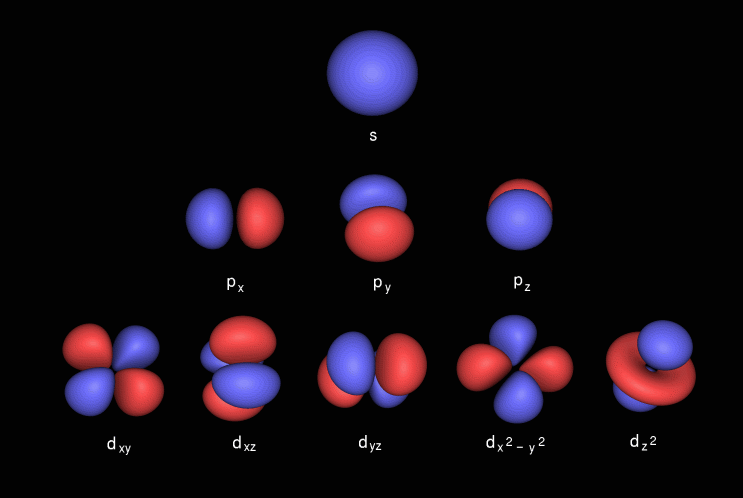
Where the finding of an electron is maximum is known as orbital.The first shell contain s orbital in which two electron can be filled .The second shell contain s & p orbital ,the p orbital can have maximum 6 electrons.The third shell contain S , p & d orbital ,d orbital can have maximum 10 electrons .The forth shell contain s , p , d & f orbital, f can have maximum 14 electrons .
The p orbital have dumbbell shape , it contain subshell known as px which lies on x axis , py which lies on y axis and pz which lies on z axis . The d orbital have double dumbbell shape . it contain subshells known as dxy lies between x and y axis , dyz lies between y and z axis, dzx lies between z and x axis , dx2-y2 lies on the x and y axis & finally dz2 which lies on z axis .
Here are the images of subshell
More
VOTE
VOTE
VOTE
VOTE
VOTE
VOTE
By SPDF configuration, he meant orbital configuration. Now the basic of this concept is from very fundamental quantum chemistry formulation but I don't think you need to know that now (It is usually taught in 4th year of UG or 1st year of graduate study in Engineering discipline but i am not sure about pure science discipline). Whatever I would like to think about it from a different perspective. Are you familiar with quantum numbers? There are 4 different quantum numbers:
Principal quantum number (This is like the city you live in). There are lots of electrons in an atoms. Now if we want to distinguish between those electrons than we need to name them or there should be something to distinguish. Imagine you are living in a circular states and the cities are named as the radius it has. Like sector 1 is the city which has a mean radius of 1 unit and so on. By principal quantum number, we actually mean that the probability of finding that electron is high within that particular radius. It is named as n=1,2,3...
Azimuthal quantum number: This is like the building you live in. Now if you are living in a city that is very small and has only one building, then you don't need to specify each building of that city differently. Like for n=1, l=0 (Here l=azimuthal quantum number/building number) but if n=3, then l=0 to (n-1), that means in Sector 3 city there are 3 building named 0,1 & 2.
Magnetic quantum number: This is like apt number on that building. m=0 to (+/-)l. So, if you are living in building no. 3, you can either live in apt -3,-2,-1,0,1,2 or 3.
Spin quantum number: Each apt has two rooms (room A and room B) (This is actually unrestricted Hartree-Fock case) but if you are living with spouse than you can have a large room by breaking the wall between those two rooms (Only room A or restricted Hartree-Fock case)
Now, The building name can be rephrased as spdf orbital. If you are living in building no. 0 that means you are living in s orbital. Similarly
building no.1= p orbital
building no.2= d orbital
building no.3= f orbital
So, in your building no.0 (s orbital),
total number of room = 1apt * 2rooms/apt = 2rooms or 2 electrons
In building no.1 (p orbital),
total number of electron/room = 3apt * 2rooms/apt = 6 rooms or 6 electrons
Now if you want to know more you can read:
But they all are superficial theory, they can say what is going on but they can't say why. But quantum chemistry method will give you mathematical understanding of why there is 2 rooms/apt or why building 2 has 5 apt etc.
By SPDF configuration, he meant orbital configuration. Now the basic of this concept is from very fundamental quantum chemistry formulation but I don't think you need to know that now (It is usually taught in 4th year of UG or 1st year of graduate study in Engineering discipline but i am not sure about pure science discipline). Whatever I would like to think about it from a different perspective. Are you familiar with quantum numbers? There are 4 different quantum numbers:
Principal quantum number (This is like the city you live in). There are lots of electrons in an atoms. Now if we want to distinguish between those electrons than we need to name them or there should be something to distinguish. Imagine you are living in a circular states and the cities are named as the radius it has. Like sector 1 is the city which has a mean radius of 1 unit and so on. By principal quantum number, we actually mean that the probability of finding that electron is high within that particular radius. It is named as n=1,2,3...
Azimuthal quantum number: This is like the building you live in. Now if you are living in a city that is very small and has only one building, then you don't need to specify each building of that city differently. Like for n=1, l=0 (Here l=azimuthal quantum number/building number) but if n=3, then l=0 to (n-1), that means in Sector 3 city there are 3 building named 0,1 & 2.
Magnetic quantum number: This is like apt number on that building. m=0 to (+/-)l. So, if you are living in building no. 3, you can either live in apt -3,-2,-1,0,1,2 or 3.
Spin quantum number: Each apt has two rooms (room A and room B) (This is actually unrestricted Hartree-Fock case) but if you are living with spouse than you can have a large room by breaking the wall between those two rooms (Only room A or restricted Hartree-Fock case)
Now, The building name can be rephrased as spdf orbital. If you are living in building no. 0 that means you are living in s orbital. Similarly
building no.1= p orbital
building no.2= d orbital
building no.3= f orbital
So, in your building no.0 (s orbital),
total number of room = 1apt * 2rooms/apt = 2rooms or 2 electrons
In building no.1 (p orbital),
total number of electron/room = 3apt * 2rooms/apt = 6 rooms or 6 electrons
Now if you want to know more you can read:
But they all are superficial theory, they can say what is going on but they can't say why. But quantum chemistry method will give you mathematical understanding of why there is 2 rooms/apt or why building 2 has 5 apt etc.
More
VOTE