Home >
Community >
What is the difference Salinity, High salt concentration and Total...
Upvote
21
Downvote
+ Water analysis
+ Salinity
+ Wastewater
Posted by
Michael Hughes
What is the difference Salinity, High salt concentration and Total...
When measuring water quality, you may be asked for a conductivity reading, a TDS reading, a Salinity reading, or all three. All three measurements are related. Conductivity is a measurement of how well an aqueous solution can carry an electrical current. It is commonly used to determine the levels of impurities in the water, typically the more impurities in the water, the higher the conductivity value will be. Absolutely pure water has a conductivity value around 0.055µS/cm, tap water typically has a value around 50-100µS/cm and sea water normally has a value around 53mS/cm. To take a conductivity measurement, two plates are placed into the sample, a potential is applied across the plates, and the current is measured. For most salts, there is a linear relationship between ion concentration and the conductivity value, although in some cases, such as sulphuric acid, it stops being linear when at very high concentrations. TDS, short for Total Dissolved Solids, is an estimate of the mass of dissolved solids within the solution and is typically expressed as mg/L or parts per million (ppm). It is derived from the conductivity reading using a conversion factor. For accurate TDS readings, the correct TDS factor must be used. For example, a sodium chloride solution has a TDS factor of around 0.49, whereas a sodium bicarbonate solution has a TDS factor of 0.91. If you are unsure of the TDS factor for your water sample, you can send it to a lab for analysis and they can analyse it for you. Salinity is similar to TDS in that is an estimate of the level of salt in a water sample and it is derived from the conductivity reading using a conversion factor (usually 0.5). It is typically expressed as parts per thousand (ppt) or g/L. Salinity readings are typically used by industries such as agriculture, hydroponics, and pool and spa monitoring.
When measuring water quality, you may be asked for a conductivity reading, a TDS reading, a Salinity reading, or all three. All three measurements are related. Conductivity is a measurement of how well an aqueous solution can carry an electrical current. It is commonly used to determine the levels of impurities in the water, typically the more impurities in the water, the higher the conductivity value will be. Absolutely pure water has a conductivity value around 0.055µS/cm, tap water typically has a value around 50-100µS/cm and sea water normally has a value around 53mS/cm. To take a conductivity measurement, two plates are placed into the sample, a potential is applied across the plates, and the current is measured. For most salts, there is a linear relationship between ion concentration and the conductivity value, although in some cases, such as sulphuric acid, it stops being linear when at very high concentrations. TDS, short for Total Dissolved Solids, is an estimate of the mass of dissolved solids within the solution and is typically expressed as mg/L or parts per million (ppm). It is derived from the conductivity reading using a conversion factor. For accurate TDS readings, the correct TDS factor must be used. For example, a sodium chloride solution has a TDS factor of around 0.49, whereas a sodium bicarbonate solution has a TDS factor of 0.91. If you are unsure of the TDS factor for your water sample, you can send it to a lab for analysis and they can analyse it for you. Salinity is similar to TDS in that is an estimate of the level of salt in a water sample and it is derived from the conductivity reading using a conversion factor (usually 0.5). It is typically expressed as parts per thousand (ppt) or g/L. Salinity readings are typically used by industries such as agriculture, hydroponics, and pool and spa monitoring.
as TDS is all the nonvolatile substances (not only salts!!!) which reside after evaporation of a filtered wastewater sample, it can largely differ from salinity in those industrial wastewaters, which contain low concentrations of salts, but high concentrations of nonvolatile organics. So, the existence of a relationship for a given industrial wastewater has to be proved by TDS measurements vs. measurements of conductivity.
as TDS is all the nonvolatile substances (not only salts!!!) which reside after evaporation of a filtered wastewater sample, it can largely differ from salinity in those industrial wastewaters, which contain low concentrations of salts, but high concentrations of nonvolatile organics. So, the existence of a relationship for a given industrial wastewater has to be proved by TDS measurements vs. measurements of conductivity.
Salinity is the concentration of salts in the wastewater...which can be low or high. On the other hand, Total Dissolved solids commonly denoted as TDS is the amount or quantity of dissolved solids in the wastewater.....which includes but not limited to the salts. The TDS is proportionally related to the salinity and also conductivity.
Salinity is the concentration of salts in the wastewater...which can be low or high. On the other hand, Total Dissolved solids commonly denoted as TDS is the amount or quantity of dissolved solids in the wastewater.....which includes but not limited to the salts. The TDS is proportionally related to the salinity and also conductivity.
I completely agree with Mr. Holger, so in water studies TDS is a good indicator of water quality, in soil studied must be knowing total salinity in ppt
I completely agree with Mr. Holger, so in water studies TDS is a good indicator of water quality, in soil studied must be knowing total salinity in ppt
All salts are total dissolved solids but all total dissolved solids are not salts. The salinity is measure of amount of salts dissolved in water. High salt concentration more or less indicates salinity, however it is represented as solid content means mg/g or mg/kg of soil.
All salts are total dissolved solids but all total dissolved solids are not salts. The salinity is measure of amount of salts dissolved in water. High salt concentration more or less indicates salinity, however it is represented as solid content means mg/g or mg/kg of soil.
TDS stands for total dissolved solids and represents the total concentration of dissolved substances in water. TDS is made up of inorganic salts, as well as a small amount of organic matter. Common inorganic salts that can be found in water include calcium, magnesium, potassium, and sodium, which are all cations, and carbonates, nitrates, bicarbonates, chlorides, and sulfates, which are all anions. a very low concentration of TDS has been found to give water a flat taste, which is undesirable to many people. Increased concentrations of dissolved solids can also have technical effects. Dissolved solids can produce hard water, which leaves deposits and films on fixtures, and on the insides of hot water pipes and boilers. Soaps and detergents do not produce as much lather with hard water as with soft water. As well, high amounts of dissolved solids can stain household fixtures, corrode pipes, and have a metallic taste. Hard water causes water filters to wear out sooner, because of a number of minerals in the water.
TDS stands for total dissolved solids and represents the total concentration of dissolved substances in water. TDS is made up of inorganic salts, as well as a small amount of organic matter. Common inorganic salts that can be found in water include calcium, magnesium, potassium, and sodium, which are all cations, and carbonates, nitrates, bicarbonates, chlorides, and sulfates, which are all anions. a very low concentration of TDS has been found to give water a flat taste, which is undesirable to many people. Increased concentrations of dissolved solids can also have technical effects. Dissolved solids can produce hard water, which leaves deposits and films on fixtures, and on the insides of hot water pipes and boilers. Soaps and detergents do not produce as much lather with hard water as with soft water. As well, high amounts of dissolved solids can stain household fixtures, corrode pipes, and have a metallic taste. Hard water causes water filters to wear out sooner, because of a number of minerals in the water.
Great input, very clear and understandable @ Ammar Kamel. So in measuring the TDS for xml of wastewater, all the available salts can be measured as TDS, and other dissolved solids. High concentration of salts have an indirect contribution to eutrophication,, see attachment. Making it an important area of focus in wastewater treatment. Thanks for you input; Vikas Ramteke and Ammar Kamel
Great input, very clear and understandable @ Ammar Kamel. So in measuring the TDS for xml of wastewater, all the available salts can be measured as TDS, and other dissolved solids. High concentration of salts have an indirect contribution to eutrophication,, see attachment. Making it an important area of focus in wastewater treatment. Thanks for you input; Vikas Ramteke and Ammar Kamel
as TDS is all the nonvolatile substances (not only salts!!!) which reside after evaporation of a filtered wastewater sample, it can largely differ from salinity in those industrial wastewaters, which contain low concentrations of salts, but high concentrations of nonvolatile organics. So, the existence of a relationship for a given industrial wastewater has to be proved by TDS measurements vs. measurements of conductivity.
as TDS is all the nonvolatile substances (not only salts!!!) which reside after evaporation of a filtered wastewater sample, it can largely differ from salinity in those industrial wastewaters, which contain low concentrations of salts, but high concentrations of nonvolatile organics. So, the existence of a relationship for a given industrial wastewater has to be proved by TDS measurements vs. measurements of conductivity.
Thank you, Saber Mohammadi, this is very detailed and understandable. So we can conclude that TDS may contain salts and conductive ions which helps it to carry electric current in an aqueous solution.
Thank you, Saber Mohammadi, this is very detailed and understandable. So we can conclude that TDS may contain salts and conductive ions which helps it to carry electric current in an aqueous solution.
In salt water related industry, Salinity is defined as the weight of the total dissolved non-organic solids when carbonates and bicarbonates are converted to oxides and all the bromides and iodines have been replaced by an equivalent amount of chloride. TDS total dissolved solids on the other hand is the weight of dissolved non-organic solids without any conversion, or oxidation. This is why, TDS can be slightly higher than Salinity. I know this thread is old and my answer is probably too late, but I hope someone else finds it helpful.
In salt water related industry, Salinity is defined as the weight of the total dissolved non-organic solids when carbonates and bicarbonates are converted to oxides and all the bromides and iodines have been replaced by an equivalent amount of chloride. TDS total dissolved solids on the other hand is the weight of dissolved non-organic solids without any conversion, or oxidation. This is why, TDS can be slightly higher than Salinity. I know this thread is old and my answer is probably too late, but I hope someone else finds it helpful.


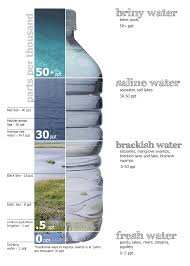
When measuring water quality, you may be asked for a conductivity reading, a TDS reading, a Salinity reading, or all three. All three measurements are related.
Conductivity is a measurement of how well an aqueous solution can carry an electrical current. It is commonly used to determine the levels of impurities in the water, typically the more impurities in the water, the higher the conductivity value will be. Absolutely pure water has a conductivity value around 0.055µS/cm, tap water typically has a value around 50-100µS/cm and sea water normally has a value around 53mS/cm. To take a conductivity measurement, two plates are placed into the sample, a potential is applied across the plates, and the current is measured. For most salts, there is a linear relationship between ion concentration and the conductivity value, although in some cases, such as sulphuric acid, it stops being linear when at very high concentrations.
TDS, short for Total Dissolved Solids, is an estimate of the mass of dissolved solids within the solution and is typically expressed as mg/L or parts per million (ppm). It is derived from the conductivity reading using a conversion factor. For accurate TDS readings, the correct TDS factor must be used. For example, a sodium chloride
solution has a TDS factor of around 0.49, whereas a sodium bicarbonate solution has a TDS factor of 0.91. If you are unsure of the TDS factor for your water sample, you can send it to a lab for analysis and they can analyse it for you.
Salinity is similar to TDS in that is an estimate of the level of salt in a water sample and it is derived from the conductivity reading using a conversion factor (usually 0.5). It is typically expressed as parts per thousand (ppt) or g/L. Salinity readings are typically used by industries such as agriculture, hydroponics, and pool and spa monitoring.
When measuring water quality, you may be asked for a conductivity reading, a TDS reading, a Salinity reading, or all three. All three measurements are related.
Conductivity is a measurement of how well an aqueous solution can carry an electrical current. It is commonly used to determine the levels of impurities in the water, typically the more impurities in the water, the higher the conductivity value will be. Absolutely pure water has a conductivity value around 0.055µS/cm, tap water typically has a value around 50-100µS/cm and sea water normally has a value around 53mS/cm. To take a conductivity measurement, two plates are placed into the sample, a potential is applied across the plates, and the current is measured. For most salts, there is a linear relationship between ion concentration and the conductivity value, although in some cases, such as sulphuric acid, it stops being linear when at very high concentrations.
TDS, short for Total Dissolved Solids, is an estimate of the mass of dissolved solids within the solution and is typically expressed as mg/L or parts per million (ppm). It is derived from the conductivity reading using a conversion factor. For accurate TDS readings, the correct TDS factor must be used. For example, a sodium chloride
solution has a TDS factor of around 0.49, whereas a sodium bicarbonate solution has a TDS factor of 0.91. If you are unsure of the TDS factor for your water sample, you can send it to a lab for analysis and they can analyse it for you.
Salinity is similar to TDS in that is an estimate of the level of salt in a water sample and it is derived from the conductivity reading using a conversion factor (usually 0.5). It is typically expressed as parts per thousand (ppt) or g/L. Salinity readings are typically used by industries such as agriculture, hydroponics, and pool and spa monitoring.
More
VOTE
Kindly check on this paper
https://www.mdpi.com/1660-4601/17/6/1953/pdf
Kindly check on this paper
https://www.mdpi.com/1660-4601/17/6/1953/pdf
More
VOTE
Dear David,
as TDS is all the nonvolatile substances (not only salts!!!) which reside after evaporation of a filtered wastewater sample, it can largely differ from salinity in those industrial wastewaters, which contain low concentrations of salts, but high concentrations of nonvolatile organics. So, the existence of a relationship for a given industrial wastewater has to be proved by TDS measurements vs. measurements of conductivity.
Best regards,
Holger
Dear David,
as TDS is all the nonvolatile substances (not only salts!!!) which reside after evaporation of a filtered wastewater sample, it can largely differ from salinity in those industrial wastewaters, which contain low concentrations of salts, but high concentrations of nonvolatile organics. So, the existence of a relationship for a given industrial wastewater has to be proved by TDS measurements vs. measurements of conductivity.
Best regards,
Holger
More
VOTE
Salinity is the concentration of salts in the wastewater...which can be low or high. On the other hand, Total Dissolved solids commonly denoted as TDS is the amount or quantity of dissolved solids in the wastewater.....which includes but not limited to the salts. The TDS is proportionally related to the salinity and also conductivity.
Salinity is the concentration of salts in the wastewater...which can be low or high. On the other hand, Total Dissolved solids commonly denoted as TDS is the amount or quantity of dissolved solids in the wastewater.....which includes but not limited to the salts. The TDS is proportionally related to the salinity and also conductivity.
More
VOTE
I completely agree with Mr. Holger, so in water studies TDS is a good indicator of water quality, in soil studied must be knowing total salinity in ppt
I completely agree with Mr. Holger, so in water studies TDS is a good indicator of water quality, in soil studied must be knowing total salinity in ppt
More
VOTE
All salts are total dissolved solids but all total dissolved solids are not salts.
The salinity is measure of amount of salts dissolved in water.
High salt concentration more or less indicates salinity, however it is represented as solid content means mg/g or mg/kg of soil.
All salts are total dissolved solids but all total dissolved solids are not salts.
The salinity is measure of amount of salts dissolved in water.
High salt concentration more or less indicates salinity, however it is represented as solid content means mg/g or mg/kg of soil.
More
VOTE
TDS stands for total dissolved solids and represents the total concentration of dissolved substances in water. TDS is made up of inorganic salts, as well as a small amount of organic matter. Common inorganic salts that can be found in water include calcium, magnesium, potassium, and sodium, which are all cations, and carbonates, nitrates, bicarbonates, chlorides, and sulfates, which are all anions. a very low concentration of TDS has been found to give water a flat taste, which is undesirable to many people. Increased concentrations of dissolved solids can also have technical effects. Dissolved solids can produce hard water, which leaves deposits and films on fixtures, and on the insides of hot water pipes and boilers. Soaps and detergents do not produce as much lather with hard water as with soft water. As well, high amounts of dissolved solids can stain household fixtures, corrode pipes, and have a metallic taste. Hard water causes water filters to wear out sooner, because of a number of minerals in the water.
TDS stands for total dissolved solids and represents the total concentration of dissolved substances in water. TDS is made up of inorganic salts, as well as a small amount of organic matter. Common inorganic salts that can be found in water include calcium, magnesium, potassium, and sodium, which are all cations, and carbonates, nitrates, bicarbonates, chlorides, and sulfates, which are all anions. a very low concentration of TDS has been found to give water a flat taste, which is undesirable to many people. Increased concentrations of dissolved solids can also have technical effects. Dissolved solids can produce hard water, which leaves deposits and films on fixtures, and on the insides of hot water pipes and boilers. Soaps and detergents do not produce as much lather with hard water as with soft water. As well, high amounts of dissolved solids can stain household fixtures, corrode pipes, and have a metallic taste. Hard water causes water filters to wear out sooner, because of a number of minerals in the water.
More
VOTE
Thank you Holger Gulyas .
Thank you Holger Gulyas .
More
VOTE
Great input, very clear and understandable @ Ammar Kamel.
So in measuring the TDS for xml of wastewater, all the available salts can be measured as TDS, and other dissolved solids.
High concentration of salts have an indirect contribution to eutrophication,, see attachment. Making it an important area of focus in wastewater treatment.
Thanks for you input; Vikas Ramteke and Ammar Kamel
Great input, very clear and understandable @ Ammar Kamel.
So in measuring the TDS for xml of wastewater, all the available salts can be measured as TDS, and other dissolved solids.
High concentration of salts have an indirect contribution to eutrophication,, see attachment. Making it an important area of focus in wastewater treatment.
Thanks for you input; Vikas Ramteke and Ammar Kamel
More
VOTE
Dear David,
as TDS is all the nonvolatile substances (not only salts!!!) which reside after evaporation of a filtered wastewater sample, it can largely differ from salinity in those industrial wastewaters, which contain low concentrations of salts, but high concentrations of nonvolatile organics. So, the existence of a relationship for a given industrial wastewater has to be proved by TDS measurements vs. measurements of conductivity.
Best regards,
Holger
Dear David,
as TDS is all the nonvolatile substances (not only salts!!!) which reside after evaporation of a filtered wastewater sample, it can largely differ from salinity in those industrial wastewaters, which contain low concentrations of salts, but high concentrations of nonvolatile organics. So, the existence of a relationship for a given industrial wastewater has to be proved by TDS measurements vs. measurements of conductivity.
Best regards,
Holger
More
VOTE
Thank you, Saber Mohammadi, this is very detailed and understandable.
So we can conclude that TDS may contain salts and conductive ions which helps it to carry electric current in an aqueous solution.
Thank you, Saber Mohammadi, this is very detailed and understandable.
So we can conclude that TDS may contain salts and conductive ions which helps it to carry electric current in an aqueous solution.
More
VOTE
In salt water related industry, Salinity is defined as the weight of the total dissolved non-organic solids when carbonates and bicarbonates are converted to oxides and all the bromides and iodines have been replaced by an equivalent amount of chloride. TDS total dissolved solids on the other hand is the weight of dissolved non-organic solids without any conversion, or oxidation. This is why, TDS can be slightly higher than Salinity.
I know this thread is old and my answer is probably too late, but I hope someone else finds it helpful.
In salt water related industry, Salinity is defined as the weight of the total dissolved non-organic solids when carbonates and bicarbonates are converted to oxides and all the bromides and iodines have been replaced by an equivalent amount of chloride. TDS total dissolved solids on the other hand is the weight of dissolved non-organic solids without any conversion, or oxidation. This is why, TDS can be slightly higher than Salinity.
I know this thread is old and my answer is probably too late, but I hope someone else finds it helpful.
More
VOTE