Home >
Community >
What is the meaning when it is said Temperature of an Oxyacetylene Torch is 3500 degrees Celsius?
Upvote
21
Downvote
+ Heat
+ Temperature
+ Thermodynamics
+ Combustion
Posted by
Mohammadreza Sanayi
What is the meaning when it is said Temperature of an Oxyacetylene Torch is 3500 degrees Celsius?
Oxyacetylene is a mixture of acetylene (ethyne) and oxygen (not air). The mentioned temperature of about $T=3500\ \mathrm{^\circ C}$ is the adiabatic flame temperature for the combustion reaction of acetylene and oxygen.
An adiabatic process is one that occurs without transfer of heat. The adiabatic flame temperature is a theoretical temperature, which would be achieved in a combustion system in which there are no heat losses (e.g. no radiation losses from the flame). Note that this cannot be achieved in a real flame; therefore, adiabatic flame temperatures are calculated values.
The heat $Q$ released from the combustion reaction of acetylene and oxygen is the heat of combustion. If all of the energy released by this chemical reaction is used to increase the temperature $T$ of the products ($\ce{CO2}$ and $\ce{H2O}$) with no heat losses, the resulting adiabatic flame temperature can be calculated from the heat capacity $C$ of the products.
Hence, the adiabatic flame temperature represents the maximum possible theoretical temperature for a particular fuel/oxidant combustion.
Oxyacetylene is a mixture of acetylene (ethyne) and oxygen (not air). The mentioned temperature of about $T=3500\ \mathrm{^\circ C}$ is the adiabatic flame temperature for the combustion reaction of acetylene and oxygen.
An adiabatic process is one that occurs without transfer of heat. The adiabatic flame temperature is a theoretical temperature, which would be achieved in a combustion system in which there are no heat losses (e.g. no radiation losses from the flame). Note that this cannot be achieved in a real flame; therefore, adiabatic flame temperatures are calculated values.
The heat $Q$ released from the combustion reaction of acetylene and oxygen is the heat of combustion. If all of the energy released by this chemical reaction is used to increase the temperature $T$ of the products ($\ce{CO2}$ and $\ce{H2O}$) with no heat losses, the resulting adiabatic flame temperature can be calculated from the heat capacity $C$ of the products.
Hence, the adiabatic flame temperature represents the maximum possible theoretical temperature for a particular fuel/oxidant combustion.




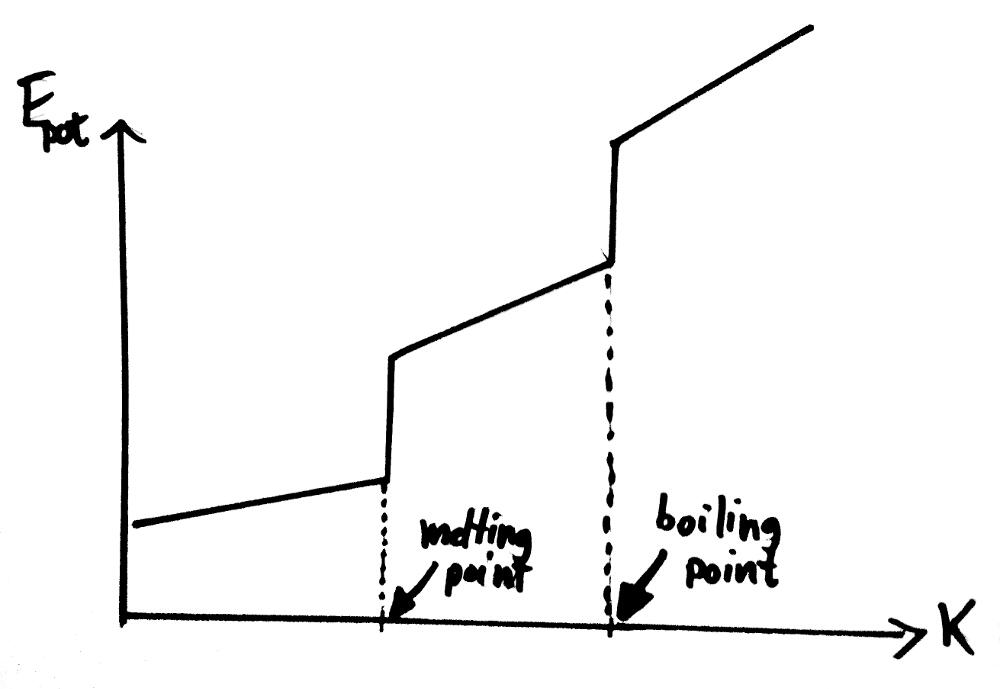
Oxyacetylene is a mixture of acetylene (ethyne) and oxygen (not air). The mentioned temperature of about $T=3500\ \mathrm{^\circ C}$ is the adiabatic flame temperature for the combustion reaction of acetylene and oxygen.
An adiabatic process is one that occurs without transfer of heat. The adiabatic flame temperature is a theoretical temperature, which would be achieved in a combustion system in which there are no heat losses (e.g. no radiation losses from the flame). Note that this cannot be achieved in a real flame; therefore, adiabatic flame temperatures are calculated values.
The heat $Q$ released from the combustion reaction of acetylene and oxygen is the heat of combustion. If all of the energy released by this chemical reaction is used to increase the temperature $T$ of the products ($\ce{CO2}$ and $\ce{H2O}$) with no heat losses, the resulting adiabatic flame temperature can be calculated from the heat capacity $C$ of the products.
Hence, the adiabatic flame temperature represents the maximum possible theoretical temperature for a particular fuel/oxidant combustion.
Oxyacetylene is a mixture of acetylene (ethyne) and oxygen (not air). The mentioned temperature of about $T=3500\ \mathrm{^\circ C}$ is the adiabatic flame temperature for the combustion reaction of acetylene and oxygen.
An adiabatic process is one that occurs without transfer of heat. The adiabatic flame temperature is a theoretical temperature, which would be achieved in a combustion system in which there are no heat losses (e.g. no radiation losses from the flame). Note that this cannot be achieved in a real flame; therefore, adiabatic flame temperatures are calculated values.
The heat $Q$ released from the combustion reaction of acetylene and oxygen is the heat of combustion. If all of the energy released by this chemical reaction is used to increase the temperature $T$ of the products ($\ce{CO2}$ and $\ce{H2O}$) with no heat losses, the resulting adiabatic flame temperature can be calculated from the heat capacity $C$ of the products.
Hence, the adiabatic flame temperature represents the maximum possible theoretical temperature for a particular fuel/oxidant combustion.
More
VOTE