so wouldn't it be that you
would have an even more positive carbon and 2 partially negative
oxygens
Yes, your analysis is correct to this point. A chemist would say that the bonds in $\ce{CO2}$ are polar (or polarized) and therefor each $\ce{C=O}$ bond has a bond dipole moment. However the molecule itself is linear and the two bond dipole moments are oriented 180 degrees with respect to one another and cancel each other out, so overall the molecule does not have a dipole moment and is non-polar.
EDIT: There are a couple of reasons why $\ce{CO2}$ is more soluble in water than $\ce{O2}$. Because the two $\ce{C=O}$ bonds in $\ce{CO2}$ are polarized (whereas in $\ce{O2}$ the bond is not polarized) it makes it easier for the polar water molecule to solvate it and to form hydrogen bonds. Both of these factors will stabilize a $\ce{CO2}$ molecule more than an $\ce{O2}$ molecule in water; stabilization translates into greater solubility. Another factor enhancing the solubility of $\ce{CO2}$ in water is the fact that $\ce{CO2}$ reacts with water to set up an equilibrium with carbonic acid.
$$\ce{CO2(aq) + H2O <=> H2CO3(aq)}$$
This reaction will also enhance $\ce{CO2}$'s solubility in water compared to oxygen which does not react with water.
so wouldn't it be that you would have an even more positive carbon and 2 partially negative oxygens
Yes, your analysis is correct to this point. A chemist would say that the bonds in $\ce{CO2}$ are polar (or polarized) and therefor each $\ce{C=O}$ bond has a bond dipole moment. However the molecule itself is linear and the two bond dipole moments are oriented 180 degrees with respect to one another and cancel each other out, so overall the molecule does not have a dipole moment and is non-polar.
EDIT: There are a couple of reasons why $\ce{CO2}$ is more soluble in water than $\ce{O2}$. Because the two $\ce{C=O}$ bonds in $\ce{CO2}$ are polarized (whereas in $\ce{O2}$ the bond is not polarized) it makes it easier for the polar water molecule to solvate it and to form hydrogen bonds. Both of these factors will stabilize a $\ce{CO2}$ molecule more than an $\ce{O2}$ molecule in water; stabilization translates into greater solubility. Another factor enhancing the solubility of $\ce{CO2}$ in water is the fact that $\ce{CO2}$ reacts with water to set up an equilibrium with carbonic acid.$$\ce{CO2(aq) + H2O <=> H2CO3(aq)}$$This reaction will also enhance $\ce{CO2}$'s solubility in water compared to oxygen which does not react with water.
@Martin The dipole moment or polarity of a molecule never mattered that much to me. I was usually interested in the reactivity of a molecule, which usually translates into the reactivity of a bond. So the polarity of a bond is what I would consider. If the hybridization in the bond wasnt symmetrical, then the bond was polarized; the asymmetry of the hybridization told me how polarized.More
I accept this answer as valid and correct. However, I really have problems with this definition of polarity solely based on on the dipole moment. I would consider toluene to be an unpolar solvent, yet the molecule itself has a dipole of 0.36D, it is small, but it is there. Does that mean toluol is a polar molecule? On the other hand $\ce{CO2}$ has no net dipole moment, but its reactivity towards nucleophiles/ electrophiles is similar to polar molecules. Therefore Id rather consider it polar. This is in no way a critique on your answer, Id just value your opinion on the matter.More
@caters You should probably ask about that in another question.More
Upvote
VOTE
Downvote
It's like they are at tug-of-war with each other, and they both have the same strength; it's not going anywhere. Since the oxygen is more electronegative than carbon, it has a partial negative charge and the carbon has a partial positive charge (twice of the oxygen since there are 2 oxygen).
It's like they are at tug-of-war with each other, and they both have the same strength; it's not going anywhere. Since the oxygen is more electronegative than carbon, it has a partial negative charge and the carbon has a partial positive charge (twice of the oxygen since there are 2 oxygen).
A molecule with a centre of inversion (centre of symmetry) has no dipole since exchanging one atom with its opposite leaves the molecule unchanged. Thus CO$_2$ and, for example, benzene have no dipole, but toluene does even if small.
As CO$_2$ vibrates, depending upon the motion of the atoms a transient dipole can be formed. This transient dipole is the cause of ir absorption in CO$_2$ and hence its importance as a greenhouse gas.
A symmetrical vibration causes no transient dipole, O$\leftarrow$ C $\rightarrow $O, an asymmetrical vibration O$\leftarrow$ C$\rightarrow$ $\leftarrow $O does produce a transient dipole. (In the asymmetrical vibration one C=O bond shortens as the other lengthens). There are also two degenerate bending motions about the C atom causing transient dipoles; $\uparrow$O = $\downarrow$C=O$\uparrow$
A molecule with a centre of inversion (centre of symmetry) has no dipole since exchanging one atom with its opposite leaves the molecule unchanged. Thus CO$_2$ and, for example, benzene have no dipole, but toluene does even if small.
As CO$_2$ vibrates, depending upon the motion of the atoms a transient dipole can be formed. This transient dipole is the cause of ir absorption in CO$_2$ and hence its importance as a greenhouse gas.
A symmetrical vibration causes no transient dipole, O$\leftarrow$ C $\rightarrow $O, an asymmetrical vibration O$\leftarrow$ C$\rightarrow$ $\leftarrow $O does produce a transient dipole. (In the asymmetrical vibration one C=O bond shortens as the other lengthens). There are also two degenerate bending motions about the C atom causing transient dipoles; $\uparrow$O = $\downarrow$C=O$\uparrow$
The lone pairs on both oxygen atoms cancel each others effect, as simple as that. And the structure is symmetrical from all aspects, which again leads to zero dipole moment. Plus there is no net negative charge or lone pair of Carbon as well, therefore the compound cannot be polar. REMEMBER polarity is a vector.
The lone pairs on both oxygen atoms cancel each others effect, as simple as that. And the structure is symmetrical from all aspects, which again leads to zero dipole moment. Plus there is no net negative charge or lone pair of Carbon as well, therefore the compound cannot be polar. REMEMBER polarity is a vector.
where $q_i$ is the charge of the $i$th point particle and $\vec{r_i}$ is the position vector for said particle; each individual dipole moment points from a negative charge to a positive charge. Carbon dioxide is a linear and symmetrical molecule, meaning that in the ground state the bonds between each respective oxygen atom and the carbon atom have the same lengths, and each oxygen atom bears an identical (partial) negative charge. All of this ultimately means that the two individual dipole moments between the carbon and oxygens one and two, respectively, perfectly oppose each other geometrically and have the same magnitude, i.e., $q\vec{r_1} = -q\vec{r_2}$, hence the vector sum $q\vec{r_1} + q\vec{r_2} = \mathbf{0}$.
where $q_i$ is the charge of the $i$th point particle and $\vec{r_i}$ is the position vector for said particle; each individual dipole moment points from a negative charge to a positive charge. Carbon dioxide is a linear and symmetrical molecule, meaning that in the ground state the bonds between each respective oxygen atom and the carbon atom have the same lengths, and each oxygen atom bears an identical (partial) negative charge. All of this ultimately means that the two individual dipole moments between the carbon and oxygens one and two, respectively, perfectly oppose each other geometrically and have the same magnitude, i.e., $q\vec{r_1} = -q\vec{r_2}$, hence the vector sum $q\vec{r_1} + q\vec{r_2} = \mathbf{0}$.
In understanding molecular polarity you need to take the whole structure into account.
Your reasoning is correct as far as the parts of the molecule are concerned. The individual bonds are polar.
But, a molecule can only be polar if it has a net dipole moment (that is, the charges don't balance out in direction across the whole molecule). So CO is polar as the polarity of the carbon-oxygen bond is unbalanced and the distribution of partial charge on the bond affects the whole molecule (giving the whole molecule a dipole moment). But CO2 is a linear molecule and the partial dipoles of the two bonds are in exactly opposite directions. Hence they exactly balance out giving a molecule which is non-polar.
If CO2 were not linear (like SO2 which is bent) it would be a polar molecule.
In understanding molecular polarity you need to take the whole structure into account.
Your reasoning is correct as far as the parts of the molecule are concerned. The individual bonds are polar.
But, a molecule can only be polar if it has a net dipole moment (that is, the charges don't balance out in direction across the whole molecule). So CO is polar as the polarity of the carbon-oxygen bond is unbalanced and the distribution of partial charge on the bond affects the whole molecule (giving the whole molecule a dipole moment). But CO2 is a linear molecule and the partial dipoles of the two bonds are in exactly opposite directions. Hence they exactly balance out giving a molecule which is non-polar.
If CO2 were not linear (like SO2 which is bent) it would be a polar molecule.
particular molecules have certain shapes is a much bigger question. If you want to know whether a molecule is polar then you have to know the structure (which you can look up and worry about More
@MrLister well in water molecules the angle between the 2 Hs is only 105° as opposed to 180° for the 2 Os in carbon-dioxide thus the negative O in water is not balanced out. A lot of the properties of water come from this inbalance - including that its normally liquid and has a way higher melting point than carbon-dioxide despite being the lighter molecule (by all other means it should be gaseous) - because the dipole character allows forming of bridge groupings of water molecules .. which doesnt occur for carbon-dioxideMore
This may be the source of the OPs confusion, yes. Otherwise what would the difference between O=C=O and, say, H-O-H be? Maybe you could explain why O=C=O is linear and H-O-H is "bent".More



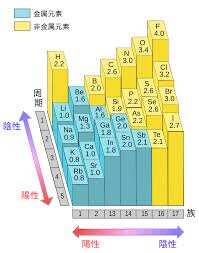


Yes, your analysis is correct to this point. A chemist would say that the bonds in $\ce{CO2}$ are polar (or polarized) and therefor each $\ce{C=O}$ bond has a bond dipole moment. However the molecule itself is linear and the two bond dipole moments are oriented 180 degrees with respect to one another and cancel each other out, so overall the molecule does not have a dipole moment and is non-polar.
EDIT: There are a couple of reasons why $\ce{CO2}$ is more soluble in water than $\ce{O2}$. Because the two $\ce{C=O}$ bonds in $\ce{CO2}$ are polarized (whereas in $\ce{O2}$ the bond is not polarized) it makes it easier for the polar water molecule to solvate it and to form hydrogen bonds. Both of these factors will stabilize a $\ce{CO2}$ molecule more than an $\ce{O2}$ molecule in water; stabilization translates into greater solubility. Another factor enhancing the solubility of $\ce{CO2}$ in water is the fact that $\ce{CO2}$ reacts with water to set up an equilibrium with carbonic acid. $$\ce{CO2(aq) + H2O <=> H2CO3(aq)}$$ This reaction will also enhance $\ce{CO2}$'s solubility in water compared to oxygen which does not react with water.
Yes, your analysis is correct to this point. A chemist would say that the bonds in $\ce{CO2}$ are polar (or polarized) and therefor each $\ce{C=O}$ bond has a bond dipole moment. However the molecule itself is linear and the two bond dipole moments are oriented 180 degrees with respect to one another and cancel each other out, so overall the molecule does not have a dipole moment and is non-polar.
EDIT: There are a couple of reasons why $\ce{CO2}$ is more soluble in water than $\ce{O2}$. Because the two $\ce{C=O}$ bonds in $\ce{CO2}$ are polarized (whereas in $\ce{O2}$ the bond is not polarized) it makes it easier for the polar water molecule to solvate it and to form hydrogen bonds. Both of these factors will stabilize a $\ce{CO2}$ molecule more than an $\ce{O2}$ molecule in water; stabilization translates into greater solubility. Another factor enhancing the solubility of $\ce{CO2}$ in water is the fact that $\ce{CO2}$ reacts with water to set up an equilibrium with carbonic acid.$$\ce{CO2(aq) + H2O <=> H2CO3(aq)}$$This reaction will also enhance $\ce{CO2}$'s solubility in water compared to oxygen which does not react with water.
More
VOTE
VOTE
VOTE
VOTE
VOTE
It's like they are at tug-of-war with each other, and they both have the same strength; it's not going anywhere. Since the oxygen is more electronegative than carbon, it has a partial negative charge and the carbon has a partial positive charge (twice of the oxygen since there are 2 oxygen).
It's like they are at tug-of-war with each other, and they both have the same strength; it's not going anywhere. Since the oxygen is more electronegative than carbon, it has a partial negative charge and the carbon has a partial positive charge (twice of the oxygen since there are 2 oxygen).
More
VOTE
A molecule with a centre of inversion (centre of symmetry) has no dipole since exchanging one atom with its opposite leaves the molecule unchanged. Thus CO$_2$ and, for example, benzene have no dipole, but toluene does even if small.
As CO$_2$ vibrates, depending upon the motion of the atoms a transient dipole can be formed. This transient dipole is the cause of ir absorption in CO$_2$ and hence its importance as a greenhouse gas.
A symmetrical vibration causes no transient dipole, O$\leftarrow$ C $\rightarrow $O,
an asymmetrical vibration O$\leftarrow$ C$\rightarrow$ $\leftarrow $O does produce a transient dipole. (In the asymmetrical vibration one C=O bond shortens as the other lengthens). There are also two degenerate bending motions about the C atom causing transient dipoles; $\uparrow$O = $\downarrow$C=O$\uparrow$
A molecule with a centre of inversion (centre of symmetry) has no dipole since exchanging one atom with its opposite leaves the molecule unchanged. Thus CO$_2$ and, for example, benzene have no dipole, but toluene does even if small.
As CO$_2$ vibrates, depending upon the motion of the atoms a transient dipole can be formed. This transient dipole is the cause of ir absorption in CO$_2$ and hence its importance as a greenhouse gas.
A symmetrical vibration causes no transient dipole, O$\leftarrow$ C $\rightarrow $O,
an asymmetrical vibration O$\leftarrow$ C$\rightarrow$ $\leftarrow $O does produce a transient dipole. (In the asymmetrical vibration one C=O bond shortens as the other lengthens). There are also two degenerate bending motions about the C atom causing transient dipoles; $\uparrow$O = $\downarrow$C=O$\uparrow$
More
VOTE
The lone pairs on both oxygen atoms cancel each others effect, as simple as that. And the structure is symmetrical from all aspects, which again leads to zero dipole moment. Plus there is no net negative charge or lone pair of Carbon as well, therefore the compound cannot be polar. REMEMBER polarity is a vector.
The lone pairs on both oxygen atoms cancel each others effect, as simple as that. And the structure is symmetrical from all aspects, which again leads to zero dipole moment. Plus there is no net negative charge or lone pair of Carbon as well, therefore the compound cannot be polar. REMEMBER polarity is a vector.
More
VOTE
The formula for the net dipole moment $\vec{\mu_{net}}$ of an overall neutral system of $n$ charged point particles is given by:
$$ \vec{\mu_{net}} = \sum\limits_{i}^{n} q_i\vec{r_i} $$
where $q_i$ is the charge of the $i$th point particle and $\vec{r_i}$ is the position vector for said particle; each individual dipole moment points from a negative charge to a positive charge. Carbon dioxide is a linear and symmetrical molecule, meaning that in the ground state the bonds between each respective oxygen atom and the carbon atom have the same lengths, and each oxygen atom bears an identical (partial) negative charge. All of this ultimately means that the two individual dipole moments between the carbon and oxygens one and two, respectively, perfectly oppose each other geometrically and have the same magnitude, i.e., $q\vec{r_1} = -q\vec{r_2}$, hence the vector sum $q\vec{r_1} + q\vec{r_2} = \mathbf{0}$.
The formula for the net dipole moment $\vec{\mu_{net}}$ of an overall neutral system of $n$ charged point particles is given by:
$$\vec{\mu_{net}} = \sum\limits_{i}^{n} q_i\vec{r_i}$$
where $q_i$ is the charge of the $i$th point particle and $\vec{r_i}$ is the position vector for said particle; each individual dipole moment points from a negative charge to a positive charge. Carbon dioxide is a linear and symmetrical molecule, meaning that in the ground state the bonds between each respective oxygen atom and the carbon atom have the same lengths, and each oxygen atom bears an identical (partial) negative charge. All of this ultimately means that the two individual dipole moments between the carbon and oxygens one and two, respectively, perfectly oppose each other geometrically and have the same magnitude, i.e., $q\vec{r_1} = -q\vec{r_2}$, hence the vector sum $q\vec{r_1} + q\vec{r_2} = \mathbf{0}$.
More
VOTE
In understanding molecular polarity you need to take the whole structure into account.
Your reasoning is correct as far as the parts of the molecule are concerned. The individual bonds are polar.
But, a molecule can only be polar if it has a net dipole moment (that is, the charges don't balance out in direction across the whole molecule). So CO is polar as the polarity of the carbon-oxygen bond is unbalanced and the distribution of partial charge on the bond affects the whole molecule (giving the whole molecule a dipole moment). But CO2 is a linear molecule and the partial dipoles of the two bonds are in exactly opposite directions. Hence they exactly balance out giving a molecule which is non-polar.
If CO2 were not linear (like SO2 which is bent) it would be a polar molecule.
In understanding molecular polarity you need to take the whole structure into account.
Your reasoning is correct as far as the parts of the molecule are concerned. The individual bonds are polar.
But, a molecule can only be polar if it has a net dipole moment (that is, the charges don't balance out in direction across the whole molecule). So CO is polar as the polarity of the carbon-oxygen bond is unbalanced and the distribution of partial charge on the bond affects the whole molecule (giving the whole molecule a dipole moment). But CO2 is a linear molecule and the partial dipoles of the two bonds are in exactly opposite directions. Hence they exactly balance out giving a molecule which is non-polar.
If CO2 were not linear (like SO2 which is bent) it would be a polar molecule.
More
VOTE
VOTE
VOTE
VOTE
VOTE
VOTE