Home >
Community >
Why is OH group activating towards electrophilic aromatic substitution?
Upvote
26
Downvote
+ Electronegativity
Posted by
Orest Reminsky
Why is OH group activating towards electrophilic aromatic substitution?
The oxygen in the $\ce{-OH}$ group in phenol has unpaired electrons that are capable of being donated to the ring. Although oxygen is electronegative and does exhibit some I- effects, the electron sharing that oxygen is capable of (shown by when drawing the resonance structures) has a stronger effect and results in $\ce{-OH}$ being a good ring activator. I've included the resonance structures below.
The oxygen in the $\ce{-OH}$ group in phenol has unpaired electrons that are capable of being donated to the ring. Although oxygen is electronegative and does exhibit some I- effects, the electron sharing that oxygen is capable of (shown by when drawing the resonance structures) has a stronger effect and results in $\ce{-OH}$ being a good ring activator. I've included the resonance structures below.
Halogens are deactivating groups because they are much so electronegative (even more than oxygen). Because of this, electrophilic addition reactions with halobenzenes will be considerably slower than with phenols. They are, however, ortho/para directions like oxygen because, like oxygen, they have unbonded pairs of electrons that get donated to the ring, forming similar resonance structures.More
You could even improve this answer with orbitals; the hydroxy group introduces a seventh p-orbital into the pi system and two more electrons; the latter make for the stronger activation.More
Halogens are weekly deactivating, there are two competing mechanisms: inductive (deactivating), resonance (activating), overall = weakly deactivatingMore



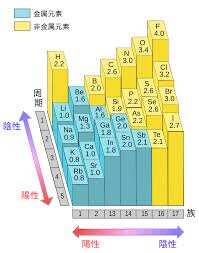


The oxygen in the $\ce{-OH}$ group in phenol has unpaired electrons that are capable of being donated to the ring. Although oxygen is electronegative and does exhibit some I- effects, the electron sharing that oxygen is capable of (shown by when drawing the resonance structures) has a stronger effect and results in $\ce{-OH}$ being a good ring activator. I've included the resonance structures below.
The oxygen in the $\ce{-OH}$ group in phenol has unpaired electrons that are capable of being donated to the ring. Although oxygen is electronegative and does exhibit some I- effects, the electron sharing that oxygen is capable of (shown by when drawing the resonance structures) has a stronger effect and results in $\ce{-OH}$ being a good ring activator. I've included the resonance structures below.
More
VOTE
VOTE
VOTE
VOTE
VOTE