Home >
Community >
Can any one explain how to determine diastereomeric ratio from NMR...
Upvote
20
Downvote
+ Stereochemistry
+ Nuclear magnetic resonance
+ Nmr spectroscopy
Posted by
Laurence Cuffe
Can any one explain how to determine diastereomeric ratio from NMR...
Select a pair of suitable signals (one from each diastereomer) and do a careful integration. This gives good results only when the nuclei are fully relaxed. It is therefore best to use 1H NMR signals. 13C usually relaxes more slowly and suffers from incorrect signal intensities due to nuclear Overhauser effects as a consequence of proton decoupling.
Select a pair of suitable signals (one from each diastereomer) and do a careful integration. This gives good results only when the nuclei are fully relaxed. It is therefore best to use 1H NMR signals. 13C usually relaxes more slowly and suffers from incorrect signal intensities due to nuclear Overhauser effects as a consequence of proton decoupling.
Select a pair of suitable signals (one from each diastereomer) and do a careful integration. This gives good results only when the nuclei are fully relaxed. It is therefore best to use 1H NMR signals. 13C usually relaxes more slowly and suffers from incorrect signal intensities due to nuclear Overhauser effects as a consequence of proton decoupling.
Select a pair of suitable signals (one from each diastereomer) and do a careful integration. This gives good results only when the nuclei are fully relaxed. It is therefore best to use 1H NMR signals. 13C usually relaxes more slowly and suffers from incorrect signal intensities due to nuclear Overhauser effects as a consequence of proton decoupling.
As Prof. Ernst stated, you first need to make sure to choose a correct pair of equivalent but not stereochemically equal 1H NMR signals (due to fast relaxation times), preferably of methylene or methyl groups and also preferably of low coupling patterns. Each one of them belonging to one of the two subjected diastereoisomers and thus integrate them to obtain the desired diastereomeric ratio proportion. Make sure with COSY and HETCOR (HSQC) 2D NMR experiments that they are unique signals to avoid missintegration. Best regards and experiments. Hiram
As Prof. Ernst stated, you first need to make sure to choose a correct pair of equivalent but not stereochemically equal 1H NMR signals (due to fast relaxation times), preferably of methylene or methyl groups and also preferably of low coupling patterns. Each one of them belonging to one of the two subjected diastereoisomers and thus integrate them to obtain the desired diastereomeric ratio proportion. Make sure with COSY and HETCOR (HSQC) 2D NMR experiments that they are unique signals to avoid missintegration. Best regards and experiments. Hiram


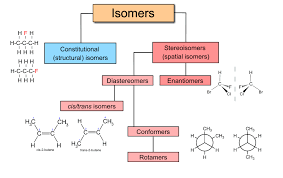

Select a pair of suitable signals (one from each diastereomer) and do a careful integration. This gives good results only when the nuclei are fully relaxed. It is therefore best to use 1H NMR signals. 13C usually relaxes more slowly and suffers from incorrect signal intensities due to nuclear Overhauser effects as a consequence of proton decoupling.
Select a pair of suitable signals (one from each diastereomer) and do a careful integration. This gives good results only when the nuclei are fully relaxed. It is therefore best to use 1H NMR signals. 13C usually relaxes more slowly and suffers from incorrect signal intensities due to nuclear Overhauser effects as a consequence of proton decoupling.
More
VOTE
Please check the link below ( in Chem. Commun., 2014,50, 2512-2514) and I hope to be useful for you
http://pubs.rsc.org/en/Content/ArticleLanding/2014/CC/c3cc49659g#!divAbstract
Please check the link below ( in Chem. Commun., 2014,50, 2512-2514) and I hope to be useful for you
http://pubs.rsc.org/en/Content/ArticleLanding/2014/CC/c3cc49659g#!divAbstract
More
VOTE
http://en.wikipedia.org/wiki/NMR_spectroscopy_of_stereoisomers
http://en.wikipedia.org/wiki/NMR_spectroscopy_of_stereoisomers
More
VOTE
Further to what has been stated earlier, please make sure you do baseline correction of your spectrum.
Further to what has been stated earlier, please make sure you do baseline correction of your spectrum.
More
VOTE
Select a pair of suitable signals (one from each diastereomer) and do a careful integration. This gives good results only when the nuclei are fully relaxed. It is therefore best to use 1H NMR signals. 13C usually relaxes more slowly and suffers from incorrect signal intensities due to nuclear Overhauser effects as a consequence of proton decoupling.
Select a pair of suitable signals (one from each diastereomer) and do a careful integration. This gives good results only when the nuclei are fully relaxed. It is therefore best to use 1H NMR signals. 13C usually relaxes more slowly and suffers from incorrect signal intensities due to nuclear Overhauser effects as a consequence of proton decoupling.
More
VOTE
As Prof. Ernst stated, you first need to make sure to choose a correct pair of equivalent but not stereochemically equal 1H NMR signals (due to fast relaxation times), preferably of methylene or methyl groups and also preferably of low coupling patterns. Each one of them belonging to one of the two subjected diastereoisomers and thus integrate them to obtain the desired diastereomeric ratio proportion. Make sure with COSY and HETCOR (HSQC) 2D NMR experiments that they are unique signals to avoid missintegration. Best regards and experiments. Hiram
As Prof. Ernst stated, you first need to make sure to choose a correct pair of equivalent but not stereochemically equal 1H NMR signals (due to fast relaxation times), preferably of methylene or methyl groups and also preferably of low coupling patterns. Each one of them belonging to one of the two subjected diastereoisomers and thus integrate them to obtain the desired diastereomeric ratio proportion. Make sure with COSY and HETCOR (HSQC) 2D NMR experiments that they are unique signals to avoid missintegration. Best regards and experiments. Hiram
More
VOTE