Home >
Community >
Does hyperconjugation and induction always have the same effect?
Upvote
27
Downvote
+ Orbitals
+ Bond
+ Hyperconjugation
+ Biochemistry
Posted by
Murray H.G. Paterson
Does hyperconjugation and induction always have the same effect?
The effect is similar to the positive mesomeric, it appears by substituting the hydrogen in the alkyl group of multiple bond. This effect is directed toward multiple bond:
Hyperconjugation reminds positive mesomeric effect, because it gives sigma-electrons in the conjugated pi-system:
Inductive effect and hyperconjugation usually occur simultaneously. Inductive effect will undoubtedly outweigh, when the molecule is easily polarized. In addition, the spatial effect may mask the hyperconjugation effect.
In benzene homologues hyperconjugation enhances the inductive effect.
The effect is similar to the positive mesomeric, it appears by substituting the hydrogen in the alkyl group of multiple bond. This effect is directed toward multiple bond:
Hyperconjugation reminds positive mesomeric effect, because it gives sigma-electrons in the conjugated pi-system:
Inductive effect and hyperconjugation usually occur simultaneously. Inductive effect will undoubtedly outweigh, when the molecule is easily polarized. In addition, the spatial effect may mask the hyperconjugation effect.In benzene homologues hyperconjugation enhances the inductive effect.
Im afraid Dissenter knows well how hyperconiugation works and asks about unusual cases.More
Upvote
VOTE
Downvote
The inductive effect occurs through overlapping sigma bonds, whereas the hyperconjugative effect occurs through overlap of a sigma bond with a p orbital.
There are many different types of hyperconjugation and hyperconjugation has been used to explain many different chemical phenomenon. A nice overview can be found here.
Are there any cases in which the hyperconjugative effect and the
inductive effect have opposite effects?
Since inductive effects are transmitted through the sigma system, they effect should be independent of rotation around the bond(s) involved. On the other hand, the pi type of overlap used in hyperconjugation is very dependent upon rotation about the bond(s) involved. In the diagram above, rotation about the $\ce{C-C}$ bond by 90° shouldn't affect any inductive effect of the methyl group upon the carbocation center, but such rotation would completely destroy the overlap required for hyperconjugation to occur.
As you might expect, hydrogen/deuterium isotope effects can be used to assess hyperconjugation $\ce{C-H}$
[Note: isotope effects are a subject unto themselves; a nice overview can be found here. See p. 12 for their application to hyperconjugation.]
Here is a "thought experiment" where inductive effects and hyperconjugation should have different effects (I don't know if this or a similar experiment has been done). Take the following two carbocations.
One would expect them to both have similar inductive effects upon the carbocation center. The tris-ethyl carbocation, free to rotate about its various $\ce{C-C}$ bonds could also exist in conformations where the $\ce{C-H}$ bonds alpha to the carbocation center are correctly positioned for hyperconjugation to occur - it should show a secondary $\ce{K_{H}/K_{D} >1}$ since hydrogen is more electron donating than deuterium (see here for the reasoning behind this statement). However, the $\ce{C-H}$ bonds alpha to the carbocation center in the rigid bicycloctyl carbocation cannot adopt a conformation that would allow effective hyperconjugative overlap of these $\ce{C-H}$ bonds with the cationic center - it should show a secondary $\ce{K_{H}/K_{D} =1}$. Different secondary isotope effects would be expected in the solvolysis of these two systems.
Another case where inductive effects and hyperconjugation do not provide equivalent explanations relates to rotational barriers. The origin of the rotational barrier in ethane has been a subject of investigation for a long time. Inductive effects cannot be used to explain the barrier because, as discussed above, inductive effects are rotationally invariant. An argument using hyperconjugation to explain the rotational barrier has been advanced and is the subject of much discussion (see the "Rotational barrier of ethane" section). Whether the hyperconjugation argument is correct remains to be proven, but it is another case where hyperconjugation can be used to explain observations that the inductive effect cannot.
The inductive effect occurs through overlapping sigma bonds, whereas the hyperconjugative effect occurs through overlap of a sigma bond with a p orbital.
There are many different types of hyperconjugation and hyperconjugation has been used to explain many different chemical phenomenon. A nice overview can be found here.
Are there any cases in which the hyperconjugative effect and the inductive effect have opposite effects?
Since inductive effects are transmitted through the sigma system, they effect should be independent of rotation around the bond(s) involved. On the other hand, the pi type of overlap used in hyperconjugation is very dependent upon rotation about the bond(s) involved. In the diagram above, rotation about the $\ce{C-C}$ bond by 90° shouldn't affect any inductive effect of the methyl group upon the carbocation center, but such rotation would completely destroy the overlap required for hyperconjugation to occur.
As you might expect, hydrogen/deuterium isotope effects can be used to assess hyperconjugation $\ce{C-H}$
[Note: isotope effects are a subject unto themselves; a nice overview can be found here. See p. 12 for their application to hyperconjugation.]
Here is a "thought experiment" where inductive effects and hyperconjugation should have different effects (I don't know if this or a similar experiment has been done). Take the following two carbocations.
One would expect them to both have similar inductive effects upon the carbocation center. The tris-ethyl carbocation, free to rotate about its various $\ce{C-C}$ bonds could also exist in conformations where the $\ce{C-H}$ bonds alpha to the carbocation center are correctly positioned for hyperconjugation to occur - it should show a secondary $\ce{K_{H}/K_{D} >1}$ since hydrogen is more electron donating than deuterium (see here for the reasoning behind this statement). However, the $\ce{C-H}$ bonds alpha to the carbocation center in the rigid bicycloctyl carbocation cannot adopt a conformation that would allow effective hyperconjugative overlap of these $\ce{C-H}$ bonds with the cationic center - it should show a secondary $\ce{K_{H}/K_{D} =1}$. Different secondary isotope effects would be expected in the solvolysis of these two systems.
Another case where inductive effects and hyperconjugation do not provide equivalent explanations relates to rotational barriers. The origin of the rotational barrier in ethane has been a subject of investigation for a long time. Inductive effects cannot be used to explain the barrier because, as discussed above, inductive effects are rotationally invariant. An argument using hyperconjugation to explain the rotational barrier has been advanced and is the subject of much discussion (see the "Rotational barrier of ethane" section). Whether the hyperconjugation argument is correct remains to be proven, but it is another case where hyperconjugation can be used to explain observations that the inductive effect cannot.
Nice answer! Unfortunately, the first two links to Princeton Universitys website, in your answer arent working. Also, these pages were not archived in the Wayback Machine (More




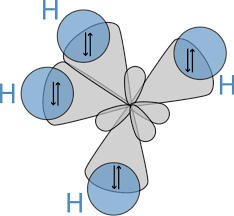
The effect is similar to the positive mesomeric, it appears by substituting the hydrogen in the alkyl group of multiple bond. This effect is directed toward multiple bond:
Hyperconjugation reminds positive mesomeric effect, because it gives sigma-electrons in the conjugated pi-system:
Inductive effect and hyperconjugation usually occur simultaneously. Inductive effect will undoubtedly outweigh, when the molecule is easily polarized. In addition, the spatial effect may mask the hyperconjugation effect. In benzene homologues hyperconjugation enhances the inductive effect.
The effect is similar to the positive mesomeric, it appears by substituting the hydrogen in the alkyl group of multiple bond. This effect is directed toward multiple bond:
Hyperconjugation reminds positive mesomeric effect, because it gives sigma-electrons in the conjugated pi-system:
Inductive effect and hyperconjugation usually occur simultaneously. Inductive effect will undoubtedly outweigh, when the molecule is easily polarized. In addition, the spatial effect may mask the hyperconjugation effect.In benzene homologues hyperconjugation enhances the inductive effect.
More
VOTE
VOTE
VOTE
VOTE
The inductive effect occurs through overlapping sigma bonds, whereas the hyperconjugative effect occurs through overlap of a sigma bond with a p orbital.
There are many different types of hyperconjugation and hyperconjugation has been used to explain many different chemical phenomenon. A nice overview can be found here.
Since inductive effects are transmitted through the sigma system, they effect should be independent of rotation around the bond(s) involved. On the other hand, the pi type of overlap used in hyperconjugation is very dependent upon rotation about the bond(s) involved. In the diagram above, rotation about the $\ce{C-C}$ bond by 90° shouldn't affect any inductive effect of the methyl group upon the carbocation center, but such rotation would completely destroy the overlap required for hyperconjugation to occur.
As you might expect, hydrogen/deuterium isotope effects can be used to assess hyperconjugation $\ce{C-H}$
[Note: isotope effects are a subject unto themselves; a nice overview can be found here. See p. 12 for their application to hyperconjugation.]
Here is a "thought experiment" where inductive effects and hyperconjugation should have different effects (I don't know if this or a similar experiment has been done). Take the following two carbocations.
One would expect them to both have similar inductive effects upon the carbocation center. The tris-ethyl carbocation, free to rotate about its various $\ce{C-C}$ bonds could also exist in conformations where the $\ce{C-H}$ bonds alpha to the carbocation center are correctly positioned for hyperconjugation to occur - it should show a secondary $\ce{K_{H}/K_{D} >1}$ since hydrogen is more electron donating than deuterium (see here for the reasoning behind this statement). However, the $\ce{C-H}$ bonds alpha to the carbocation center in the rigid bicycloctyl carbocation cannot adopt a conformation that would allow effective hyperconjugative overlap of these $\ce{C-H}$ bonds with the cationic center - it should show a secondary $\ce{K_{H}/K_{D} =1}$. Different secondary isotope effects would be expected in the solvolysis of these two systems.
Another case where inductive effects and hyperconjugation do not provide equivalent explanations relates to rotational barriers. The origin of the rotational barrier in ethane has been a subject of investigation for a long time. Inductive effects cannot be used to explain the barrier because, as discussed above, inductive effects are rotationally invariant. An argument using hyperconjugation to explain the rotational barrier has been advanced and is the subject of much discussion (see the "Rotational barrier of ethane" section). Whether the hyperconjugation argument is correct remains to be proven, but it is another case where hyperconjugation can be used to explain observations that the inductive effect cannot.
The inductive effect occurs through overlapping sigma bonds, whereas the hyperconjugative effect occurs through overlap of a sigma bond with a p orbital.
There are many different types of hyperconjugation and hyperconjugation has been used to explain many different chemical phenomenon. A nice overview can be found here.
Since inductive effects are transmitted through the sigma system, they effect should be independent of rotation around the bond(s) involved. On the other hand, the pi type of overlap used in hyperconjugation is very dependent upon rotation about the bond(s) involved. In the diagram above, rotation about the $\ce{C-C}$ bond by 90° shouldn't affect any inductive effect of the methyl group upon the carbocation center, but such rotation would completely destroy the overlap required for hyperconjugation to occur.
As you might expect, hydrogen/deuterium isotope effects can be used to assess hyperconjugation $\ce{C-H}$
[Note: isotope effects are a subject unto themselves; a nice overview can be found here. See p. 12 for their application to hyperconjugation.]
Here is a "thought experiment" where inductive effects and hyperconjugation should have different effects (I don't know if this or a similar experiment has been done). Take the following two carbocations.
One would expect them to both have similar inductive effects upon the carbocation center. The tris-ethyl carbocation, free to rotate about its various $\ce{C-C}$ bonds could also exist in conformations where the $\ce{C-H}$ bonds alpha to the carbocation center are correctly positioned for hyperconjugation to occur - it should show a secondary $\ce{K_{H}/K_{D} >1}$ since hydrogen is more electron donating than deuterium (see here for the reasoning behind this statement). However, the $\ce{C-H}$ bonds alpha to the carbocation center in the rigid bicycloctyl carbocation cannot adopt a conformation that would allow effective hyperconjugative overlap of these $\ce{C-H}$ bonds with the cationic center - it should show a secondary $\ce{K_{H}/K_{D} =1}$. Different secondary isotope effects would be expected in the solvolysis of these two systems.
Another case where inductive effects and hyperconjugation do not provide equivalent explanations relates to rotational barriers. The origin of the rotational barrier in ethane has been a subject of investigation for a long time. Inductive effects cannot be used to explain the barrier because, as discussed above, inductive effects are rotationally invariant. An argument using hyperconjugation to explain the rotational barrier has been advanced and is the subject of much discussion (see the "Rotational barrier of ethane" section). Whether the hyperconjugation argument is correct remains to be proven, but it is another case where hyperconjugation can be used to explain observations that the inductive effect cannot.
More
VOTE
VOTE
VOTE