It is easy to install if you use Avogadro 1.1.1 for Windows, only to download cp2kinputextension.dll from the above site and put it in the C:\Program Files\Avogadro\lib\avogadro\1_1\extensions folder in your PC.
Now libavogadro1cp2k is still in making and its function may be unsatisfactory.
But you can edit its generated input file. It will be easier than making CP2K input file from scratch.
It is easy to install if you use Avogadro 1.1.1 for Windows, only to download cp2kinputextension.dll from the above site and put it in the C:\Program Files\Avogadro\lib\avogadro\1_1\extensions folder in your PC.
Now libavogadro1cp2k is still in making and its function may be unsatisfactory.
But you can edit its generated input file. It will be easier than making CP2K input file from scratch.
This is news to me - why not contact the developers about integrating into the full version?More
Upvote
VOTE
Downvote
If you look at the CP2K website, you'll see that the coordinates are only a small fraction of the input file. Most of it is text describing how a calculation should be run.
The key parts from a coordinates perspective look like this:
&CELL
  ABC 12.4138 12.4138 12.4138
&END CELL
&COORD
  O      12.235322       1.376642      10.869880
  H      12.415139       2.233125      11.257611
  H      11.922476       1.573799       9.986994
&END COORD
As it looks, these are the Cartesian coordinates of the atoms (in regular space) and the unit cell vectors. You can either save the file in .XYZ format or use an input generator like GAMESS or Gaussian to get these coordinates.
If you want a periodic boundary calculation, you just need to estimate the bounding box. You can do this manually, or you can go to Crystallography | Add Unit Cell and then tweak the volume. In Avogadro v1.1.x, you'll see the ABC lattice vectors needed for that CP2K block.
As it might seem, Avogadro2 will be v2.0 of Avogadro. It's still in development.
If you look at the CP2K website, you'll see that the coordinates are only a small fraction of the input file. Most of it is text describing how a calculation should be run.
The key parts from a coordinates perspective look like this:
&CELL ABC 12.4138 12.4138 12.4138&END CELL&COORD O 12.235322 1.376642 10.869880 H 12.415139 2.233125 11.257611 H 11.922476 1.573799 9.986994&END COORD
As it looks, these are the Cartesian coordinates of the atoms (in regular space) and the unit cell vectors. You can either save the file in .XYZ format or use an input generator like GAMESS or Gaussian to get these coordinates.
If you want a periodic boundary calculation, you just need to estimate the bounding box. You can do this manually, or you can go to Crystallography | Add Unit Cell and then tweak the volume. In Avogadro v1.1.x, you'll see the ABC lattice vectors needed for that CP2K block.
As it might seem, Avogadro2 will be v2.0 of Avogadro. It's still in development.


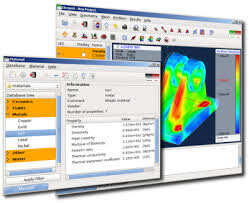


There is an experimentally CP2K input generator for Avogadro 1.1 in https://github.com/brhr-iwao/libavogadro1cp2k
It is easy to install if you use Avogadro 1.1.1 for Windows, only to download cp2kinputextension.dll from the above site and put it in the C:\Program Files\Avogadro\lib\avogadro\1_1\extensions folder in your PC.
Now libavogadro1cp2k is still in making and its function may be unsatisfactory.
But you can edit its generated input file. It will be easier than making CP2K input file from scratch.
There is an experimentally CP2K input generator for Avogadro 1.1 inhttps://github.com/brhr-iwao/libavogadro1cp2k
It is easy to install if you use Avogadro 1.1.1 for Windows, only to download cp2kinputextension.dll from the above site and put it in the C:\Program Files\Avogadro\lib\avogadro\1_1\extensions folder in your PC.
Now libavogadro1cp2k is still in making and its function may be unsatisfactory.
But you can edit its generated input file. It will be easier than making CP2K input file from scratch.
More
VOTE
VOTE
VOTE
If you look at the CP2K website, you'll see that the coordinates are only a small fraction of the input file. Most of it is text describing how a calculation should be run.
The key parts from a coordinates perspective look like this:
As it looks, these are the Cartesian coordinates of the atoms (in regular space) and the unit cell vectors. You can either save the file in
.XYZformat or use an input generator like GAMESS or Gaussian to get these coordinates.If you want a periodic boundary calculation, you just need to estimate the bounding box. You can do this manually, or you can go to Crystallography | Add Unit Cell and then tweak the volume. In Avogadro v1.1.x, you'll see the ABC lattice vectors needed for that CP2K block.
As it might seem, Avogadro2 will be v2.0 of Avogadro. It's still in development.
If you look at the CP2K website, you'll see that the coordinates are only a small fraction of the input file. Most of it is text describing how a calculation should be run.
The key parts from a coordinates perspective look like this:
As it looks, these are the Cartesian coordinates of the atoms (in regular space) and the unit cell vectors. You can either save the file in
.XYZformat or use an input generator like GAMESS or Gaussian to get these coordinates.If you want a periodic boundary calculation, you just need to estimate the bounding box. You can do this manually, or you can go to Crystallography | Add Unit Cell and then tweak the volume. In Avogadro v1.1.x, you'll see the ABC lattice vectors needed for that CP2K block.
As it might seem, Avogadro2 will be v2.0 of Avogadro. It's still in development.
More
VOTE