




Analytical Chemistry
- • Standard (1904)
- • Analysis Reagents (616)
- • Food Safety (411)
- • Liquid Chromatography (43)
Related News


Analysis Reagents
Analysis Reagents
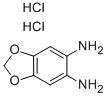
1,3-Benzodioxole-5,6-diamine, hydrochloride (1:2)
(81864-15-5)-

- / 99.00%
-

Industrial Grade / 99%
-

-

Industrial Grade / 99%


Request for quotation , get quotes from more suppliers.
-
 2-naphthalen-1-ylacetate")
-

-

-

Industrial Grade / 99%


Request for quotation , get quotes from more suppliers.
-

Industrial Grade / 99%
-

-

-


Request for quotation , get quotes from more suppliers.
-

Industrial Grade / 99%
-

-

Industrial Grade / 99%
-
![buy Norfloxacin-[d5]]( "Norfloxacin-[d5]")
Industrial Grade / 95%


Request for quotation , get quotes from more suppliers.
-
![buy 10,19-BIS[(OCTADECYLCARBAMOYL)METHOXY-ACETYL]-1,4,7,13,16-PENTAOXA-10,19-DIAZACYCLOHENEICOSANE]( "10,19-BIS[(OCTADECYLCARBAMOYL)METHOXY-ACETYL]-1,4,7,13,16-PENTAOXA-10,19-DIAZACYCLOHENEICOSANE")
Industrial Grade / 99%
-
![buy N-octadecyl-2-[2-[19-[2-[2-(octadecylamino)-2-oxoethoxy]acetyl]-1,4,7,13,16-pentaoxa-10,19-diazacyclohenicos-10-yl]-2-oxoethoxy]acetamide]( "N-octadecyl-2-[2-[19-[2-[2-(octadecylamino)-2-oxoethoxy]acetyl]-1,4,7,13,16-pentaoxa-10,19-diazacyclohenicos-10-yl]-2-oxoethoxy]acetamide")
-
![buy 10,19-BIS[(OCTADECYLCARBAMOYL)METHOXY-ACETYL]-1,4,7,13,16-PENTAOXA-10,19-DIAZACYCLOHENEICOSANE]( "10,19-BIS[(OCTADECYLCARBAMOYL)METHOXY-ACETYL]-1,4,7,13,16-PENTAOXA-10,19-DIAZACYCLOHENEICOSANE")
-
![buy 10,19-BIS[(OCTADECYLCARBAMOYL)METHOXY-ACETYL]-1,4,7,13,16-PENTAOXA-10,19-DIAZACYCLOHENEICOSANE]( "10,19-BIS[(OCTADECYLCARBAMOYL)METHOXY-ACETYL]-1,4,7,13,16-PENTAOXA-10,19-DIAZACYCLOHENEICOSANE")
Industrial Grade / 99%
![buy 10,19-BIS[(OCTADECYLCARBAMOYL)METHOXY-ACETYL]-1,4,7,13,16-PENTAOXA-10,19-DIAZACYCLOHENEICOSANE](https://file.echemi.com/fileManage/upload/cas/715/5a37162f-27e7-11ec-a78f-0255ac100033.png "10,19-BIS[(OCTADECYLCARBAMOYL)METHOXY-ACETYL]-1,4,7,13,16-PENTAOXA-10,19-DIAZACYCLOHENEICOSANE")
![buy 10,19-BIS[(OCTADECYLCARBAMOYL)METHOXY-ACETYL]-1,4,7,13,16-PENTAOXA-10,19-DIAZACYCLOHENEICOSANE](https://file.echemi.com/fileManage/upload/canonicalSmiles/20220811/e5ae162e3284487f9e552e7355867724.png "10,19-BIS[(OCTADECYLCARBAMOYL)METHOXY-ACETYL]-1,4,7,13,16-PENTAOXA-10,19-DIAZACYCLOHENEICOSANE")
Request for quotation , get quotes from more suppliers.
1-(9H-Carbazol-4-yloxy)-3-[[2-(2-methoxyphenoxy)ethyl](phenylmethyl)amino]-2-propanol
(72955-94-3)-
![buy 1-[benzyl-[2-(2-methoxyphenoxy)ethyl]amino]-3-(9H-carbazol-4-yloxy)propan-2-ol]( "1-[benzyl-[2-(2-methoxyphenoxy)ethyl]amino]-3-(9H-carbazol-4-yloxy)propan-2-ol")
-

-
![buy 1-{benzyl[2-(2-methoxyphenoxy)ethyl]amino}-3-(9H-carbazol-4-yloxy)propan-2-ol]( "1-{benzyl[2-(2-methoxyphenoxy)ethyl]amino}-3-(9H-carbazol-4-yloxy)propan-2-ol")
Different Grade / 99.9%
$0.1/KG EXW
-
![buy 1-{benzyl[2-(2-methoxyphenoxy)ethyl]amino}-3-(9H-carbazol-4-yloxy)propan-2-ol]( "1-{benzyl[2-(2-methoxyphenoxy)ethyl]amino}-3-(9H-carbazol-4-yloxy)propan-2-ol")
![buy 1-[benzyl-[2-(2-methoxyphenoxy)ethyl]amino]-3-(9H-carbazol-4-yloxy)propan-2-ol](https://file.echemi.com/fileManage/upload/cas/401/ce1265ea-37c9-4339-bb46-a6ab9f4691cd.png "1-[benzyl-[2-(2-methoxyphenoxy)ethyl]amino]-3-(9H-carbazol-4-yloxy)propan-2-ol")
Request for quotation , get quotes from more suppliers.
-
IMIDAZOLE")
Industrial Grade / 99.0%
-
IMIDAZOLE")
-

-

Industrial Grade / 99%


Request for quotation , get quotes from more suppliers.
-

-
![buy [12-(4-ETHYLPHENYL)DODECYL] 2-NITROPHENYL ETHER]( "[12-(4-ETHYLPHENYL)DODECYL] 2-NITROPHENYL ETHER")
Industrial Grade / 99%
-
![buy [12-(4-ETHYLPHENYL)DODECYL] 2-NITROPHENYL ETHER]( "[12-(4-ETHYLPHENYL)DODECYL] 2-NITROPHENYL ETHER")
-
![buy [12-(4-ETHYLPHENYL)DODECYL] 2-NITROPHENYL ETHER]( "[12-(4-ETHYLPHENYL)DODECYL] 2-NITROPHENYL ETHER")
Industrial Grade / 99%

![buy [12-(4-ETHYLPHENYL)DODECYL] 2-NITROPHENYL ETHER](https://file.echemi.com/fileManage/upload/cas/21/888bdb31-0ebb-4d79-a874-844b9ea34de3.gif "[12-(4-ETHYLPHENYL)DODECYL] 2-NITROPHENYL ETHER")
![buy [12-(4-ETHYLPHENYL)DODECYL] 2-NITROPHENYL ETHER](https://file.echemi.com/fileManage/upload/canonicalSmiles/20220811/52f7e21c71524eee91b086bfabc07d6b.png "[12-(4-ETHYLPHENYL)DODECYL] 2-NITROPHENYL ETHER")
Request for quotation , get quotes from more suppliers.
-

Industrial Grade / 99.0%
-
![buy diundecyl 4-[3,4-bis(undecoxycarbonyl)benzoyl]benzene-1,2-dicarboxylate]( "diundecyl 4-[3,4-bis(undecoxycarbonyl)benzoyl]benzene-1,2-dicarboxylate")
-

-

Industrial Grade / 99%


Request for quotation , get quotes from more suppliers.
-

Industrial Grade / 99%

Request for quotation , get quotes from more suppliers.
Source Analysis Reagents Raw Materials by Region


Frequently Asked Questions
Analysis reagents are high-purity chemical substances used to detect, measure, or analyze the composition of samples in scientific research, quality control, and diagnostic testing. They play a critical role in ensuring accuracy, reproducibility, and reliability in analytical procedures such as titrations, chromatography, spectrophotometry, and immunoassays. Using certified analysis reagents helps maintain compliance with regulatory standards like ISO, USP, or EP.
Selecting the appropriate grade of analysis reagent depends on your specific application:1. Analytical Reagent (AR) Grade: Suitable for general laboratory analysis and educational purposes.2. ACS Grade: Meets American Chemical Society specifications; ideal for precise quantitative analysis.3. HPLC or GC Grade: Ultra-pure solvents for chromatographic techniques.4. USP/NF or EP Grade: Required for pharmaceutical and clinical applications.Always verify purity levels, impurity profiles, and certification documentation before purchase.
While all analytical reagents are laboratory chemicals, not all laboratory chemicals qualify as analytical reagents. Analytical reagents are manufactured to strict purity standards with documented impurity limits, making them suitable for quantitative and qualitative analysis. In contrast, general laboratory chemicals may have higher impurity levels and are typically used for cleaning, synthesis, or non-critical tasks where precision isn’t required.
Proper storage is essential to preserve the stability and performance of analysis reagents:1. Keep in original, tightly sealed containers away from light, moisture, and air.2. Store at recommended temperatures—many require refrigeration (2–8°C) or freezing (–20°C).3. Segregate incompatible chemicals (e.g., acids from bases) to prevent reactions.4. Label containers clearly with opening date and expiration.Following manufacturer guidelines ensures reagent reliability and extends shelf life.
Using expired analysis reagents is strongly discouraged, especially in regulated or precision-sensitive applications. Over time, reagents may degrade, absorb moisture, oxidize, or form impurities that compromise test accuracy and safety. While some stable compounds might retain functionality shortly after expiry, there’s no guarantee of performance. Always adhere to expiration dates and conduct validation tests if reuse is considered under controlled conditions.