




Organic Chemistry
- • Amides (2638)
- • Alcohols, Phenols, Phenol Alcohols (341)
- • Nitrogen Compounds (273)
- • Nitrile Compound (97)
- • Hydrazine or Hydroxylamine Derivatives (213)
- • Quinones (38)
- • Ethers and Derivatives (191)
- • Aldehydes (126)
- • Carboxylic Acids and Derivatives (860)
- • Hydrocarbons and Derivatives (2332)
- • Ketones (95)
- • Inorganic Acid Esters (173)
- • Heterocyclic Ring (426)
- • Organometallic Compounds (989)
- • Organosulfur Compounds (90)
- • Phosphines (736)
- • Organometalate (290)
- • Organic Fluorine Compound (2157)
- • Triazenes (18)
- • Semicarbazides (34)
- • Organoselenium Compounds (28)
- • Nitro Compounds (96)
- • Nitrates (15)
- • Lactones (240)
- • Imines (24)
- • Free Radicals (48)
- • Dioxins and Dioxin-like Compounds (31)
- • Cyanates (32)
- • Coordination Complexes (3065)
- • Boron Compounds (121)
- • Azides (67)
- • Arsenicals (56)
Related News
-
Since September, the methanol market in China has shown a significant increase
2026-09-19 -
Premium Global Chemical Sourcing Requests (10-13Sep.,2026)
2026-09-14 -
UK Opens Formal Review of AkzoNobel–Axalta $25 Billion Merger
2026-09-19 -
U.S. Formally Imposes Antidumping and Countervailing Duty Orders on Chinese L-Lysine
2026-09-19 -
Premium Global Chemical Sourcing Requests (14-16Sep.,2026)
2026-09-17 -
2026 Mid-Autumn Festival & National Day Holiday Notice
2026-09-22


Imines
Imines



Request for quotation , get quotes from more suppliers.
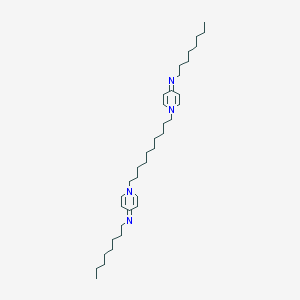
Octenidine
(71251-02-0)-

Cosmetics Grade / 99%
-

Pharmaceutical Grade / 99%
$1/KG EXW
-

Industrial Grade / 99%
-


Request for quotation , get quotes from more suppliers.
1-[3-(Dimethylamino)propyl]-3-ethylcarbodiimide methiodide
(22572-40-3)-
-3-ETHYLCARBODIIMIDE METHIODIDE 22572-40-3 Powder 98% Dideu")
Chemical Grade / 98%
-
-3-ETHYLCARBODIIMIDE METHIODIDE CAS 22572-40-3")
Pharmaceutical Grade / 99%
-
![buy 1-[3-(Dimethylamino)propyl]-3-ethylcarbodiimide methiodide 99% see COA Kanbei]( "1-[3-(Dimethylamino)propyl]-3-ethylcarbodiimide methiodide 99% see COA Kanbei")
Pharmaceutical Grade / 99%
-
![buy Best Selling 1-[3-(Dimethylamino)propyl]-3-ethylcarbodiimide methiodide CAS NO (22572-40-3)]( "Best Selling 1-[3-(Dimethylamino)propyl]-3-ethylcarbodiimide methiodide CAS NO (22572-40-3)")
Industrial Grade / 99%

![buy 1-[3-(Dimethylamino)propyl]-3-ethylcarbodiimide methiodide 99% see COA Kanbei](https://file.echemi.com/fileManage/upload/goodpicture/20230328/m20230328113404675.jpg "1-[3-(Dimethylamino)propyl]-3-ethylcarbodiimide methiodide 99% see COA Kanbei")
![buy Best Selling 1-[3-(Dimethylamino)propyl]-3-ethylcarbodiimide methiodide CAS NO (22572-40-3)](https://file.echemi.com/fileManage/upload/goodpicture/20240502/1-3-dimethylaminopropyl-3-ethylcarbodiimide-methiodide-cas-no-22572-40-3_b20240502050556417.jpg "Best Selling 1-[3-(Dimethylamino)propyl]-3-ethylcarbodiimide methiodide CAS NO (22572-40-3)")
Request for quotation , get quotes from more suppliers.
-

- / 99.00%
-

Industrial Grade / 95%
-

Industrial Grade / 99.0%
-


Request for quotation , get quotes from more suppliers.
Methyloctadecylamine
(2439-55-6)-

Industrial Grade / 99%
-

Pharma Grade / 99%
$28/KG EXW
-
 For sale At Reasonable Price")
Industrial Grade / 99%
-



Request for quotation , get quotes from more suppliers.
Source Imines Products Supply
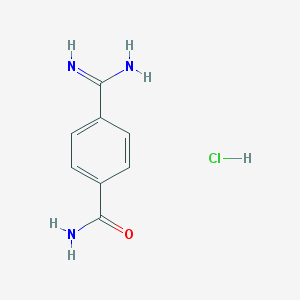
4-AMIDINOBENZAMIDE HYDROCHLORIDE
(59855-11-7)-

Industrial Grade / 99%
-

-

-


Request for quotation , get quotes from more suppliers.
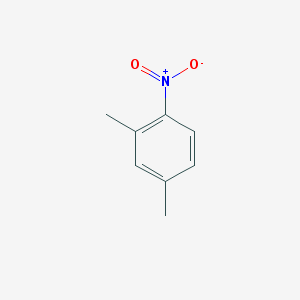
4-Nitro-m-xylene
(89-87-2)-

industrial Grade / 98%
$1/MT FOB
-

Industrial Grade / 99%
-

-

Industrial Grade / 99%

Request for quotation , get quotes from more suppliers.
1400WDIHYDROCHLORIDE,96
(214358-33-5)-

- / 99.00%
-

- / 95%
-

Industrial Grade, Feed Grade, Food Grade, Pharma Grade / 99%
-
")

Request for quotation , get quotes from more suppliers.
-

Industrial Grade, Feed Grade, Food Grade, Pharma Grade / 99%
-

-

-

Industrial Grade / 99%


Request for quotation , get quotes from more suppliers.
-

Industrial Grade / 99%
-

Pharmaceutical Grade / 99%
-

Industrial Grade / 99%
-



Request for quotation , get quotes from more suppliers.
Frequently Asked Questions
Imines are organic compounds containing a carbon-nitrogen double bond (C=N), formed by the condensation of a primary amine with a carbonyl compound such as an aldehyde or ketone. They serve as key intermediates in organic synthesis, particularly in reductive amination, Strecker amino acid synthesis, and as precursors to amines, heterocycles, and pharmaceuticals. Their versatility makes them valuable in both academic research and industrial applications.
Imines are typically synthesized through a condensation reaction between a primary amine and an aldehyde or ketone under mild acidic or neutral conditions, often with the removal of water to drive the equilibrium forward. Common methods include using molecular sieves, azeotropic distillation, or dehydrating agents. Reaction conditions such as solvent choice, temperature, and catalyst use can significantly affect yield and purity.
Imines contain a C=N bond formed from aldehydes/ketones and primary amines. Enamines are similar but result from the reaction of secondary amines with carbonyl compounds, featuring an adjacent C=C bond (C=C–N). Oximes are a subclass of imines where the nitrogen is bonded to a hydroxyl group (C=N–OH), formed specifically from hydroxylamine and carbonyls. Each has distinct reactivity and applications in synthesis and medicinal chemistry.
Most imines are moderately stable but can be sensitive to moisture and hydrolyze back to their parent carbonyl and amine components. Stability depends on substituents—aromatic imines (Schiff bases) are generally more stable than aliphatic ones. For storage, imines should be kept in airtight containers under inert atmosphere (e.g., nitrogen or argon), away from light and moisture, and often at low temperatures to prevent decomposition.
In the pharmaceutical industry, imines are crucial intermediates in synthesizing active pharmaceutical ingredients (APIs), especially in routes involving reductive amination to produce secondary or tertiary amines. They also participate in multicomponent reactions (e.g., Ugi or Mannich reactions) to build complex molecular scaffolds. Additionally, certain imine-containing compounds exhibit biological activity themselves, serving as antimicrobial or anticancer agents in drug discovery programs.