




Chemical Reagents
- • Deuterated Reagents (124)
- • Organic Reagents (10144)
- • Silane Reagent (853)
- • Chiral Chemicals (28)
- • Grignard Reagent (5)
- • Desulfurizer (22)
Related News
-
What Reagent Is Used To Test For Starch
2022-03-03 -
Meditex Bangladesh2019
2018-11-09 -
International Exhibition for Laboratory Equipment and Chemical Reagents
2017-06-20


Silane Reagent Featured Products
Silane Reagent
Methyltris(methyl ethyl ketoxime)silane
(22984-54-9)-
silane 22984-54-9")
Pharmaceutical Grade / 99%
-
silane")
-
 Silane CAS 22984-54-9")
-
silane")
- / 99.00%



Request for quotation , get quotes from more suppliers.
Vinyltris(methylethylketoxime)silane
(2224-33-1)-
silane")
-
silane")
Industrial Grade / 95%
-
silane VOS Crosslinker CAS 2224-33-1")
Industrial Grade / 90%
-
 Vinylsilane Vinyltris (Methylethylketoxime) Syntheses Material Intermediates")
Industrial Grade / 99%


Request for quotation , get quotes from more suppliers.
Glass, oxide, chemicals
(65997-17-3)-

Chemical Grade / 99%
$1/KG FOB
-

Cosmetics Grade / 98%
-
")
- / 99%
$1100-1200/MT FOB
-

Industrial Grade / 100%


Request for quotation , get quotes from more suppliers.
Bis[3-(triethoxysilyl)propyl] tetrasulfide
(40372-72-3)Coupling agent for non-black pigments;
Cure equilibrium for reversion resistance;
Curing agent for good heat aging.
Coupling Agent - With as little as 0.5 to 1.0 phr with clay fillers and 1.0 to 4.0 phr for silica pigments, BIS[3-(TRIETHOXYSILYL)PROPYL]TETRASULFIDE couples the non-black pigment and elastomers resulting in increases in modulus and increase in abrasion resistance.
Cure Equilibrium - BIS[3-(TRIE
-
![buy Bis[3-(triethoxysilyl)propyl]tetrasulfide]( "Bis[3-(triethoxysilyl)propyl]tetrasulfide")
- / 99.00%
-

Industrial Grade / 98%
-
![buy Bis-(γ-triethoxysilylpropyl)-disulfide; Bis[3-(triethoxysilyl)propyl]tetrasulfide; CAS 40372-72-3 99.0% Yellow liquid CAS 40372-72-3 Honour]( "Bis-(γ-triethoxysilylpropyl)-disulfide; Bis[3-(triethoxysilyl)propyl]tetrasulfide; CAS 40372-72-3 99.0% Yellow liquid CAS 40372-72-3 Honour")
Industrial Grade / 99.0%
-
![buy Bis[3-(triethoxysilyl)propyl]tetrasulfide 99% white powder kanbei]( "Bis[3-(triethoxysilyl)propyl]tetrasulfide 99% white powder kanbei")
Industrial Grade / 99%
![buy Bis[3-(triethoxysilyl)propyl]tetrasulfide](https://file.echemi.com/fileManage/upload/goodpicture/20220406/20220801115033009255_40372-72-3.png "Bis[3-(triethoxysilyl)propyl]tetrasulfide")

![buy Bis-(γ-triethoxysilylpropyl)-disulfide; Bis[3-(triethoxysilyl)propyl]tetrasulfide; CAS 40372-72-3 99.0% Yellow liquid CAS 40372-72-3 Honour](https://file.echemi.com/fileManage/upload/goodpicture/20230322/m20230322152638966.png "Bis-(γ-triethoxysilylpropyl)-disulfide; Bis[3-(triethoxysilyl)propyl]tetrasulfide; CAS 40372-72-3 99.0% Yellow liquid CAS 40372-72-3 Honour")
![buy Bis[3-(triethoxysilyl)propyl]tetrasulfide 99% white powder kanbei](https://file.echemi.com/fileManage/upload/goodpicture/20230725/m20230725162204388.jpg "Bis[3-(triethoxysilyl)propyl]tetrasulfide 99% white powder kanbei")
Request for quotation , get quotes from more suppliers.
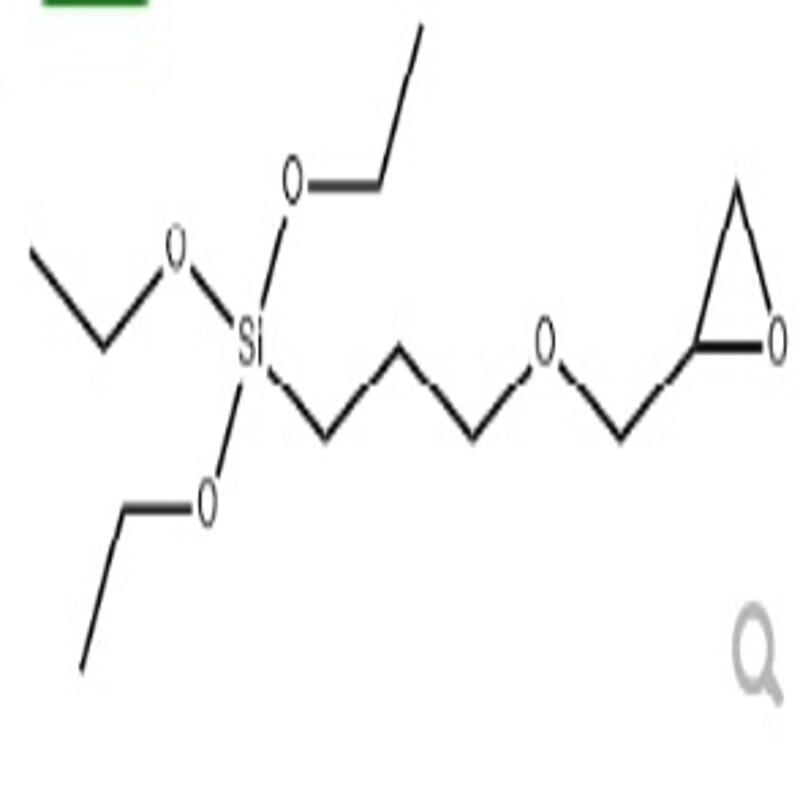
γ-Glycidoxypropyltriethoxysilane
(2602-34-8)-
propyltriethoxysilane")
Inustrial Grade / 95%
-
TRIETHOXYSILANE 1")
-
triethoxysilane")
- / 99.00%
-
silane-")
Industrial Grade / 98%


Request for quotation , get quotes from more suppliers.
Source Silane Reagent Products Supply
- 2-(Trimethylsilyl)ethoxymethyl chloride suppliers
- 2,2,4-Trimethyl-1-oxa-4-aza-2-silacyclohexane suppliers
- 7-Methoxyquinoline suppliers
- (Anilinomethyl)triethoxysilane suppliers
- (3-Chloropropyl)diethoxymethylsilane suppliers
- 10-(2,5-Dihydroxyphenyl)-10H-9-oxa-10-phospha-phenantbrene-10-oxide suppliers
Zeolite 13X
(63231-69-6)-

Sodium disilicate,δ-samdwich crystal / 99%
-

- / 99%
-

Industrial Grade / 99%
$1/KG EXW
-

industrial Grade / 98%


Request for quotation , get quotes from more suppliers.
(3-Chloropropyl)trichlorosilane
(2550-06-3)-

- / 99.00%
-

industrial Grade / 98%
-

Industrial Grade / 97.5%
-

Industrial Grade / 99%


Request for quotation , get quotes from more suppliers.
Tetramethyldisiloxane
(30110-74-8)-

-

Industrial Grade / 99%
-

Industrial Grade / 99%
-
 ETHER")
industrial Grade / 98%


Request for quotation , get quotes from more suppliers.
Diatomite
(61790-53-2)-

-

Food Grade / -
-

Food Grade / 99.9%
-

Top Product / 99%



Request for quotation , get quotes from more suppliers.
-

Industrial Grade / 95%
-

Industrial Grade / 99%
-

-


Request for quotation , get quotes from more suppliers.
Frequently Asked Questions
A Silane Reagent refers to organosilicon compounds containing one or more silicon-hydrogen (Si-H) bonds, commonly used in organic synthesis, surface modification, and materials science. These reagents play a critical role in hydrosilylation reactions, crosslinking polymers, and functionalizing surfaces with silane coupling agents. Their versatility makes them essential in industries such as pharmaceuticals, electronics, and coatings.
Silane Reagents are widely used across multiple sectors:1. In adhesives and sealants to improve bonding between organic polymers and inorganic substrates.2. In semiconductor manufacturing for surface passivation and thin-film deposition.3. In pharmaceutical synthesis as reducing agents or intermediates.4. In composite materials to enhance interfacial adhesion between fillers and matrices.These applications leverage the unique reactivity and stability of silane-based chemistry.
When selecting a Silane Reagent supplier, consider these key criteria:1. Regulatory compliance—ensure the supplier adheres to ISO, REACH, or GMP standards where applicable.2. Purity and consistency—reputable suppliers provide detailed certificates of analysis (CoA) and batch-specific data.3. Technical support—look for vendors offering application guidance and custom synthesis capabilities.4. Supply chain reliability—evaluate their production capacity and global logistics network.Choosing a certified and experienced supplier minimizes risk in sensitive chemical processes.
Many Silane Reagents can be moisture-sensitive, flammable, or reactive with air and water, requiring careful handling. For example, chlorosilanes release hydrochloric acid upon contact with moisture, while hydrosilanes may ignite spontaneously. Always consult the Safety Data Sheet (SDS) for specific hazards, storage conditions (e.g., under inert atmosphere), and personal protective equipment (PPE) recommendations. Proper training and engineering controls are essential for safe laboratory or industrial use.
The stability of Silane Reagents depends on several factors:1. Chemical structure—reagents with electron-withdrawing groups may be more reactive and less stable.2. Exposure to moisture or oxygen, which can cause hydrolysis or oxidation.3. Storage temperature—most should be kept cool, dry, and under nitrogen or argon.4. Container integrity—use sealed, amber glass bottles to prevent degradation.Always verify expiration dates and monitor for signs of decomposition, such as cloudiness or gas evolution, before use.