




Natural Products
- • Lignans (234)
- • Xanthones (46)
- • Flavonoids (471)
- • Terpenes (775)
- • Iridoid Derivatives (92)
- • Coumarin and Derivatives (121)
- • Phenols (341)
- • Steroids (104)
- • Phenylpropanoids (75)
- • Anthraquinone and Derivatives (16)
- • Chalcones (47)
- • Alkaloids (501)
- • Quinone Ring (28)
- • Sesquiterpene (228)
Related News
-
Credit Suisse triggers anxiety, international crude oil and natural gas collectively plummet
2023-03-16 -
Germany's annual natural gas imports fell by more than 10%
2023-01-17 -
Turkey announces discovery of 58 billion cubic meters of natural gas in Black Sea
2022-12-28 -
Natural gas: Sinopec and Qatar Energy signed a long-term purchase agreement
2022-12-01 -
The EU proposes to set a price ceiling of 275 euros per megawatt hour for natural gas
2022-11-24 -
German natural gas storage facility reaches 100% gas storage capacity
2022-11-22


Chalcone and Chalcone Derivatives
Chalcones
Phlorizin
(60-81-1)-

- / 99.00%
-

Chemical Grade / 98%
-
![buy 99% L(-)-Epinephrine;1-1-(3,4-dihydroxyphenyl)-2-methylaminoethanol[qr];1-adrenalin[qr];1-Adrenaline]( "99% L(-)-Epinephrine;1-1-(3,4-dihydroxyphenyl)-2-methylaminoethanol[qr];1-adrenalin[qr];1-Adrenaline")
-

industrial Grade / 98%


![buy 99% L(-)-Epinephrine;1-1-(3,4-dihydroxyphenyl)-2-methylaminoethanol[qr];1-adrenalin[qr];1-Adrenaline](https://file.echemi.com/fileManage/upload/cas/380/b0863a85-0af1-42c0-b120-78e487c5b147.png "99% L(-)-Epinephrine;1-1-(3,4-dihydroxyphenyl)-2-methylaminoethanol[qr];1-adrenalin[qr];1-Adrenaline")
Request for quotation , get quotes from more suppliers.
Hesperidin methylchalcone
(24292-52-2)-

-

- / 99.00%
-

Pharmaceutical Grade / 99%
-

Chemical Grade / 99%


Request for quotation , get quotes from more suppliers.
Cardamonin
(19309-14-9)-

Chemical Grade / 99%
-

Industrial Grade / 98%
-

Industrial Grade / 99%
-

Industrial Grade / 99.0%


Request for quotation , get quotes from more suppliers.
Isobavachalcone
(20784-50-3)-

industrial Grade / 98%
-

Analytical Reagent / 98%
$43-50/G FOB
-

Industrial Grade / 98%
-

Industrial Grade / 99%


Request for quotation , get quotes from more suppliers.
Butein
(487-52-5)-

Pharmaceutical grade / 99%
$10/G EXW
-

Industrial Grade / 99%
-

- / 95%
-


Request for quotation , get quotes from more suppliers.
Source Chalcones Products Supply
4,4'-DIHYDROXY-2-METHOXYCHALCONE
(34221-41-5)-

Industrial Grade / 98%
-

Industrial Grade / 99.00%
-
-3-(4-hydroxy-2-methoxyphenyl)-1-(4-hydroxyphenyl)prop-2-en-1-one")
-

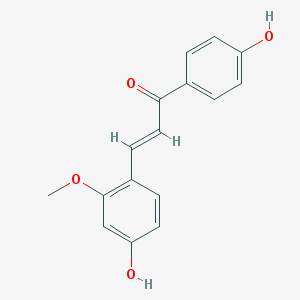
Request for quotation , get quotes from more suppliers.
Anthracite
(8029-10-5)-

- / 99%
$150-175/MT FOB
-

Industrial Grade / 98%
-

-

Industrial Grade / 99%

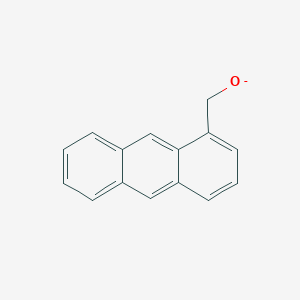
Request for quotation , get quotes from more suppliers.
-

Pharmaceutical Grade / 99%
-

-
")
- / 99%
$550-590/KG FOB
-
-3-(4-hydroxyphenyl)prop-2-en-1-one")

Request for quotation , get quotes from more suppliers.
Trilobatin
(4192-90-9)-

Pharmaceutical Grade / 99%
-
![buy 3,5-dihydroxy-4-[3-(4-hydroxyphenyl)propanoyl]phenyl beta-D-glucopyranoside]( "3,5-dihydroxy-4-[3-(4-hydroxyphenyl)propanoyl]phenyl beta-D-glucopyranoside")
Industrial Grade / 99%
-
![buy 1-[2,6-dihydroxy-4-[(2S,3R,4S,5S,6R)-3,4,5-trihydroxy-6-(hydroxymethyl)oxan-2-yl]oxyphenyl]-3-(4-hydroxyphenyl)propan-1-one]( "1-[2,6-dihydroxy-4-[(2S,3R,4S,5S,6R)-3,4,5-trihydroxy-6-(hydroxymethyl)oxan-2-yl]oxyphenyl]-3-(4-hydroxyphenyl)propan-1-one")
-


![buy 3,5-dihydroxy-4-[3-(4-hydroxyphenyl)propanoyl]phenyl beta-D-glucopyranoside](https://file.echemi.com/fileManage/upload/canonicalSmiles/20220811/07c6dcb77cfe4477892bf6815628b769.png "3,5-dihydroxy-4-[3-(4-hydroxyphenyl)propanoyl]phenyl beta-D-glucopyranoside")
![buy 1-[2,6-dihydroxy-4-[(2S,3R,4S,5S,6R)-3,4,5-trihydroxy-6-(hydroxymethyl)oxan-2-yl]oxyphenyl]-3-(4-hydroxyphenyl)propan-1-one](https://file.echemi.com/fileManage/upload/cas/821/3c7bad8b-dd47-11eb-89d6-0255ac100033.png "1-[2,6-dihydroxy-4-[(2S,3R,4S,5S,6R)-3,4,5-trihydroxy-6-(hydroxymethyl)oxan-2-yl]oxyphenyl]-3-(4-hydroxyphenyl)propan-1-one")
Request for quotation , get quotes from more suppliers.
-

Industrial Grade / 99%
-

-

-



Request for quotation , get quotes from more suppliers.
Frequently Asked Questions
Chalcones are organic compounds belonging to the flavonoid family, characterized by an open-chain structure with two aromatic rings linked by an α,β-unsaturated carbonyl system. They serve as key precursors in the synthesis of flavonoids and isoflavonoids, which exhibit a wide range of biological activities. Due to their anti-inflammatory, anticancer, antimicrobial, and antioxidant properties, chalcones are widely studied in drug discovery and development.
In medicinal chemistry, chalcones are primarily used as scaffolds for developing new therapeutic agents. Their structural simplicity and ease of modification allow researchers to synthesize derivatives with enhanced pharmacological effects. Common applications include the development of anticancer drugs, antiviral agents, anti-diabetic compounds, and neuroprotective molecules. Additionally, chalcone-based compounds are explored for their potential in treating malaria and tuberculosis.
Chalcones are typically synthesized via the Claisen-Schmidt condensation reaction, which involves the base-catalyzed aldol condensation between an aromatic aldehyde and an acetophenone derivative. This method is favored for its high yield, simplicity, and scalability. Alternative green chemistry approaches—such as solvent-free reactions, microwave-assisted synthesis, or use of solid-supported catalysts—are also employed to improve sustainability and reduce environmental impact.
When sourcing chalcone compounds, buyers should evaluate several critical factors:1. Purity and analytical data (e.g., HPLC, NMR, MS reports) to ensure compound integrity.2. Supplier compliance with regulatory standards such as ISO or GMP, especially for pharmaceutical applications.3. Availability of custom synthesis services for specific derivatives.4. Stability and proper storage conditions of the product.5. Technical support and documentation for research or industrial use.Choosing a reputable supplier with transparent quality control enhances reliability and reproducibility in downstream applications.
Chalcones themselves are not drugs but chemical intermediates or lead compounds used in preclinical research. Their safety profile depends on the specific derivative and its intended application. While many chalcone analogs show promising bioactivity with low toxicity in vitro and in animal models, thorough toxicological evaluation—including genotoxicity, hepatotoxicity, and pharmacokinetic studies—is required before clinical use. Regulatory approval for any chalcone-derived drug candidate must follow standard FDA or EMA guidelines.