




Is Hexane Soluble in Water? | Understanding Its Properties and Interactions
Ever tried mixing oil and water? Hexane’s basically the lab version of that oil.
It’s a simple hydrocarbon—six carbons in a row, fourteen hydrogens clinging on (C₆H₁₄)—and utterly nonpolar. No charges, no dipoles, nothing for water to grab onto. Water, meanwhile, is fiercely polar. Those bent H–O–H molecules cling to each other with strong hydrogen bonds, forming a kind of molecular “club” that doesn’t welcome outsiders without the right credentials.
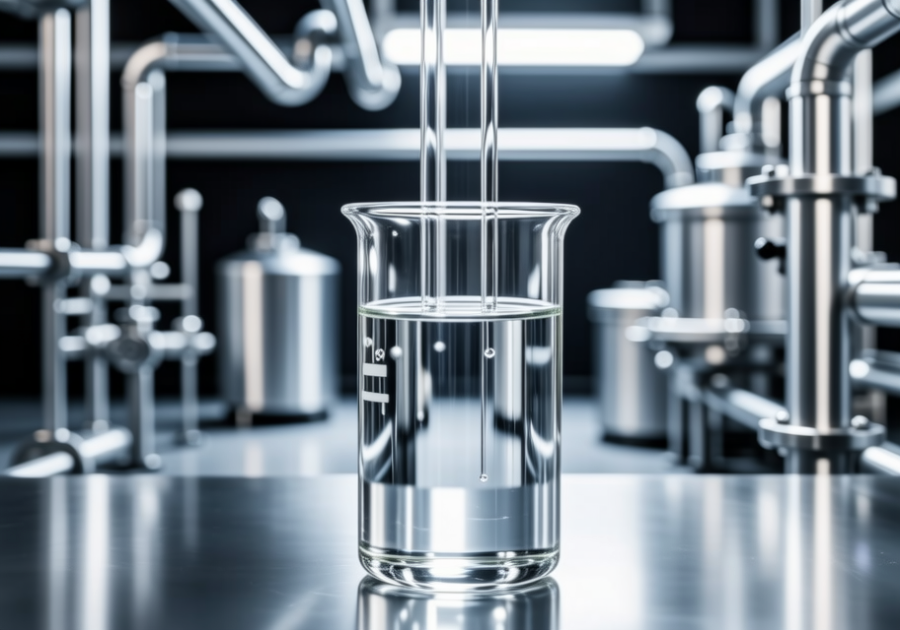
Hexane? It shows up with nothing but weak London dispersion forces—basically temporary electron wobbles. Water takes one look and says, “Not happening.” So instead of mixing, they split: two clear layers, with hexane floating on top (it’s lighter—about 0.66 g/mL vs. water’s 1.0).
You can shake them together all you want. For a second, you might get a cloudy emulsion, but it collapses fast. There’s just no energetic payoff for water to break its hydrogen bonds to make room for hexane. And hexane gains nothing by squeezing in. So they stay apart—politely, but firmly.
Now, technically, “insoluble” isn’t absolute. A few hexane molecules do sneak into water—something like 9–13 mg per liter at room temperature. Barely enough to matter. Warm the mixture a bit, and you might squeeze in a hair more, thanks to extra molecular jiggling. Pressure? Almost no effect unless you’re deep underground.
But here’s the twist: that very refusal to mix is why chemists love it.
In extractions, hexane acts like a magnet for nonpolar stuff—oils, fats, pesticides, essential oils—pulling them cleanly out of watery mixtures. Shake, wait, separate the top layer, and boom: you’ve isolated your target compound. Clean. Efficient.
This also gives us the partition coefficient (log P): how much a molecule prefers hexane over water. High log P? It’s lipophilic—likely to cross cell membranes, hang out in fat tissue, maybe stick around in the body longer. Drug designers watch this number like a hawk.
So yes—hexane won’t dissolve in your tea. But that’s exactly why it’s so useful in labs, food processing (think soybean oil extraction), and environmental testing. Its stubborn refusal to play nice with water is, ironically, its greatest strength.
Just don’t breathe too much of it—it’s volatile, flammable, and not something you want lingering in your lungs. But in a fume hood, with proper care? Hexane’s a quiet workhorse of organic chemistry.
Looking for chemical products? Let suppliers reach out to you!
You May Interested In


SS-31 Cosmetic peptides, discounted price improving cognitive impairment factory supply
$8E+1/UNIT FOB


2026-09-15
Trade Alert
Delivering the latest product trends and industry news straight to your inbox.
(We'll never share your email address with a third-party.)

Related News
-
Acesulfame Potassium: Safety, Side Effects, and Food Uses
-
Understanding the Arsenate Symbol and Its Uses
-
Polysorbate 80: Food Additive, Medical Use, and Safety
-
What Color Should a Zinc-Copper Couple Be?
-
Anastrozole Side Effects: What You Need to Know
-
Benzoylecgonine: Detection and Testing Methods
-
Why You Should Never Mix Bleach and Vinegar
-
Sulfur Dioxide Properties & Uses: Industrial, Preservative & Safety Guide
-
Zoledronic Acid: Uses, Mechanism, and Side Effects
Recommend Reading
-
![This Week, the Chinese Polymeric MDI Market Showed a Weak Decline (4.20-4.24)]()
This Week, the Chinese Polymeric MDI Market Showed a Weak Decline (4.20-4.24)
-
![This Week, Anhydrous Hydrogen Fluoride Prices Remain Steady at High Levels in China (4.20-4.24)]()
This Week, Anhydrous Hydrogen Fluoride Prices Remain Steady at High Levels in China (4.20-4.24)
-
![Chinese Ammonium Sulfate Market Prices Show Mixed Trends (4.13-4.23)]()
Chinese Ammonium Sulfate Market Prices Show Mixed Trends (4.13-4.23)
-
![Returning to Fundamentals: Ethylene Glycol Prices in April Show Volatile and Weak Trends]()
Returning to Fundamentals: Ethylene Glycol Prices in April Show Volatile and Weak Trends
-
![Recent Continuous Decline in the Ethyl Acetate Market in China]()
Recent Continuous Decline in the Ethyl Acetate Market in China
- Hot Searches
- food grade propylene glycol
- samarium oxide 3n price 2025
- methylene b
- retatrutide supplier
- zirconia fused alumina
- retatrutide 20mg where to buy
- disulfur hexafluoride
- sulfuric acid price per litre
- formaldehyde where to buy
- beryllium sds
- polyvinyl alcohol films market
- sulphonated naphthalene formaldehyde price