Shandong and other places are limited to catch wild jellyfish this year
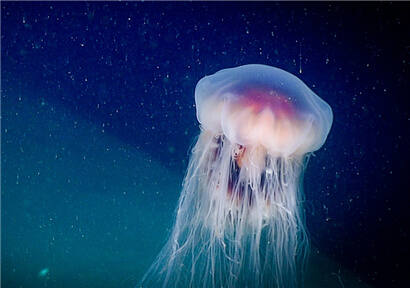
Although jellyfish is not the main dish in restaurants and restaurants, cold dishes such as marinated jellyfish, salad jellyfish, vinegar jellyfish and so on will appear in most restaurants and restaurants, and many of them like to order jellyfish, jellyfish is one of the most popular dishes for many devils.
But recently, a news about restrictions on wild jellyfish fishing in Shandong has been spreading on the Internet. Many people are worried about this. They worry that the number of jellyfish listed in Shandong will decrease significantly and the price will rise sharply after the restrictions are imposed. Journalists consulted Qiu Shengyao, an expert in jellyfish research and a professor at Yantai University. Qiu Shengyao confirmed that wild jellyfish were restricted in Shandong province this year. At the same time, reporters also found the arrest restriction documents from relevant government websites. After consulting with Oriental Fisheries International, the biggest jellyfish wholesale market in Moduu, the principal and distributor of the market believed that Shandong's restriction on jellyfish fishing this year had little impact on the jellyfish Market in Moduu, and jellyfish prices would not rise dramatically. Eaters need not worry about it. The data of wild jellyfish in Shandong Province showed that wild jellyfish were mainly produced from southern Bohai Bay to Laizhou Bay in Shandong Province and from Chengshantou to Rizhao in southern Shandong Peninsula, and cultured jellyfish were mainly produced in Liaoning Province. The annual output of wild and cultured jellyfish was estimated to exceed 100,000 tons.
Qiu Shengyao revealed that wild jellyfish outbreaks occurred in 1992 in China, and 1992 was the highest annual jellyfish production in history. The annual total annual output of wild jellyfish in China reached more than 100,000 tons, but then declined year by year. In order to protect and utilize jellyfish resources, since 1994, Shandong Province has implemented jellyfish proliferation and release in Laizhou Bay. At present, there are 300 to 800 million jellyfish in the whole province. The total amount of wild jellyfish resources in Shandong Province was relatively stable after a large number of proliferation and release. At the same time, the province has also adopted the method of issuing special resources fishing licenses, stipulating that licensed fishermen can go to sea to catch wild jellyfish at the prescribed time.
This year, Shandong Province restricted the capture of wild jellyfish.
It is known that at present, the time of wild jellyfish fishing varies from place to place. Shandong stipulates that the annual catch of wild jellyfish begins on 20 July and ends at the end of July, with a fishing period of only about 10 days. "In previous years, licensed fishermen were allowed to catch jellyfish except during the prohibited fishing period. The number of jellyfish was not limited. From 2017, Shandong Province began to pilot jellyfish quota fishing. The government issued a document stipulating that the number of jellyfish should be limited during the allowable fishing period." Qiu Shengyao told reporters that jellyfish caught by fishermen every day are purchased by purchasing stations. Fisheries departments will count the number of purchases every day. If the amount reaches the quota, fishermen will be informed to stop fishing.
It is reported that the Ministry of Agriculture and Rural Affairs had previously asked all parts of the country to select some seafood for pilot fishing, Shandong Province to select jellyfish for pilot fishing, Shandong Province pilot pilot fishing jellyfish from the previous year, first in Dongying offshore waters for two years, this year began to expand to the whole province. At the same time, Jiangsu Province is also listed as a pilot province of limited fishing for jellyfish.
Qiu Shengyao pointed out that quota fishing was mainly to control the total catch, and the quota fishing was determined according to the results of investigation and evaluation of wild jellyfish resources. "The purpose of quota fishing of wild jellyfish is to protect jellyfish resources and prohibit overfishing, so as to make the sustainable use of jellyfish resources."
The price of the jellyfish has been stable in recent years. The new jellyfish will be on the market half a month later.
Wang Decai, assistant president of Oriental Fisheries International, told reporters that their market is currently the largest jellyfish wholesale market in Dedu, with nearly 80 jellyfish merchants of both size and size. Last year, thousands of tons of jellyfish were wholesaled in their market. From last year to this year, the wholesale price of Oriental jellyfish has been kept at more than 40 yuan per kilogram in wild jellyfish and 30 to 40 yuan per kilogram in cultured jellyfish. In addition, the reporters learned that the retail prices of jellyfish in Devil Metropolitan Market vary widely. The most expensive wild jellyfish should be more than 100 yuan per kilogram, and the cheaper jellyfish should be 70 yuan per kilogram. The retail price of cultured jellyfish is 20-60 yuan/kg. The data also show that the wholesale and retail prices of jellyfish in Devil Metropolitan Market are basically stable at the above levels from 2016 to 2018, and there are no big ups and downs.
The jellyfish has jellyfish and new jellyfish every other year. At present, there are still a large number of jellyfish waiting for sale in the international jellyfish stall of Oriental Fisheries last year. At the same time, the new jellyfish will be on the market in half a month, and the new jellyfish will gradually enter the sales peak after September, which is before the Spring Festival. When analyzing the reasons why this year's arrest restriction in Shandong and other places has little impact on the market of the jellyfish, Wang Decai believed that a large number of stocks last year was an important reason. A large number of stocks will inevitably supplement this year's insufficient market supply and stabilize the market supply. And the price. Another reason why Wang Decai thought the impact was not significant was that although Shandong had a large amount of wild jellyfish fishing, Liaoning was a major province of jellyfish breeding in China, accounting for more than 80% of the total output. In recent years, the number of cultured jellyfish in China is also very considerable. As a result of a large number of supplements of cultured jellyfish, the impact of limited capture of wild jellyfish in Shandong and other places will be significantly reduced.
An owner of Oriental Fisheries International who managed jellyfish in Shandong for more than 10 years concluded that in order to ensure the relatively stable income of local fishermen in Shandong, in the first year of limited fishing, the government departments would not restrict fishing very much, and the supply of wild jellyfish in the market could not be significantly reduced.

You May Interested In


High Quality β-Nicotinamide adenine dinucleotide CAS 53-84-9 NADwith ready stock and best price
$3/UNIT FOB


2026-10-14
Trade Alert
Delivering the latest product trends and industry news straight to your inbox.
(We'll never share your email address with a third-party.)

Related News
-
Crude Tanker Freight From the Americas to Asia Tops $80 Million per Voyage Amid Global Shipping Crunch
-
UAE Breaks Ground on World’s First Gigascale Round-the-Clock Renewable Energy Project, Setting a New Global Standard For Clean Energy
-
Coal Price Surge Coupled with El Niño Drives Urea Up by RMB 100/Ton in a Single Day
-
$530 Million Lawsuit Unheard, $76 Million Counterclaim Filed: Is Qicai Chemical’s ‘Reputation Defense’ a Desperate Last Stand or a Calculated PR Gambit?
-
Alipay, Baidu, and iFlytek Win Big—As the Government Spends $1.1 Billion on AI Healthcare, Is This a Lifeline or a Feeding Frenzy for Tech Giants?
-
Oil-Coal Price Gap Widens! Coal Chemical Enterprises See Significant Profit Surge in H1 2026
-
Two Contractors Hospitalized After Deflagration at BASF Ludwigshafen Site
-
EFSA Unable to Confirm Safety of Fusarium flavolapis Fungal Protein as a Novel Food
-
EFSA Confirms Safety of β-Amylase Produced from Barley for Food Manufacturing Use
-
EU Officially Approves Rapeseed Oil as a Low-Risk Active Substance Until 2040
Recommend Reading
-
![India Accuses Balaji Amines of Manufacturing Pharma-Grade Propylene Glycol Without Drug Manufacturing Licence]()
India Accuses Balaji Amines of Manufacturing Pharma-Grade Propylene Glycol Without Drug Manufacturing Licence
-
![Sekisui Specialty Chemicals Has Announced a Global Price Increase]()
Sekisui Specialty Chemicals Has Announced a Global Price Increase
-
![EFSA Evaluates Extended Use of Pasteurised Akkermansia muciniphila as a Novel Food]()
EFSA Evaluates Extended Use of Pasteurised Akkermansia muciniphila as a Novel Food
-
![Brazil Confirms 32 Methanol Poisoning Cases Linked to Contaminated Alcoholic Beverages]()
Brazil Confirms 32 Methanol Poisoning Cases Linked to Contaminated Alcoholic Beverages
-
![Panama Canal Delays Deeper Draft Cut, but Transit Capacity Is Still Tightening]()
Panama Canal Delays Deeper Draft Cut, but Transit Capacity Is Still Tightening
-
![Premium Global Chemical Sourcing Requests (2 - 6 Feb, 2026)]()
Premium Global Chemical Sourcing Requests (2 - 6 Feb, 2026)
-
![What is Amylum Starch? (Old Terminology & Modern Equivalent)]()
What is Amylum Starch? (Old Terminology & Modern Equivalent)
-
![Business Society September 24, 2026 Palm Oil Trend Analysis: Clear Decline]()
Business Society September 24, 2026 Palm Oil Trend Analysis: Clear Decline
-
![Polyester Bottle Flakes in January Show Initial Weakness, Then Strengthen, Climbing to a Peak at Month’s End Before Reversing]()
Polyester Bottle Flakes in January Show Initial Weakness, Then Strengthen, Climbing to a Peak at Month’s End Before Reversing
-
![Downward Trend in Local Refinery Petroleum Coke Prices at Month’s End]()
Downward Trend in Local Refinery Petroleum Coke Prices at Month’s End