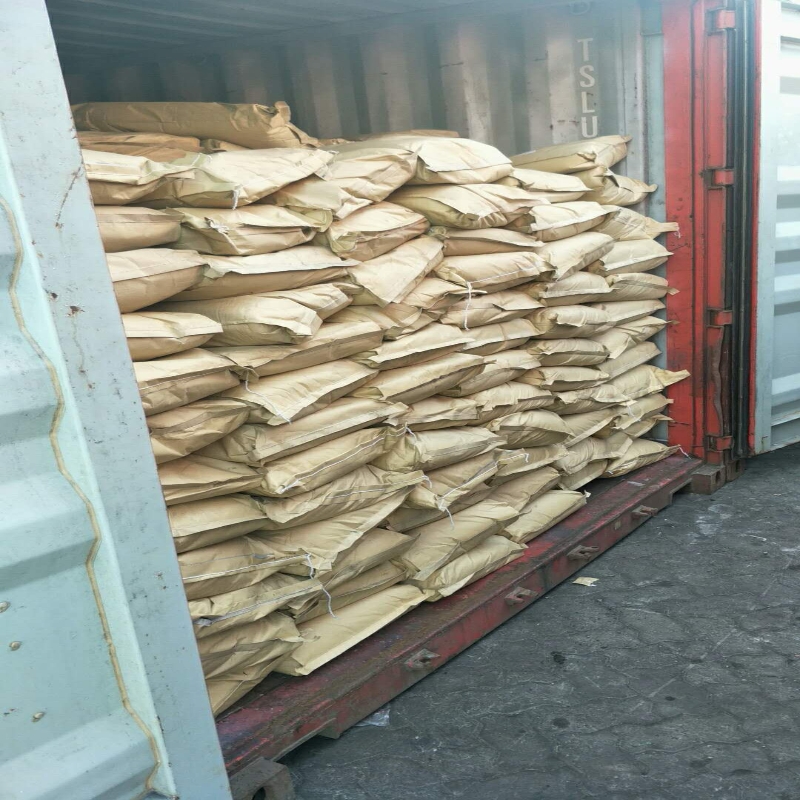
Levodopa 98%
7 Inquiries
59-92-7
Food Grade
98%
QINGDAO
30kg/2kg Cardboard Drum
2016-12-25

-
Product Description
-
Seller Information
-
Inquiry History
-
Description
Guangxi Hengxian Tianyuan Biotechnology Co., Ltd. is one of the group's subsidiary companies, Hengxian six King Industrial Park, it is located in, the company focuses on the production of L-dopa, levodopa is an antiparkinsonian drug, levodopa is extracted from our cat bean plants, phase analysis by high performance liquid (HPLC), levodopa component of which reached 99% above, with BP2007 and BP2009 standard. The appearance of white powder, the use of cardboard barrels packaging, weighing about 25 kg per barrel, we have other different weight of packaging.
Our product testing methods are available, the quality assurance system is complete, and many domestic colleges and universities to establish long-term cooperative relations, with independent research, development, production of high-tech products.
The company has developed strong capabilities, advanced production technology, first-class testing equipment, perfect quality assurance system, advanced management consciousness, complete system of corporate culture and high-quality technical talent, has a strong competitive advantage in the same industry.
Content: 10%, 15%, 20%, 50%, 60%, 99% product specifications: 5KG 10KG 25KG 1KG
Or according to customer requirements of product packaging: inner vacuum packaging bag, outer carton
Chinese Name: levodopa
English Name: Levodopa
CAS number: 59-92-7
Molecular formula and molecular weight: C9H11NO4197.19
Chemical name: 3- hydroxy -L- tyrosine
Properties: This product is white or white powder
Plant origin and distribution: from cat bean (alias: Li beans, beans, beans, tiger claw Talon Li stizolobiumcochinchinesis) are extracted and refined, South Asian and Eastern cat bean native Chinese, mainly distributed in Southern China, Guangxi, Hunan and other provinces and the southwest.
Specifications: 10%, 15%, 20%, 50%, 60%, 99%,
Effect: This product is a quasi dopaminergics anti Parkinson's disease drugs, precursor levodopa for in vivo dopamine synthesis, itself has no pharmacological activity, into the central through the blood-brain barrier, the effect of dopa decarboxylase into dopamine and exert their pharmacological effects, improve the symptoms of Parkinson. Because this product can increase the brain dopamine and norepinephrine neurotransmitter, but also can increase the brain's tolerance to ammonia, and used for the treatment of hepatic coma, improve the central function, so that patients awake, symptoms improved.
ECHEMI Editorial ReferenceL-DOPA is a natural form of DOPA used in the treatment of Parkinson's disease. L-DOPA is the precursor of dopamine and product of tyrosine hydroxylase.Target: Dopamine ReceptorL-DOPA (L-3,4-dihydroxyphenylalanine) is a chemical that is made and used as part of the normal biology of humans, some animals and plants. Some animals and humans make it via biosynthesis from the amino acid L-tyrosine. L-DOPA is the precursor to the neurotransmitters dopamine, norepinephrine (noradrenaline), and
Solid
L-dopa is an optically active form of dopa having L-configuration. Used to treat the stiffness, tremors, spasms, and poor muscle control of Parkinson's disease It has a role as a prodrug, a hapten, a neurotoxin, an antiparkinson drug, a dopaminergic agent, an antidyskinesia agent, an allelochemical, a plant growth retardant, a human metabolite, a mouse metabolite and a plant metabolite. It is a dopa, a L-tyrosine derivative and a non-proteinogenic L-alpha-amino acid. It is a conjugate acid of a L-dopa(1-). It is an enantiomer of a D-dopa. It is a tautomer of a L-dopa zwitterion.|Levodopa is a prodrug of dopamine that is administered to patients with Parkinson's due to its ability to cross the blood-brain barrier. Levodopa can be metabolised to dopamine on either side of the blood-brain barrier and so it is generally administered with a dopa decarboxylase inhibitor like carbidopa to prevent metabolism until after it has crossed the blood-brain barrier. Once past the blood-brain barrier, levodopa is metabolized to dopamine and supplements the low endogenous levels of dopamine to treat symptoms of Parkinson's. The first developed drug product that was approved by the FDA was a levodopa and carbidopa combined product called Sinemet that was approved on May 2, 1975.|Levodopa is an Aromatic Amino Acid.|Levodopa (L-Dopa) is an amino acid precursor of dopamine and is the most effective and commonly used drug in the treatment of Parkinson disease. Levodopa is usually combined with carbidopa, which is an inhibitor of L-amino acid decarboxylase, the plasma enzyme that metabolizes levodopa peripherally. Treatment with the combination of levodopa and carbidopa has been associated with mild and transient increases in serum enzymes in a proportion of patients and with very rare instances of clinically apparent acute liver injury.|Levodopa is an amino acid precursor of dopamine with antiparkinsonian properties. Levodopa is a prodrug that is converted to dopamine by DOPA decarboxylase and can cross the blood-brain barrier. When in the brain, levodopa is decarboxylated to dopamine and stimulates the dopaminergic receptors, thereby compensating for the depleted supply of endogenous dopamine seen in Parkinson's disease. To assure that adequate concentrations of levodopa reach the central nervous system, it is administered with carbidopa, a decarboxylase inhibitor that does not cross the blood-brain barrier, thereby diminishing the decarboxylation and inactivation of levodopa in peripheral tissues and increasing the delivery of dopamine to the CNS.|The naturally occurring form of DIHYDROXYPHENYLALANINE and the immediate precursor of DOPAMINE. Unlike dopamine itself, it can be taken orally and crosses the blood-brain barrier. It is rapidly taken up by dopaminergic neurons and converted to DOPAMINE. It is used for the treatment of PARKINSONIAN DISORDERS and is usually given with agents that inhibit its conversion to dopamine outside of the central nervous system.Basic Info-
Product Name:
DOPA
Other Name:L-Tyrosine,3-hydroxy-;Alanine,3-(3,4-dihydroxyphenyl)-,L-;3-Hydroxy-L-tyrosine;DA;(-)-3,4-Dihydroxyphenylalanine;Levodopa;L-3,4-Dihydroxyphenylalanine;3,4-Dihydroxy-L-phenylalanine;L-DOPA;DOPA;L-β-(3,4-Dihydroxyphenyl)-α-alanine;L-(-)-Dopa;β-(3,4-Dihydroxyphenyl)-α-L-alanine;(-)-Dopa;3-(3,4-Dihydroxyphenyl)-L-alanine;β-(3,4-Dihydroxyphenyl)alanine;β-(3,4-Dihydroxyphenyl)-L-alanine;Dihydroxy-L-phenylalanine;Dopar;Levopa;Eldopal;Pardopa;Helfo-dopa;Insulamina;Larodopa;Dopalina;Dopaston;Dopaflex;3,4-Dihydroxyphenylalanine;3,4-Dihydroxyphenyl-L-alanine;L-3-(3,4-Dihydroxyphenyl)alanine;Dopaston SE;L-4,5-Dihydroxyphenylalanine;Dopicar;Dopastone;Dopal;Doparkine;Eurodopa;Dopaidan;Eldopatec;Parda;Eldopar;Dopasol;Laradopa;Weldopa;Doparl;Dopastral;Veldopa;Doprin;Ledopa;Deadopa;Maipedopa;Bendopa;Cidandopa;(2S)-2-Amino-3-(3,4-dihydroxyphenyl)propanoic acid;Syndopa;Alphadopa;Dihydroxyphenylalanine;(S)-3,4-Dihydroxyphenylalanine;3-Hydroxytyrosine;Brocadopa;(2S)-2-Amino-3-(3,4-dihydroxyphenyl)propanoic acid;Inbrija;23734-74-9;25525-15-9;34241-25-3;72572-99-7;72573-00-3;88250-23-1;90638-38-3
CAS No.:59-92-7
Molecular Formula:C9H11NO4
InChIKeys:InChIKey=WTDRDQBEARUVNC-LURJTMIESA-N
Molecular Weight:197.18800
Exact Mass:197.19
EC Number:200-445-2
UNII:46627O600J
NSC Number:759573|118381
DSSTox ID:DTXSID9023209
NCI Thesaurus Code:C611
Color/Form:Colorless to white crystals or crystalline powder; needles from water
ATC Code:N04BA01|N04BA03|N04BA02|N - Nervous system
HScode:2932999099
Categories:
Characteristics-
PSA:
103.78000
XLogP3:0.75250
Appearance:Solid
Density:1.51 g/cm3
Melting Point:284-286 °C
Boiling Point:448.4±45.0 °C at 760 mmHg
Flash Point:225.0±28.7 °C
Refractive Index:-12 ° (C=5, 1mol/L HCl)
Water Solubility:Slightly soluble in water, dilute hydrochloric acid and formic acid. Insoluble in ethanol.
Storage Conditions:2-8°C
Toxicity:LD50 in mice (mg/kg): 3650 ±327 orally, 1140 ±66 i.p., 450 ±42 i.v., >400 s.c.; in male, female rats (mg/kg): >3000, >3000 orally; 624, 663 i.p.; >1500, >1500 s.c. (Clark)
Specific rotation:Specific optical rotation: -13.1 deg @ 13 °C/D (c= 5.12 in 1 N HCl); max absorption (0.001 N HCl): 220.5 nm (log e= 3.79); 280 nm (log e= 3.42)
Odor:Odorless
Taste:Tasteless
Dissociation Constants:pKa = 2.32
Collision Cross Section:148.7 Ų [M+H]+ [CCS Type: DT, Method: single field calibrated with Agilent tune mix (Agilent)]|138.21 Ų [M-H]- [CCS Type: DT, Method: single field calibrated with Agilent tune mix (Agilent)]|144.27 Ų [M-H]- [CCS Type: DT, Method: stepped-field]|149.4 Ų [M+H]+ [CCS Type: DT, Method: single field calibrated with ESI Low Concentration Tuning Mix (Agilent)]|147.5 Ų [M+Na]+ [CCS Type: DT, Method: single field calibrated with ESI Low Concentration Tuning Mix (Agilent)]|140.6 Ų [M-H]- [CCS Type: DT, Method: single field calibrated with ESI Low Concentration Tuning Mix (Agilent)]|141.2 Ų [M+Na-2H]- [CCS Type: DT, Method: single field calibrated with ESI Low Concentration Tuning Mix (Agilent)]|145.4 Ų [M+H]+ [CCS Type: TW, Method: calibrated with polyalanine and drug standards]|141.6 Ų [M-2H+Na]-
Hazard IdentificationClassification of the substance or mixture
Acute toxicity - Category 4, Oral
Skin irritation, Category 2
Specific target organ toxicity â single exposure, Category 3
GHS label elements, including precautionary statements
Pictogram(s) 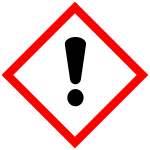
Signal word Warning
Hazard statement(s) H302 Harmful if swallowed
H315 Causes skin irritation
H319 Causes serious eye irritation
H335 May cause respiratory irritation
Precautionary statement(s) Prevention P264 Wash ... thoroughly after handling.
P270 Do not eat, drink or smoke when using this product.
P280 Wear protective gloves/protective clothing/eye protection/face protection/hearing protection/...
P261 Avoid breathing dust/fume/gas/mist/vapours/spray.
P271 Use only outdoors or in a well-ventilated area.
Response P301+P317 IF SWALLOWED: Get medical help.
P330 Rinse mouth.
P302+P352 IF ON SKIN: Wash with plenty of water/...
P321 Specific treatment (see ... on this label).
P332+P317 If skin irritation occurs: Get medical help.
P362+P364 Take off contaminated clothing and wash it before reuse.
P304+P340 IF INHALED: Remove person to fresh air and keep comfortable for breathing.
P319 Get medical help if you feel unwell.
Storage P403+P233 Store in a well-ventilated place. Keep container tightly closed.
P405 Store locked up.
Disposal P501 Dispose of contents/container to an appropriate treatment and disposal facility in accordance with applicable laws and regulations, and product characteristics at time of disposal.
Other hazards which do not result in classification
no data available
Handling and StoragePrecautions for safe handling
Handling in a well ventilated place. Wear suitable protective clothing. Avoid contact with skin and eyes. Avoid formation of dust and aerosols. Use non-sparking tools. Prevent fire caused by electrostatic discharge steam.
Conditions for safe storage, including any incompatibilities
Store the container tightly closed in a dry, cool and well-ventilated place. Store apart from foodstuff containers or incompatible materials.
-
-
Seller Information
-
Business Type:
Manufactory
-
Location:
Weft four road, Nanning six King Industrial Park
Guangxi Donglin Food Chemical Co., Ltd. was founded in July 19, 2007, employing 65 people, belonging to the private corporate limited liability company, the total investment of 18 million yuan. Group headquarters is located in Nanning, the capital of Guangxi, the production base is located in Hengxian Nanning six King Industrial Park, covers an area of about 19382 square meters, the production base is very convenient transportation, roads, railways, waterways are available.Hengxian six King Industrial Park is located in the southeast of Hengxian six King Town, about 50 kilometers away from Nanning City, Hunan Guangxi railway in six set from the train station, Li Qin railway Hengxian station 10 km, Guangxi Nanning Guangzhou high-speed high-speed, sea and six benign and two highway empty territory. The highway has six scenic entrance, Yu Jiang the navigation channel for navigable 1000 tons of cargo, six king are preparing to build deep-water port.The group owns 3 companies, production enterprises have 2, namely Guangxi Donglin Food Chemical Co. Ltd. and Guangxi Hengxian Tianyuan Biotechnology Co. Ltd., trade enterprises have 1, namely Nanning Ling Feng trade limited company.Guangxi Donglin Food Chemical Co., Ltd is mainly engaged in phosphoric acid and phosphate series products production, sales and storage, the main products for phosphoric acid production scale of 20 thousand tons / year. The tank and has 1 tons of phosphate, 2 tons of yellow phosphorus tank.Guangxi Hengxian Tianyuan biotechnology limited company mainly produces levodopa, levodopa for antiparkinsonian drugs, the company of levodopa extracted from cat bean plants, mainly exported to Europe and other countries and regions.Nanning bell Feng Trading Co., Ltd. is a company specializing in domestic and foreign trade of professional companies, mainly engaged in auto parts and chemical products and biological products trade.Our product testing methods are available, the quality assurance system is complete, and many domestic colleges and universities to establish long-term cooperative relations, with independent research, development, production of high-tech products.The company has developed strong capabilities, advanced production technology, first-class testing equipment, perfect quality assurance system, advanced management consciousness, complete system of corporate culture and high-quality technical talent, has a strong competitive advantage in the same industry.
-
-
Inquiry History7 Inquiries
Country Product Purchase Quantity Date Posted  Russia
Levodopa 59-92-7 White crystalline powder
180 MT Jun 22, 2026  Canada
Levodopa
1000 KG Oct 28, 2025  Indonesia
Levodopa
500 KG Aug 21, 2026  India
LEVODOPA
1250 KG Jun 22, 2026  United States
Levodopa
1 KG Oct 27, 2025  Pakistan
Levodopa
2 G Nov 8, 2023
India
Levodopa
17 MT Apr 28, 2025 Post an enquiry for this product