Product
Supplier
Encyclopedia
Inquiry
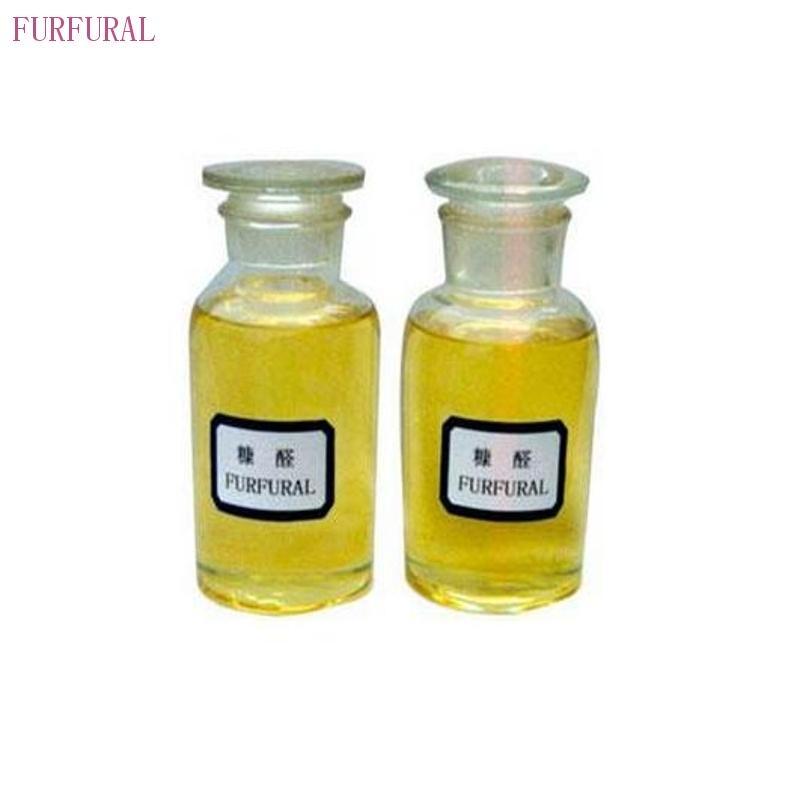
Home > Organic Chemistry > Aldehydes > Furfural for Sale > furfural 99.13% Colorless to light yellow color, transparent liquid
furfural 99.13% Colorless to light yellow color, transparent liquid buy - large image1
furfural 99.13% Colorless to light yellow color, transparent liquid buy - image1

furfural 99.13% Colorless to light yellow color, transparent liquid

TDS 17 Inquiries

Unit Price: Get Latest Price
CAS No.:

98-01-1

Grade:

Industrial Grade

Content:

99.13%

Port:

Qingdao or Shanghai

Packaging:

240kg or 250kg/drum or ISO TANK

Price valid (until):

2022-02-28

Company Type:
Manufactory
Location:
China
Qualification:
Main Products:

dibenzoylmethane furfural

  • Product Description

  • Seller Information

  • Inquiry History

  • Description


      Product Detail  


    Furfural


    CAS No.:       98-01-1

    Chemical Name: Furfural

    Synonyms    FCHO;Fural;Furol;Furale;Furole;HPFCHO;Fufural;ANT OIL;quakeral;frufural

    Molecular Formula: C5H4O2

    Formula Weight:   96.08


    Furfural Properties

    Melting point:      −36°C(lit.)

    Boiling point:      54-56°C11 mm Hg

    Density:           1.16g/mL at 25°C(lit.)

    vapor density:      3.31 (vs air)

    vapor pressure:     13.5 mm Hg ( 55°C)

    refractive index:     n20/D 1.527

    Flash point:        137°F

    storage temp.:      2-8°C

    Solubility:          95% ethanol: soluble1ML/mL, clear

    Form:             Liquid

    Color:              colorless to yellow

    PH               >=3.0 (50g/l, 25℃)

    explosive limit:     2.1-19.3%(V)

    Water Solubility:    8.3 g/100 mL

    FreezingPoint:      -36.5℃

    Sensitive:         Air Sensitive

    JECFA Number:   450

    Merck:            14,4304

    BRN:              105755

    Henry's Law Constant:

    1.52(x 10-6 atm?m3/mol) at 20°C (approximate - calculated from water solubility and vapor pressure)

    Exposure limits:

    NIOSH REL: IDLH 100 ppm; OSHA PEL: TWA 5 ppm (20 mg/m3); ACGIH TLV: TWA 2 ppm (adopted).

    Stability:

    Stable. Substances to be avoided include strong bases, strong oxidizing agents and strong acids. Flammable.

    Substances Added to Food (formerly EAFUS):        FURFURAL

    FDA 21 CFR:        175.105

    CAS DataBase Reference:

    98-01-1(CAS DataBase Reference)

    EWG's Food Scores:   3

    FDA UNII:             DJ1HGI319P

    NIST Chemistry Reference:      2-Furancarboxaldehyde(98-01-1)

    EPA Substance Registry System:    furfural (98-01-1)

    Autoignition Temperature:          599 °F &_& 599 °F

    Hazard Note:                     Irritant

    TSCA:                            Yes

    HS Code:                         29321200

    Hazard class:                      6.1

    Furfural Chemical Properties,Uses,Production

    Description

    Furfural is an essential renewable, non-petroleum based, chemical feedstock which is primarily composed of various agricultural byproducts, including oat husks, wheat bran, corncobs, and sawdust. Chemically, furfural is an organic compound belonging to an aldehyde of furan with the odor of almonds. It is typically produced for industrial purposes, which can be used as a selective solvent in the process of refining lubricating oils and used in the manufacture of transportation fuels to improve the characteristics of diesel fuel and catalytic cracker recycle stocks. Besides, furfural is applied widely for producing resin-bonded abrasive wheels and purifying butadiene needed for the manufacture of synthetic rubber. It is also used to make other furan chemicals, such as furoic acid and furan itself. Other products of furfural include weed killer, fungicide, other solvents and etc.


    Description

    Furfural is a colourless to amber-like oily liquid with an almond-like odour. On exposure to light and air, it turns reddish brown. Furfural is used in making chemicals, as a solvent in petroleum refining, a fungicide, and a weed killer. It is incompatible with strong acids, oxidisers, and strong alkalis. It undergoes polymerisation on contact with strong acids or strong alkalis. Furfural is produced commercially by the acid hydrolysis of pentosan polysaccharides from non-food residues of food crops and wood wastes. It is used widely as a solvent in petroleum refining, in the production of phenolic resins, and in a variety of other applications. Human exposure to furfural occurs during its production and use, as a result of its natural occurrence in many foods and from the combustion of coal and wood.

    Chemical Properties

    Furfural is a colorless to yellow aromatic het erocyclic aldehyde with an almond-like odor. Turns amber on exposure to light and air.

    Chemical Properties

    Furfural has a characteristic penetrating odor typical of cyclic aldehydes. Furfural is prepared industrially from pentosans that are contained in cereal straws and brans; these materials are previously digested with diluted H2S04, and the formed furfural steam is distilled.

    Physical properties

    Colorless to yellow liquid with an almond-like odor. Turns reddish brown on exposure to light and air. Odor and taste thresholds are 0.4 and 4 ppm, respectively (quoted, Keith and Walters, 1992). Shaw et al. (1970) reported a taste threshold in water of 80 ppm.

    Occurrence

    Reported found in several essential oils from plants of the Pinaceae family, in the essential oil from Cajenne linaloe, in the oil from leaves of Trifolium pratense and Trifolium incarnatum, in the distillation waters of several essential oils, such as ambrettee and angelica seeds, in Ceylon cinnamon essential oil, in petitgrain oil, ylang-ylang, lavender, lemongrass, calamus, eucalyptus, neroli, sandalwood, tobacco leaves and others Also reported found in many foods including apple, apricot, citrus peel oils and juices, berries, guava, grapes, pineapple, asparagus, kohlrabi, celery, onion, leek, potato, tomato, cinnamon, mustard, bread, cheeses, meats, fsh, cognac, rum, whiskies, cider, grape wine, cocoa, coffee, tea, barley, peanuts, popcorn, pecans, oats, honey, soybeans, passion fruit, plums, mushroom, mango, tamarind, fruit brandies, whiskey malt, white bread, rum, bourbon, cardamom, coriander seed, calamus, corn oil, malt, wort and other sources

    Uses

    In the manufacture of furfural-phenol plastics such as Durite; in solvent refining of petroleum oils; in the preparation of pyromucic acid. As a solvent for nitrated cotton, cellulose acetate, and gums; in the manufacture of varnishes; for accelerating vulcanization; as insecticide, fungicide, germicide; as reagent in analytical chemistry. In the synthesis of furan derivatives.

    Definition

    furfural: A colourless liquid,C5H4O2, b.p. 162°C, which darkenson standing in air. It is the aldehydederivative of furan and occurs invarious essential oils and in fuseloil. It is used as a solvent for extractingmineral oils and natural resinsand itself forms resins with somearomatic compounds.

    Production Methods

    Furfural is obtained commercially by treating pentosan-rich agricultural residues (corncobs, oat hulls, cottonseed hulls, bagasse, rice hulls) with a dilute acid and removing the furfural by steam distillation. Major industrial uses of furfuraldehyde include: (1) the production of furans and tetrahydrofurans where the compound is an intermediate; (2) the solvent refining of petroleum and rosin products; (3) the solvent binding of bonded phenolic products; and (4) the extractive distillation of butadiene from other C4 hydrocarbons.
    When pentoses, e.g., arabinose, xylose, are heated with dilute HCl, furfuraldehyde is formed, recognizable by deep red coloration with phloroglucinol, or by the formation, with phenylhydrazine, of furfuraldehyde phenylhydrazone C4H3O·CH : NNHC6H5, solid, mp 97 °C.

    Definition

    ChEBI: An aldehyde that is furan with the hydrogen at position 2 substituted by a formyl group.

    Preparation

    Industrially prepared from pentosans that are contained in cereal straws and brans; these materials are previously digested with diluted H2SO4, and the formed furfural steam is distilled.

    Reactions

    Aside from a darkening in color, furfural is relatively stable thermally and does not exhibit changes in physical properties after prolonged heating up to 230°C. The reactions of furfural are typical of those of the aromatic aldehydes, although some complex side reactions occur because of the reactive ring. Furfural yields acetals, condenses with active methylene compounds, reacts with Grignard reagents, and provides a bisulfite complex. Upon reduction, furfural yields furfural alcohol; upon oxidation, it yields furoic acid. It can be decarbonylated to furan.

    Taste threshold values

    Taste characteristics at 30 ppm: brown, sweet, woody, bready, nutty, caramellic with a burnt astringent nuance.

    General Description

    Colorless or reddish-brown mobile liquids with a penetrating odor. Flash points 140°F. Denser than water and soluble in water. Vapors heavier than air. May be toxic by ingestion, skin absorption or inhalation.

    Air & Water Reactions

    Flammable. Furfural is sensitive to light and air. Soluble in water, with mixing.

    Reactivity Profile

    Furfural reacts with sodium hydrogen carbonate. Furfural also can react with strong oxidizers. An exothermic resinification of almost explosive violence can occur upon contact with strong mineral acids or alkalis. Furfural forms condensation products with many types of compounds, including phenol, amines and urea. .

    Hazard

    Absorbed by skin; irritant to eyes, skin, and mucous membranes. Toxic by skin absorption; questionable carcinogen.

    Health Hazard

    Vapor may irritate eyes and respiratory system. Liquid irritates skin and may cause dermatitis.

    Fire Hazard

    Special Hazards of Combustion Products: Irritating vapors are generated when heated

    Industrial uses

    Also known as furfuraldehyde, furol, and pyromuclealdehyde,furfural is a yellowish liquidwith an aromatic odor, soluble in water and inalcohol, but not in petroleum hydrocarbons. Onexposure, it darkens and gradually decomposes.Furfural occurs in different forms in variousplant life and is obtained from complex carbohydratesknown as pentosans, which occur insuch agricultural wastes as cornstalks, corncobs,straw, oat husks, peanut shells, bagasse,and rice. Furfural is used for making syntheticplastics, as a plasticizer in other synthetic resins,as a preservative in weed killers, and as aselective solvent especially for removing aromaticand sulfur compounds from lubricatingoils. It is also used for the making of butadiene,adiponitrile, and other chemicals.
    Various derivatives of furfural are not used,and these, known collectively as furans, are nowmade synthetically from formaldehyde andacetylene, which react to form butyl nedole.

    Potential Exposure

    Furfural is used for lube oil refining and butadiene extraction; as a solvent for wood resin, nitrated cotton, cellulose acetate, and gums; in the produc tion of phenolic plastics, thermosetting resins, refined petroleum oils, dyes, and varnishes; in the manufacture of pyromucic acid, vulcanized rubber, insecticides, fungicides, herbicides, germicides, furan derivatives, polymers, and other organic chemicals.

    Carcinogenicity

    The IARC evaluated furfural and determined that there was inadequate evidence in humans for the carcinogenicity of furfural. There is limited evidence in experimental animals for the carcinogenicity of furfural.

    Source

    Furfural occurs naturally in many plants including rice (90,000–100,000 ppm), lovage roots (2 to 20 ppm), caraway, strawberry leaves, cilantro, java cintronella, cassia, ylang-ylang, sweetflag, Japanese mint, oat husks (100,000 ppm), anise, broad-leaved lavender, myrtle flowers (0–1 ppm), lemon verbena, Karaya gum (123,000 ppm), nutmeg seeds (15,000 ppm), West Indian lemongrass, licorice roots (2 ppm), cinnamon bark (3 to 12 ppm), Hyssop shoots (1–2 ppm), periwinkle leaves, rockrose leaves, and garden dill (Duke, 1992).
    Identified as one of 140 volatile constituents in used soybean oils collected from a processing plant that fried various beef, chicken, and veal products (Takeoka et al., 1996).
    The gas-phase tailpipe emission rate from California Phase II reformulated gasoline-powered automobile without a catalytic converter was 1.70 mg/km (Schauer et al., 2002).

    Environmental Fate

    Biological. Under nitrate-reducing and methanogenic conditions, furfural biodegraded to methane and carbon dioxide (Knight et al., 1990). In activated sludge inoculum, following a 20-d adaptation period, 96.3% COD removal was achieved. The average rate of biodegradation was 37.0 mg COD/g?h (Pitter, 1976).
    Photolytic. Atkinson (1985) reported an estimated photooxidation half-life of 10.5 h for the reaction of furfural with OH radicals in the atmosphere.
    Chemical/Physical. Slowly resinifies at room temperature (Windholz et al., 1983). May polymerize on contact with strong acids or strong alkalies (NIOSH, 1997).

    Shipping

    UN1199 Furaldehyde, Hazard class: 6.1; Labels: 6.1-Poisonous materials, 3-Flammable liquid.

    Purification Methods

    Furfural is unstable to air, light and acids. Impurities include formic acid, .-formylacrylic acid and furan-2-carboxylic acid. Distil it in an oil bath from 7% (w/w) Na2CO3 (added to neutralise acids, especially pyromucic acid). Redistil it from 2% (w/w) Na2CO3, and then, finally fractionally distil it under vacuum. It is stored in the dark. [Evans & Aylesworth Ind Eng Chem (Anal ed) 18 24 1926.] Impurities resulting from storage can be removed by passage through chromatographic grade alumina. Furfural can be separated from impurities other than carbonyl compounds by the bisulfite addition compound. The aldehyde is steam volatile. It has been purified by distillation (using a Claisen head) under reduced pressure. This is essential as is the use of an oil bath with temperatures of no higher than 130o which is highly recommended. When furfural is distilled at atmospheric pressure (in a stream of N2), or under reduced pressure with a free flame (caution: because the aldehyde is flammable), an almost colourless oil is obtained. After a few days and sometimes a few hours, the oil gradually darkens and finally becomes black. This change is accelerated by light and occurs more slowly when it is kept in a brown bottle. However, when the aldehyde is distilled under vacuum and the bath temperature kept below 130o during the distillation, the oil develops only a slight colour when exposed to direct sunlight during several days. The distillation of very impure material should NOT be attempted at atmospheric pressure; otherwise the product darkens very rapidly. After one distillation under vacuum, a distillation at atmospheric pressure can be carried out without too much decomposition and darkening. The liquid irritates mucous membranes. Store it in dark containers under N2, preferably in sealed ampoules. [Adams & Voorhees Org Synth Coll Vol I 280 1941, Beilstein 17/9 V 292.]

    Incompatibilities

    May form explosive mixture with air. Acids and bases can cause polymerization, causing fire or explosion hazard. Reacts violently with oxidants. Incompatible with strong acids; caustics, ammonia, ali phatic amines; alkanolamines, alromatic amines; oxidizers. Attacks many plastics.


    ECHEMI Editorial Reference
    Furfural is a colorless to yellow aromatic het erocyclic aldehyde with an almond-like odor. Turns amber on exposure to light and air. Furfural has a characteristic penetrating odor typical of cyclic aldehydes. Furfural is prepared industrially from pentosans that are contained in cereal straws and brans; these materials are previously digested with diluted H2S04, and the formed furfural steam is distilled.
    Furfural is an organic compound derived from a variety of agricultural byproducts, including corncobs, oat, wheat bran, and sawdust. The name furfural comes from the Latin word furfur, meaning bran, referring to its usual source.

    Certificates
    • furfural 99.13% Colorless to light yellow color, transparent liquid Certificates 1 TDS

    Basic Info
    Product Name:

    Furfural

    Other Name:

    2-Furancarboxaldehyde;2-Furaldehyde;Artificial ant oil;Fural;2-Furanaldehyde;2-Furancarbonal;Furfural;Furfuraldehyde;Furfurol;Furfurole;Furole;Pyromucic aldehyde;α-Furole;Furancarbonal;2-Formylfuran;Furaldehyde;2-Furfural;2-Furfuraldehyde;2-Furylaldehyde;Furfurylaldehyde;2-Furylcarboxaldehyde;2-Furancarbaldehyde;NSC 8841;Furan-2-carboxaldehyde;2-Furanal;Furfurals

    CAS No.:

    98-01-1

    UN No.:

    1199

    Molecular Formula:

    C5H4O2

    InChIKeys:

    InChIKey=HYBBIBNJHNGZAN-UHFFFAOYSA-N

    Molecular Weight:

    96.0841

    Exact Mass:

    96.08

    EC Number:

    232-450-0

    Freezing Point:

    -36.5℃

    HScode:

    2923900090

    Categories:

    Aldehydes

    Characteristics
    PSA:

    30.21000

    XLogP3:

    0.73

    Appearance:

    1.16 g/mL at 25 °C(lit.)

    Density:

    1.1563 g/cm3 @ Temp: 25 °C

    Melting Point:

    -38.7 °C

    Boiling Point:

    18.5 °C @ Press: 1.0 Torr

    Flash Point:

    58.3±0.0 °C

    Refractive Index:

    1.515

    Water Solubility:

    H2O: 0.33kPa/25°C 

    Storage Conditions:

    2-8°C

    Vapor Pressure:

    2.2±0.3 mmHg at 25°C

    Vapor Density:

    3.31 (vs air)

    Toxicity:

    Acute toxicity: mice by mouth LC50: 425 mg / kg; rats inhaled LD50: 601mg / m3, 4 hours; mouse abdominal LC50: 1490mg / kg; dog oral LD50: 2300mg / kg; guinea pig oral 541.7mg / Kg

    Flammability characteristics:

    Class IIIA Combustible Liquid: Fl.P. at or above 140°F and below 200°F.

    Explosive limit:

    vol% in air: 2.19.3

    Odor:

    Peculiar odor, somewhat resembling the odor of benzaldehyde

    Taste:

    Distinct caramel taste

    Hazard Identification

    Classification of the substance or mixture

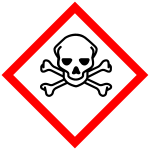
    Acute toxicity - Category 3, Oral

    Acute toxicity - Category 4, Dermal

    Skin irritation, Category 2

    Eye irritation, Category 2

    Acute toxicity - Category 3, Inhalation

    Specific target organ toxicity – single exposure, Category 3

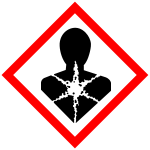
    Carcinogenicity, Category 2

    GHS label elements, including precautionary statements

    Pictogram(s)
    Signal word

    Danger

    Hazard statement(s)

    H301 Toxic if swallowed

    H312 Harmful in contact with skin

    H315 Causes skin irritation

    H319 Causes serious eye irritation

    H331 Toxic if inhaled

    H335 May cause respiratory irritation

    H351 Suspected of causing cancer

    Precautionary statement(s)
    Prevention

    P264 Wash ... thoroughly after handling.

    P270 Do not eat, drink or smoke when using this product.

    P280 Wear protective gloves/protective clothing/eye protection/face protection/hearing protection/...

    P261 Avoid breathing dust/fume/gas/mist/vapours/spray.

    P271 Use only outdoors or in a well-ventilated area.

    P203 Obtain, read and follow all safety instructions before use.

    Response

    P301+P316 IF SWALLOWED: Get emergency medical help immediately.

    P321 Specific treatment (see ... on this label).

    P330 Rinse mouth.

    P302+P352 IF ON SKIN: Wash with plenty of water/...

    P317 Get medical help.

    P362+P364 Take off contaminated clothing and wash it before reuse.

    P332+P317 If skin irritation occurs: Get medical help.

    P305+P351+P338 IF IN EYES: Rinse cautiously with water for several minutes. Remove contact lenses, if present and easy to do. Continue rinsing.

    P304+P340 IF INHALED: Remove person to fresh air and keep comfortable for breathing.

    P316 Get emergency medical help immediately.

    P319 Get medical help if you feel unwell.

    P318 IF exposed or concerned, get medical advice.

    Storage

    P405 Store locked up.

    P403+P233 Store in a well-ventilated place. Keep container tightly closed.

    Disposal

    P501 Dispose of contents/container to an appropriate treatment and disposal facility in accordance with applicable laws and regulations, and product characteristics at time of disposal.

    Other hazards which do not result in classification

    no data available

    Handling and Storage

    Precautions for safe handling

    NO open flames, NO sparks and NO smoking. Above 60°C use a closed system, ventilation and explosion-proof electrical equipment. Handling in a well ventilated place. Wear suitable protective clothing. Avoid contact with skin and eyes. Avoid formation of dust and aerosols. Use non-sparking tools. Prevent fire caused by electrostatic discharge steam.

    Conditions for safe storage, including any incompatibilities

    Separated from strong bases, strong acids, strong oxidants and food and feedstuffs. Keep in the dark. Well closed. Ventilation along the floor. Store in an area without drain or sewer access.Keep in air tight container and protect from light

  • Seller Information
    Business Type:

    Manufactory

    Main Products:

    dibenzoylmethane furfural

    Location:

    Shenxian Shuiyuan New Energy Technology Co.,Ltd.

    Payment Terms:

    TT against copy of documents,L/C

    Average lead Time:

    15

    Total Annual Revenue:

    Above $100 million

    Year of Establishment:

    2013

    Shenxian Shuiyuan New Energy Technology Co.,Ltd. established in 2000,located in Shandong province, we are the manufacturer factory specialized in produce Dibenzoylmethane (DBM) CAS NO.120-46-7 and furfural CAS NO.98-01-1. As one of the world's largest professional production Dibenzoylmethane (DBM) factory with annual capacity 10,000 metric tons, as one of the world's biggest professional manufacturer furfural with annual capacity 30,000 metric tons.  


    Shenxian Shuiyuan New Energy Technology Co.,Ltd.  is a factory of 83,916 square meters including 80,000 square meters workshop space.Company has more than 200 staff, strong technical force, has a professional engaged in new product research and development technical team, and keep close cooperation with many domestic famous scientific research institutes, we adhere to the concept of scientific and technological innovation and environmental protection new non-toxic PVC auxiliary heat stabilizer Dibenzoylmethane (DBM) and furaldehyde and furfural products production and sales company annual production capacity of 40,000 tons, the company has the world advanced technology production line and of the world's biggest Dibenzoylmethane (DBM) production equipment, product quality has reached the international advanced level.                                                             


    The products mainly using methanol and acetic acid from corn cobs, used in the production of Dibenzoylmethane and furfural, wide range of uses, mainly for furfural alcohol resin pharmaceutical and fine chemical industry in areas.Furfural products can be used in the production of medicines, furfuryl alcohol, spices, flavors, resins and other products.                                                              

    Dibenzoylmethane is mainly used as a plastic stabilizer in water bottle dispenzers, infusion sets, diversion pipes, etc. At present, with an annual production capacity of 10,000 tons,More than 95% of the products are exported to the United States, European countries , South Korea, Japan, Britain, Mexico,e.t.c. We have customers in more than 40 countries.our company has become a leader in the Dibenzoylmethane and furfural industry in China

  • Inquiry History
    17 Inquiries
    Country Product Purchase Quantity Date Posted
    United States

    Non GMO - ProTerra Certified Furfural

    100 MT May 27, 2026
    Spain

    Furfural

    700 MT Jan 14, 2026
    Singapore

    High quality Furfural

    250 G Jun 27, 2025
    Finland

    furfural

    0.1 L May 8, 2025
    United States

    Furfural

    1 MT Mar 26, 2025
    Singapore

    FURFURAL

    115200 KG Oct 21, 2024
    Spain

    Furfural

    150 MT Aug 1, 2024
    Pakistan

    Furfural

    96000 KG Mar 22, 2024
    Algeria

    Furfural

    1200 MT Nov 30, 2023
    Pakistan

    FURFURAL

    115200 KG Oct 23, 2023
    Belgium

    Furfural Solvent (industrial grade, min. 99.0%)

    80 MT Jan 30, 2026
    United Arab Emirates

    Furfural

    126.5 TON Dec 11, 2024
    Nigeria

    Furfural

    0.5 L Jul 17, 2024
    India

    Furfural 98.5%

    1 KG Nov 10, 2025
    Pakistan

    FURFURAL

    96000 KG Jul 18, 2024
    Pakistan

    Furfural

    96000 KG Jul 5, 2024
    Malaysia

    Furfural

    1000 TON Apr 3, 2024
    Post an enquiry for this product
pic ×

Scan the QR Code to Share

All products displayed on this website are only for non-medical purposes such as industrial applications or scientific research, and cannot be used for clinical diagnosis or treatment of humans or animals. They are not medicinal or edible.

According to relevant laws and regulations and the regulations of this website, units or individuals who purchase hazardous materials should obtain valid qualifications and qualification conditions.

The information shown above is provided by the enterprise itself, and the authenticity, accuracy and legitimacy of the content are the responsibility of the publishing company. ECHEMI does not bear any guarantee responsibility for this. Please be aware that risks in internet transactions objectively exist.

Feedback & Suggestions
Send Message

Thank you for your feedback. If you require further assistance, please contact us by email at info@echemi.com or call us at +86-532-55729510.