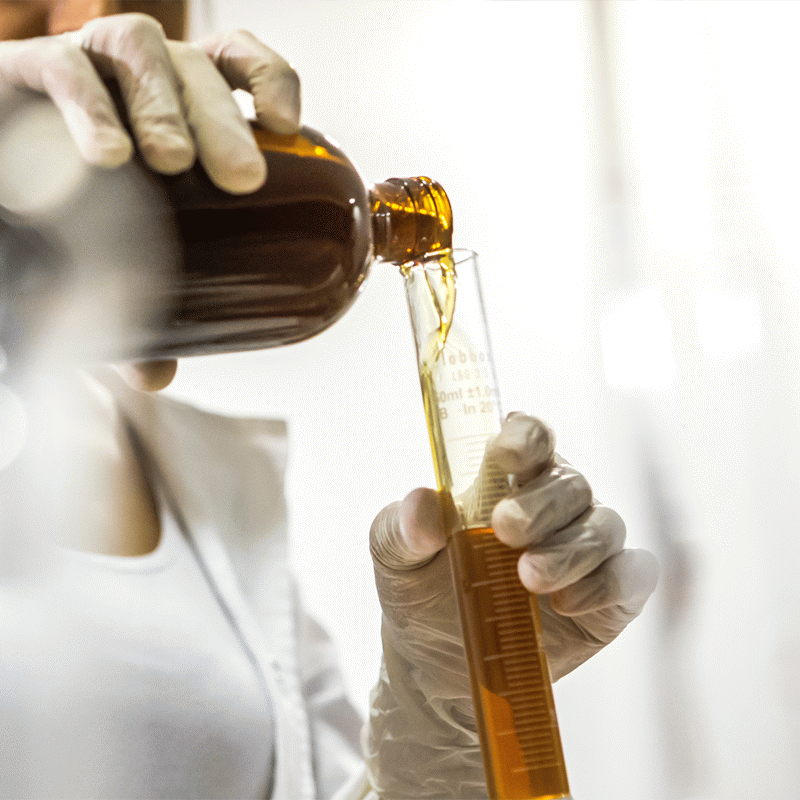
Myristic acid
7 Inquiries
544-63-8
99%
Bottle,barrel,cargo,container,etc.
Yes
2026-11-24

Intermediates,Building blocks,API,Silicones,Peptides,Lab chemicals
-
Product Details
-
Seller Information
-
Inquiry History
-
DescriptionKeywords
544-63-8
Myristic acid
C14H28O2
Quick DetailsProName:Myristic acid
CasNo:544-63-8
Molecular Formula:C14H28O2
Appearance:powder, or liquid
Application:Pharmaceuticals, intermediates, APIs, custom synthesis, chemicals
DeliveryTime:5-7 Days
PackAge:Bottle, barrel, cargo, container, etc.
Port:Shanghai
Purity:99
Storage:Stored in room temperature, ventilated place
Transportation:By air, ship, express, etc.
LimitNum:0
Grade:Industrial Grade
SuperiorityBest Seller, High Quality, Competitive Price, Fast Delivery, Quick Response
DetailsLEAPChem supplies high quality Pharmaceuticals, intermediates, APIs, custom synthesis, fine chemicals and other industrial chemicalsECHEMI Editorial ReferenceMyristic acid is a saturated 14-carbon fatty acid occurring in most animal and vegetable fats, particularly butterfat and coconut, palm, and nutmeg oils.
Tetradecanoic acid is an oily white crystalline solid. (NTP, 1992)|DryPowder; Liquid; OtherSolid; OtherSolid, Liquid; PelletsLargeCrystals|Solid|hard, white, or faintly yellowish, somewhat glossy, crystalline solid
Tetradecanoic acid is an oily white crystalline solid. (NTP, 1992)|Tetradecanoic acid is a straight-chain, fourteen-carbon, long-chain saturated fatty acid mostly found in milk fat. It has a role as a human metabolite, an EC 3.1.1.1 (carboxylesterase) inhibitor, a Daphnia magna metabolite and an algal metabolite. It is a long-chain fatty acid and a straight-chain saturated fatty acid. It is a conjugate acid of a tetradecanoate.|Myristic Acid is a saturated long-chain fatty acid with a 14-carbon backbone. Myristic acid is found naturally in palm oil, coconut oil and butter fat.|A saturated 14-carbon fatty acid occurring in most animal and vegetable fats, particularly butterfat and coconut, palm, and nutmeg oils. It is used to synthesize flavor and as an ingredient in soaps and cosmetics. (From Dorland, 28th ed)Basic Info-
Product Name:
Myristic acid
Other Name:Tetradecanoic acid;Myristic acid;Neo-Fat 14;Univol U 316S;n-Tetradecoic acid;1-Tridecanecarboxylic acid;n-Tetradecanoic acid;n-Tetradecan-1-oic acid;Prifac 2942;NAA 142;NAA 104;Emery 655;Hystrene 9014;Edenor C 14;Kortacid 1499;Philacid 1400;NSC 5028;Lunac MY 98;Prifrac 2942;Edenor C 14/98-100;1-Tetradecanoic acid;MY 98;Imex C 1499;Palmac 98-14;Lunac M 98;Edenor C14-99 (C);Sinar FA 1499;Myristates;Edenor C14-99;POFAC 1498;45184-05-2
CAS No.:544-63-8
Molecular Formula:C14H28O2
InChIKeys:InChIKey=TUNFSRHWOTWDNC-UHFFFAOYSA-N
Molecular Weight:228.37
Exact Mass:228.37
BRN:508624
EC Number:208-875-2
UNII:0I3V7S25AW
NSC Number:5028
DSSTox ID:DTXSID6021666
NCI Thesaurus Code:C68393
Color/Form:Oily, white, crystalline solid|Crystals from methanol|Leaflets from ethyl ether
HScode:29159080
Categories:
Characteristics-
PSA:
37.3
XLogP3:5.3
Appearance:White Flakes, Powder, Chunks or Crystalline Mass
Density:0.8622 g/cm3 @ Temp: 54 °C
Melting Point:58.5 °C
Boiling Point:326.2 °C
Flash Point:>230 °F
Refractive Index:1.451
Water Solubility:H2O: <0.1 g/100 mL at 18 ºC
Storage Conditions:−20°C
Vapor Pressure:<0.01 hPa (20 °C)
Toxicity:LD50 i.v. in mice: 432.6 mg/kg (Or, Wretlind)
Explosive limit:Combustible
Odor:The odor should be faint with no rancidity.
Henrys Law Constant:Henry's Law constant = 4.95X10⁻⁷ atm-cu m/mol at 25 °C (est)
Dissociation Constants:pKa = 4.90
Collision Cross Section:159.21 Ų [M-H]- [CCS Type: DT, Method: single field calibrated with Agilent tune mix (Agilent)]
Experimental Properties:Neutralization value: 245.68|Heat of fusion = 44.8 kJ/mol; specific heat = 1.60 J/g (for the solid)|Hydroxyl radical reaction rate constant = 1.68X10⁻¹¹ cu-cm/molec sec at 25 °C (est)
Air and Water Reactions:Insoluble in water.
Reactive Group:Acids, Carboxylic
Reactivity Profile:TETRADECANOIC ACID is a carboxylic acid. Carboxylic acids donate hydrogen ions if a base is present to accept them. They react in this way with all bases, both organic (for example, the amines) and inorganic. Their reactions with bases, called "neutralizations", are accompanied by the evolution of substantial amounts of heat. Neutralization between an acid and a base produces water plus a salt. Carboxylic acids with six or fewer carbon atoms are freely or moderately soluble in water; those with more than six carbons are slightly soluble in water. Soluble carboxylic acid dissociate to an extent in water to yield hydrogen ions. The pH of solutions of carboxylic acids is therefore less than 7.0. Many insoluble carboxylic acids react rapidly with aqueous solutions containing a chemical base and dissolve as the neutralization generates a soluble salt. Carboxylic acids in aqueous solution and liquid or molten carboxylic acids can react with active metals to form gaseous hydrogen and a metal salt. Such reactions occur in principle for solid carboxylic acids as well, but are slow if the solid acid remains dry. Even "insoluble" carboxylic acids may absorb enough water from the air and dissolve sufficiently in it to corrode or dissolve iron, steel, and aluminum parts and containers. Carboxylic acids, like other acids, react with cyanide salts to generate gaseous hydrogen cyanide. The reaction is slower for dry, solid carboxylic acids. Insoluble carboxylic acids react with solutions of cyanides to cause the release of gaseous hydrogen cyanide. Flammable and/or toxic gases and heat are generated by the reaction of carboxylic acids with diazo compounds, dithiocarbamates, isocyanates, mercaptans, nitrides, and sulfides. Carboxylic acids, especially in aqueous solution, also react with sulfites, nitrites, thiosulfates (to give H2S and SO3), dithionites (SO2), to generate flammable and/or toxic gases and heat. Their reaction with carbonates and bicarbonates generates a harmless gas (carbon dioxide) but still heat. Like other organic compounds, carboxylic acids can be oxidized by strong oxidizing agents and reduced by strong reducing agents. These reactions generate heat. A wide variety of products is possible. Like other acids, carboxylic acids may initiate polymerization reactions; like other acids, they often catalyze (increase the rate of) chemical reactions.
Heat of Combustion:-8,721.4 kJ/mol
Hazard IdentificationClassification of the substance or mixture
Not classified.
GHS label elements, including precautionary statements
Pictogram(s) No symbol. Signal word No signal word
Hazard statement(s) none
Precautionary statement(s) Prevention none
Response none
Storage none
Disposal none
Other hazards which do not result in classification
no data available
Handling and StoragePrecautions for safe handling
Handling in a well ventilated place. Wear suitable protective clothing. Avoid contact with skin and eyes. Avoid formation of dust and aerosols. Use non-sparking tools. Prevent fire caused by electrostatic discharge steam.
Conditions for safe storage, including any incompatibilities
Store the container tightly closed in a dry, cool and well-ventilated place. Store apart from foodstuff containers or incompatible materials.
-
-
Seller Information
-
Business Type:
Trader
-
Main Products:
Intermediates,Building blocks,API,Silicones,Peptides,Lab chemicals
-
Location:
Room A, 23rd Floor, No. 609 Yan'an Road, Gongshu District, Hangzhou, Zhejiang
-
Payment Terms:
TT against copy of documents,D/P,L/C
-
Average lead Time:
5 days
-
Total Annual Revenue:
Above $100 million
-
Year of Establishment:
2020
Company Certificates-
 ISO
ISO
">Company ProfileLEAPChem is a specialized fine chemical supplier for research, development and production.
LEAPChem provides nearly 200,000 rare and innovative chemical products to support the evolving needs of our customers in research & bulk manufacturing activities.
As a highly customer-oriented enterprise, we are committed to providing high-quality customer services and products to our global customers in a cost-effective and efficient manner.
Our client list includes many major pharmaceutical and science companies, universities, research institutions and chemical catalogue companies.
Methodology: Sound & Stable; Active & Innovative.
Attitude: Conscientious; Ingenious.
Goals: Customer's Satisfaction
We regard client's success as our success.
At LEAPChem, we strive to be the preferred supplier for efficiency increasing and cost lowering in your Research & Production.
To achieve this strategic vision, we always push ourselves to exceed our customer's requirement. By focusing on the aim of 'Beyond Your Expectation', we continually expand our product lines, and enhance our systematic management and human resources.
Welcome to contact us and we look forward to becoming your reliable and preferred partner.
-
-
Inquiry History7 Inquiries
Country Product Purchase Quantity Date Posted  Egypt
Egypt
Myristic Acid
5 MT Jul 11, 2026  South Africa
dereck jurgen
5 MT Sep 13, 2025  India
India
Myristic acid
500.00 KG Jun 17, 2025  Pakistan
Myristic Acid
30.00 KG May 6, 2025  Lebanon
Myristic Acid
1 20' Fcl Jul 26, 2024  France
Edenor c14-99
14 MT Jul 15, 2024  Poland
Myristic acid
1 MT May 23, 2024 Post an enquiry for this product

More from this Seller
-
-

-
1,3,2-Dioxathiane 2-oxide
/ 99.00%
-
-
-

-
4-tert-Butylcyclohexanol
/ 99.00%
-
-
-

-
N-Ethyl-o-toluenesulfonamide
/ 99.00%
-
-
-
-
Brexpiprazole
/ 99.00%
-
-
-
")
-
Poly(vinyl butyral)
/ 99.00%
-