






147-71-7 D-Tartaric acid 99.5% White crystal powder
3 Inquiries
147-71-7
99.5%
SHANGHAI
25KG FIBER DRUM
Yes
2023-06-03

Ethyl chloroacetate,Methyl chloroacetate,2-Thiophenecarboxaldehyde,Zinc Sulfide,DCOIT,Trichloroisocyanuric Acid
-
Product Details
-
Seller Information
-
Inquiry History
-
DescriptionECHEMI Editorial ReferenceD-Tartaric acid, also known as (S, S)-tartrate or D-threaric acid, belongs to the class of organic compounds known as sugar acids and derivatives. Sugar acids and derivatives are compounds containing a saccharide unit which bears a carboxylic acid group. D-Tartaric acid has been detected but not quantified in loquats (Eriobotrya japonica). This could make D-tartaric acid a potential biomarker for consuming these foods. D-Tartaric acid is a secondary metabolite. Secondary metabolites are metabolically or physiologically non-essential metabolites that may serve as defense or signalling molecules. In some cases, they are molecules that arise from the incomplete metabolism of other secondary metabolites.
D-Tartaric acid is a white crystalline dicarboxylic acid found in many plants, particularly tamarinds and grapes. It is an acidulant that occurs naturally in grapes. It is hygroscopic and rapidly soluble, with a solubility of 150 g in 100 ml of distilled water at 25°c. It has a slightly tarter taste than citric acid, with a tartness equivalent of 0.8–0.9. It augments the flavor of fruits in which it is a natural constituent. It is used in grapeand limeflavored beverages and grape-flavored jellies. It is used as an acidulant in baking powder and as a synergist with antioxidants to prevent rancidity.
ChEBI: D-tartaric acid is the D-enantiomer of tartaric acid. It has a role as an Escherichia coli metabolite. It is a conjugate acid of a D-tartrate(1-). It is an enantiomer of a L-tartaric acid.
D-(-)-Tartaric acid is a polycrystalline solid, widely used as food additive. It has been reported to exhibit piezoelectric effect.
Crystallise the acid from distilled H2O or *benzene/diethyl ether containing 5% of pet ether (b 60-80o) (1:1). Soxhlet extraction with diethyl ether has been used to remove an impurity absorbing at 265nm. It has also been crystallised from absolute EtOH/hexane and dried in a vacuum for 18hours [Kornblum & Wade J Org Chem 52 5301 1987]. [Beilstein 3 IV 1229.]Basic Info-
Product Name:
D-(-)-Tartaric Acid
Other Name:tartaricacidd-minus;Tartarieacid;TARTARIC ACID, D-(-)-;TARTARIC ACID [DEXTRO (+)];UNNATURAL TARTARIC ACID;(2S,3S)-(-)-TARTARIC ACID FOR THE RESOLU;TARTARIC ACID, D-(-)-(P);D-(-)-Tartaric acid puriss., unnatural forM, >=99.0% (T)
CAS No.:147-71-7
Molecular Formula:C4H6O6
InChIKeys:FEWJPZIEWOKRBE-LWMBPPNESA-N
Molecular Weight:150.09
BRN:1725145
EC Number:205-695-6
TSCA:TSCA listed
Color/Form:White
HScode:29181200
Categories:
Characteristics-
Density:
1,8 g/cm3
Melting Point:172-174 °C(lit.)
Boiling Point:191.59°C (rough estimate)
Refractive Index:-12.5 ° (C=5, H2O)
Water Solubility:1394 g/L (20 ºC)
Odor:odorless
PKA:3.0, 4.4(at 25℃)
Autoignition Temperature:425 °C
Critical Temperature & Pressure:Store below +30°C.
Hazard IdentificationClassification of the substance or mixture
Serious eye damage, Category 1
GHS label elements, including precautionary statements
Pictogram(s) 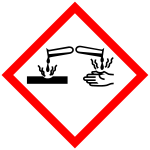
Signal word Danger
Hazard statement(s) H318 Causes serious eye damage
Precautionary statement(s) Prevention P280 Wear protective gloves/protective clothing/eye protection/face protection/hearing protection/...
Response P305+P354+P338 IF IN EYES: Immediately rinse with water for several minutes. Remove contact lenses, if present and easy to do. Continue rinsing.
P317 Get medical help.
Storage none
Disposal none
Other hazards which do not result in classification
no data available
Handling and StoragePrecautions for safe handling
Handling in a well ventilated place. Wear suitable protective clothing. Avoid contact with skin and eyes. Avoid formation of dust and aerosols. Use non-sparking tools. Prevent fire caused by electrostatic discharge steam.
Conditions for safe storage, including any incompatibilities
Store the container tightly closed in a dry, cool and well-ventilated place. Store apart from foodstuff containers or incompatible materials.
-
-
Seller Information
-
Business Type:
Trader
-
Main Products:
Ethyl chloroacetate,Methyl chloroacetate,2-Thiophenecarboxaldehyde,Zinc Sulfide,DCOIT,Trichloroisocyanuric Acid
-
Location:
NO.2577, DONGFANG ROAD,WEIFANG,CHINA
-
Payment Terms:
TT against copy of documents,D/P,TT against B/L draft before shipment,100% TT in advance
-
Average lead Time:
300 days
-
Total Annual Revenue:
$25 million-$50 million
-
Total Employees:
11-50
-
Year of Establishment:
2004
-
-
Inquiry History3 Inquiries
Country Product Purchase Quantity Date Posted  United States
D-(-)-Tartaric acid
5 KG Mar 15, 2025
United States
D tartaric acid
10 KG Jun 24, 2024
United States
D-(-)-Tartaric Acid
10 KG Dec 15, 2024 Post an enquiry for this product
More from this Seller
-
-

-
Diphenyl sulfone 99.5% White crystalline Powder 99.5% OUCHEM
Industrial Grade / 99.5%
-
-
-
ethyl]amino]ethyl]glycine monohydrochloride 97% OUCHEM")
-
N-[2-[[2-(dodecylamino)ethyl]amino]ethyl]glycine monohydrochloride 97% OUCHEM
Pharmaceutical Grade / 97%
-
-
-
OXY]ETHOXY]ETHANOL 98% Colorless liquid 98% OUCHEM")
-
2-[2-[(2-ETHYLHEXYL)OXY]ETHOXY]ETHANOL 98% Colorless liquid 98% OUCHEM
Industrial Grade / 98%
-


Hot Related Products
-
 Liquid Calcium Fertilizer - Fast-Absorbing Calcium Nutrition for Healthier Plants
-
 99% pure high quality raw material Calcium chloride CAS 10043-52-4 with Best Price
-
 Anhydrous Calcium Chloride
-
 Wholesale Calcium Chloride Flakes Industrial Grade Chemical Raw Material for Water Treatment and Construction
-
 Calcium chloride White to gray powder
-
 Calcium Chloride 74% White Powder, Flake
-
 Calcium Chloride 94% 74% 77% & FOOD GRADE Off-White free-flowing
-
 Calcium chloride 94.0%
-
 Calcium Chloride Sewage Treatment CAS 10043-52-4 White Granules Powder Flakes 74% 90% 77% 94% for sale
-
 China professional factory suply Calcium Chloride CAS NO. 10043-52-4


