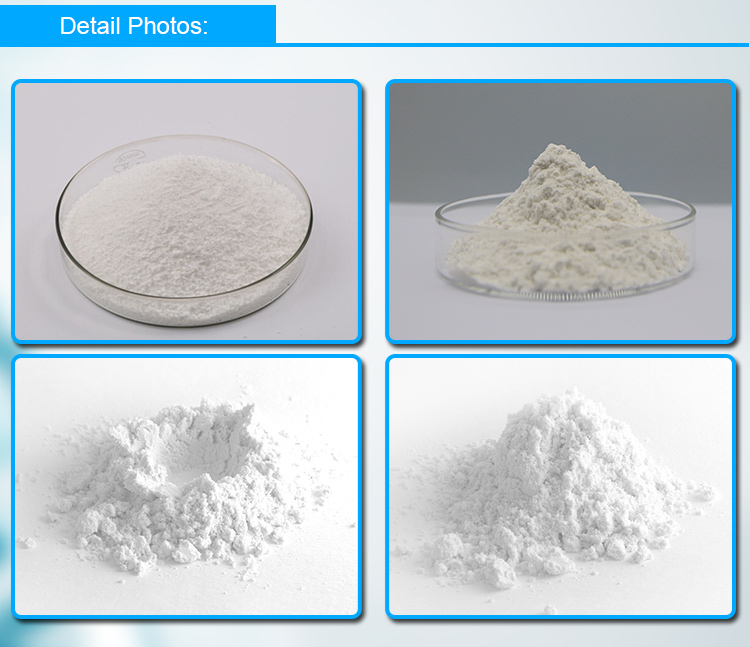
Lenvatinib
417716-92-8
Shanghai Port
1kg;10kg
2023-08-06
Upadacitinib Hemihydrate,(S)-(+)-1-Boc-3-hydroxypyrrolidine
-
Product Description
-
Seller Information
-
DescriptionECHEMI Editorial ReferenceLenvatinib is an oral, multi-targeted tyrosine kinase inhibitor with IC50s of 4 and 5.2 nM for VEGFR2(KDR) and VEGFR3(Flt-4), respectively. Lenvatinib is less potent against VEGFR1/Flt-1 and shows approximately 10-fold selectivity for VEGFR2/3 over FGFR1, PDGFRα/β.
Lenvatinib is a member of the class of quinolines that is the carboxamide of 4-{3-chloro-4-[(cyclopropylcarbamoyl)amino]phenoxy}-7-methoxyquinoline-6-carboxylic acid. A multi-kinase inhibitor and orphan drug used (as its mesylate salt) for the treatment of various types of thyroid cancer that do not respond to radioiodine. It has a role as a vascular endothelial growth factor receptor antagonist, an orphan drug, an antineoplastic agent, an EC 2.7.10.1 (receptor protein-tyrosine kinase) inhibitor and a fibroblast growth factor receptor antagonist. It is a member of quinolines, an aromatic ether, a monocarboxylic acid amide, an aromatic amide, a member of monochlorobenzenes, a member of cyclopropanes and a member of phenylureas. It is a conjugate base of a lenvatinib(1+).|Lenvatinib is a receptor tyrosine kinase (RTK) inhibitor that inhibits the kinase activities of vascular endothelial growth factor (VEGF) receptors VEGFR1 (FLT1), VEGFR2 (KDR), and VEGFR3 (FLT4). Lenvatinib also inhibits other RTKs that have been implicated in pathogenic angiogenesis, tumor growth, and cancer progression in addition to their normal cellular functions, including fibroblast growth factor (FGF) receptors FGFR1, 2, 3, and 4; the platelet derived growth factor receptor alpha (PDGFRα), KIT, and RET. These receptor tyrosine kinases (RTKs) located in the cell membrane play a central role in the activation of signal transduction pathways involved in the normal regulation of cellular processes, such as cell proliferation, migration, apoptosis and differentiation, and in pathogenic angiogenesis, lymphogenesis, tumour growth and cancer progression. In particular, VEGF has been identified as a crucial regulator of both physiologic and pathologic angiogenesis and increased expression of VEGF is associated with a poor prognosis in many types of cancers. Lenvatinib is indicated for the treatment of patients with locally recurrent or metastatic, progressive, radioactive iodine (RAI)-refractory differentiated thyroid cancer. Most patients with thyroid cancer have a very good prognosis with treatment (98% 5 year survival rate) involving surgery and hormone therapy. However, for patients with RAI-refractory thyroid cancer, treatment options are limited and the prognosis is poor, leading to a push for the development of more targeted therapies such as lenvatinib.|Lenvatinib is a Kinase Inhibitor. The mechanism of action of lenvatinib is as a Receptor Tyrosine Kinase Inhibitor.|Lenvatinib is orally available multi-kinase inhibitor and antineoplastic agent that is used in treatment of advanced, metastatic medullary thyroid cancer and refractory renal cell carcinoma. Lenvatinib is associated with a modest rate of serum enzyme elevations during treatment and has been implicated to rare instances of clinically apparent, acute liver injury some of which have been fatal.|Lenvatinib is a synthetic, orally available inhibitor of vascular endothelial growth factor receptor 2 (VEGFR2, also known as KDR/FLK-1) tyrosine kinase with potential antineoplastic activity. Lenvatinib blocks VEGFR2 activation by VEGF, resulting in inhibition of the VEGF receptor signal transduction pathway, decreased vascular endothelial cell migration and proliferation, and vascular endothelial cell apoptosis.Basic Info-
Product Name:
Lenvatinib
Other Name:6-Quinolinecarboxamide,4-[3-chloro-4-[[(cyclopropylamino)carbonyl]amino]phenoxy]-7-methoxy-;4-[3-Chloro-4-[[(cyclopropylamino)carbonyl]amino]phenoxy]-7-methoxy-6-quinolinecarboxamide;E 7080;Lenvatinib;ER 203492-00;Lenvanix;942407-57-0
CAS No.:417716-92-8
Molecular Formula:C21H19ClN4O4
InChIKeys:InChIKey=WOSKHXYHFSIKNG-UHFFFAOYSA-N
Molecular Weight:426.853
Exact Mass:426.85
UNII:EE083865G2
DSSTox ID:DTXSID50194605
NCI Thesaurus Code:C95124
ATC Code:L01XE|L01XE29|L - Antineoplastic and immunomodulating agents
Categories:
Characteristics-
PSA:
115.57000
XLogP3:2.8
Density:1.5±0.1 g/cm3
Boiling Point:627.2±55.0 °C at 760 mmHg
Flash Point:333.1±31.5 °C
Refractive Index:1.697
PKA:5.05None
Dissociation Constants:5.05
Hazard IdentificationClassification of the substance or mixture
no data available
GHS label elements, including precautionary statements
Pictogram(s) no data available Signal word no data available
Hazard statement(s) no data available
Precautionary statement(s) Prevention no data available
Response no data available
Storage no data available
Disposal no data available
Other hazards which do not result in classification
no data available
Handling and StoragePrecautions for safe handling
Handling in a well ventilated place. Wear suitable protective clothing. Avoid contact with skin and eyes. Avoid formation of dust and aerosols. Use non-sparking tools. Prevent fire caused by electrostatic discharge steam.
Conditions for safe storage, including any incompatibilities
Store the container tightly closed in a dry, cool and well-ventilated place. Store apart from foodstuff containers or incompatible materials.
-
-
Seller Information
-
Business Type:
Trader
-
Main Products:
Upadacitinib Hemihydrate,(S)-(+)-1-Boc-3-hydroxypyrrolidine
-
Location:
Honggutan District, Nanchang City, Jiangxi Province
-
Payment Terms:
TT against copy of documents,L/C
-
Average lead Time:
50
-
Total Annual Revenue:
$2.5 million-$5 million
-
Total Employees:
11-50
-
Year of Establishment:
2021
-
-
Country Product Purchase Quantity Date Posted Post an enquiry for this product