Product
Supplier
Encyclopedia
Inquiry
Home > Biochemical Engineering > Inhibitors > Aristolochic acid for Sale > Best Quality Supplyer Aristolochic acid (313-67-7)
Best Quality Supplyer Aristolochic acid  (313-67-7) buy - large image1
Best Quality Supplyer Aristolochic acid  (313-67-7) buy - image1
Best Quality Supplyer Aristolochic acid  (313-67-7) buy - image2
Best Quality Supplyer Aristolochic acid  (313-67-7) buy - image3
Best Quality Supplyer Aristolochic acid  (313-67-7) buy - image4
Best Quality Supplyer Aristolochic acid  (313-67-7) buy - image5
Best Quality Supplyer Aristolochic acid  (313-67-7) buy - image6

Best Quality Supplyer Aristolochic acid (313-67-7)

Unit Price: Get Latest Price
CAS No.:

313-67-7

Grade:

Industrial Grade

Content:

99%

Port:

Durban

Brand:

Custom

Packaging:

As per customer requirement

Price valid (until):

2024-05-19

Company Type:
Distributor
Location:
South Africa
Qualification:
Main Products:

Sodium Lauryl Ether Sulfate,Caustic Soda,Soda Ash,Citric Acid,Calcium Hypochlorite,Oxalic Acid

  • Product Description

  • Seller Information

  • Description


      Product Detail  


        1. Aristolochic Acid (313-67-7): Understanding its Properties, Uses, and Risks

          Aristolochic acid, identified by the CAS number 313-67-7, is a naturally occurring compound found in various plants of the Aristolochia genus. This organic compound, primarily derived from plants like Aristolochia clematitis, possesses unique chemical properties that have attracted both scientific interest and concern due to its significant implications in medicine and toxicology.

          Chemical Structure and Properties

          Aristolochic acid is characterized by its complex chemical structure, which includes a bicyclic ring system containing nitrogen atoms. Its molecular formula is C17H11NO7, and it belongs to the class of aristolochic acids, which are nitrophenanthrene carboxylic acids.

          Biological Significance

          Despite its toxic nature, aristolochic acid has been historically utilized in traditional medicine for its purported therapeutic properties. It has been employed in various cultures for the treatment of conditions such as arthritis, snakebites, and even cancer.

          Medical Applications and Research

          Research into aristolochic acid's potential medical applications has been ongoing, particularly in the field of oncology. Some studies have suggested its cytotoxic effects on cancer cells, leading to investigations into its potential use as an anticancer agent. However, its toxicity profile presents significant challenges in this regard.

          Toxicity and Health Risks

          One of the most notable aspects of aristolochic acid is its high toxicity to humans. Prolonged exposure or consumption of plants containing aristolochic acid has been linked to severe renal toxicity, nephropathy, and even carcinogenesis. Aristolochic acid nephropathy (AAN) is a well-documented condition characterized by progressive renal failure and an increased risk of urothelial carcinoma.

          Regulatory Status and Controversies

          Due to its potent toxicity, many countries have imposed regulations on the use of aristolochic acid-containing products in both traditional and modern medicine. However, controversies persist, particularly regarding the presence of aristolochic acid in certain herbal supplements and traditional remedies, raising concerns about inadvertent exposure and associated health risks.

          Analytical Methods and Detection

          Detection and quantification of aristolochic acid in biological samples and herbal products require sophisticated analytical techniques, including chromatography and mass spectrometry. These methods play a crucial role in ensuring consumer safety and regulatory compliance.

          Risk Mitigation and Public Health Strategies

          In light of the significant health risks associated with aristolochic acid exposure, public health efforts focus on raising awareness among healthcare professionals, regulating the use of herbal products containing aristolochic acid, and implementing stringent quality control measures in the herbal medicine industry.

          Conclusion

          Aristolochic acid, with its intricate chemistry and profound biological effects, serves as a poignant example of the complex interplay between traditional medicine, scientific research, and public health. While its toxic nature poses formidable challenges, ongoing research aims to elucidate its mechanisms of action, potential therapeutic applications, and effective strategies for mitigating associated health risks. Vigilance, regulation, and continued scientific inquiry are essential in navigating the multifaceted landscape of aristolochic acid and its implications for human health.


      Specifications  


    Items Specifications
    1. Structure Aristolochic acid is a naturally occurring nitrophenanthrene carboxylic acid found in some plants of the Aristolochia genus.
    2. Source It is primarily derived from plants such as Aristolochia clematitis and Aristolochia indica.
    3. Chemical Formula The chemical formula of Aristolochic acid is C17H11NO7.
    4. Toxicity Aristolochic acid is known to be highly toxic and carcinogenic, particularly to the kidneys and urinary tract.
    5. Nephrotoxicity Its consumption has been linked to severe kidney damage and the development of renal fibrosis.
    6. Carcinogenicity Prolonged exposure to Aristolochic acid increases the risk of developing cancer, especially in the urinary tract.
    7. Mutagenicity It exhibits mutagenic properties, causing DNA damage and potentially leading to mutations and cancer formation.
    8. Herbal Remedies Aristolochic acid has historically been used in traditional Chinese medicine, but its use has been restricted due to its toxic effects.
    9. Regulatory Actions Several countries have implemented regulations or outright bans on products containing Aristolochia species due to health concerns.
    10. Aristolochic Acid I The main component of Aristolochic acid found in plants, also known as aristolochic acid I.
    11. Aristolochic Acid II Another variant of Aristolochic acid found in nature, known as aristolochic acid II.
    12. Herbal Contamination Aristolochic acid contamination has been found in herbal products, especially those marketed for weight loss or detoxification.
    13. Renal Failure Consumption of Aristolochic acid has been associated with cases of severe renal failure and the need for dialysis.
    14. Legal Restrictions Due to its health risks, the sale and use of products containing Aristolochic acid are restricted in many countries.
    15. Research Areas Ongoing research aims to better understand the mechanisms of Aristolochic acid toxicity and develop treatments for exposure-related conditions.


      Product Detail  


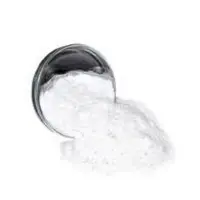
    Shop Certified Aristolochic Acid CAS 313-67-7 Aristolochia Debilis Extract Powder Purity 99% Chemicals 99% White Powder HHD-Detailed Image 1Shop Certified Aristolochic Acid CAS 313-67-7 Aristolochia Debilis Extract Powder Purity 99% Chemicals 99% White Powder HHD-Detailed Image 2

    Basic Info
    Product Name:

    Aristolochic acid

    Other Name:

    Phenanthro[3,4-d]-1,3-dioxole-5-carboxylic acid,8-methoxy-6-nitro-;8-Methoxy-6-nitrophenanthro[3,4-d]-1,3-dioxole-5-carboxylic acid;Aristolochic acid I;Tardolyt;TR 1736;Aristolochic acid;Aristolochic acid A;Aristolochic acid 1;NSC 11926;NSC 50413;Aristolochia A;8-Methoxy-3,4-methylenedioxy-10-nitrophenanthrene-1-carboxylic acid;12770-90-0;61117-05-3;1414787-57-7

    CAS No.:

    313-67-7

    Molecular Formula:

    C17H11NO7

    InChIKeys:

    InChIKey=BBFQZRXNYIEMAW-UHFFFAOYSA-N

    Molecular Weight:

    341.27

    Exact Mass:

    341.27

    EC Number:

    206-238-3

    UNII:

    94218WFP5T

    NSC Number:

    50413|11926

    DSSTox ID:

    DTXSID0040969

    HScode:

    29329990

    Categories:

    Inhibitors

    Characteristics
    PSA:

    111

    XLogP3:

    3.6

    Appearance:

    yellow powder

    Density:

    1.6±0.1 g/cm3

    Melting Point:

    278 °C (decomp)

    Boiling Point:

    615.5°C at 760 mmHg

    Flash Point:

    326.0±31.5 °C

    Refractive Index:

    1.747

    Water Solubility:

    DMSO: soluble

    Storage Conditions:

    2-8°C

    Toxicity:

    Oral-rat LD50: 184 mg/kg; Oral-Mouse LD50: 55.9 mg/kg

    Flammability characteristics:

    Flammable; burning produces toxic nitrogen oxide fumes

    Hazard Identification

    Classification of the substance or mixture

    Acute toxicity - Category 3, Oral

    GHS label elements, including precautionary statements

    Pictogram(s)
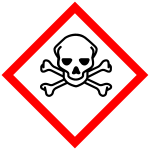
    Signal word

    Danger

    Hazard statement(s)

    H301 Toxic if swallowed

    Precautionary statement(s)
    Prevention

    P264 Wash ... thoroughly after handling.

    P270 Do not eat, drink or smoke when using this product.

    Response

    P301+P316 IF SWALLOWED: Get emergency medical help immediately.

    P321 Specific treatment (see ... on this label).

    P330 Rinse mouth.

    Storage

    P405 Store locked up.

    Disposal

    P501 Dispose of contents/container to an appropriate treatment and disposal facility in accordance with applicable laws and regulations, and product characteristics at time of disposal.

    Other hazards which do not result in classification

    no data available

    Handling and Storage

    Precautions for safe handling

    Handling in a well ventilated place. Wear suitable protective clothing. Avoid contact with skin and eyes. Avoid formation of dust and aerosols. Use non-sparking tools. Prevent fire caused by electrostatic discharge steam.

    Conditions for safe storage, including any incompatibilities

    Store the container tightly closed in a dry, cool and well-ventilated place. Store apart from foodstuff containers or incompatible materials.

  • Seller Information
    Business Type:

    Distributor

    Main Products:

    Sodium Lauryl Ether Sulfate,Caustic Soda,Soda Ash,Citric Acid,Calcium Hypochlorite,Oxalic Acid

    Location:

    13 PROTEA PARK MILKWOOD STREET RANGEVIEW GAUTENG 1739

    Payment Terms:

    TT against copy of documents,TT against B/L draft before shipment

    Average lead Time:

    60

    Total Annual Revenue:

    $1 million-$2.5 million

    Total Employees:

    11-50

    Year of Establishment:

    2012

  • Country Product Purchase Quantity Date Posted
    Post an enquiry for this product
pic ×

Scan the QR Code to Share

All products displayed on this website are only for non-medical purposes such as industrial applications or scientific research, and cannot be used for clinical diagnosis or treatment of humans or animals. They are not medicinal or edible.

According to relevant laws and regulations and the regulations of this website, units or individuals who purchase hazardous materials should obtain valid qualifications and qualification conditions.

The information shown above is provided by the enterprise itself, and the authenticity, accuracy and legitimacy of the content are the responsibility of the publishing company. ECHEMI does not bear any guarantee responsibility for this. Please be aware that risks in internet transactions objectively exist.

Feedback & Suggestions
Send Message

Thank you for your feedback. If you require further assistance, please contact us by email at info@echemi.com or call us at +86-532-55729510.