

1,3-propane sultone 1120-71-4
TDS 1 Inquiries
1120-71-4
Industrial Grade
99.95%
SHANGHAI
ZHISHANG
25kg
Yes
2024-12-20

Agrochemicals,Daily Chemicals,Catalysts & Chemical Auxiliary Agents,Extract,Inorganic Chemicals,Organic Intermediate
-
Product Description
-
Seller Information
-
Inquiry History
-
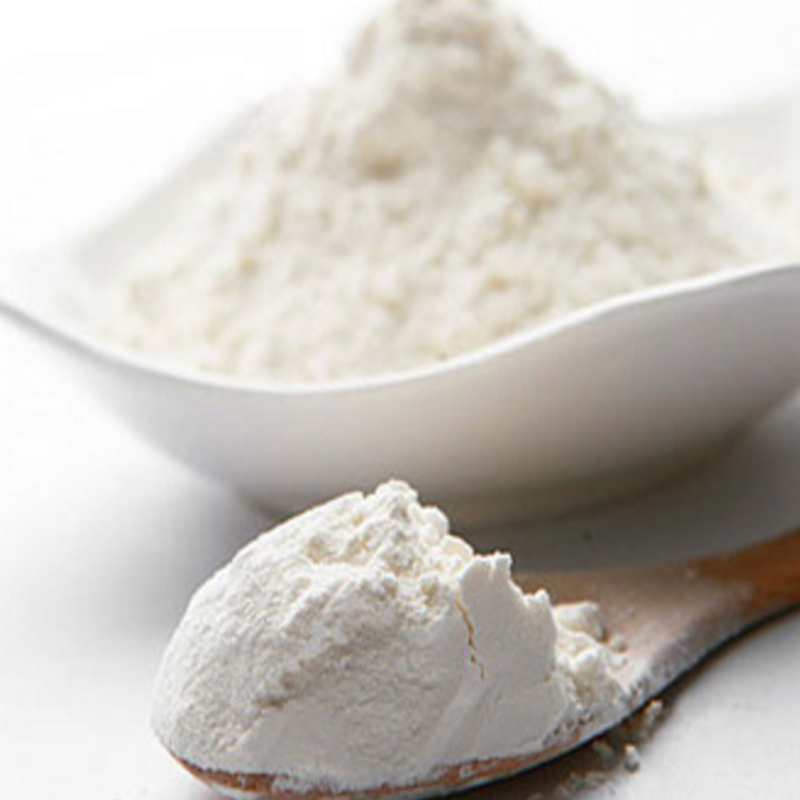
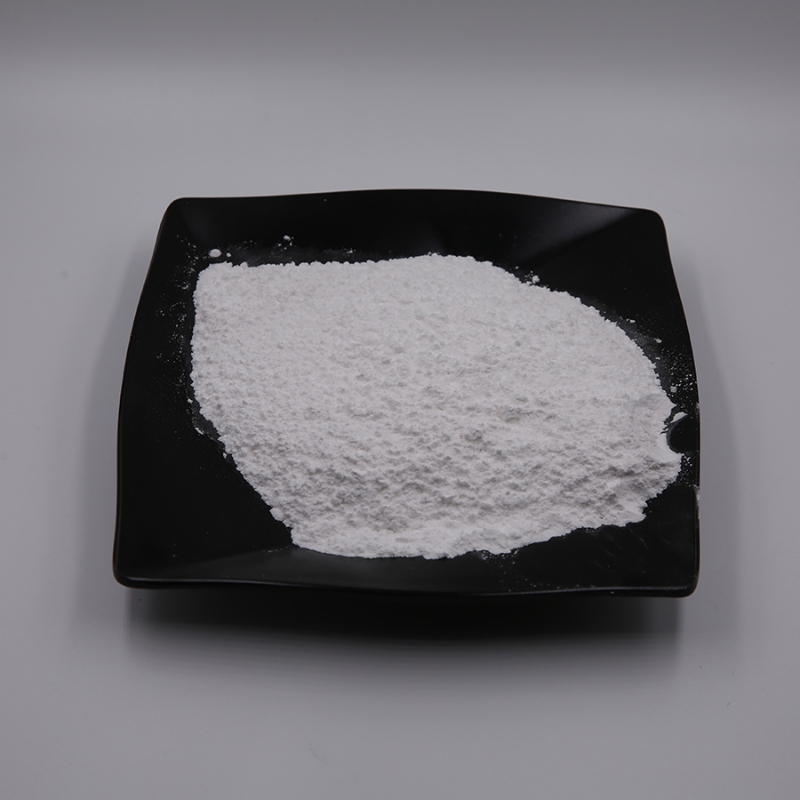
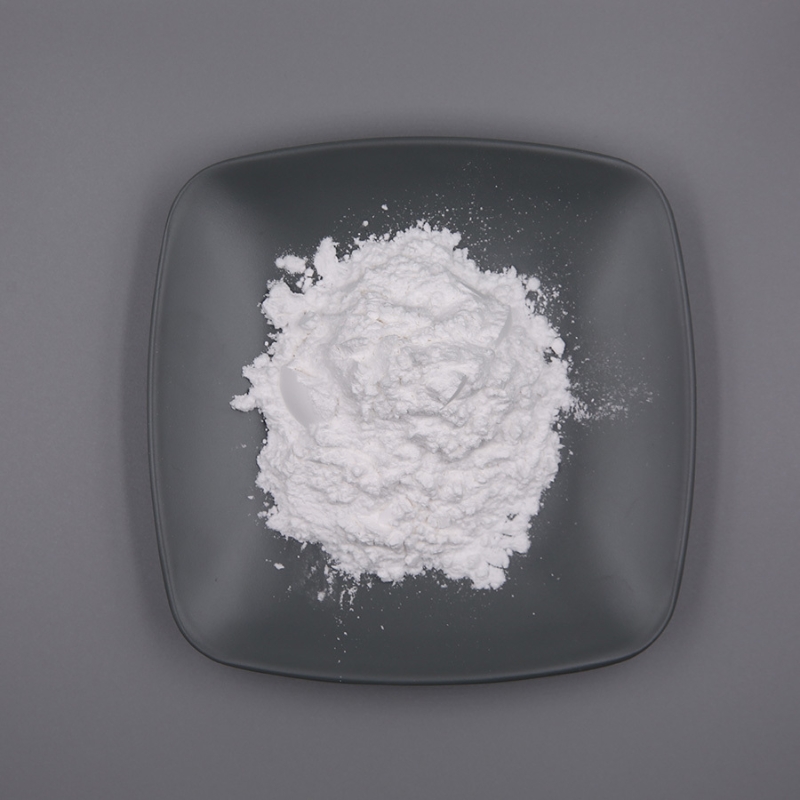
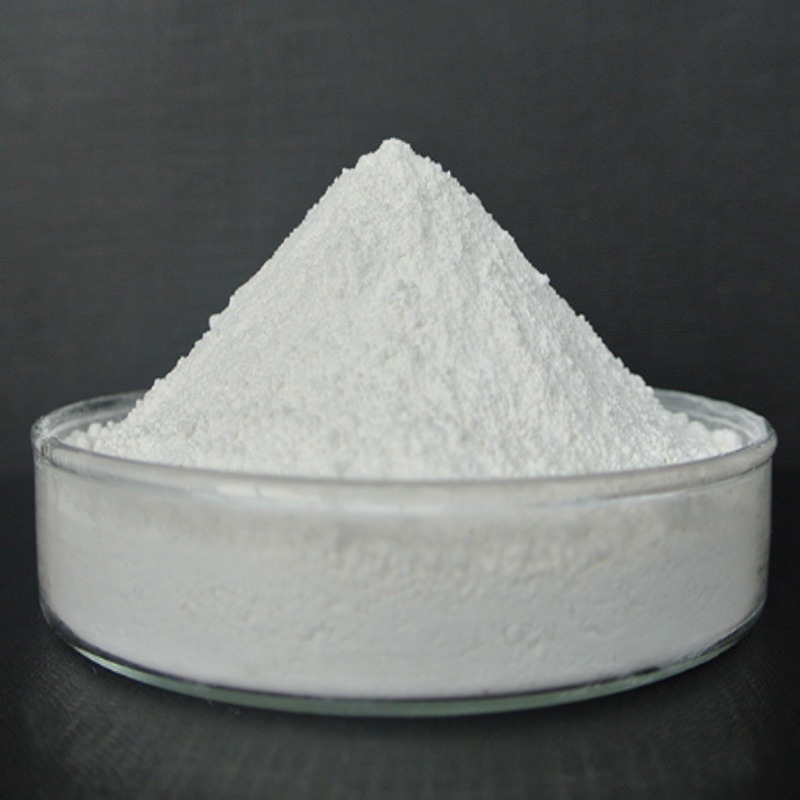
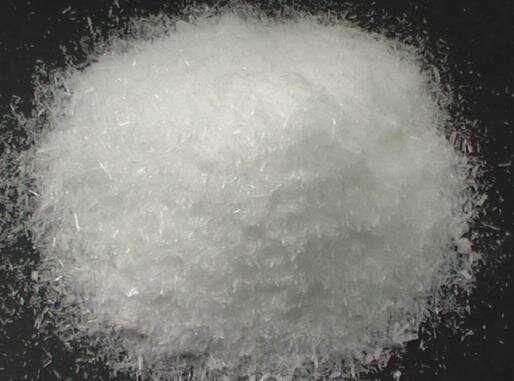
DescriptionECHEMI Editorial ReferenceWhite To Off-White low melting Solid 1,3-Propane sultone is a white crystalline solid or a colorless liquid above 30 C. It releases a foul odor as it melts.White crystalline solid or a colorless liquid. Melting point 86°F. Releases a foul odor when melting.
Propane sultone appears as white crystalline solid or a colorless liquid (above 86°F). Releases a foul odor when melting. (NIOSH, 2016)|WHITE CRYSTALS OR COLOURLESS LIQUID WITH CHARACTERISTIC ODOUR.|White, crystalline solid or a colorless liquid (above 86°F). [Note: Releases a foul odor as it melts.]
Propane sultone appears as white crystalline solid or a colorless liquid (above 86°F). Releases a foul odor when melting. (NIOSH, 2016)|1,3-Propane sultone is a sultone.|1,3-Propane sultone is used as a chemical intermediate. No information is available on the acute (short- term), chronic (long-term), reproductive, developmental, and carcinogenic effects of 1,3-propane sultone in humans. In rodents exposed to 1,3-propane sultone via gavage (experimentally placing the chemical in the stomach) and intravenous injection, tumors of the brain and other central nervous system (CNS) tissues have been observed. Leukemia, and tumors of the ear duct, small intestine, kidneys, lung, mammary gland, uterus, and skin have been reported in rodents exposed via gavage, injection, or dermal contact. The International Agency for Research on Cancer (IARC) has classified 1,3-propane sultone as a Group 2B, possible human carcinogen.CertificatesBasic Info-
Product Name:
Propane sultone
Other Name:1,2-Oxathiolane,2,2-dioxide;1-Propanesulfonic acid,3-hydroxy-,γ-sultone;1,3-Propane sultone;γ-Propane sultone;Propane sultone;3-Hydroxy-1-propanesulfonic acid sultone;Propyl sultone;3-Hydroxy-1-propanesulfonic acid γ-sultone;NSC 42386;1,3-Trimethylene sultone;1,2-Oxathiolan-2,2-dioxide;1,2-Oxathiolane-2,2-dioxide;ES 200L
CAS No.:1120-71-4
Molecular Formula:C3H6O3S
InChIKeys:InChIKey=FSSPGSAQUIYDCN-UHFFFAOYSA-N
Molecular Weight:122.14
Exact Mass:122.14
EC Number:214-317-9
UNII:L6NTK7VJX9
ICSC Number:1524
NSC Number:42386
UN Number:2810|2811|3077
DSSTox ID:DTXSID8021195
Color/Form:COLORLESS LIQ OR WHITE CRYSTALS|White, crystalline solid or a colorless liquid (above 86 degrees F).
HScode:29349990
Categories:
Characteristics-
PSA:
51.75000
XLogP3:-0.69
Appearance:Propane sultone appears as white crystalline solid or a colorless liquid (above 86°F). Releases a foul odor when melting. (NIOSH, 2016)
Density:1.393 g/cm3 @ Temp: 40 °C
Melting Point:31 °C
Boiling Point:180 °C @ Press: 30 Torr
Flash Point:>230 °F
Refractive Index:1.4332 (estimate)
Water Solubility:H2O: Slightly soluble
Storage Conditions:PRECAUTIONS FOR "CARCINOGENS": Storage site should be as close as practical to lab in which carcinogens are to be used, so that only small quantities required for ... expt need to be carried. Carcinogens should be kept in only one section of cupboard, an explosion-proof refrigerator or freezer (depending on chemicophysical properties ...) that bears appropriate label. An inventory ... should be kept, showing quantity of carcinogen & date it was acquired ... Facilities for dispensing ... should b
Vapor Pressure:0.00237mmHg at 25°C
Flammability characteristics:Combustible Solid
Odor:Foul odor above 31.11 °C.
Experimental Properties:HYDROLYZES TO 3-HYDROXY-1-PROPANESULFONIC ACID.
Air and Water Reactions:Soluble in water [Hawley].
Reactive Group:Acids, Strong Oxidizing
Reactivity Alerts:Water-Reactive
Reactivity Profile:PROPANE SULTONE reacts slowly with water to give 3-hydroxopropanesulfonic acid. This reaction may be accelerated by acid. May react with strong reducing agents to give toxic and flammable hydrogen sulfide.
Flammable Limits:Combustible Solid
Hazard IdentificationClassification of the substance or mixture
Acute toxicity - Category 4, Oral
Acute toxicity - Category 4, Dermal
Carcinogenicity, Category 1B
GHS label elements, including precautionary statements
Pictogram(s) 
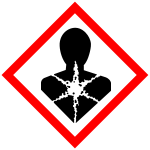
Signal word Danger
Hazard statement(s) H302 Harmful if swallowed
H312 Harmful in contact with skin
H350 May cause cancer
Precautionary statement(s) Prevention P264 Wash ... thoroughly after handling.
P270 Do not eat, drink or smoke when using this product.
P280 Wear protective gloves/protective clothing/eye protection/face protection/hearing protection/...
P203 Obtain, read and follow all safety instructions before use.
Response P301+P317 IF SWALLOWED: Get medical help.
P330 Rinse mouth.
P302+P352 IF ON SKIN: Wash with plenty of water/...
P317 Get medical help.
P321 Specific treatment (see ... on this label).
P362+P364 Take off contaminated clothing and wash it before reuse.
P318 IF exposed or concerned, get medical advice.
Storage P405 Store locked up.
Disposal P501 Dispose of contents/container to an appropriate treatment and disposal facility in accordance with applicable laws and regulations, and product characteristics at time of disposal.
Other hazards which do not result in classification
no data available
Handling and StoragePrecautions for safe handling
NO open flames. Handling in a well ventilated place. Wear suitable protective clothing. Avoid contact with skin and eyes. Avoid formation of dust and aerosols. Use non-sparking tools. Prevent fire caused by electrostatic discharge steam.
Conditions for safe storage, including any incompatibilities
Dry. Well closed. Separated from food and feedstuffs.PRECAUTIONS FOR "CARCINOGENS": Storage site should be as close as practical to lab in which carcinogens are to be used, so that only small quantities required for ... expt need to be carried. Carcinogens should be kept in only one section of cupboard, an explosion-proof refrigerator or freezer (depending on chemicophysical properties ...) that bears appropriate label. An inventory ... should be kept, showing quantity of carcinogen & date it was acquired ... Facilities for dispensing ... should be contiguous to storage area. Chemical Carcinogens
-
-
Seller Information
-
Business Type:
Manufactory
-
Main Products:
Agrochemicals,Daily Chemicals,Catalysts & Chemical Auxiliary Agents,Extract,Inorganic Chemicals,Organic Intermediate
-
Location:
hisense intelligence valley,no 2116,of phoenix road
-
Payment Terms:
TT against copy of documents,D/P,L/C
-
Average lead Time:
7 days
-
Total Annual Revenue:
Less than $1 million
-
Total Employees:
11-50
-
Year of Establishment:
2017
-
-
Inquiry History1 Inquiries
Country Product Purchase Quantity Date Posted  United States
1,3-propane sultone
10 MT Nov 19, 2024 Post an enquiry for this product



 mass ratio of sodium polyacrylate to calcium chloride is 0.1:1; (3) Prepare a sodium carbonate solution with a mass concentration of 20%, and then quickly add the mixed solution B obtained above to a sodium carbonate solution, stir and precipitate at 5000 rpm, filter after the precipitation is completed, wash the precipitate with deionized water, and dry to obtain porous calcium carbonate; (4) Mix perbenzoic acid and deionized water The mixture was stirred at 50°C until the solid dissolved, and then porous calcium carbonate was added, and the mixture was immersed for 3 hours, and then cooled to room temperature and dried to obtain a catalyst; wherein the mass ratio of peroxybenzoic acid to porous calcium carbonate was 1:15; (5) sodium allyl sulfonate and sulfuric acid solution were mixed and added to a three-necked flask, and stirred at a stirring speed of 1500 rpm for 10 minutes, and then the catalyst prepared above was added, and the temperature was slowly raised to 80°C, and the mixture was stirred for 1 hour. After the reaction was completed, the mixture was cooled to room temperature, and an ethanol solution of sodium hydroxide was added. , stirring and mixing for 30 minutes, then adding hydrochloric acid to acidify, to obtain 3-hydroxypropanesulfonic acid; wherein the mass ratio of the sodium allyl sulfonate to the catalyst is 10:1; and in the ethanol solution of sodium hydroxide, the mass ratio of sodium hydroxide to ethanol is 5:15; (6) adding the above-prepared 3-hydroxypropanesulfonic acid and n-hexane to a three-necked flask, stirring and reacting at 100°C and 3000 rpm for 3 hours, cooling to room temperature after the reaction is completed, and distilling under reduced pressure to obtain the target product 1,3-propane sultone.