Diisobutyl Ketone6
8 Inquiries
108-83-8
Industrial Grade
100%
Rotterdam
50KG
2025-07-20

Food Chemicals,Industrial Chemicals,Organic Chemicals
-
Product Description
-
Seller Information
-
Inquiry History
-
DescriptionECHEMI Editorial Referencecolourless liquid2, 6-Dimethyl-4-heptanone, also known as diisobutyl ketone, belongs to the family of ketones, being a flavoring ingredient. It can also be used as the extraction solvent for the determination of ten trace metals (V, Cr, Fe, Co, Ni, Cu, Zn, Mo, Cd, Pb) in aqueous samples with plasma atomic emission spectrometry. Similar logic can also be applied to the measurement of phosphorus using 2, 6-dimethyl-4-heptanone as the extraction agent. It is also an important organic solvent widel
Diisobutyl ketone appears as a clear colorless liquid. Flash point 140°F. Less dense than water and insoluble in water. Vapors heavier than air.|Liquid|COLOURLESS LIQUID WITH CHARACTERISTIC ODOUR.|colourless, oily liquid with a fruity and sweet or menthol-like odour|Colorless liquid with a mild, sweet odor.
Diisobutyl ketone appears as a clear colorless liquid. Flash point 140°F. Less dense than water and insoluble in water. Vapors heavier than air.|2-Methyl-4-heptanone is a ketone.Basic Info-
Product Name:
Isobutyl ketone
Other Name:4-Heptanone,2,6-dimethyl-;2,6-Dimethyl-4-heptanone;DIBK;Diisobutyl ketone;s-Diisopropylacetone;Isobutyl ketone;Isovalerone;DIBC;NSC 15136;NSC 406913;958635-42-2
CAS No.:108-83-8
Molecular Formula:C9H18O
InChIKeys:InChIKey=PTTPXKJBFFKCEK-UHFFFAOYSA-N
Molecular Weight:142.24
Exact Mass:142.24
BRN:1743163
EC Number:203-620-1
UNII:V52W30H1BU
ICSC Number:0713
NSC Number:406913|15136
UN Number:1157
DSSTox ID:DTXSID4025080
Color/Form:WATER CLEAR LIQUID|Colorless oil|Colorless liquid
HScode:29141990
Categories:
Characteristics-
PSA:
17.1
XLogP3:2.56 (est)
Appearance:Clear colorless to slightly yellow Liquid
Density:0.8062 g/cm3 @ Temp: 20 °C
Melting Point:-41.5 °C
Boiling Point:168 °C
Flash Point:120 °F
Refractive Index:n 20/D 1.412(lit.)
Water Solubility:H2O: 0.05 g/100 mL.Miscible with ethanol, ether, carbon tetrachloride, chloroform, benzene and most organic liquids.
Storage Conditions:Flammables area
Vapor Pressure:1.7 mm Hg ( 20 °C)
Vapor Density:4.9 (vs air)
Toxicity:Oral-rat LD50: 5750 mg/kg; Oral-Mouse LD50: 1416 mg/kg
Flammability characteristics:combustible
Explosive limit:0.8-6.2%, 100°F
Odor:Peppermint odor
OH:2.60e-11 cm3/molecule*sec
Henrys Law Constant:Henry's Law constant = 1.17X10⁻⁴ atm-cu m/mol at 25 °C (est)
Experimental Properties:Saturation concentration in air: 9.3 g/cu m at 20 °C; 17 g/cu m at 30 °C|Air pollution factors: 1 mg/cu m = 0.172 ppm, 1 ppm = 5.81 mg/cu m|May attack some forms of plastics|LOW VOLATILITY|For more Other Experimental Properties (Complete) data for DIISOBUTYL KETONE (9 total), please visit the HSDB record page.
Air and Water Reactions:Flammable. Insoluble in water.
Reactive Group:Ketones
Reactivity Alerts:Highly Flammable
Reactivity Profile:DIISOBUTYL KETONE may attack some plastics. It reacts with oxidizers. (NTP, 1992)
Autoignition Temperature:745 °F (USCG, 1999)|745 °F (396 °C)|396 °C
Heat of Combustion:-16,040 BTU/LB= -8,910 CAL/G= -373X10+5 J/KG
Ionization Potential:9.04 eV
Flammable Limits:Lower flammable limit: 0.8% by volume @ 200 °F (93 °C); Upper flammable limit: 7.1% by volume @ 200 °F (93 °C)|Class II Combustible Liquid: Fl.P. at or above 100°F and below 140°F.
Heat of Vaporization:121 BTU/LB= 67 CAL/G= 2.8X10+5 J/KG
Hazard IdentificationClassification of the substance or mixture
Flammable liquids, Category 3
Specific target organ toxicity â single exposure, Category 3
GHS label elements, including precautionary statements
Pictogram(s) 

Signal word Warning
Hazard statement(s) H226 Flammable liquid and vapour
H335 May cause respiratory irritation
Precautionary statement(s) Prevention P210 Keep away from heat, hot surfaces, sparks, open flames and other ignition sources. No smoking.
P233 Keep container tightly closed.
P240 Ground and bond container and receiving equipment.
P241 Use explosion-proof [electrical/ventilating/lighting/...] equipment.
P242 Use non-sparking tools.
P243 Take action to prevent static discharges.
P280 Wear protective gloves/protective clothing/eye protection/face protection/hearing protection/...
P261 Avoid breathing dust/fume/gas/mist/vapours/spray.
P271 Use only outdoors or in a well-ventilated area.
Response P303+P361+P353 IF ON SKIN (or hair): Take off immediately all contaminated clothing. Rinse affected areas with water [or shower].
P370+P378 In case of fire: Use ... to extinguish.
P304+P340 IF INHALED: Remove person to fresh air and keep comfortable for breathing.
P319 Get medical help if you feel unwell.
Storage P403+P235 Store in a well-ventilated place. Keep cool.
P403+P233 Store in a well-ventilated place. Keep container tightly closed.
P405 Store locked up.
Disposal P501 Dispose of contents/container to an appropriate treatment and disposal facility in accordance with applicable laws and regulations, and product characteristics at time of disposal.
Other hazards which do not result in classification
no data available
Handling and StoragePrecautions for safe handling
NO open flames, NO sparks and NO smoking. Above 49°C use a closed system, ventilation and explosion-proof electrical equipment. Handling in a well ventilated place. Wear suitable protective clothing. Avoid contact with skin and eyes. Avoid formation of dust and aerosols. Use non-sparking tools. Prevent fire caused by electrostatic discharge steam.
Conditions for safe storage, including any incompatibilities
Fireproof. Separated from strong oxidants.MATERIALS WHICH ARE TOXIC AS STORED OR WHICH CAN DECOMPOSE INTO TOXIC COMPONENTS ... SHOULD BE STORED IN A COOL, WELL VENTILATED PLACE, OUT OF THE DIRECT RAYS OF THE SUN, AWAY FROM AREAS OF HIGH FIRE HAZARD, AND SHOULD BE PERIODICALLY INSPECTED. IMCOMPATIBLE MATERIALS SHOULD BE ISOLATED.
-
-
Seller Information
-
Business Type:
Trader
-
Main Products:
Food Chemicals,Industrial Chemicals,Organic Chemicals
-
Location:
BINNEN PARALLELWEG 00027 5701PH HELMOND
-
Payment Terms:
TT against copy of documents
-
Average lead Time:
300
-
Total Annual Revenue:
$1 million-$2.5 million
-
Total Employees:
5-10
-
Year of Establishment:
1969
-
-
Inquiry History8 Inquiries
Country Product Purchase Quantity Date Posted  Germany
Diisobutyl Ketone
6000 L Jul 17, 2025  Italy
Italy
Diisobutyl Ketone (DIBK)
24 MT Feb 10, 2025  Thailand
DIBK
19 20' Fcl Jan 3, 2024  Pakistan
2, 6-Dimethyl-4-Heptanone
500 KG Sep 4, 2026  Burkina-faso
Diisobutyl Ketone (DIBK)
1 20' Fcl Jun 20, 2025  Vietnam
Diisobutyl ketone
1.00 20' Fcl Apr 16, 2026  Indonesia
Diisobutyl ketone (DIBK)
2 20' Fcl May 24, 2024  Turkey
Isobutyl ketone.
2000 L Nov 14, 2023 Post an enquiry for this product
Hot Related Products
-
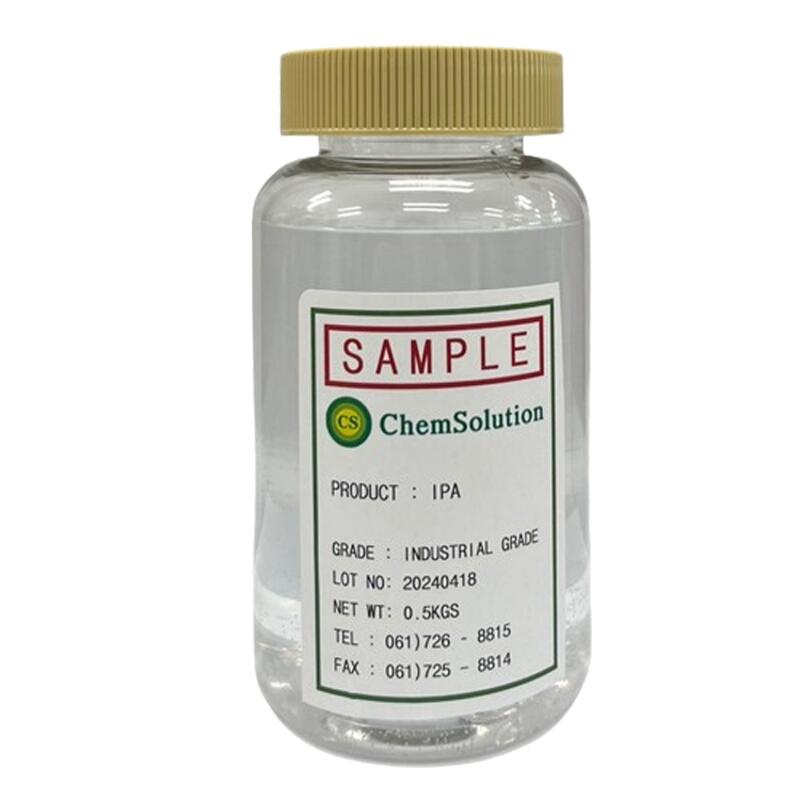
 Solvent for Bulk Buyers") South Korea Origin Supplier Selling Cas No. 67-63-0 Colorless Liquid Isopropyl Alcohol (IPA) Solvent for Bulk Buyers
South Korea Origin Supplier Selling Cas No. 67-63-0 Colorless Liquid Isopropyl Alcohol (IPA) Solvent for Bulk Buyers -
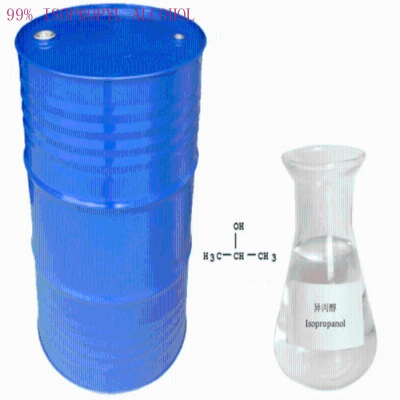
 ISOPROPYL ALCOHOL 99% CAS: 67-63-0 transparent liquid YUSSEN
 -
") Iso Propanol(IPA)
Iso Propanol(IPA) -
 Chinese high-quality isopropanol supplier 99.9% Isopropyl Alcohol/ipa
 -
 Isopropyl alcohol-IPA
 -
 Industrial Grade Isopropyl Alcohol IPA CAS 67-63-0 Solvent & Disinfectant