Name | D-Glucose-6,6-d2 |
CAS number | 18991-62-3 |
Description | D-Glucose-6,6-d2, also named as 6,6-dideuteroglucose, is a nonradioactive tracer. |
Synonym | D-Glucose-6,6-d2; 18991-62-3; Glucose, 6,6-dideutero; UNII-W8HHU8ES4E; W8HHU8ES4E; D-Glucose-6,6-c-d2; D-[6,6'-2H2]glucose; DTXSID00940518 |
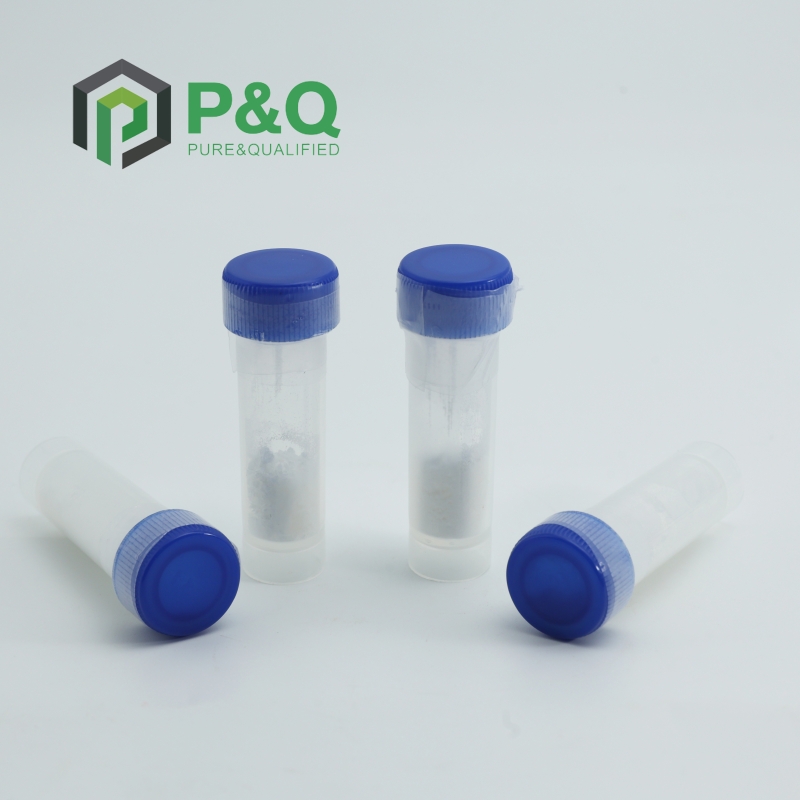
Appearance | Solid powder |
Quality Standard | USP, EP, BP, CP |
Shipping Condition | Shipped under ambient temperature as non-hazardous chemical. This product is stable enough for a few weeks during ordinary shipping and time spent in Customs. |
Storage Condition | Dry, dark and at 0 - 4 ℃ for short term (days to weeks) or -20 ℃ for long term (months to years). |
Shelf Life | >2 years if stored properly |
Sample package | Aluminium foil bag |
Commercial package | Aluminium Tin, Fiber drum |
Origin | China |
D-Glucose-6,6-d ₂ More Info
D-Glucose-6,6-d₂ is a deuterium-labeled derivative of D-glucose—one of the most abundant naturally occurring monosaccharides and the primary energy source for nearly all living organisms. The "6,6-d₂" notation specifically indicates that two hydrogen atoms (¹H) attached to the 6th carbon atom (C6) of the glucose molecule are replaced with deuterium (²H), a stable, non-radioactive isotope of hydrogen. This isotopic modification does not drastically alter the molecule’s inherent chemical behavior but introduces a distinct mass signature, making it an indispensable tool in analytical chemistry, biochemistry, and metabolic research for precise tracking and quantification.
1. Chemical Structure and Properties
Basic Structure
The parent molecule of D-Glucose-6,6-d₂ is D-glucose (molecular formula C₆H₁₂O₆), which exists primarily in a cyclic pyranose form (α-D-glucopyranose and β-D-glucopyranose) in aqueous solutions, though it can also adopt a linear aldehyde structure. The key modification in D-Glucose-6,6-d₂ occurs at the C6 position: this terminal carbon forms a hydroxymethyl group (-CH₂OH) in unlabeled glucose, but in the deuterated derivative, the two hydrogen atoms in this group are substituted with deuterium, resulting in a -CD₂OH group. This change only slightly increases the molecular weight—from ~180 g/mol for unlabeled D-glucose to ~182 g/mol for D-Glucose-6,6-d₂—without disrupting the molecule’s stereochemistry or core reactivity.
Key Physical and Chemical Properties
D-Glucose-6,6-d₂ maintains high stability under standard laboratory conditions, including room temperature and dry environments; like unlabeled glucose, it decomposes only at elevated temperatures. It exhibits solubility properties nearly identical to natural D-glucose, being highly soluble in water and polar organic solvents such as methanol and ethanol. A critical characteristic for experimental reliability is its isotopic purity: commercial and research-grade samples typically have ≥98% deuterium enrichment at the C6 position, ensuring minimal interference from unlabeled glucose in tracer studies. Its molecular formula is C₆H₁₀D₂O₆, with a precise molecular weight of approximately 182.16 g/mol.
2. Synthesis Methods
The synthesis of D-Glucose-6,6-d₂ focuses on selective deuterium incorporation at the C6 position while preserving the glucose molecule’s stereochemical integrity and avoiding unwanted modifications to other carbon sites. Two primary approaches are widely used:
Reductive Deuteration: This method starts with a glucose precursor (e.g., D-gluconolactone, a cyclic ester derived from glucose). The C6 position of the precursor, which exists as an aldehyde group (-CHO) in its linear form, is reduced using a deuterium-containing reducing agent—most commonly sodium borodeuteride (NaBD₄)—dissolved in a deuterated solvent like deuterium oxide (D₂O). The reduction converts the -CHO group to a -CD₂OH group, yielding pure D-Glucose-6,6-d₂ after purification (e.g., via chromatography).
Biocatalytic Labeling: For applications requiring ultra-high purity or stereoselectivity, enzymes such as glucose oxidase or hexokinase are used to catalyze deuterium incorporation at the C6 position. These enzymes specifically target the C6 hydroxymethyl group of glucose derivatives, minimizing side reactions and ensuring that deuterium is only added to the desired site. This method is particularly valuable for studies where even trace impurities could skew results, such as in sensitive metabolic imaging.
3. Applications
D-Glucose-6,6-d₂’s core utility lies in its role as a stable isotope tracer: it behaves like natural glucose in biological systems (e.g., being taken up by cells via glucose transporters, metabolized in glycolysis), but its deuterium label allows it to be distinguished and quantified using analytical techniques like mass spectrometry (MS) or nuclear magnetic resonance (NMR) spectroscopy. Key applications include:
3.1 Metabolic Research
In cell culture, animal models, and even human studies, D-Glucose-6,6-d₂ is used to track glucose uptake and utilization. For example, researchers can measure how quickly cells absorb the labeled glucose, how much is converted to pyruvate (the end product of glycolysis), or how it is stored as glycogen in the liver or muscles. This helps elucidate metabolic dysregulation in conditions like diabetes—where glucose uptake by cells is impaired—or obesity, where glycogen storage pathways may be altered. It also enables the study of "metabolic flux" (the rate of nutrient flow through metabolic pathways), providing insights into how cells adapt their energy use under different conditions (e.g., starvation, exercise).
3.2 Analytical Chemistry and Quality Control
In food science and pharmaceutical research, D-Glucose-6,6-d₂ serves as an internal standard for glucose quantification. When added to a sample (e.g., a fruit juice, a drug formulation containing glucose as an excipient), it accounts for errors in sample preparation (e.g., evaporation, loss during extraction) or instrument variability (e.g., MS signal drift). By comparing the signal intensity of the labeled standard to that of unlabeled glucose in the sample, researchers can calculate the exact concentration of glucose with high accuracy—critical for ensuring food safety (e.g., avoiding excess sugar in processed foods) or pharmaceutical efficacy (e.g., ensuring consistent glucose levels in drug formulations).
3.3 Biomedical Imaging and Diagnostics
In preclinical imaging, D-Glucose-6,6-d₂ is used in conjunction with techniques like hyperpolarized NMR (hpNMR) to visualize glucose metabolism in real time. Hyperpolarization enhances the NMR signal of the deuterium label, allowing researchers to track the labeled glucose as it moves through tissues (e.g., the brain, tumors). For example, in cancer research, this can reveal how rapidly tumors take up glucose (a hallmark of cancer cells, known as the Warburg effect), helping to distinguish malignant tumors from benign lesions or monitor how tumors respond to chemotherapy (e.g., a decrease in labeled glucose uptake may indicate treatment success).
3.4 Enzyme Kinetics
Enzymes that act on glucose (e.g., hexokinase, which phosphorylates glucose to glucose-6-phosphate, the first step in glycolysis) are studied using D-Glucose-6,6-d₂ to determine their kinetic parameters (e.g., reaction rate, affinity for glucose). The deuterium label allows researchers to track the formation of labeled products (e.g., glucose-6-phosphate-6,6-d₂) over time, providing data on how efficiently enzymes catalyze glucose metabolism. This is useful for developing enzyme inhibitors (e.g., drugs that block hexokinase to slow tumor metabolism) or understanding how genetic mutations in enzymes affect their function (e.g., mutations in hexokinase that cause metabolic disorders).
4. Safety Considerations
D-Glucose-6,6-d₂ is generally considered safe for laboratory and preclinical use, as deuterium is a non-toxic, stable isotope that is naturally present in small amounts in all biological systems (e.g., in water, food). However, standard laboratory safety practices should still be followed:
It should be stored in a dry, cool environment to prevent degradation (though it is more stable than many organic compounds).
Contact with skin or eyes should be avoided (like unlabeled glucose, it is not highly irritant, but concentrated solutions may cause mild discomfort).
For human studies, all use must comply with ethical guidelines and regulatory approvals, as with any experimental tracer.
Notably, its stability means it does not pose radioactive hazards—unlike radioisotope tracers (e.g., ¹⁴C-glucose)—making it safer to handle and eliminating the need for specialized radioactive waste disposal.









 Taiwan, China