Product
Supplier
Encyclopedia
Inquiry
Home > Organic Chemistry > Ketones > Methyl isobutyl ketone for Sale > 4-Methyl-2-pentanone108-10-1
4-Methyl-2-pentanone108-10-1 buy - large image1
4-Methyl-2-pentanone108-10-1 buy - image1
4-Methyl-2-pentanone108-10-1 buy - image2
4-Methyl-2-pentanone108-10-1 buy - image3
4-Methyl-2-pentanone108-10-1 buy - image4
4-Methyl-2-pentanone108-10-1 buy - image5
4-Methyl-2-pentanone108-10-1 buy - image6

4-Methyl-2-pentanone108-10-1

29 Inquiries

Unit Price:

$33-34/MT FOB

Get Latest Price
CAS No.:

108-10-1

Grade:

Industrial Grade

Content:

99.5%

Port:

上海

Brand:

OORENT

Packaging:

Vial/Bottle/Bag/Carton

Price valid (until):

2026-07-17

Company Type:
Trader
Location:
China
Qualification:
Main Products:

pharmaceutical intermediates,peptides,electronic chemicals

  • Product Description

  • Seller Information

  • Inquiry History

  • Description

    Product Detail

    4-Methyl-2-pentanone Basic information
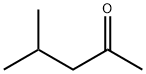
    Product Name: 4-Methyl-2-pentanone
    Synonyms: 4-METHYL-2-PENTANONE, FOR GC;4-METHYL-2-PENTANONE >=98.5% A.C.S. R&;4-METHYL-2-PENTANONE 99+% FCC;4-METHYL-2-PENTANONE, >=98.5%, A.C.S. REAGENT;METHYL ISOBUTYL KETONE GC STANDARD;Methyl-Iso-ButylKetoneGr;MethylIsobutylKetoneAcs;Methyl-Iso-ButylKetone(Iso-ButylMethylKetone)
    CAS: 108-10-1
    MF: C6H12O
    MW: 100.16
    EINECS: 203-550-1
    Product Categories: ketone;ACS and Reagent Grade Solvents;Carbon Steel Cans with NPT Threads;Nutrition Research;Phytochemicals by Plant (Food/Spice/Herb);ReagentPlus;Amber Glass Bottles;Analytical Reagents;Analytical/Chromatography;CHROMASOLV for HPLC;Chromatography Reagents &;ReagentPlus Solvent Grade Products;Semi-Bulk Solvents;Zingiber officinale (Ginger);HPLC &;HPLC Grade Solvents (CHROMASOLV);HPLC/UHPLC Solvents (CHROMASOLV);Solvent Bottles;Solvent by Application;Solvent Packaging Options;Solvents;UHPLC Solvents (CHROMASOLV);108-10-1;bc0001
    Mol File: 108-10-1.mol
    Shop 4-Methyl-2-pentanone108-10-1-Detailed Image 1

    4-Methyl-2-pentanone Chemical Properties
    Melting point  -80 °C (lit.)
    Boiling point  117-118 °C
    density  0.801 g/mL at 25 °C (lit.)
    vapor density  3.5 (vs air)
    vapor pressure  15 mm Hg ( 20 °C)
    refractive index  n20/D 1.395(lit.)
    FEMA  2731 | 4-METHYL-2-PENTANONE
    Fp  56 °F
    storage temp.  Store at +5°C to +30°C.
    solubility  water: soluble20g/L, soluble in alcohol, miscible with oils. Soluble in Propylene glycol and Glycerin.
    form  Liquid
    color  APHA: ≤15
    Specific Gravity 0.80
    Odor Pleasant; mild, characteristic; sharp; non-residual; ketonic.
    PH 7 (20°C)
    Odor Threshold 0.17ppm
    Odor Type green
    biological source synthetic
    explosive limit 1.2-8%, 93°F
    Water Solubility  17 g/L (20 ºC)
    λmax λ: 335 nm Amax: 1.00
    λ: 340 nm Amax: 0.50
    λ: 360 nm Amax: 0.15
    λ: 380 nm Amax: 0.02
    λ: 400 nm Amax: 0.01
    Merck  14,5207
    JECFA Number 301
    BRN  605399
    Henry's Law Constant 2.56 at 25 °C (batch stripping method-GC, Kim et al., 2000)
    Exposure limits ACGIH:TLV-TWA 20 ppm (82 mg/m3); TLV-STEL 75 ppm (307 mg/m3)
    OSHA:PEL-TWA 100 ppm (410 mg/m3)
    NIOSH:REL-TWA 50 ppm; REL-STEL 75 ppm
    Dielectric constant 13.0(Ambient)
    Stability: Volatile
    Cosmetics Ingredients Functions SOLVENT
    PERFUMING
    DENATURANT
    Cosmetic Ingredient Review (CIR) 4-Methyl-2-pentanone (108-10-1)
    InChI 1S/C6H12O/c1-5(2)4-6(3)7/h5H,4H2,1-3H3
    InChIKey NTIZESTWPVYFNL-UHFFFAOYSA-N
    SMILES CC(C)CC(C)=O
    LogP 1.3-1.9 at 20℃
    CAS DataBase Reference 108-10-1(CAS DataBase Reference)
    IARC 2B (Vol. 101) 2013
    NIST Chemistry Reference Methyl isobutyl ketone(108-10-1)
    EPA Substance Registry System Methyl isobutyl ketone (108-10-1)
    ECETOC JACC REPORT 4-Methyl-2-pentanone (108-10-1)

    Safety Information
    Hazard Codes  F,Xn,T
    Risk Statements  11-20-36/37-66-39/23/24/25-23/24/25
    Safety Statements  9-16-29-45-36/37-7
    RIDADR  UN 1245
    OEB A
    OEL TWA: 50 ppm (205 mg/m3), STEL: 75 ppm (300 mg/m3)
    WGK Germany  1
    RTECS  SA9275000
    Autoignition Temperature 840 °F
    TSCA  TSCA listed
    HS Code  2914 13 00
    HazardClass  3
    PackingGroup  II
    Storage Class 3 - Flammable liquids
    Hazard Classifications Acute Tox. 4 Inhalation
    Carc. 2 Inhalation
    Eye Irrit. 2
    Flam. Liq. 2
    STOT SE 3
    Hazardous Substances Data 108-10-1(Hazardous Substances Data)
    Toxicity LD50 orally in rats: 2.08 g/kg (Smyth)
    IDLH 500 ppm
    MSDS Information
    Provider Language
    SigmaAldrich English
    ACROS English
    ALFA English

    4-Methyl-2-pentanone Usage And Synthesis
    Description 4-Methyl-2-pentanone has a pleasant odor. May be prepared by hydrogenation of mesityl oxide over Ni at 160 - 190°C; also by oxidation of methyl isobutyl carbinol.
    Chemical Properties 4-Methyl-2-pentanone has a fruity, ethereal, spicy (on dilution) odor.
    Chemical Properties 4-Methyl-2-pentanone, also known as Methyl isobutyl ketone (MIBK), is a colorless liquid with a pleasant, sweet, fruity odor. The odor threshold can be as low as 0.10 ppm. It is 2% soluble in water by weight and with several other organic solvents. The lower explosive limit is 1.2% and the upper explosive limit is 8.0% at 200 °F. Methyl isobutyl ketone may be incompatible with strong oxidizers and potassium tert-butoxide.
    Physical properties Clear, colorless, watery liquid with a mild, pleasant odor. Odor threshold concentration is 47 ppbv (Leonardos et al., 1969). Experimentally determined detection and recognition odor threshold concentrations were 400 μg/m3 (100 ppbv) and 1.1 mg/m3 (270 ppbv), respectively (Hellman and Small, 1974).
    Occurrence Reported found in orange and lemon juice, grape; vinegar, baked potato, papaya, ginger, wheat bread, cheeses, milk, cooked egg, roast chicken, cooked beef, lamb fat, pork liver, hop oil, beer, cognac, coffee, tea, plumcot, plum brandy, mushroom, trassi, sesame seed, buckwheat, wort, elder flower, Bourbon vanilla, clary and red sage, crab, clam and Chinese quince.
    Uses MIBK is used as a solvent for gums, resins,nitrocellulose and cellulose ethers, and various fats, oils, and waxes.
    Uses In paints, glues, and cleaning agents; used in the plastic and petrol industries
    Uses Methyl isobutyl ketone (hexone, isobutyl methyl ketone, 4-methyl-2-pentanone) is an organic solvent similar in structure and use to methyl butyl ketone. In addition to its use as a solvent for paints, lacquers, and varnishes, methyl isobutyl ketone is used in extraction processes and as a denaturant for rubbing alcohol. Methyl isobutyl ketone is also used as a synthetic flavoring in some varieties of rum, candy, and cheese. Unlike methyl butyl ketone, methyl isobutyl ketone has not been found to occur naturally.
    Definition ChEBI: Methyl isobutyl ketone is a ketone.
    Preparation By hydrogenation of mesityl oxide over Ni at 160 to 190°C; also by oxidation of methyl isobutyl carbinol.
    Production Methods Methyl isobutyl ketone can be manufactured by two processes . The first is a mixed ketone process where MiBK, diisobutyl ketone, and acetone are coproduced in a single reaction using isopropanol as a starting material. The second method is used to produce the majority of MiBK and involves a three-step reaction sequence in which diacetone alcohol and mesityl oxide are formed as intermediates.
    Aroma threshold values Detection: 240 to 640 ppb
    Taste threshold values Taste characteristics at 25 ppm: sweet, ethereal, banana and fruity with dairy nuances
    Synthesis Reference(s) Journal of the American Chemical Society, 100, p. 5437, 1978 DOI: 10.1021/ja00485a031
    Tetrahedron Letters, 36, p. 2285, 1995 DOI: 10.1016/0040-4039(95)00191-E
    Tetrahedron, 37, p. 3073, 1981 DOI: 10.1016/S0040-4020(01)98839-8
    General Description A clear colorless liquid with a pleasant odor. Flash point 73°F. Less dense than water. Vapors heavier than air.
    Air & Water Reactions Highly flammable. 4-Methyl-2-pentanone is sensitive to air (may form explosive peroxides). Slightly soluble in water.
    Reactivity Profile 4-Methyl-2-pentanone is incompatible with caustic soda and other strong alkalis, hydrochloric acid, sulfuric acid and other strong inorganic acids, amines and oxidizing agents such as hydrogen peroxide, nitric acid, perchloric acid and chromium trioxide. 4-Methyl-2-pentanone reacts violently with potassium tert-butoxide. 4-Methyl-2-pentanone reacts vigorously with reducing materials. .
    Hazard Flammable, dangerous fire risk, explosivelimits in air 1.4–7.5%. Avoid ingestion and inhala-tion. Upper respiratory tract irritant, dizziness, andheadache. Possible carcinogen.
    Health Hazard Vapor causes irritation of eyes and nose; high concentrations cause anesthesia and depression. Liquid dries out skin and may cause dermatitis; irritates eyes but does not injure them.
    Health Hazard MIBK exhibits low to moderate toxicity.It is more toxic than acetone. Exposureto 200 ppm can cause irritation of theeyes, mucous membranes, and skin. Prolonged skin contact can leach out fat fromthe skin. Exposure to high concentrationscan cause nausea, headache, and narcosis. Animal studies indicate that this compound could probably cause kidney damage,with symptoms of a heavier kidney, higherkidney-to-body weight ratio, and tubularnecrosis. An increase in liver weight wasnoted, too, associated with its exposure inanimal subjects. In male rats the effect wasobserved at 2000 ppm on 2 weeks’ exposure(6 hours/day) (Phillips et al. 1987). Otherthan for the male rat kidney effect, the levelsup to 1000 ppm for 14 weeks had no significant toxicological effect. In another study,exposure to 3000 ppm in rats and mice wasfound to cause increased liver and kidneyweights, decrease in food consumption, incidence of dead fetuses, and reduced fetal bodyweight (Tyl et al. 1987).
    Ingestion of MIBK can result in narcosis and coma. A genetic toxicology studyof MIBK showed a negative response inthe bacterial mutation assays and the yeastmitotic gene conversion assay (Brooks et al.1988).
    LD50 value, oral (rat): 2080 mg/kg
    LD50 value, intraperitoneal (rat): 400 mg/kg.
    Flammability and Explosibility Highly flammable
    Chemical Reactivity Reactivity with Water No reaction; Reactivity with Common Materials: No reaction; Stability During Transport: Stable; Neutralizing Agents for Acids and Caustics: Not pertinent; Polymerization: Not pertinent; Inhibitor of Polymerization: Not pertinent.
    Potential Exposure MIBK is used as a solvent; a denaturant; and as an extractant; in the manufacture of methyl amyl alcohol; as a solvent in paints, varnishes, and lacquers; as an alcohol denaturant; as a solvent in uranium extraction from fission products.
    First aid If this chemical gets into the eyes, remove anycontact lenses at once and irrigate immediately for at least15 min, occasionally lifting upper and lower lids. Seek medical attention immediately. If this chemical contacts theskin, remove contaminated clothing and wash immediatelywith soap and water. Seek medical attention immediately. Ifthis chemical has been inhaled, remove from exposure,begin rescue breathing (using universal precautions, including resuscitation mask) if breathing has stopped and CPR ifheart action has stopped. Transfer promptly to a medicalfacility. When this chemical has been swallowed, get medical attention. Give large quantities of water and inducevomiting. Do not make an unconscious person vomit.
    Carcinogenicity The National Toxicology Program conducted cancer bioassays by exposing groups of 50 male and 50 female F344 rats and B6C3F1 mice to MiBK vapor at 0, 450, 900, or 1800 ppm 6h/day, 5 days/ week for 2 years. Survival and body weight gain were decreased in male rats at 1800 ppm. Body weight gain was also decreased in male rats at 900 and in female mice at 1800ppm. A higher incidence of mineralization of the renal papilla was observed in male rats at all MiBK exposure levels. Chronic progressive nephropathy (CPN) and the incidences of adenoma and adenoma or carcinoma (combined) were increased for the male 1800 ppm exposure group. The severity of CPN and renal tubular hyperplasia was increased in all male rat exposure groups. An uncertain increase in mononuclear cell leukemia, adrenal medulla hyperplasia, and a positive trend for increases in benign or malignant pheochromocytomas (combined) were reported for the 1800 ppm male group. The NTP considered that there was some evidence of carcinogenic activity in male rats based on increased incidences of renal tubule neoplasms.
    None of the rodent bioassay results were considered clear evidence of carcinogenicity by NTP.
    Environmental fate Biological. Bridié et al. (1979) reported BOD and COD values of 2.06 and 2.16 g/g using filtered effluent from a biological sanitary waste treatment plant. These values were determined using a standard dilution method at 20 °C and stirred for a period of 5 d. Heukelekian and Rand (1955) reported a 5-d BOD value of 1.51 g/g which is 55.5% of the ThOD value of 2.72 g/g.
    Photolytic. When synthetic air containing gaseous nitrous acid and 4-methyl-2-pentanone was exposed to artificial sunlight (λ = 300–450 nm), photooxidation products identified were acetone, peroxyacetal nitrate, and methyl nitrate (Cox et al., 1980). In a subsequent experiment, the OHinitiated photooxidation of 4-methyl-2-pentanone in a smog chamber produced acetone (90% yield) and peroxyacetal nitrate (Cox et al., 1981). Irradiation at 3130 resulted in the formation of acetone, propyldiene, and free radicals (Calvert and Pitts, 1966).
    Second-order photooxidation rate constants for the reaction of 4-methyl-2-butanone and OH radicals in the atmosphere are 1.4 x 10⁻¹⁰, 1.42 x 10⁻¹⁰, and 1.32 x 10⁻¹⁰ cm3/moleculesec at 295, 299, and 300 K, respectively (Atkinson, 1985). The atmospheric lifetime was estimated to be 1–5 d (Kelly et al., 1994).
    Photolytic. Cox et al. (1980) reported a rate constant of 1.24 x 10⁻¹¹ cm3/moleculesec for the reaction of gaseous 4-methyl-2-pentanone with OH radicals based on a value of 8 x 10-12 cm3/moleculesec for the reaction of ethylene with OH radicals.
    Chemical/Physical. 4-Methyl-2-pentanone will not hydrolyze in water because it does not contain a hydrolyzable functional group (Kollig, 1993).
    storage Color Code—Red: Flammability Hazard: Store ina flammable liquid storage area or approved cabinet awayfrom ignition sources and corrosive and reactive materials.Prior to working with this chemical you should be trainedon its proper handling and storage. Before entering confinedspace where this chemical may be present, check to makesure that an explosive concentration does not exist. Methylisobutyl ketone must be stored to avoid contact with strongoxidizers because violent reactions occur. Store in tightlyclosed containers in a cool, well-ventilated area away fromheat, sparks, and flames. Sources of ignition, such as smoking and open flames, are prohibited where methyl isobutylketone is used, handled, or stored in a manner that couldcrate a potential fire or explosion hazard. Metal containersinvolving the transfer of 5 gallons or more of methyl isobutyl ketone should be grounded and bonded. Drums must beequipped with self-closing valves, pressure vacuum bungs,and flame arresters. Use only nonsparking tools and equipment, especially when opening and closing containers ofmethyl isobutyl ketone.
    Shipping UN1245 Methyl isobutyl ketone, Hazard Class: 3; Labels: 3-Flammable liquid.
    Purification Methods Reflux the ketone with a little KMnO4, wash it with aqueous NaHCO3, dry with CaSO4 and distil it. Acidic impurities are removed by passage through a small column of activated alumina. [Beilstein 1 IV 3305.]
    Incompatibilities Able to form unstable and explosive peroxides on contact with air. Reacts violently with strong oxidizers, potassium tert-butoxide; strong acids; aliphatic amines; reducing agents
    Toxics Screening Level The Initial Threshold Screening Level (ITSL) for methyl isobutyl ketone (MIBK) is 820 μg/m3 with an 8-hr averaging time.
    Waste Disposal Consult with environmental regulatory agencies for guidance on acceptable disposal practices. Generators of waste containing this contaminant (≥100 kg/mo) must conform to EPA regulations governing storage, transportation, treatment, and waste disposal. Incineration.


    Shop Fluorobenzene462-06-6C6H5F-Detailed Image 2 Shop Fluorobenzene462-06-6C6H5F-Detailed Image 3 Shop Fluorobenzene462-06-6C6H5F-Detailed Image 4 Shop Fluorobenzene462-06-6C6H5F-Detailed Image 5 Shop Fluorobenzene462-06-6C6H5F-Detailed Image 6 Shop Fluorobenzene462-06-6C6H5F-Detailed Image 7


    Basic Info
    Product Name:

    Methyl isobutyl ketone

    Other Name:

    2-Pentanone,4-methyl-;4-Methyl-2-pentanone;Isobutyl methyl ketone;Methyl isobutyl ketone;2-Methyl-4-pentanone;MIBK;MIK;Hexone;4-Methyl-2-oxopentane;Isopropylacetone;2-Methylpropyl methyl ketone;Methyl iso-butyl ketone;Methyl 2-methylpropyl ketone;NSC 5712;ZMD-D;1338234-91-5

    CAS No.:

    108-10-1

    UN No.:

    1245

    Molecular Formula:

    C6H12O

    InChIKeys:

    InChIKey=NTIZESTWPVYFNL-UHFFFAOYSA-N

    Molecular Weight:

    100.161

    Exact Mass:

    100.16

    EC Number:

    203-550-1

    HScode:

    2914 13 00

    Categories:

    Ketones

    Characteristics
    PSA:

    17.1

    XLogP3:

    1.38

    Appearance:

    Clear liquid

    Density:

    0.8042 g/cm3 @ Temp: 20 °C

    Melting Point:

    -85 °C

    Boiling Point:

    115.8 °C @ Press: 760 Torr

    Flash Point:

    64°F

    Refractive Index:

    n 20/D 1.395(lit.)

    Water Solubility:

    water: soluble 20g/L

    Storage Conditions:

    Conditions that could lead to autoxidation (presence of air, light, heat, or heavy metals) or condensation (strongly acidic or basic media) should be avoided during storage. Containers of V2A steel are recommended for both storage and transportation.

    Vapor Pressure:

    Vapour pressure, kPa at 20°C: 2.1

    Vapor Density:

    3.45

    Toxicity:

    LD50 orally in rats: 2.08 g/kg (Smyth)

    Flammability characteristics:

    Class IB Flammable Liquid: Fl.P. below 73°F and BP at or above 100°F.

    Explosive limit:

    vol% in air: 1.4.5

    Hazard Identification

    Classification of the substance or mixture

    Flammable liquids, Category 2

    Eye irritation, Category 2

    Acute toxicity - Category 4, Inhalation

    Specific target organ toxicity – single exposure, Category 3

    GHS label elements, including precautionary statements

    Pictogram(s)
    Signal word

    Danger

    Hazard statement(s)

    H225 Highly flammable liquid and vapour

    H319 Causes serious eye irritation

    H332 Harmful if inhaled

    H335 May cause respiratory irritation

    Precautionary statement(s)
    Prevention

    P210 Keep away from heat, hot surfaces, sparks, open flames and other ignition sources. No smoking.

    P233 Keep container tightly closed.

    P240 Ground and bond container and receiving equipment.

    P241 Use explosion-proof [electrical/ventilating/lighting/...] equipment.

    P242 Use non-sparking tools.

    P243 Take action to prevent static discharges.

    P280 Wear protective gloves/protective clothing/eye protection/face protection/hearing protection/...

    P264 Wash ... thoroughly after handling.

    P261 Avoid breathing dust/fume/gas/mist/vapours/spray.

    P271 Use only outdoors or in a well-ventilated area.

    Response

    P303+P361+P353 IF ON SKIN (or hair): Take off immediately all contaminated clothing. Rinse affected areas with water [or shower].

    P370+P378 In case of fire: Use ... to extinguish.

    P305+P351+P338 IF IN EYES: Rinse cautiously with water for several minutes. Remove contact lenses, if present and easy to do. Continue rinsing.

    P304+P340 IF INHALED: Remove person to fresh air and keep comfortable for breathing.

    P317 Get medical help.

    P319 Get medical help if you feel unwell.

    Storage

    P403+P235 Store in a well-ventilated place. Keep cool.

    P403+P233 Store in a well-ventilated place. Keep container tightly closed.

    P405 Store locked up.

    Disposal

    P501 Dispose of contents/container to an appropriate treatment and disposal facility in accordance with applicable laws and regulations, and product characteristics at time of disposal.

    Other hazards which do not result in classification

    no data available

    Handling and Storage

    Precautions for safe handling

    NO open flames, NO sparks and NO smoking. Closed system, ventilation, explosion-proof electrical equipment and lighting. Do NOT use compressed air for filling, discharging, or handling. Handling in a well ventilated place. Wear suitable protective clothing. Avoid contact with skin and eyes. Avoid formation of dust and aerosols. Use non-sparking tools. Prevent fire caused by electrostatic discharge steam.

    Conditions for safe storage, including any incompatibilities

    Fireproof. Separated from strong oxidants. Well closed.... OPEN LIGHTS OR OTHER AGENCIES LIABLE TO IGNITE THE VAPOR SHOULD BE EXCLUDED FROM THOSE AREAS WHERE LIQUID IS BEING STORED OR USED. KETONES

  • Seller Information
    Business Type:

    Trader

    Main Products:

    pharmaceutical intermediates,peptides,electronic chemicals

    Location:

    Room 102, 1st Floor, East Office Building, No. 45 Pengwan Road, Qianwan Bonded Port Area, Qingdao Zone, China (Shandong) Pilot Free Trade Zone

    Payment Terms:

    100% TT in advance

    Average lead Time:

    10

    Total Annual Revenue:

    $10 million-$25 million

    Total Employees:

    51-100

    Year of Establishment:

    2024

    A reliable supplier is like insurance.

    We are mainly specilized in supply of pharmaceutical intermediates, electronic chemicals,food additives, and other fine chemical products.
    Integrity is the foundation, quality is life. We would like to work together with you to build a greener and brighter future.

    Website: orientchem.cc
    Email: scarlett@orientchem.cc
    WhatsApp: +86 17753254221

  • Inquiry History
    29 Inquiries
    Country Product Purchase Quantity Date Posted
    India

    Mibk 100% Powder

    1000 MT Sep 6, 2023
    Saudi Arabia

    Methyl Isobutyl Ketone

    100 MT Jan 16, 2026
    India

    Methyl isobutyl ketone

    18 MT Dec 3, 2025
    India

    Methyl Isobutyl Ketone

    24 MT Jul 23, 2025
    India

    MIBK

    10.00 MT Jun 13, 2024
    South Korea

    Methyl Isobutyl Ketone

    1 20' Fcl May 17, 2024
    South Korea

    MIBK

    3 20' Fcl Dec 29, 2023
    India

    Mibk

    1.00 20' Fcl Sep 18, 2023
    India

    Mibk 100% White Powder

    1000 MT Aug 28, 2023
    Brazil

    MIBK METHYL ISOBUTYL KETONE KOREA KUMHO

    500000 KG Jul 26, 2023
    India

    MIBK ( Methyl Isobutyl Ketone)

    50.00 MT Jun 29, 2023
    Pakistan

    4-Methyl-2-pentanone

    10 MT Jun 18, 2026
    Bangladesh

    MIBK

    1 20' Fcl Dec 31, 2025
    Bangladesh

    Methyl Isobutyl Ketone

    40 MT Aug 26, 2025
    Jordan

    MIBK

    1000 KG Mar 24, 2025
    India

    methyl isobutyl ketone

    2.00 MT Feb 26, 2025
    India

    METHYL ISOBUTYL KETONE

    5 20' Fcl Feb 6, 2025
    India

    MIBK

    100 MT Dec 23, 2024
    India

    Methyl isobutyl ketone

    500.00 MT Jun 24, 2024
    India

    Methyl isobutyl ketone

    1.00 20' Fcl Oct 16, 2023
    • 1
    • 2
    • Go to Page Go
    Post an enquiry for this product
pic ×

Scan the QR Code to Share

All products displayed on this website are only for non-medical purposes such as industrial applications or scientific research, and cannot be used for clinical diagnosis or treatment of humans or animals. They are not medicinal or edible.

According to relevant laws and regulations and the regulations of this website, units or individuals who purchase hazardous materials should obtain valid qualifications and qualification conditions.

The information shown above is provided by the enterprise itself, and the authenticity, accuracy and legitimacy of the content are the responsibility of the publishing company. ECHEMI does not bear any guarantee responsibility for this. Please be aware that risks in internet transactions objectively exist.

Feedback & Suggestions
Send Message

Thank you for your feedback. If you require further assistance, please contact us by email at info@echemi.com or call us at +86-532-55729510.