Product
Supplier
Encyclopedia
Inquiry
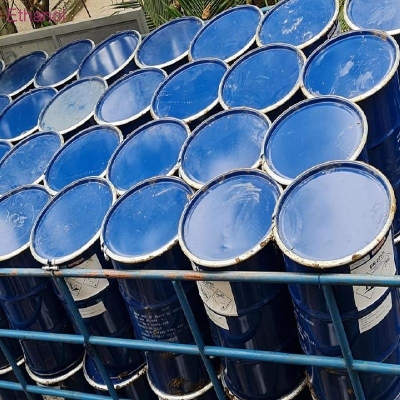
Triallylamine102-70-5 buy - large image1
Triallylamine102-70-5 buy - image1
Triallylamine102-70-5 buy - image2
Triallylamine102-70-5 buy - image3
Triallylamine102-70-5 buy - image4
Triallylamine102-70-5 buy - image5
Triallylamine102-70-5 buy - image6

Triallylamine102-70-5

1 Inquiries

Unit Price:

$33-34/MT FOB

Get Latest Price
CAS No.:

102-70-5

Grade:

Pharmaceutical Grade

Content:

99.5%

Port:

上海

Brand:

OORENT

Packaging:

Vial/Bottle/Bag/Carton

Price valid (until):

2026-07-17

Company Type:
Trader
Location:
China
Qualification:
Main Products:

pharmaceutical intermediates,peptides,electronic chemicals

  • Product Description

  • Seller Information

  • Inquiry History

  • Description

    Product Detail

    Triallylamine Basic information
    Product Name: Triallylamine
    Synonyms: 2-Propen-1-amine, N,N-di-2-propen-1-yl-;AMINOTRI-2-PROPENE;(CH2=CHCH2)3N;n,n-di-2-propenyl-2-propen-1-amin;N,N-Diallyl-2-propen-1-amine;tertiaryamine;Tris(2-propenyl)amine;TRIALLYLAMINE: 97.5%
    CAS: 102-70-5
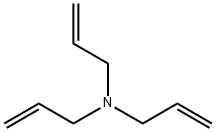
    MF: C9H15N
    MW: 137.22
    EINECS: 203-048-2
    Product Categories: Acyclic;Alkenes;Organic Building Blocks;Building Blocks;Chemical Synthesis;Organic Building Blocks
    Mol File: 102-70-5.mol
    Shop Triallylamine102-70-5-Detailed Image 1

    Triallylamine Chemical Properties
    Melting point  -70°C
    Boiling point  150-151 °C (lit.)
    density  0.79 g/mL at 25 °C (lit.)
    vapor density  4.73 (vs air)
    vapor pressure  90 mm Hg ( 80 °C)
    refractive index  n20/D 1.451(lit.)
    Fp  87 °F
    storage temp.  2-8°C
    pka pK1:8.31(+1) (25°C)
    form  clear liquid
    color  Colorless to Yellow to Orange
    Water Solubility  250 g/100 mL
    Henry's Law Constant 3.9×10⁻² mol/(m3Pa) at 25℃, Brockbank (2013)
    Stability: Stable. Flammable. Incompatible with strong oxidizing agents.
    InChI 1S/C9H15N/c1-4-7-10(8-5-2)9-6-3/h4-6H,1-3,7-9H2
    InChIKey VPYJNCGUESNPMV-UHFFFAOYSA-N
    SMILES C=CCN(CC=C)CC=C
    CAS DataBase Reference 102-70-5(CAS DataBase Reference)
    NIST Chemistry Reference 2-Propen-1-amine, N,N-di-2-propenyl-(102-70-5)
    EPA Substance Registry System Triallylamine (102-70-5)

    Safety Information
    Hazard Codes  C
    Risk Statements  10-20/21/22-34
    Safety Statements  16-26-36/37/39-45
    RIDADR  UN 2610
    WGK Germany  3
    RTECS  XX5950000
    TSCA  TSCA listed
    HazardClass  3
    PackingGroup  III
    HS Code  29211990
    Storage Class 3 - Flammable liquids
    Hazard Classifications Acute Tox. 3 Inhalation
    Acute Tox. 4 Dermal
    Acute Tox. 4 Oral
    Flam. Liq. 3
    Skin Corr. 1B
    Hazardous Substances Data 102-70-5(Hazardous Substances Data)
    MSDS Information
    Provider Language
    Triallylamine English
    SigmaAldrich English
    ALFA English

    Triallylamine Usage And Synthesis
    Chemical Properties dark brown liquid
    Chemical Properties Triallylamine is a flammble liquid. Triallylamine can be detected at 0.5 ppm and is severely irritating at 75 ppm.
    Uses Triallylamine is used in organic synthesis.Triallylamine has been proposed as a catalyst for the production of polyesters and as an initiator for the polymerization of butadiene.
    Uses
    • Triallylamine (TAA) reacts with primary aromatic amines in the presence of a ruthenium catalyst to form 2-ethyl-3-methylquinolines.
    • TAA undergoes hydrozirconation followed by transmetalation with germanium tetrachloride to form 1-aza-5-germa-5-chlorobicyclo[3.3.3]undecane. This compound can react with Grignard or lithium reagents to form the corresponding 5-organo compounds.
    • The cycloaddition of TAA to fluorinated 1,3,4-oxadiazoles affords octahydro-2,7-methanofuro[3,2-c]pyridines.

    Definition ChEBI: Triallylamine is a tertiary amino compound.
    Production Methods Triallylamine is manufactured using allyl chloride and ammonia under heat and pressure. It is used as a solvent and in organic syntheses.
    Application Triallylamine (TAA) reacts with primary aromatic amines in the presence of a ruthenium catalyst to form 2-ethyl-3-methylquinolines.
    TAA undergoes hydrozirconation followed by transmetalation with germanium tetrachloride to form 1-aza-5-germa-5-chlorobicyclo[3.3.3]undecane. This compound can react with Grignard or lithium reagents to form the corresponding 5-organo compounds.
    The cycloaddition of TAA to fluorinated 1,3,4-oxadiazoles affords octahydro-2,7-methanofuro[3,2-c]pyridines.
    General Description A colorless liquid with a fishlike odor. Density 0.800 g / cm3 and insoluble in water. Hence floats on water. Flash point 103°F. Vapors heavier than air. May irritate skin and eyes. Used to make other chemicals.
    Air & Water Reactions Flammable. Insoluble in water.
    Reactivity Profile Triallylamine is a strong reducing agent that reacts violently with oxidizing agents. Corrosive towards Al and Zn [Handling Chemicals Safely 1980 p. 912] . Neutralizes acids in exothermic reactions to form salts plus water. May be incompatible with isocyanates, halogenated organics, peroxides, phenols (acidic), epoxides, anhydrides, and acid halides. Flammable gaseous hydrogen may be generated in combination with strong reducing agents, such as hydrides.
    Health Hazard May cause toxic effects if inhaled or ingested/swallowed. Contact with substance may cause severe burns to skin and eyes. Fire will produce irritating, corrosive and/or toxic gases. Vapors may cause dizziness or suffocation. Runoff from fire control or dilution water may cause pollution.
    Fire Hazard Flammable/combustible material. May be ignited by heat, sparks or flames. Vapors may form explosive mixtures with air. Vapors may travel to source of ignition and flash back. Most vapors are heavier than air. They will spread along ground and collect in low or confined areas (sewers, basements, tanks). Vapor explosion hazard indoors, outdoors or in sewers. Runoff to sewer may create fire or explosion hazard. Containers may explode when heated. Many liquids are lighter than water.
    Safety Profile Poison by skin contact and intraperitoneal routes. Moderately toxic by ingestion and inhalation. An eye and severe skin irritant. Human systemic effects by inhalation: structural or functional changes in trachea or bronchi. Flammable liquid when exposed to heat, flame or oxidlzers. To fight fire, use foam, alcohol foam, fog. When heated to decomposition it emits toxic fumes of NOx. See also AMINES and ALLYL COMPOUNDS.

    Shop 3-Chloro-1-propene107-05-1-Detailed Image 2 Shop 3-Chloro-1-propene107-05-1-Detailed Image 3 Shop 3-Chloro-1-propene107-05-1-Detailed Image 4 Shop 3-Chloro-1-propene107-05-1-Detailed Image 5 Shop 3-Chloro-1-propene107-05-1-Detailed Image 6 Shop 3-Chloro-1-propene107-05-1-Detailed Image 7


    Basic Info
    Product Name:

    Triallylamine

    Other Name:

    2-Propen-1-amine,N,N-di-2-propen-1-yl-;Triallylamine;2-Propen-1-amine,N,N-di-2-propenyl-;N,N-Di-2-propen-1-yl-2-propen-1-amine;Tris(2-propenyl)amine;N,N-Di-2-propenyl-2-propen-1-amine;NSC 32635;44905-30-8;343314-28-3

    CAS No.:

    102-70-5

    Molecular Formula:

    C9H15N

    InChIKeys:

    InChIKey=VPYJNCGUESNPMV-UHFFFAOYSA-N

    Molecular Weight:

    137.22200

    Exact Mass:

    137.22

    EC Number:

    203-048-2

    UNII:

    B6N19XC04R

    NSC Number:

    32635

    UN Number:

    2610

    DSSTox ID:

    DTXSID5026174

    Color/Form:

    Liquid|Dark brown liquid

    HScode:

    2942000000

    Characteristics
    PSA:

    3.24000

    XLogP3:

    1.84640

    Appearance:

    Triallylamine appears as a colorless liquid with a fishlike odor. Density 0.800 g / cm3 and insoluble in water. Hence floats on water. Flash point 103°F. Vapors heavier than air. May irritate skin and eyes. Used to make other chemicals.

    Density:

    0.809 g/cm3 @ Temp: 20 °C

    Melting Point:

    <-70 °C

    Boiling Point:

    155.5 °C

    Flash Point:

    30.6ºC

    Refractive Index:

    n20/D 1.451(lit.)

    Water Solubility:

    H2O: 250 g/100 mL

    Storage Conditions:

    IN GENERAL, MATERIALS WHICH ARE TOXIC AS STORED OR WHICH CAN DECOMP INTO TOXIC COMPONENTS SHOULD BE STORED IN A COOL, WELL-VENTILATED PLACE, OUT OF DIRECT RAYS OF THE SUN, AWAY FROM AREAS OF HIGH FIRE HAZARD, & SHOULD BE PERIODICALLY INSPECTED . INCOMPATIBLE MATERIALS SHOULD BE ISOLATED FROM EACH OTHER.

    Vapor Pressure:

    90 mm Hg ( 80 °C)

    Vapor Density:

    4.73 (vs air)

    Odor:

    Ammonia-like

    Dissociation Constants:

    pKa= 8.31 (conjugate acid)

    Experimental Properties:

    Freezing point: -70 °C|Conversion units: 1 mg/l equiv to 178 ppm, 1 ppm equiv to 5.61 mg/cu m

    Air and Water Reactions:

    Flammable. Insoluble in water.

    Reactive Group:

    Amines, Phosphines, and Pyridines

    Reactivity Alerts:

    Strong Reducing Agent

    Reactivity Profile:

    TRIALLYLAMINE is a strong reducing agent that reacts violently with oxidizing agents. Corrosive towards Al and Zn [Handling Chemicals Safely 1980 p. 912] . Neutralizes acids in exothermic reactions to form salts plus water. May be incompatible with isocyanates, halogenated organics, peroxides, phenols (acidic), epoxides, anhydrides, and acid halides. Flammable gaseous hydrogen may be generated in combination with strong reducing agents, such as hydrides.

    Heat of Vaporization:

    5.4121X10+7 J/Kmol @ 200.00 K

    Critical Temperature & Pressure:

    Critical temperature: 592.00 K; Critical pressure: 2.4600X10+6 Pa

    Hazard Identification

    Classification of the substance or mixture

    Flammable liquids, Category 3

    Acute toxicity - Category 4, Oral

    Acute toxicity - Category 3, Dermal

    Skin corrosion, Sub-category 1C

    Serious eye damage, Category 1

    Acute toxicity - Category 3, Inhalation

    Specific target organ toxicity – single exposure, Category 3

    GHS label elements, including precautionary statements

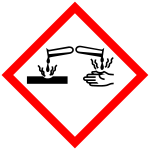
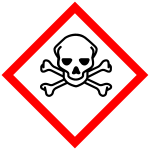
    Pictogram(s)
    Signal word

    Danger

    Hazard statement(s)

    H226 Flammable liquid and vapour

    H302 Harmful if swallowed

    H311 Toxic in contact with skin

    H314 Causes severe skin burns and eye damage

    H318 Causes serious eye damage

    H331 Toxic if inhaled

    H335 May cause respiratory irritation

    Precautionary statement(s)
    Prevention

    P210 Keep away from heat, hot surfaces, sparks, open flames and other ignition sources. No smoking.

    P233 Keep container tightly closed.

    P240 Ground and bond container and receiving equipment.

    P241 Use explosion-proof [electrical/ventilating/lighting/...] equipment.

    P242 Use non-sparking tools.

    P243 Take action to prevent static discharges.

    P280 Wear protective gloves/protective clothing/eye protection/face protection/hearing protection/...

    P264 Wash ... thoroughly after handling.

    P270 Do not eat, drink or smoke when using this product.

    P260 Do not breathe dust/fume/gas/mist/vapours/spray.

    P261 Avoid breathing dust/fume/gas/mist/vapours/spray.

    P271 Use only outdoors or in a well-ventilated area.

    Response

    P303+P361+P353 IF ON SKIN (or hair): Take off immediately all contaminated clothing. Rinse affected areas with water [or shower].

    P370+P378 In case of fire: Use ... to extinguish.

    P301+P317 IF SWALLOWED: Get medical help.

    P330 Rinse mouth.

    P302+P352 IF ON SKIN: Wash with plenty of water/...

    P316 Get emergency medical help immediately.

    P321 Specific treatment (see ... on this label).

    P361+P364 Take off immediately all contaminated clothing and wash it before reuse.

    P301+P330+P331 IF SWALLOWED: Rinse mouth. Do NOT induce vomiting.

    P363 Wash contaminated clothing before reuse.

    P304+P340 IF INHALED: Remove person to fresh air and keep comfortable for breathing.

    P305+P351+P338 IF IN EYES: Rinse cautiously with water for several minutes. Remove contact lenses, if present and easy to do. Continue rinsing.

    P305+P354+P338 IF IN EYES: Immediately rinse with water for several minutes. Remove contact lenses, if present and easy to do. Continue rinsing.

    P317 Get medical help.

    P319 Get medical help if you feel unwell.

    Storage

    P403+P235 Store in a well-ventilated place. Keep cool.

    P405 Store locked up.

    P403+P233 Store in a well-ventilated place. Keep container tightly closed.

    Disposal

    P501 Dispose of contents/container to an appropriate treatment and disposal facility in accordance with applicable laws and regulations, and product characteristics at time of disposal.

    Other hazards which do not result in classification

    no data available

    Handling and Storage

    Precautions for safe handling

    Handling in a well ventilated place. Wear suitable protective clothing. Avoid contact with skin and eyes. Avoid formation of dust and aerosols. Use non-sparking tools. Prevent fire caused by electrostatic discharge steam.

    Conditions for safe storage, including any incompatibilities

    Store the container tightly closed in a dry, cool and well-ventilated place. Store apart from foodstuff containers or incompatible materials.

  • Seller Information
    Business Type:

    Trader

    Main Products:

    pharmaceutical intermediates,peptides,electronic chemicals

    Location:

    Room 102, 1st Floor, East Office Building, No. 45 Pengwan Road, Qianwan Bonded Port Area, Qingdao Zone, China (Shandong) Pilot Free Trade Zone

    Payment Terms:

    100% TT in advance

    Average lead Time:

    10

    Total Annual Revenue:

    $10 million-$25 million

    Total Employees:

    51-100

    Year of Establishment:

    2024

    A reliable supplier is like insurance.

    We are mainly specilized in supply of pharmaceutical intermediates, electronic chemicals,food additives, and other fine chemical products.
    Integrity is the foundation, quality is life. We would like to work together with you to build a greener and brighter future.

    Website: orientchem.cc
    Email: scarlett@orientchem.cc
    WhatsApp: +86 17753254221

  • Inquiry History
    1 Inquiries
    Country Product Purchase Quantity Date Posted
    Uzbekistan

    Trialkylamine

    2 20' Fcl Feb 13, 2026
    Post an enquiry for this product
pic ×

Scan the QR Code to Share

All products displayed on this website are only for non-medical purposes such as industrial applications or scientific research, and cannot be used for clinical diagnosis or treatment of humans or animals. They are not medicinal or edible.

According to relevant laws and regulations and the regulations of this website, units or individuals who purchase hazardous materials should obtain valid qualifications and qualification conditions.

The information shown above is provided by the enterprise itself, and the authenticity, accuracy and legitimacy of the content are the responsibility of the publishing company. ECHEMI does not bear any guarantee responsibility for this. Please be aware that risks in internet transactions objectively exist.

Feedback & Suggestions
Send Message

Thank you for your feedback. If you require further assistance, please contact us by email at info@echemi.com or call us at +86-532-55729510.