| with JNJ-4 | Standard | Test Results |
Identification | A.H-NMR:Comply with the structure | Complies |
B.LC-MS:Comply with the structure | Complies |
C.The IR spectrum of sample should be identical with that of reference standard. | Complies |
D.HPLC-ESI-MS The retention time of the major peak in the chromatogram of the Assay preparation corresponds to that in the chromatogram of the Standard preparation, as obtained in the Assay. | Complies |
| Loss on drying % | ≤2.0 | 0.19 |
| Heavy metals ppm | ≤10 | <10 |
| Moisture % | ≤1.0 | 0.1 |
| Sulphated ash % | ≤0.5 determined on 1.0 g. | 0.009 |
| Residue on ignition % | ≤0.1 | 0.03 |
Related Substances % | Unspecified impurities: for each impurity | ≤0.10 | <0.10 |
| Total Impurity | ≤0.5 | 0.18 |
| Purity % | ≥99.0 | 99.7 |
| Assay % | 99.0 ~101.0 (anhydrous substance). | 99.8 |
| Storage | Preserve in well-closed, light-resistant and airtight containers. | Complies |
SURPASS studies are a series of large clinical randomized controlled trials designed to evaluate the efficacy and safety of telpotide in patients with type 2 diabetes mellitus (T2DM). Of these, the head-to-head comparison with Semaglutide SURPASS-2[1] is the most exciting, comparing Tipotide 5mg (n=470), 10mg (n=469), and 15mg (n=469) with semaglutide 1mg (n=468) in glycemic performance. Telpotide reduced HbA1c by an average of 2.0%, 2.2%, and 2.3% compared with baseline HbA1c (8.3%), while semaglutide reduced Hba1c by an average of 1.9%. In terms of weight loss, compared with baseline weight of Chemicalbook (207 pounds), telpotide resulted in average weight loss of 17 pounds, 21 pounds, and 25 pounds, compared with 13 pounds for semaglutide. The experiment showed that tilpotide showed better hypoglycemic and weight loss ability than semaglutide. Another large study enrolled 2,539 adults with at least one obesity complication (excluding diabetes) with a body mass index (BMI) of ≥30kg/m2 or ≥27kg/m2. All subjects were randomly divided into tipotide 5mg, 10mg, 15mg and placebo groups in equal proportion. The results showed that the body weight of each group decreased by 16.1kg, 22.2kg, 23.6kg and 2.4kg, respectively, at 72 weeks [2]. The weight loss effect of tilpotide is comparable to that of weight loss surgery.
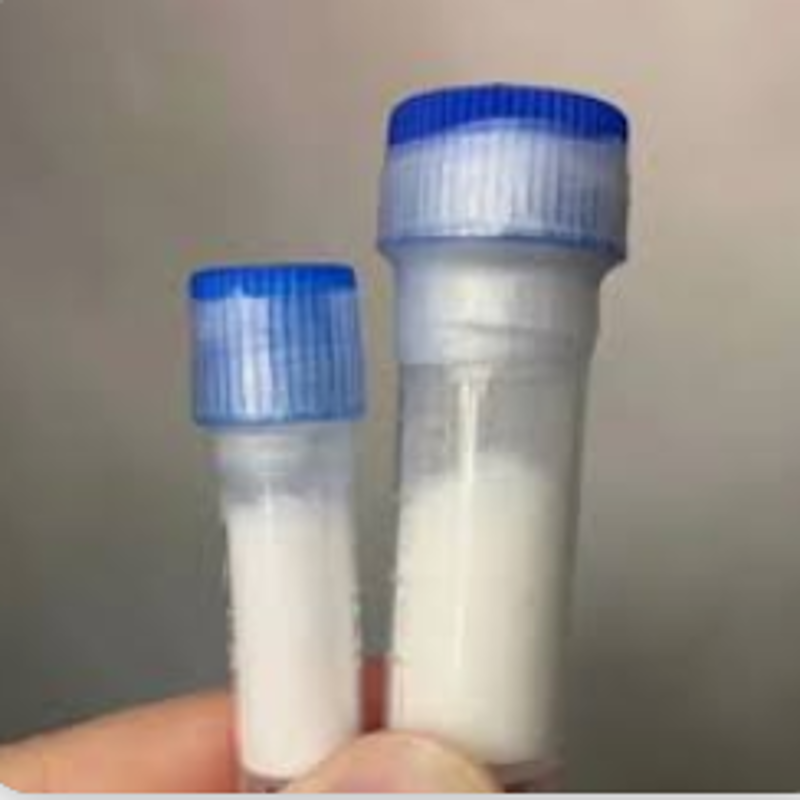
Our normal packaging is 1g/Vial and 10g/Vial.
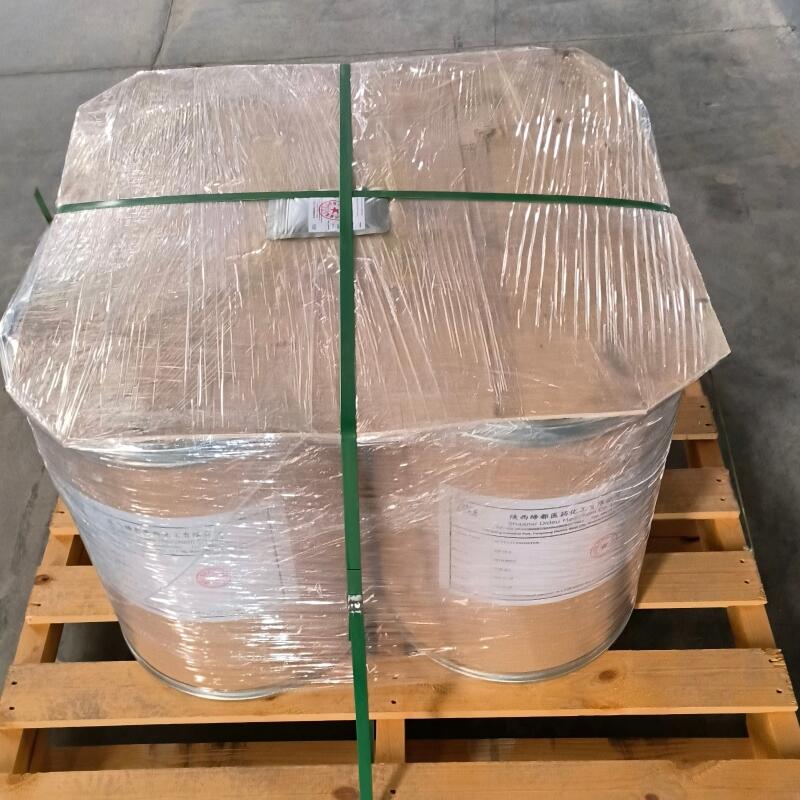
The packaging can be customized. the shipping term can be shipped by DHL, FEDEX, EMS and TNT.
Erdafitinib is an FGFR-targeting kinase inhibitor used to treat adult patients with locally advanced or metastatic urothelial carcinoma whose disease has progressed during or after platinum-based chemotherapy, and who have FGFR3 or FGFR2 gene mutations, including those who have received neoadjuvant or adjuvant platinum-based chemotherapy within the past 12 months.
In April 2019, the FDA approved Balversa (Erdafitinib), the first approved targeted therapy for metastatic bladder cancer, for the treatment of adult patients with locally advanced or metastatic bladder cancer who have progressed after platinum-based chemotherapy and have FGFR3 or FGFR2 mutations. Data from the BLC2001 clinical trial, on which the approval was based, showed an ORR of 32.2% (CR 2.3%, PR 29.9%) in 87 patients with advanced FGFR-mutant bladder cancer. Recent updated data shows that erdafitinib achieved an ORR (Organic Chemical Book Rate) of 40% (CR 3%, PR 37%) in 99 patients with advanced FGFR-mutant bladder cancer, and an ORR as high as 59% in 22 patients who had undergone immunotherapy. These results were published in the *New England Journal of Medicine*. Erdafitinib (JNJ-42756493) is a potent, selective, and orally bioactive pan-fibroblast growth factor receptor (FGFR) inhibitor with potential antitumor activity. Erdafitinib can also bind to RET (c-RET), CSF-1R, PDGFR-α/PDGFR-β, FLT4, Kit (c-Kit), and VEGFR-2 and can induce apoptosis.
In vitro studies: JNJ-42756493 is a potent, orally active pan-FGFR tyrosine kinase inhibitor with IC50 values for all members of the FGFR family (FGFR1-4) in the low molar range, while having minimal effect on VEGFR activity. In vitro, JNJ-42756493 treatment reduced cell proliferation, increased apoptosis and cell death, and decreased cell viability.
In vivo studies: In in vivo experiments, treatment with JNJ-42756493 delayed the growth of NCI-H716 tumors, while tumor volume increased upon withdrawal of treatment. JNJ-42756493 exhibits favorable drug-like properties and is widely distributed in lung, liver, and kidney tissues. At effective doses, JNJ-42756493 is well-tolerated, exhibits dose-dependent antitumor activity, and has a pharmacological modulatory effect on FGFR and its downstream pathway components in tumors.