




Propranolol hydrochloride

-
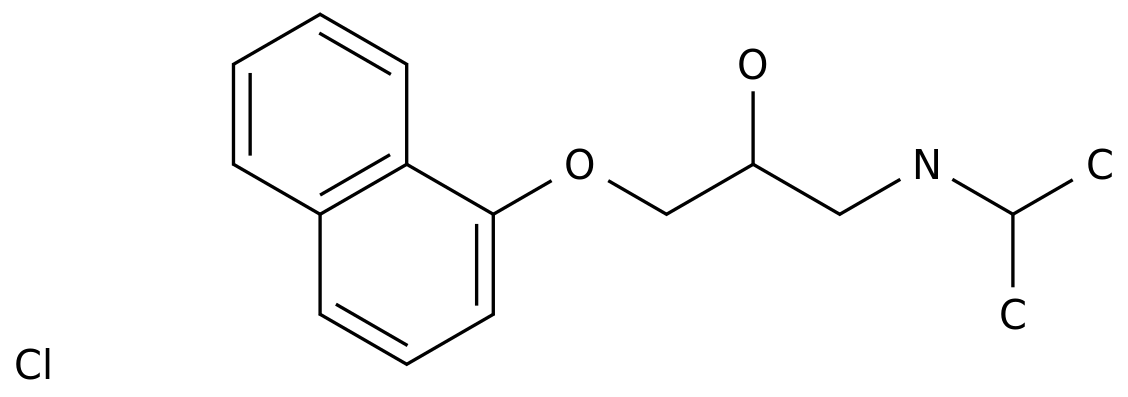
Propranolol hydrochloride
structure -
-
CAS No:
318-98-9
-
Formula:
C16H21NO2.ClH
-
Chemical Name:
Propranolol hydrochloride
-
Synonyms:
2-Propanol,1-[(1-methylethyl)amino]-3-(1-naphthalenyloxy)-,hydrochloride (1:1);2-Propanol,1-(isopropylamino)-3-(1-naphthyloxy)-,hydrochloride;2-Propanol,1-[(1-methylethyl)amino]-3-(1-naphthalenyloxy)-,hydrochloride;Dociton;1-(Isopropylamino)-3-(1-naphthyloxy)propan-2-ol hydrochloride;1-(1-Naphthyloxy)-2-hydroxy-3-isopropylaminopropane hydrochloride;Propranolol hydrochloride;ICI 45520;Naprilin;Anapriline;1-(1-Naphthoxy)-2-hydroxy-3-isopropylaminopropane hydrochloride;Propranolol chloride;1-(1-Naphthyloxy)-3-(isopropylamino)-2-propanol hydrochloride;Anaprilin;Obsidan;Avlocardyl;Inderal LA;Propraratiopharm;1-(Isopropylamino)-3-(1-naphthoxy)-2-propanol hydrochloride;dl-Propranolol hydrochloride;(±)-Propranolol hydrochloride;Inderal;DL-Anapriline;Docitan;DL-Propranolol hydrochloride;Duranol;(R,S)-Propranolol hydrochloride;Angilol;Beta-Tablinen;Servanolol;Oposim;Prano-Puren;Kemi S;Elbol;Bedranol;NSC 91523;Prophylux;Pylapron;Berkolol;Cardinol;Apsolol;Tesnol;Beta-Neg;Frekven;Beta-Timelets;Rapynogen;Sumial;Beprane;Sloprolol;Deralin;Propranur;Sagittol;Caridolol;Efektolol;Indobloc;Intermigran;(RS)-Propranolol hydrochloride;Inderalici;Monoprolol;Ciplar;Betacap;1-Isopropylamino-3-naphthalen-1-yloxypropan-2-ol monohydrochloride;1-(Naphthalen-1-yloxy)-3-[(propan-2-yl)amino]propan-2-ol hydrochloride;1-(Isopropylamino)-3-(naphthalen-1-yloxy)propan-2-ol hydrochloride;Hemangiol;Hemangeol;3506-09-0;146874-86-4
- Categories:
-
CAS No:
Description
Propranolol hydrochloride is a nonselective β-adrenergic receptor (βAR) antagonist with an IC50 of 12 nM.
A widely used non-cardioselective beta-adrenergic antagonist. Propranolol has been used for MYOCARDIAL INFARCTION; ARRHYTHMIA; ANGINA PECTORIS; HYPERTENSION; HYPERTHYROIDISM; MIGRAINE; PHEOCHROMOCYTOMA; and ANXIETY but adverse effects instigate replacement by newer drugs.
Propranolol hydrochloride Basic Attributes
295.8
331.110596
206-268-7
758950|91523
DTXSID3021198
White or almost white powder|Solid|Crystals from n-propanol
C07AA05
2922509090
Characteristics
41.5
-0.45 @ pH 2.0
white powder
163-164 °C
434.9ºC at 760mmHg
9℃
H2O: 50 mg/mL, clear, colorless
2-8°C
LD50 in mice (mg/kg): 565 orally; 22 i.v.; 107 i.p. (Martin, Linee)
Odorless
Bitter
pKa = 9.45
Intense mass spectral peaks: 72 m/z, 100 m/z, 144 m/z, 259 m/z /Propranolol/
Safety Information
IRRITANT
UN1230 - class 3 - PG 2 - Methanol, solution
3
22-39/23/24/25-23/24/25-11
22-45-36/37-16-7
UB7525000
Xn,Xi,T,F
Propranolol hydrochloride preparations should be protected from light and storedat room temperature (approximately 25 deg C). The manufacturer recommends that propranolol hydrochloride extended-release capsules be stored in tight, light resistant containers and be protected from moisture, freezing, and excessive heat. USP recommends that propranolol hydrochloride preparations be stored in well closed containers. Solutions of the drug have maximum stability at pH 3 and decompose rapidly at alkali
P301 + P312 + P330
H302
SRP: The most favorable course of action is to use an alternative chemical product with less inherent propensity for occupational exposure or environmental contamination. Recycle any unused portion of the material for its approved use or return it to the manufacturer or supplier. Ultimate disposal of the chemical must consider: the material's impact on air quality; potential migration in soil or water; effects on animal, aquatic, and plant life; and conformance with environmental and public health regulations.
The Approved Drug Products with Therapeutic Equivalence Evaluations List identifies currently marketed prescription drug products, incl propranolol hydrochloride, approved on the basis of safety and effectiveness by FDA under sections 505 of the Federal Food, Drug, and Cosmetic Act.|Manufacturers, packers, and distributors of drug and drug products for human use are responsible for complying with the labeling, certification, and usage requirements as prescribed by the Federal Food, Drug, and Cosmetic Act, as amended (secs 201-902, 52 Stat. 1040 et seq., as amended; 21 U.S.C. 321-392).
Feenstra MG; Functional Neuroteratology of Drugs Acting on Adrenergic Receptors. Neurotoxicology 13 (1): 55-63 (1992). Long term biochemical, morphological, behavioral and electrophysiological effects have been reported after pre- or postnatal exposure of rats to adrenergic drugs, the alpha 2-agonist clonidine and the beta-antagonist propranolol in particular, and are summarized here.|Hjalmarson A, Olsson G; Myocardial Infarction. Effects of Beta-blockade. Circulation 84 (6 Suppl): VI101-7 (1991). In this review article, different aspects of early and late treatment with beta-adrenoceptor blockers are discussed. Impressive effects on mortality and morbidity have been obtained with propranolol, timolol, and metoprolol, which are noncardioselective as well as more beta 1-selective (metoprolol), but they are all lacking intrinsic sympathomimetic activity and, furthermore, have a relatively high degree of lipophilicity.|Huang SK, Marcus FI; Beta-blockers, Phenytoin, and Calcium Antagonists. Hosp Ther 12 (Jun): 66, 71-73, 77 (1987). A brief review of the unique roles of beta-adrenergic blockers, including propranolol, metoprolol, and acebutolol, phenytoin and verapamil, in the treatment of ventricular arrhythmias is presented including their dosages and side effects profile.|Lader M; Beta-adrenoceptor Antagonists in Neuropsychiatry: An Update. J Clin Psychiatry 49 (6): 213-23 (1988). In this overview, which concentrates on the recent literature, four indications for use of the beta- adrenoceptor antagonists, including propranolol, are reviewed, with particular reference to efficacy, mode of action, and clinical utility.|McAinsh J, Cruickshank JM; Beta-blockers and Central Nervous System Side Effects. Pharmacol Ther 46 (2): 163-97 (1990). Every published clinical paper, in which the beta-blockers propranolol, pindolol, metoprolol, and atenolol were compared, was assessed for information pertaining to CNS side effects.
|Warning|H302 (100%): Harmful if swallowed [Warning Acute toxicity, oral]|P261, P264, P270, P271, P272, P280, P301+P312, P302+P352, P304+P312, P304+P340, P312, P321, P322, P330, P333+P313, P363, and P501|Aggregated GHS information provided by 69 companies from 3 notifications to the ECHA C&L Inventory. Each notification may be associated with multiple companies.
Toxicity
IDENTIFICATION: Propranolol is a class II antiarrhthmic drug which be longs to the beta-andrenergic blocking agents. Propranol hydrochloride is a white, odorless white crystalline powder. It is soluble in alcohol; slightly soluble in chloroform; practically insoluble in ether. Cardiovascular diseases: Propranolol, a non cardioselective beta-blocker, is mostly used in the treatment of hypertension, angina, for the prevention of re-infarction in patients who have suffered from myocardial infarction. It is also used to control symptoms of anxiety and in the treatment of supraventricular tachycardia, hypertrophic obstructive and cardiomyopathy. Endocrine disorders: In hyperthyroidism and thyrotoxic crisis; together with alpha-blocking agents in the preoperative treatment of pheochromocytoma. Hepatic diseases: Prevention of hemorrhage in portal hypertension Neurological disorders: Propranolol has also been used in the treatment of extrapyramidal disorders and in the prophylaxis of migraine headache. Anxiety disorders: Propranolol may be used in acute stress reactions, somatic anxiety and panic reactions, but its value is questioned. HUMAN EXPOSURE: Main risks and target organs: Beta-blockers compete with endogenous and/or exogenous beta-adrenergic agonists. Propranolol is not cardioselective and it has no intrinsic sympathomimetic activity. It has membrane stabilizing properties and is highly lipid soluble. At toxic doses, propranolol has a pronounced negative chronotropic and inotropic effect and also a quinidine like effect on the heart. The cardiovascular system is the main target organ. Propranolol decreases sinus rate, atrio-ventricular conduction, intraventricular conduction and cardiac contractility. Central nervous system toxicity (coma and convulsions) may also occur because of its high liposolubility.Summary of clinical effects: Toxicity occurs within 1 to 2 hours following ingestion but the delay in onset may vary according to the formulation. Symptoms may include: Cardiovascular disturbances: bradycardia, atrioventricular block of varying degrees, intraventricular block, hypotension, cardiogenic shock and pulmonary edema. Neurological symptoms: coma and convulsions. Respiratory depression and apnea. Cardiovascular collapse and apnea may occur suddenly. Patients with underlying cardiovascular disease are predisposed to the adverse cardiac effects of propranolol. Propranolol may induce bronchospasm in asthmatic patients. Contraindications: Absolute: asthma, congestive cardiac failure, atrio-ventricular block, bradycardia and treatment with amiodarone. Relative: Raynaud's disease, diabetes mellitus. Routes of entry: Oral: Ingestion is the most frequent cause of poisoning Inhalation: no case has been reported. The effect of 10 mg propranolol given by nasal route is rapid and equivalent to the intravenous route. Parenteral: No case of overdoses has been reported. Cardiovascular symptoms have been reported after therapeutic administration. Absorption by route of exposure: After oral administration, propranolol is almost completely and rapidly absorbed from the gastrointestinal tract. However, because of the high first-pass metabolism and hepatic tissue binding, the absolute bioavailability is only about 30% and varies greatly between individuals. Peak plasma concentration occurs one to two hours after administration. After administration of the sustained release formulation, the peak plasma concentration occurs 7 hours after absorption. Distribution by route of exposure: About 90 to 95 % of the drug is bound to plasma proteins. Propranolol is highly lipophilic: it crosses the blood-brain barrier and the placenta. Biological half-life by route of exposure: After oral administration, propranolol undergoes saturable kinetics. The plasma half-life is 3 to 6 hours and is about 12 hours with the sustained release forms. The total body clearance is 800 mL/minute/1.73 m2. After overdose, the plasma half-life is prolonged. One study reported a half-life of 16 hours. In two cases reported, the half-life was 13.8 and 8.3 hours. In five cases, the mean plasma half-life was 10.5 hours (range: 5.1 to 17). Metabolism: Propranolol is extensively metabolized by the liver. At least one of the metabolites, the 4-hydroxypropranolol, is biologically active. The hepatic metabolism is saturable and bioavailability may be increased in overdoses. Elimination by route of exposure: After a single oral dose, propranolol is completely eliminated in 48 hours, mainly by hepatic metabolism. Less than 0.5 % is excreted unchanged in urine. The renal clearance is 12 mL/kg/minute. About 20% of the dose is eliminated in urine mainly as glucuronide conjugates. Propranolol is excreted in breast milk at a concentration of 50% that of blood. Mode of action Toxicodynamics: Propranolol is a non cardioselective beta-blocker with no intrinsic sympathomimetic action. It has membrane stabilizing activity and is highly lipid soluble. At toxic doses, propranolol has a pronounced negative chronotropic and inotropic effect and a quinidine-like effect on the heart: the result is a reduction of the heart rate, a decrease of the sino-atrial and atrioventricular conduction, a prolongation of the intraventricular conduction and a decrease of cardiac output. Blockade of beta-2 receptors may cause bronchospasm and hypoglycemia. Given its high lipid solubility, propranolol crosses the blood-brain barrier and may cause coma and convulsions. Pharmacodynamics: Beta-blocking agents compete with endogenous and/or exogenous beta-adrenergic agonists. Their specific effects depend on their selectivity for beta-1 receptors (located in the heart) or beta-2 receptors (located in bronchi, blood vessels, stomach, gut, uterus). Beta-blockers are classified according to their cardioselectivity, membrane stabilizing effect, intrinsic sympathomimetic effect and lipid solubility. At therapeutic doses, propranolol slightly decreases heart rate (15%), supraventricular conduction and cardiac output (15 to 20%). Cardiac work and oxygen consumption are also decreased. Propranolol decreases the secretion of renin. The pharmaceutical form of propranolol is a racemate: the dextrorotary isomer accounts for most of the beta-blocking effect, whereas the levorotary isomer has a predominantly membrane stabilizing effect. Toxicity: Human data: Adults: Propranolol toxicity shows individual variations which may be due to an underlying cardiac disease, to the ingestion of other cardiotoxic drugs and to variations in first-pass metabolism. Children: Ingestion of 70 mg by a 2 year old child produced drowsiness, second degree atrioventricular block and hypoglycemia. Ingestion of 100 mg by a 5-year-old child produced drowsiness, delirium and hallucinations. Interactions: Decreased bioavailability: Antacids decrease the gastric absorption of propranolol. Barbiturates, phenytoïn and rifampicin increase the first-pass clearance of propranolol by hepatic enzyme induction. Increased bioavailability: Plasma propranolol concentrations may be increased up to 50% by histamine H2 antagonists and oral contraceptives, which decrease hepatic metabolism by enzyme inhibition. Diminished pharmacodynamic effects: Non-steroidal anti-inflammatory drugs decrease the antihypertensive effect of propranolol. Nifedipine might exacerbate the symptoms of beta-blocker withdrawal. Enhanced pharmacodynamic effects: Digitalis, amiodarone, verapamil and diltiazem may increase bradycardia due to propranolol. Verapamil, prenylamine, flecainide and disopyramide enhance the negative inotropic effect of propranolol. Main adverse effects: Numerous adverse effects during propranolol treatment have been reported. Cardiovascular: sinus bradycardia, atrioventricular block, hypotension, increase of left ventricular failure, cardiogenic shock, intermittent claudication. Respiratory: bronchospasm, exacerbation of asthmatic symptoms in known asthmatics, pulmonary edema. Central nervous system: depression, psychosis, convulsions, hallucinations. Musculoskeletal: muscle weakness, aggravation of myasthenia gravis, peripheral neuropathy. Gastrointestinal: vomiting, diarrhea, dry mouth. Endocrine and metabolic: hypoglycemia, hyperkalemia, hypothyroidism, sexual dysfunction (impotence). Dermatological: urticaria, exfoliative dermatitis. Hematological: agranulocytosis (immunologic reaction), thrombocytopenia. Teratogenicity: a case of tracheoesophageal fistula in a newborn of a mother treated with propranolol during the pregnancy has been reported. However, a teratogenic effect of propranolol has not been confirmed. Pregnancy: hypoglycemia and lethargy have been reported in newborn from mothers treated with propranolol before delivery. Others: propranolol treatment may potentiate anaphylactic shock. Clinical effects: Acute poisoning: Ingestion: The severity of propranolol poisoning is due to its cardiotoxicity and depends on the dose ingested, the presence of underlying cardiac disease and concomitant ingestion of other cardiotoxic drugs. Symptoms and signs appear within one to two hours and may include the following: Cardiovascular effects: bradycardia, hypotension, cardiogenic shock. The ECG may show nodal rhythm, atrioventricular block and QRS widening. CNS effects: lethargy, coma and convulsions and mydriasis. Hypoventilation resulting from severe shock. Parenteral exposure: Cardiovascular effects: bradycardia, hypotension, cardiogenic shock. The ECG may show nodal rhythm, atrioventricular block and QRS widening CNS effects: lethargy, coma and convulsions, mydriasis Hypoventilation resulting from severe shock. Course, prognosis, cause of death: Patients who survive 48 hours after acute poisoning or who have not developed cardiac arrest before admission are likely to recover. Death may occur from cardiac asystole which is noted by hypoxemia. The prognosis depends on the dose ingested and is worse in patients with an underlying cardiac disease and in those who have ingested other cardiotoxic drugs. Systematic description of clinical effects: Cardiovascular: Acute: Cardiovascular symptoms are the major features of propranolol poisoning. Bradycardia is the commonest symptom (present in 60 to 90% of cases) and occurs soon after ingestion. Hypotension is observed in about 50 to 70% of the cases. Hypotension and shock are due to decreased cardiac output and vasodilatation. Cardiac arrest may occur within 1 to 2 hours of ingestion. Cardiac arrest has been reported to occur in 45 minutes following an over dose propranolol by a 60 year old man. ECG changes are always present in symptomatic poisoning: sinus or nodal bradycardia, atrioventricular block (1st to 3rd degree) are the most common. Widening of the QRS interval, bundle branch block or increased QT interval are less frequently observed. Respiratory: Acute: Respiratory depression and apnea is mostly associated with severe shock and is due to cerebral hypoxia. Pulmonary edema may occur, especially in patients with a previous compromised cardiac function. Bronchospasm may occur in susceptible patients. Neurological: CNS: Acute: Lethargy, drowsiness, agitation, delirium, hallucinations and mydriasis may be observed. Coma is usually only seen in patients with cardiovascular collapse. Convulsions have been reported after ingestion of large doses. Convulsions may be due to hypotension or to a direct effect of propranolol (membrane stabilizing effect). Chronic: Fatigue, CNS depression, hallucinations and psychosis have been reported. Autonomic nervous system: Acute: Effects of beta-receptor blockade. Chronic: Effects of beta-receptor blockade. Skeletal and smooth muscle: Chronic: Muscular fatigue may be observed. Gastrointestinal: Acute: vomiting, nausea may be seen; spasm of the lower oesophageal sphincter has been reported in two cases. A case of mesenteric ischemia following propranolol overdose has been reported. Eye, ear, nose, throat: local effects: Acute: Mydriasis and diplopia may be noted. Metabolic: Acid-base disturbances: Metabolic acidosis may occur in severe poisoning with shock. Fluid and electrolyte disturbances: Hypokalemia or a hyperkalaemia have been reported rarely. Others: Hypoglycemia was reported in two cases of poisoning in children.
Propranolol antagonizes cardiac stimulation that may limit effectiveness of hydralazine, and combination has been shown to be more effective than either drug alone.|Neuromuscular blockade produced by tubocurarine was prolonged in 2 thyrotoxic patients receiving high doses (120 mg/day for 14 days) of propranolol. ...Decamethonium and succinylcholine have been shown to interact with propranolol in similar manner... in animals.|Propranolol increased acute CNS toxicity of ether, hexobarbital, morphine and urethane in mice.|Stimulatory effect of epinephrine on heart is blocked by propranolol. If epinephrine is administered to patient receiving propranolol, reflex tachycardia may result, /SRP: due to fall in blood pressure because of beta blockade on blood vessels/.|For more Interactions (Complete) data for PROPRANOLOL HYDROCHLORIDE (16 total), please visit the HSDB record page.
The drug is distributed into milk.
The drug is distributed into milk.
Drug Information
Hemangiol is indicated in the treatment of proliferating infantile haemangioma requiring systemic therapy:, , , Life- or function-threatening haemangioma,, Ulcerated haemangioma with pain and/or lack of response to simple wound care measures,, Haemangioma with a risk of permanent scars or disfigurement., , , It is to be initiated in infants aged 5 weeks to 5 months.,|Treatment of haemangioma|Drug: Propranolol-hydrochloride
Adrenergic beta-Antagonists; Anti-Anxiety Agents; Anti-Arrhythmia Agents; Antihypertensive Agents; Sympatholytics; Vasodilator Agents|/SRP: Former use/: Propranolol has proven to be effective in numerous cases in which digitalis, with or without quinidine and/or procainamide, failed to reduce ventricular rate, and in cases of paroxysmal atrial tachycardia attributed to digitalis toxicity.|Propranolol is also used in hypertrophic obstructive cardiomyopathies. In these conditions forceful contraction of myocardium along a ventricular outflow tract can greatly increase outflow resistance, particularly during exercise. .../It/ is sometimes useful in management of tachycardia and arrhythmias in patient with pheochromocytoma.|Medication (Vet): ...Atropine in conjunction with propranolol /was found/ to be useful in treatment of oleander poisoning.|For more Therapeutic Uses (Complete) data for PROPRANOLOL HYDROCHLORIDE (25 total), please visit the HSDB record page.
.../Propranolol/ is relatively contraindicated in ...hay fever, cardiogenic shock, congestive heart failure, right ventricular failure secondary to pulmonary hypertension, and when myocardial depressant anesthetics, tricyclic antidepressants, or oral hypoglycemics are used.|Propranolol (1% solution) used as eye-drops .../per 1 report/, caused intense pain lasting as long as 15 min and induced hyperemia and slight miosis, but according to others these eye-drops have been well tolerated by most patients in use up to 4 times/day for 3-4 months, causing burning sensations and conjunctival hyperemia in only 8/47 eyes.|Contraindicated in patients with cardiogenic shock, sinus bradycardia and greater than first degree block, bronchial asthma, and congestive heart failure. Adverse reactions include weakness, light headedness, depression, bradycardia, paresthesia of hands, arterial insufficiency (e.g., Raynaud type), nausea, and diarrhea. Use is best avoided in patients with bronchospastic diseases and therapy in diabetic patients must be closely monitored.|After sudden cessation of propranolol therapy in some patients treated for angina, increased frequency, duration, and severity of angina episodes have occurred, often within 24 hr. These episodes are unstable and are not relieved by nitroglycerin. Acute and sometimes fatal myocardial infarction and sudden death have also occurred after abrupt withdrawal of propranolol therapy in some patients treated for angina. In hypertensive patients, sudden cessation of propranolol has produced a syndrome similar to florid thyrotoxicosis, characterized by tenseness, anxiety, tachycardia, and excessive perspiration; these symptoms occurred within one week of cessation of the drug and were relieved by reinstituting propranolol therapy.|For more Drug Warnings (Complete) data for PROPRANOLOL HYDROCHLORIDE (31 total), please visit the HSDB record page.
Drugs that bind to but do not activate beta-adrenergic receptors thereby blocking the actions of beta-adrenergic agonists. Adrenergic beta-antagonists are used for treatment of hypertension, cardiac arrhythmias, angina pectoris, glaucoma, migraine headaches, and anxiety. (See all compounds classified as Adrenergic beta-Antagonists.)|Drugs used in the treatment of acute or chronic vascular HYPERTENSION regardless of pharmacological mechanism. Among the antihypertensive agents are DIURETICS; (especially DIURETICS, THIAZIDE); ADRENERGIC BETA-ANTAGONISTS; ADRENERGIC ALPHA-ANTAGONISTS; ANGIOTENSIN-CONVERTING ENZYME INHIBITORS; CALCIUM CHANNEL BLOCKERS; GANGLIONIC BLOCKERS; and VASODILATOR AGENTS. (See all compounds classified as Antihypertensive Agents.)|Agents used for the treatment or prevention of cardiac arrhythmias. They may affect the polarization-repolarization phase of the action potential, its excitability or refractoriness, or impulse conduction or membrane responsiveness within cardiac fibers. Anti-arrhythmia agents are often classed into four main groups according to their mechanism of action: sodium channel blockade, beta-adrenergic blockade, repolarization prolongation, or calcium channel blockade. (See all compounds classified as Anti-Arrhythmia Agents.)|Drugs used to cause dilation of the blood vessels. (See all compounds classified as Vasodilator Agents.)
Studies in man and experimental animals indicate that rapid hepatic clearance is responsible for appearance of only trace amount of unmetabolized propranolol in blood after small oral doses. With larger doses, blood levels are linearly related to dose, suggesting saturation of hepatic metabolic system.|Propranolol is almost completely absorbed from the GI tract; however, plasma concentrations attained are quite variable among individuals. There is no difference in the rate of absorption of the 2 isomers of propranolol. Propranolol appears in the plasma within 30 min, and peak plasma concentrations are reached about 60-90 min after oral administration of the conventional tablets. The time when peak plasma concentrations are reached may be delayed, but concentrations are not necessarily lowered, when the drug is administered with food. Oral bioavailability of the drug may be increased in children with Down's syndrome; higher than expected plasma propranolol concentrations have been observed in such children. Bioavailability of a single 40-mg oral dose of propranolol hydrochloride as a conventional tablet or oral solution reportedly is equivalent in adults.|Propranolol hydrochloride is slowly absorbed following administration of the drug as extended release capsules, and peak blood concentrations are reached about 6 hr after administration. When measured at steady state over a 24 hr period, the area under the plasma concentration time curve for the extended release capsules is about 60-65% of the plasma concentration time curve for a comparable divided daily dose of the conventional tablets. The lower plasma concentration time curve is probably caused by the slower rate of absorption of the drug from the extended release capsules with resultant greater hepatic metabolism. After administration of a single dose of propranolol as the extended release capsules, blood concentrations are fairly constant for about 12 hr and then decline exponentially during the following 12 hr.|Following iv administration of propranolol, the onset of action is almost immediate. Animal studies indicate that propranolol is rapidly absorbed after im administration.|For more Absorption, Distribution and Excretion (Complete) data for PROPRANOLOL HYDROCHLORIDE (12 total), please visit the HSDB record page.
Besides ... 4-hydroxypropranolol and naphthoxylacetic acid, 6 new urinary metabolites have... been identified... /which are/ n-deisopropylpropranolol; 1-(alpha-naphthoxy)-2,3-propyleneglycol; ring hydroxylated 1-(alpha-naphthoxy)-2,3-propyleneglycol; alpha-naphthoxyacetic acid; alpha-naphthol and 1,4-dihydroxynaphthalene.|Isopropylamine and hexadeuteriated isopropylamine have been identified as urinary metabolites of propranolol and hexadeuteriated propranolol, respectively; this is believed to be 1st recorded example of single-step oxidative deamination of n-isopropylamine compound.|During initial oral therapy (but not during iv or chronic oral therapy), an active metabolite, 4-hydroxypropranolol, is formed. 4-Hydroxypropranolol has about the same beta-adrenergic blocking potency as does propranolol and may be present in plasma in amounts about equal to propranolol. This metabolite is eliminated more rapidly than propranolol and is virtually absent from the plasma 6 hr after oral administration of the drug. Results of one study indicate that after iv administration or chronic oral administration of propranolol, 4-hydroxypropranolol is not formed to a substantial extent, and beta-adrenergic blocking activity is more closely reflected by propranolol concentrations. Individual variations in ability to hydroxylate propranolol to the active metabolite may also exist. In addition, some other metabolites of propranolol may possess antiarrhythmic activity without beta-adrenergic blocking activity.|Propranolol is almost completely metabolized in the liver and at least 8 metabolites have been identified in urine. Only 1-4% of an oral or iv dose of the drug appears in feces as unchanged drug and metabolites.
When usual therapeutic doses of propranolol are administered chronically, the half-life ranges from 3.4-6 hr. Single dose studies generally have shown a shorter half-life of 2-3 hr.
Propranolol is a nonselective beta-adrenergic blocking agent. Propranolol inhibits response to adrenergic stimuli by competitively blocking, beta-adrenergic receptors within the myocardium and within bronchial and vascular smooth muscle. Only the l-isomer of propranolol has substantial beta-adrenergic blocking activity. Propranolol has no intrinsic sympathomimetic activity.|Through its myocardial, beta-adrenergic blocking action, propranolol decreases heart rate and prevents exercise induced increases in heart rate, decreases myocardial contractility, decreases cardiac output, increases systolic ejection time, and increases cardiac volume. The drug also decreases conduction velocity through the sinoatrial and atrioventricular nodes and decreases myocardial automaticity via beta-adrenergic blockade. At blood concentrations greater than those required for beta-adrenergic blockade, propranolol has a membrane stabilizing effect on the heart which is similar to that of quinidine. The clinical importance of this effect is not clear, but it appears to be less important than its beta-adrenergic blocking activity.|beta-Adrenergic blockade may also incr peripheral resistance initially, but peripheral resistance tends to decr after chronic admin of the drug as a result of unopposed alpha-adrenergic vasoconstriction. The cardiac effects of, beta-adrenergic blockade cause an incr in sodium reabsorption because of alterations in renal hemodynamics; renal blood flow and glomerular filtration rate generally decr during chronic therapy. Plasma volume may incr if dietary sodium is not restricted. Hepatic blood flow is decreased.|The precise mechanism of propranolol's hypotensive effect has not been determined. It has been postulated that beta-adrenergic blocking agents reduce blood pressure by blocking peripheral (especially cardiac) adrenergic receptors (decreasing cardiac output), by decreasing sympathetic outflow from the CNS, and/or by suppressing renin release. In patients with high concentrations of circulating renin, low doses of the drug are associated with a fall in both blood pressure and in plasma renin concentrations, probably because of acute peripheral beta-adrenergic blockade. With higher doses of propranolol, the hypotensive effect is probably unrelated to plasma renin activity and may be caused by a delayed centrally mediated reduction of adrenergic outflow. However, there appears to be some overlap between these mechanisms, and both mechanisms seem to be operative with usual therapeutic doses. Propranolol decreases blood pressure in both the supine and standing positions.|Through its beta-adrenergic blocking action in other body systems, propranolol increases airway resistance (especially in asthmatic patients), inhibits glycogenolysis in the skeletal and cardiac muscles, blocks the release of free fatty acids and insulin by adrenergic stimulation, and increases the number of circulating eosinophils. Propranolol increases uterine activity, more in the nonpregnant than in the pregnant uterus.
Emergency and supportive measures. 1. Maintain an open airway and assist ventilation if necessary. 2. Treat coma, seizures, hypotension, hyperkalemia, and hypoglycemia if they occur. 3. Treat bradycardia with atropine, 0.01-0.03 mg/kg IV; isoproterenol (start with 4 ug/min and increase infusion as needed); or cardiac pacing. 4. Treat bronchospasm with nebulized bronchodilators. 5. Continuously monitor the vital signs and ECG for at least 6 hours after ingestion. /Propranolol, Beta-adrenergic blockers/|Specific drugs and antidotes. 1. Bradycardia and hypotension resistant to ... /normal/ measures should be treated with glucagon, 5-10 mg IV bolus, repeated as needed and followed by an infusion of 1-5 mg/hr. Epinephrine (intravenous) infusion starting at 1-4 ug/min and titrating to effect. 2. Wide complex conduction defects caused by membrane-depressant poisoning may respond to sodium bicarbonate, 1-2 meq/kg, as given for tricyclic antidepressant overdose. 3. Torsades de pointes polymorphous ventricular tachycardia associated with QT prolongation resulting from sotalol poisoning can be treated with isoproterenol infusion, magnesium, or overdrive pacing. Correction of hypokalemia may also be useful. /Propranolol, Beta-adrenergic blockers/|Decontamination. 1. Prehospital. Administer activated charcoal if available. 2. Hospital. Administer activated charcoal. Consider gastric lavage for large ingestions, especially involving propranolol. Gastric emptying is not necessary for small ingestions if activated charcoal can be given promptly. /Propranolol, Beta-adrenergic blockers/|Enhanced elimination. Most beta blockers, especially the more toxic drugs such as propranolol, are highly lipophillic and have a large volume of distribution (Vd). For those with a relatively small volume of distribution coupled with a long half-life or low intrinsic clearance (eg, acebutolol, atenolol, nadolol, or sotalol), hemoperfusion, hemodialysis, or repeat-dose charcoal may be effective. /Propranolol, Beta-adrenergic blockers/|For more Antidote and Emergency Treatment (Complete) data for PROPRANOLOL HYDROCHLORIDE (6 total), please visit the HSDB record page.
/HUMAN EXPOSURE STUDIES/ Elevated sympathetic activity can modulate parameters of immunity. ... The role of the low sympathetic activity in resting healthy volunteers by treating them with the beta-adrenergic antagonist propranolol (3 x 40 mg/d for 7 days) /was investigated/. Propranolol treatment increased the number of circulating T cells but not that of other white blood cells. Similarly, Con A-stimulated lymphocyte proliferation and IL-2 formation were enhanced. Although the number of circulating NK cells did not change, NK-cell activity was reduced markedly after propranolol treatment. These alterations are not a mirror image of the changes observed under conditions of elevated sympathetic activity but demonstrate that withdrawal of the endogenous sympathetic tone by drugs such as propranolol can modulate parameters of human immunity.|/HUMAN EXPOSURE STUDIES/ Limited information is available on the acute toxicity of propranolol. In adults who intentionally ingested the drug, estimates of the ingested doses have ranged from 0.8-6 g. The principal manifestations of overdosage were bradycardia and severe hypotension (which may result in peripheral cyanosis); loss of consciousness and seizures have also occurred. Cardiac failure and bronchospasm may also occur. In most cases of acute propranolol overdosage, the patient recovered; however, in a few cases, toxicity was severe enough to result in death. Two small children who ingested a total of 150 mg of propranolol hydrochloride became drowsy, perspired, and experienced periods of sinoatrial node block; they were treated with iv and oral dextrose. Severe hypertension has been reported in 8 patients with schizophrenic disorder who received propranolol in rapidly increasing doses (600 mg in the first 24 hr); these patients responded to iv phentolamine.|/CASE REPORTS/ A case of carpal tunnel syndrome in a hypertensive man on long term treatment with a beta-blocker, propranolol is described. The clinical and instrumental findings, including MRI at the wrist, excluded all other possible causes of carpal tunnel syndrome. The improvement in symptoms and electromyographic findings on discontinuation of the drug suggested that the carpal tunnel syndrome may have been related to the beta-blocker therapy.|/CASE REPORTS/ A case of severe propranolol intoxication that presented as an acute psychotic episode preceding cardiovascular decompensation and seizures by several hours /is reported/. Though acute reversible psychosis has been appreciated after initiating or increasing propranolol dosage therapeutically, this association has not been reported in the literature regarding beta-blocker overdose or intoxication.
Anaprilin
Propranolol hydrochloride Use and Manufacturing
For the prophylaxis of migraine
Angilol, Apsolol, Bedranol, Beprane, Berkolol, Beta-Tablinen, Beta-Timelets, Cardinol, Deralin, Dociton, Duranol, Efektolol, Elbrol, Frekven, Inderal, Indobloc, Kemi S, Oposim, Propabloc, Prophylux, Propanur, Rapynogen, Sumial, Tesnol|Oral Capsules, extnded release 60 mg, Betachron, Inwood; Inderal LA, Wyeth- Ayerst 80 mg, Betachron Inwood, Inderal LA, Wyeth-Ayerst; 120 mg Betachron, Inwood, Inderal LA, Wyeth-Ayerst; 160 mg, Betachron, Inwood, Inderal LA, Wyeth-Ayerst; Solution 20 mg/5 ml Propranolol Hydrochloride Solution (with parabens). Roxane; 40 mg/5 ml Propranolol Hydrochloride Solution (with parabens), Roxane; Solution concentrate, 80 mg/ml Propranolol Hydrochloride Intensol (with calibrated dropper) Roxane; Tablets 10 mg Inderal (scored), Wyeth-Averst; 20 mg Inderal (scored), Wyeth-Ayerst; 40 mg, Inderal (scored), Wyeth-Ayerst; 60 mg, Inderal (scored), Wyeth-Ayerst; 80 mg, Inderal (scored), Wyeth-Ayerst; 90 mg.|Parenteral Injection 1 mg/ml, Inderal, Wyeth-Ayerst Propranolol Hydrochloride Injection, Goldline, Smith & Nephew SoloPak|Oral Capsules, extended release 80 mg Propranolol Hydrochloride and Hydrochlorothiazide 50 mg, Inderide LA 80/50, Wyeth-Ayerst; 120 mg Propranolol Hydrochloride and Hydrochlorothiazide 50 mg, Inderide LA 120/50, Wyeth-Ayerst, 160 mg Propranolol Hydrochloride and Hydrochlorothiazide 50 mg, Inderide LA 160/50, Wyeth-Ayerst, Tablets, 40 mg Propranolol Hydrochloride and Hydrochloriothiazide 25 mg, Inderide 40/25 (scored), Wyeth-Ayerst; 80 mg Propranolol Hydrochloride and Hydrochlorothiazide 25 mg, Inderide 80/25 (scored), Wyeth-Ayerst. /Propranolol Hydrochloride and Hydrochlorothiazide/
Analyte: propranolol hydrochloride; matrix: chemical purity; procedure: liquid chromatography with detection at 290 nm and comparison to standards|Analyte: propranolol hydrochloride; matrix: chemical identification; procedure: retention time of liquid chromatogram with comparison to standards|Analyte: propranolol hydrochloride; matrix: chemical identification; procedure: infrared absorption spectrophotometry with comparison to standards|Analyte: propranolol hydrochloride; matrix: pharmaceutical preparation (tablet); procedure: retention time of liquid chromatogram with comparison to standards (chemical identification)|For more Analytic Laboratory Methods (Complete) data for PROPRANOLOL HYDROCHLORIDE (7 total), please visit the HSDB record page.
BLOOD; UV SPECTROPHOTOMETRY. GLC & TLC MAY BE USED TO CONFIRM SPECIFICITY OF ANALYSIS. METHOD WILL DETECT 0.1 MG OF PROPRANOLOL IN 100 ML OF BLOOD.|ANALYSIS OF PROPRANOLOL IN HUMAN SERUM USING HPLC.|FLUOROMETRIC TLC METHODS FOR QUANTITATIVE DETERMINATION OF PROPRANOLOL HYDROGEN CHLORIDE & ITS MAJOR METABOLITES IN HUMAN PLASMA & URINE WERE TESTED.|A SPECTRODENSITOMETRIC METHOD FOR DETERMINATION OF PROPRANOLOL HYDROGEN CHLORIDE IN PLASMA, BASED ON MEASUREMENT OF ABSORBANCE ON SILICA GEL PLATES, WAS STUDIED IN VITRO & IN 8 HOSPITALIZED PATIENTS. AMT AS LOW AS 0.010 UG WERE DETECTED. PERCENT RECOVERY FROM PLASMA WAS 90.0-102.0%.|For more Clinical Laboratory Methods (Complete) data for PROPRANOLOL HYDROCHLORIDE (6 total), please visit the HSDB record page.
Human drugs -> Hemangiol -> EMA Drug Category|Beta blocking agents -> Human pharmacotherapeutic group|Human drugs -> Rare disease (orphan)|Human Drugs -> EU pediatric investigation plans|Human Drugs -> FDA Approved Drug Products with Therapeutic Equivalence Evaluations (Orange Book) -> Active Ingredients
Computed Properties
Molecular Weight:295.80
Hydrogen Bond Donor Count:3
Hydrogen Bond Acceptor Count:3
Rotatable Bond Count:6
Exact Mass:295.1339066
Monoisotopic Mass:295.1339066
Topological Polar Surface Area:41.5
Heavy Atom Count:20
Complexity:257
Undefined Atom Stereocenter Count:1
Covalently-Bonded Unit Count:2
Compound Is Canonicalized:Yes
Drug Function and Efficacy
Pharmacological action not specified
Registered Holders
-
MANKIND PHARMA LTD
Active![United States]() United States
United States
-
RAKS PHARMA PVT LTD
Active![United States]() United States
United States
-
ALIVUS LIFE SCIENCES LTD
Active![United States]() United States
United States

Recommended Suppliers of Propranolol hydrochloride
-
![China]() CN
CN
5 YRS
Business licensedTrader Supplier of Intermediates,Building blocks,API,Silicones,Peptides,Lab chemicals,Biochemicals,Pharmaceuticals,Screening Compounds,Food Additives -
![China]() CN
CN
3 YRS
Business licensed Certified factoryManufactory Supplier of Avanafil,Tirzepatide,Semaglutide,Pregabalin,Nootropics,MT2,GPC,supplementsInquiryCAS No.: 318-98-9Grade: Pharmaceutical GradeContent: 99.19%

Learn More Other Chemicals
-
4H-1-Benzopyran-4-one, 2-[4-[3-(dibutylamino)propoxy]-3,5-dimethylbenzoyl]-, hydrochloride (1:1)
67652-33-9
-
Cyclopropanecarboxylic acid, 1-amino-2-ethenyl-, ethyl ester, hydrochloride (9CI)
681807-60-3
-
CYCLOPENTYL-(3,4,5-TRIMETHOXY-BENZYL)-AMINE HYDROCHLORIDE
1052525-88-8
-
2-Cyclopropylbenzenemethanamine hydrochloride Formula
118184-64-8
-
Des[4-(2-cycloproylMethoxy)] Betaxolol Hydrochloride Formula
464877-45-0
-
Ethanamine, 2-(decylthio)-, hydrochloride (1:1) Formula
36362-09-1
-
4,7-Dichloro-2-propylquinoline hydrochloride Structure
1204812-22-5
-
6,7-Dichloro-4-hydrazino-2-methylquinoline hydrochloride Structure
1170377-12-4
-
What is 2,8-Diazaspiro[4.5]decan-1-one, 2-[(4-bromophenyl)methyl]-, hydrochloride (1:1)
832710-56-2
-
What is 6,7-Dichloro-4-hydrazinoquinoline hydrochloride
1171843-02-9