




N-Methyl-N-nitrosourea Safety Data Sheets
SAFETY DATA SHEETS
According to the UN GHS revision 8
SECTION 1: Identification
1.1 GHS Product identifier
| Product name | 1-methyl-1-nitrosourea |
|---|
1.2 Other means of identification
| Product number | - |
|---|---|
| Other names | N-Nitroso-N-methylurea; 1-Methyl-1-nitrosourea; Urea, N-methyl-N-nitroso- |
1.3 Recommended use of the chemical and restrictions on use
| Identified uses | N-Nitroso-n-methylurea was used in the past for the laboratory synthesis of diazomethane, but it has been largely replaced by other reagents. N-Nitroso-n-methylurea has been studied in mutagenicity and genetics studies and for use as a cancer chemotherapy agent (alone or in combination with cyclophosphamide). |
|---|---|
| Uses advised against | no data available |
1.4 Supplier's details
| Company | Echemi.com |
|---|---|
| Address | Echemi.com |
| Telephone | Echemi.com |
1.5 Emergency phone number
| Emergency phone number | Echemi.com |
|---|---|
| Service hours | Monday to Friday, 9am-5pm (Standard time zone: UTC/GMT +8 hours). |
SECTION 2: Hazard identification
2.1 Classification of the substance or mixture
Flammable solids, Category 2
Acute toxicity - Category 3, Oral
Carcinogenicity, Category 1B
Reproductive toxicity, Category 1B
2.2 GHS label elements, including precautionary statements
| Pictogram(s) |  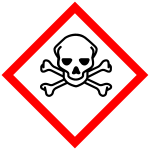  |
|---|---|
| Signal word | Danger |
| Hazard statement(s) | H228 Flammable solid H301 Toxic if swallowed H350 May cause cancer H360 May damage fertility or the unborn child |
| Precautionary statement(s) | |
| Prevention | P210 Keep away from heat, hot surfaces, sparks, open flames and other ignition sources. No smoking. P240 Ground and bond container and receiving equipment. P241 Use explosion-proof [electrical/ventilating/lighting/...] equipment. P280 Wear protective gloves/protective clothing/eye protection/face protection/hearing protection/... P264 Wash ... thoroughly after handling. P270 Do not eat, drink or smoke when using this product. P203 Obtain, read and follow all safety instructions before use. |
| Response | P370+P378 In case of fire: Use ... to extinguish. P301+P316 IF SWALLOWED: Get emergency medical help immediately. P321 Specific treatment (see ... on this label). P330 Rinse mouth. P318 IF exposed or concerned, get medical advice. |
| Storage | P405 Store locked up. |
| Disposal | P501 Dispose of contents/container to an appropriate treatment and disposal facility in accordance with applicable laws and regulations, and product characteristics at time of disposal. |
2.3 Other hazards which do not result in classification
no data available
SECTION 3: Composition/information on ingredients
3.1 Substances
| Chemical name | Common names and synonyms | CAS number | EC number | Concentration |
|---|---|---|---|---|
| 1-methyl-1-nitrosourea | 1-methyl-1-nitrosourea | 684-93-5 | 211-678-4 | 100% |
SECTION 4: First-aid measures
4.1 Description of necessary first-aid measures
If inhaled
Move the victim into fresh air. If breathing is difficult, give oxygen. If not breathing, give artificial respiration and consult a doctor immediately. Do not use mouth to mouth resuscitation if the victim ingested or inhaled the chemical.
Following skin contact
Take off contaminated clothing immediately. Wash off with soap and plenty of water. Consult a doctor.
Following eye contact
Rinse with pure water for at least 15 minutes. Consult a doctor.
Following ingestion
Rinse mouth with water. Do not induce vomiting. Never give anything by mouth to an unconscious person. Call a doctor or Poison Control Center immediately.
4.2 Most important symptoms/effects, acute and delayed
SYMPTOMS: Exposure to this compound may cause nausea, vomiting, epigastric pain, diarrhea and leukopenia. It may also cause skin rashes. Eye contact may cause damage to the retina, degeneration of pigment epithelium and destruction of the rods and outer nuclear layer leading to thinning of the whole retina and migration of pigment. Retinal atrophy and cataracts have also been reported. It may cause acetonuria. ACUTE/CHRONIC HAZARDS: This compound is toxic on skin contact or ingestion. It causes skin irritation. When heated to decomposition it emits toxic fumes of NOx. Decomposition products may be explosive. (NTP, 1992)
4.3 Indication of immediate medical attention and special treatment needed, if necessary
For immediate first aid: Ensure that adequate decontamination has been carried out. If victim is not breathing, start artificial respiration, preferably with a demand-valve resuscitator, bag-valve-mask device, or pocket mask as trained. Perform CPR if necessary. Immediately flush contaminated eyes with gently flowing water. Do not induce vomiting. If vomiting occurs, lean patient forward or place on left side (head-down position, if possible) to maintain an open airway and prevent aspiration. Keep victim quiet and maintain normal body temperature. Obtain medical attention. Nitrates, nitrites, and related compounds
SECTION 5: Fire-fighting measures
5.1 Suitable extinguishing media
Fires involving this material can be controlled with a dry chemical, carbon dioxide or Halon extinguisher. A water spray may also be used. (NTP, 1992)
5.2 Specific hazards arising from the chemical
Flash point data for this chemical are not available; however, it is probably combustible. (NTP, 1992)
5.3 Special protective actions for fire-fighters
Wear self-contained breathing apparatus for firefighting if necessary.
SECTION 6: Accidental release measures
6.1 Personal precautions, protective equipment and emergency procedures
Avoid dust formation. Avoid breathing mist, gas or vapours.Avoid contacting with skin and eye. Use personal protective equipment.Wear chemical impermeable gloves. Ensure adequate ventilation.Remove all sources of ignition. Evacuate personnel to safe areas.Keep people away from and upwind of spill/leak.
6.2 Environmental precautions
Prevent further spillage or leakage if it is safe to do so. Do not let the chemical enter drains. Discharge into the environment must be avoided.
6.3 Methods and materials for containment and cleaning up
PRECAUTIONS FOR "CARCINOGENS": A high-efficiency particulate arrestor (HEPA) or charcoal filters can be used to minimize amt of carcinogen in exhausted air ventilated safety cabinets, lab hoods, glove boxes or animal rooms ... Filter housing that is designed so that used filters can be transferred into plastic bag without contaminating maintenance staff is avail commercially. Filters should be placed in plastic bags immediately after removal ... The plastic bag should be sealed immediately ... The sealed bag should be labelled properly ... Waste liquids ... should be placed or collected in proper containers for disposal. The lid should be secured & the bottles properly labelled. Once filled, bottles should be placed in plastic bag, so that outer surface ... is not contaminated ... The plastic bag should also be sealed & labelled. ... Broken glassware ... should be decontaminated by solvent extraction, by chemical destruction, or in specially designed incinerators. Chemical Carcinogens
SECTION 7: Handling and storage
7.1 Precautions for safe handling
Handling in a well ventilated place. Wear suitable protective clothing. Avoid contact with skin and eyes. Avoid formation of dust and aerosols. Use non-sparking tools. Prevent fire caused by electrostatic discharge steam.
7.2 Conditions for safe storage, including any incompatibilities
PRECAUTIONS FOR "CARCINOGENS": Storage site should be as close as practical to lab in which carcinogens are to be used, so that only small quantities required for ... expt need to be carried. Carcinogens should be kept in only one section of cupboard, an explosion-proof refrigerator or freezer (depending on chemicophysical properties ...) that bears appropriate label. An inventory ... should be kept, showing quantity of carcinogen & date it was acquired ... Facilities for dispensing ... should be contiguous to storage area. Chemical Carcinogens
SECTION 8: Exposure controls/personal protection
8.1 Control parameters
Occupational Exposure limit values
no data available
Biological limit values
no data available
8.2 Appropriate engineering controls
Ensure adequate ventilation. Handle in accordance with good industrial hygiene and safety practice. Set up emergency exits and the risk-elimination area.
8.3 Individual protection measures, such as personal protective equipment (PPE)
Eye/face protection
Wear tightly fitting safety goggles with side-shields conforming to EN 166(EU) or NIOSH (US).
Skin protection
Wear fire/flame resistant and impervious clothing. Handle with gloves. Gloves must be inspected prior to use. Wash and dry hands. The selected protective gloves have to satisfy the specifications of EU Directive 89/686/EEC and the standard EN 374 derived from it.
Respiratory protection
If the exposure limits are exceeded, irritation or other symptoms are experienced, use a full-face respirator.
Thermal hazards
no data available
SECTION 9: Physical and chemical properties and safety characteristics
| Physical state | PHYSICAL DESCRIPTION: Pale yellow crystals or light yellow moist powder. (NTP, 1992) |
|---|---|
| Colour | PALE YELLOW CRYSTALS |
| Odour | no data available |
| Melting point/freezing point | 124ºC |
| Boiling point or initial boiling point and boiling range | 164.3ºCat 760 mmHg |
| Flammability | no data available |
| Lower and upper explosion limit/flammability limit | no data available |
| Flash point | 53.1ºC |
| Auto-ignition temperature | no data available |
| Decomposition temperature | no data available |
| pH | no data available |
| Kinematic viscosity | no data available |
| Solubility | less than 1 mg/mL at 64° F (NTP, 1992) |
| Partition coefficient n-octanol/water | log Kow = -0.03 |
| Vapour pressure | Non-volatile (NTP, 1992) |
| Density and/or relative density | 1.46 g/cm3 |
| Relative vapour density | no data available |
| Particle characteristics | no data available |
SECTION 10: Stability and reactivity
10.1 Reactivity
Sensitive to humidity and light when pure. Insoluble in water. Slowly decomposes in water. Alkaline hydrolysis produces a highly toxic, irritating and explosive gas.
10.2 Chemical stability
Decomposes to diazomethane in alkaline soln; stability in aq soln is ph-dependent (at 20 deg c)
10.3 Possibility of hazardous reactions
N-NITROSO-N-METHYLUREA is incompatible with strong acids and bases. Also incompatible with water and nucleophilic reagents. Alkaline hydrolysis produces a highly toxic, irritating and explosive gas. Can detonate with (potassium hydroxide + methylene chloride) (NTP, 1992).
10.4 Conditions to avoid
no data available
10.5 Incompatible materials
no data available
10.6 Hazardous decomposition products
Melting point: 124 deg c (decomp)
SECTION 11: Toxicological information
Acute toxicity
- Oral: LD50 Rat oral 110 mg/kg
- Inhalation: no data available
- Dermal: no data available
Skin corrosion/irritation
no data available
Serious eye damage/irritation
no data available
Respiratory or skin sensitization
no data available
Germ cell mutagenicity
no data available
Carcinogenicity
The Human Health Assessment Group in EPA's Office of Health and Environmental Assessment has evaluated N-nitroso-N-methylurea for carcinogenicity. According to their analysis, the weight-of-evidence for N-nitroso-N-methylurea is group B2, which is based on sufficient evidence in animals. No data are available for humans. As a group B2 chemical, N-nitroso-N-methylurea is considered probably carcinogenic to humans.
Reproductive toxicity
No information is available on the reproductive or developmental effects of N-nitroso-n-methylurea in humans. Animal studies have reported tumors of the nervous system and kidneys in the offspring of rats treated with N-nitroso-n-methylurea during their pregnancy.
STOT-single exposure
no data available
STOT-repeated exposure
no data available
Aspiration hazard
no data available
SECTION 12: Ecological information
12.1 Toxicity
- Toxicity to fish: no data available
- Toxicity to daphnia and other aquatic invertebrates: no data available
- Toxicity to algae: no data available
- Toxicity to microorganisms: no data available
12.2 Persistence and degradability
no data available
12.3 Bioaccumulative potential
An estimated BCF of 0.56 was calculated for N-nitroso-N-methylurea(SRC), using a measured log Kow of -0.03(1) and a recommended regression-derived equation(2). According to a classification scheme(3), this BCF suggests that bioconcentration in aquatic organisms is low(SRC). Based upon the hydrolysis of N-nitroso-N-methylurea in aqueous environments(4), bioconcentration is not expected to be an important fate process(SRC).
12.4 Mobility in soil
The Koc of N-nitroso-N-methylurea is estimated as approximately 23(SRC), using a measured log Kow of -0.03(1) and a regression-derived equation(2,SRC). According to a recommended classification scheme(3), this estimated Koc value suggests that N-nitroso-N-methylurea is expected to have very high mobility in soil(SRC). Based upon the hydrolysis of N-nitroso-N-methylurea in aqueous environments(4), adsorption to soil and leaching are not expected to be important processes(SRC).
12.5 Other adverse effects
no data available
SECTION 13: Disposal considerations
13.1 Disposal methods
Product
The material can be disposed of by removal to a licensed chemical destruction plant or by controlled incineration with flue gas scrubbing. Do not contaminate water, foodstuffs, feed or seed by storage or disposal. Do not discharge to sewer systems.
Contaminated packaging
Containers can be triply rinsed (or equivalent) and offered for recycling or reconditioning. Alternatively, the packaging can be punctured to make it unusable for other purposes and then be disposed of in a sanitary landfill. Controlled incineration with flue gas scrubbing is possible for combustible packaging materials.
SECTION 14: Transport information
14.1 UN Number
| ADR/RID: UN1325 (For reference only, please check.) | IMDG: UN1325 (For reference only, please check.) | IATA: UN1325 (For reference only, please check.) |
14.2 UN Proper Shipping Name
| ADR/RID: FLAMMABLE SOLID, ORGANIC, N.O.S. (For reference only, please check.) | IMDG: FLAMMABLE SOLID, ORGANIC, N.O.S. (For reference only, please check.) | IATA: FLAMMABLE SOLID, ORGANIC, N.O.S. (For reference only, please check.) |
14.3 Transport hazard class(es)
| ADR/RID: 4.1 (For reference only, please check.) | IMDG: 4.1 (For reference only, please check.) | IATA: 4.1 (For reference only, please check.) |
14.4 Packing group, if applicable
| ADR/RID: II (For reference only, please check.) | IMDG: II (For reference only, please check.) | IATA: II (For reference only, please check.) |
14.5 Environmental hazards
| ADR/RID: No | IMDG: No | IATA: No |
14.6 Special precautions for user
no data available
14.7 Transport in bulk according to IMO instruments
no data available
SECTION 15: Regulatory information
15.1 Safety, health and environmental regulations specific for the product in question
| Chemical name | Common names and synonyms | CAS number | EC number |
|---|---|---|---|
| 1-methyl-1-nitrosourea | 1-methyl-1-nitrosourea | 684-93-5 | 211-678-4 |
| European Inventory of Existing Commercial Chemical Substances (EINECS) | Listed. | ||
| EC Inventory | Listed. | ||
| United States Toxic Substances Control Act (TSCA) Inventory | Listed. | ||
| China Catalog of Hazardous chemicals 2015 | Not Listed. | ||
| New Zealand Inventory of Chemicals (NZIoC) | Listed. | ||
| Philippines Inventory of Chemicals and Chemical Substances (PICCS) | Not Listed. | ||
| Vietnam National Chemical Inventory | Not Listed. | ||
| Chinese Chemical Inventory of Existing Chemical Substances (China IECSC) | Not Listed. | ||
| Korea Existing Chemicals List (KECL) | Not Listed. | ||
SECTION 16: Other information
Information on revision
| Creation Date | July 15, 2019 |
|---|---|
| Revision Date | July 15, 2019 |
Abbreviations and acronyms
- CAS: Chemical Abstracts Service
- ADR: European Agreement concerning the International Carriage of Dangerous Goods by Road
- RID: Regulation concerning the International Carriage of Dangerous Goods by Rail
- IMDG: International Maritime Dangerous Goods
- IATA: International Air Transportation Association
- TWA: Time Weighted Average
- STEL: Short term exposure limit
- LC50: Lethal Concentration 50%
- LD50: Lethal Dose 50%
- EC50: Effective Concentration 50%
References
- IPCS - The International Chemical Safety Cards (ICSC), website: http://www.ilo.org/dyn/icsc/showcard.home
- HSDB - Hazardous Substances Data Bank, website: https://toxnet.nlm.nih.gov/newtoxnet/hsdb.htm
- IARC - International Agency for Research on Cancer, website: http://www.iarc.fr/
- eChemPortal - The Global Portal to Information on Chemical Substances by OECD, website: http://www.echemportal.org/echemportal/index?pageID=0&request_locale=en
- CAMEO Chemicals, website: http://cameochemicals.noaa.gov/search/simple
- ChemIDplus, website: http://chem.sis.nlm.nih.gov/chemidplus/chemidlite.jsp
- ERG - Emergency Response Guidebook by U.S. Department of Transportation, website: http://www.phmsa.dot.gov/hazmat/library/erg
- Germany GESTIS-database on hazard substance, website: http://www.dguv.de/ifa/gestis/gestis-stoffdatenbank/index-2.jsp
- ECHA - European Chemicals Agency, website: https://echa.europa.eu/
Disclaimer: The above information is believed to be correct but does not purport to be all inclusive and shall be used only as a guide. The information in this document is based on the present state of our knowledge and is applicable to the product with regard to appropriate safety precautions. It does not represent any guarantee of the properties of the product. We as supplier shall not be held liable for any damage resulting from handling or from contact with the above product.
N-Methyl-N-nitrosourea is included in Organic Reagents category.
Related Products
Industry News
More Safety Data Sheets