




Chlorine trifluoride Safety Data Sheets
SAFETY DATA SHEETS
According to the UN GHS revision 8
SECTION 1: Identification
1.1 GHS Product identifier
| Product name | Chlorine trifluoride |
|---|
1.2 Other means of identification
| Product number | - |
|---|---|
| Other names | Trifluorure de chlore;trifluoro-λ3-chlorane;EINECS 232-230-4 |
1.3 Recommended use of the chemical and restrictions on use
| Identified uses | Industrial and scientific research uses. |
|---|---|
| Uses advised against | no data available |
1.4 Supplier's details
| Company | Echemi.com |
|---|---|
| Address | Echemi.com |
| Telephone | Echemi.com |
1.5 Emergency phone number
| Emergency phone number | Echemi.com |
|---|---|
| Service hours | Monday to Friday, 9am-5pm (Standard time zone: UTC/GMT +8 hours). |
SECTION 2: Hazard identification
2.1 Classification of the substance or mixture
Skin corrosion, Sub-category 1A
Acute toxicity - Category 2, Inhalation
Hazardous to the aquatic environment, short-term (Acute) - Category Acute 1
2.2 GHS label elements, including precautionary statements
| Pictogram(s) |   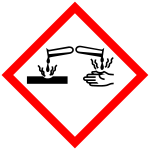 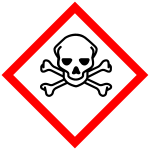 |
|---|---|
| Signal word | Danger |
| Hazard statement(s) | H270 May cause or intensify fire; oxidizer H280 Contains gas under pressure; may explode if heated H314 Causes severe skin burns and eye damage H330 Fatal if inhaled |
| Precautionary statement(s) | |
| Prevention | P260 Do not breathe dust/fume/gas/mist/vapours/spray. P264 Wash ... thoroughly after handling. P280 Wear protective gloves/protective clothing/eye protection/face protection/hearing protection/... P271 Use only outdoors or in a well-ventilated area. P284 [In case of inadequate ventilation] wear respiratory protection. P273 Avoid release to the environment. |
| Response | P301+P330+P331 IF SWALLOWED: Rinse mouth. Do NOT induce vomiting. P363 Wash contaminated clothing before reuse. P304+P340 IF INHALED: Remove person to fresh air and keep comfortable for breathing. P316 Get emergency medical help immediately. P321 Specific treatment (see ... on this label). P305+P351+P338 IF IN EYES: Rinse cautiously with water for several minutes. Remove contact lenses, if present and easy to do. Continue rinsing. P320 Specific treatment is urgent (see ... on this label). P391 Collect spillage. |
| Storage | P405 Store locked up. P403+P233 Store in a well-ventilated place. Keep container tightly closed. |
| Disposal | P501 Dispose of contents/container to an appropriate treatment and disposal facility in accordance with applicable laws and regulations, and product characteristics at time of disposal. |
2.3 Other hazards which do not result in classification
no data available
SECTION 3: Composition/information on ingredients
3.1 Substances
| Chemical name | Common names and synonyms | CAS number | EC number | Concentration |
|---|---|---|---|---|
| Chlorine trifluoride | Chlorine trifluoride | 7790-91-2 | 232-230-4 | 100% |
SECTION 4: First-aid measures
4.1 Description of necessary first-aid measures
If inhaled
Fresh air, rest. Half-upright position. Refer for medical attention.
Following skin contact
First rinse with plenty of water for at least 15 minutes, then remove contaminated clothes and rinse again. Refer for medical attention .
Following eye contact
First rinse with plenty of water for several minutes (remove contact lenses if easily possible), then refer for medical attention.
Following ingestion
Rinse mouth with water. Do not induce vomiting. Never give anything by mouth to an unconscious person. Call a doctor or Poison Control Center immediately.
4.2 Most important symptoms/effects, acute and delayed
Inhalation causes extreme irritation of respiratory tract; pulmonary edema may result. Vapors are very irritating to eyes and skin; liquid causes severe burns. (USCG, 1999)
4.3 Indication of immediate medical attention and special treatment needed, if necessary
Fluoride is protoplasmic poison that binds with calcium, inhibits enzyme systems, and activates glycolic and proteolytic mechanisms. Management consists of symptomatic and supportive care, plus the administration of calcium and the treatment of hyperkalemia. Hemodialysis may be useful in severe cases. Prognosis is largely dictated by the clinical course over the first several hours. Survival beyond 4 hours is generally associated with a favorable outcome. Fluoride
SECTION 5: Fire-fighting measures
5.1 Suitable extinguishing media
Do not use water water. Violent reaction may result. Use appropriate extinguishing agents on nearby combustible fires. Use of dry chemical or carbon dioxide preferred.
5.2 Specific hazards arising from the chemical
Special Hazards of Combustion Products: If released from container, fumes are toxic and irritating. Behavior in Fire: If released from container, can increase the intensity of fire. Containers may explode. (USCG, 1999)
5.3 Special protective actions for fire-fighters
In case of fire in the surroundings, use appropriate extinguishing media. In case of fire: keep cylinder cool by spraying with water. NO direct contact with water. Combat fire from a sheltered position.
SECTION 6: Accidental release measures
6.1 Personal precautions, protective equipment and emergency procedures
Evacuate danger area! Consult an expert! Personal protection: complete protective clothing SPECIFICALLY RECOMMENDED AS EFFECTIVE AGAINST Chlorine trifluoride, including self-contained breathing apparatus. Ventilation. Turn off gas at source if possible. NEVER direct water jet on liquid.
6.2 Environmental precautions
Evacuate danger area! Consult an expert! Personal protection: complete protective clothing SPECIFICALLY RECOMMENDED AS EFFECTIVE AGAINST Chlorine trifluoride, including self-contained breathing apparatus. Ventilation. Turn off gas at source if possible. NEVER direct water jet on liquid.
6.3 Methods and materials for containment and cleaning up
1) Ventilate area of spill or leak. 2) If in gaseous form, stop flow of gas. If source of leak is cylinder & leak cannot be stopped in place, remove...to safe place in open air, & repair leak or allow cylinder to empty. 3) If in liquid form, evacuate persons not wearing protective equipment from spill area. Allow chlorine trifluoride to evaporate while providing all available ventilation.
SECTION 7: Handling and storage
7.1 Precautions for safe handling
NO contact with flammables. NO contact with water. Handling in a well ventilated place. Wear suitable protective clothing. Avoid contact with skin and eyes. Avoid formation of dust and aerosols. Use non-sparking tools. Prevent fire caused by electrostatic discharge steam.
7.2 Conditions for safe storage, including any incompatibilities
Fireproof. Separated from combustible substances, reducing agents and food and feedstuffs. Cool. Dry.Store in a cool, dry, well-ventilated location. Keep cylinders restrained. Separate from water, organic matter, glass, asbestos, sand, chlorofluorocarbons, acids, alkalies, halogens, slats, metal oxides. Outside or detached storage is preferred.
SECTION 8: Exposure controls/personal protection
8.1 Control parameters
Occupational Exposure limit values
TLV: 0.1 ppm as STEL
Biological limit values
no data available
8.2 Appropriate engineering controls
Ensure adequate ventilation. Handle in accordance with good industrial hygiene and safety practice. Set up emergency exits and the risk-elimination area.
8.3 Individual protection measures, such as personal protective equipment (PPE)
Eye/face protection
Wear face shield or eye protection in combination with breathing protection.
Skin protection
Protective gloves. Protective clothing.
Respiratory protection
Use ventilation, local exhaust or breathing protection.
Thermal hazards
no data available
SECTION 9: Physical and chemical properties and safety characteristics
| Physical state | Chlorine trifluoride is a colorless gas or green liquid with a pungent odor. Boils at 53°F. It reacts with water to form chlorine and hydrofluoric acid with release of heat. Contact with organic materials may result in spontaneous ignition. It is corrosive to metals and tissue. Prolonged exposure to low concentrations or short term exposure to high concentrations may result in adverse health effects. Under prolonged exposure to fire or intense heat the container may violently rupture and rocket. |
|---|---|
| Colour | COLORLESS GAS; LIQUID IS YELLOW-GREEN IN COLOR; SOLID IS WHITE |
| Odour | SOMEWHAT SWEET, SUFFOCATING ODOR |
| Melting point/freezing point | -76ºC |
| Boiling point or initial boiling point and boiling range | 12ºC |
| Flammability | Nonflammable Gas Noncombustible Liquid, but contact with organic materials may result in SPONTANEOUS ignition. |
| Lower and upper explosion limit/flammability limit | no data available |
| Flash point | no data available |
| Auto-ignition temperature | no data available |
| Decomposition temperature | no data available |
| pH | no data available |
| Kinematic viscosity | 0.448 mPa-s @ 290 deg K (liquid) |
| Solubility | Reacts with water (NIOSH, 2016) |
| Partition coefficient n-octanol/water | no data available |
| Vapour pressure | 1.4 atm (NIOSH, 2016) |
| Density and/or relative density | 3.18 ï¼Relative vapour density (air = 1)ï¼ |
| Relative vapour density | More than three times that of air |
| Particle characteristics | no data available |
SECTION 10: Stability and reactivity
10.1 Reactivity
Decomposes above 220°C . This produces toxic gases of chlorine and fluorine compounds. Reacts violently with water and glass. Reacts with all forms of plastics, rubber and resins, except the highly fluorinated polymers. Most combustible materials ignite spontaneously on contact with this substance. Reacts violently with oxidizable materials, metals and metal oxides. Contact with organic materials causes explosion. Contact with acids causes emission of highly toxic fumes.
10.2 Chemical stability
Unstable/ in moist air...
10.3 Possibility of hazardous reactions
Spontaneously combusts on contact with organic or silicacious matter.The gas is heavier than air.CHLORINE TRIFLUORIDE is a low-boiling liquid (b.p. 12° C) which is irritating and toxic in the gaseous state. A highly reactive oxidant, it is spontaneously flammable and used as a rocket propellant. It is incompatible with fuels and nitro compounds. Interaction with water is violent and may be explosive, even with ice [Sidgwick, 1950, p. 1156]. It undergoes an immediate explosive reaction on contact with hydrocarbons or halocarbons even at -70° C [Brower, K. R., J. Fluorine Chem., 1986, 31, p. 333]. Solutions with carbon tetrachloride are capable of detonation, while solutions with nitroaryl compounds (TNT, hexanitrobiphenyl) or highly chlorinated compounds are extremely shock-sensitive. Violent, sometimes explosive reaction with hydrogen containing materials, e.g., acetic acid, ammonia, benzene, ether, coal gas, hydrogen, hydrogen sulfide, methane, or fluoroamino compounds. Ignition with fibrous materials (cotton, paper, wood). [Mellor, 1956, vol. 2, suppl. 1, p. 155]. Explosive gaseous products (chlorodifluoroamine) are formed with ammonium fluoride or ammonium hydrogen fluoride [Gardner, D. M. et al., Inorg., Chem., 1963, 2, p. 413]. Ignition occurs on contact with iodine, boron-containing materials (boron powder, tetraboron carbide, boron-aluminum), fibrous or finely divided refractory materials (asbestos, glass, wool, sand, tungsten carbide). Violent reactions occur with mineral acids (nitric acid, sulfuric acid), chromium trioxide, ruthenium metal, selenium tetrafluoride. [Bretherick, 5th ed., 1995, p. 1235]. Chlorine trifluoride is a hypergolic oxidizer and contact with a number of metals and their oxides (aluminum, antimony, arsenic, calcium, copper, iridium, iron, lithium, lead, magnesium, molybdenum, osmium, potassium, rhodium, sodium, selenium, silver, tellurium, tin, tungsten, zinc), nonmetals (phosphorus, silicon, sulfur), salts (mercury iodide, potassium iodide, silver, nitrate, potassium carbonate) will result in a violent reaction often followed by ignition [Mellor, 1956, vol. 2, suppl. 1, p. 155; Sidgwick, 1950, p. 1156].
10.4 Conditions to avoid
no data available
10.5 Incompatible materials
Incompatibilities: acids; ammonium fluoride; carbon tetrachloride; fluorinated polymers; fuels, hydrogen-containing materials; iodine; metals, or metal oxides, or metal salts or non-metals, or non-metal oxides; nitrocompounds; organic material; polychlorotrifluoroethylene; refractory material; water.
10.6 Hazardous decomposition products
In the vapor phase, chlorine trifluoride decomposes into a variety of substances, Cl2, ClF, ClOF, CLO2F, ClO2, & HF, depending upon the availability of water; of these chlorine, hydrogen fluoride & chlorine dioxide are probably of greatest toxicologic significance.
SECTION 11: Toxicological information
Acute toxicity
- Oral: no data available
- Inhalation: LC50 Mouse inhalation 178 ppm/1 hr
- Dermal: no data available
Skin corrosion/irritation
no data available
Serious eye damage/irritation
no data available
Respiratory or skin sensitization
no data available
Germ cell mutagenicity
no data available
Carcinogenicity
no data available
Reproductive toxicity
no data available
STOT-single exposure
The substance is corrosive to the eyes, skin and respiratory tract. Inhalation may cause lung oedema. The effects may be delayed. Medical observation is indicated. See Notes.
STOT-repeated exposure
no data available
Aspiration hazard
A harmful concentration of this gas in the air will be reached very quickly on loss of containment.
SECTION 12: Ecological information
12.1 Toxicity
- Toxicity to fish: no data available
- Toxicity to daphnia and other aquatic invertebrates: no data available
- Toxicity to algae: no data available
- Toxicity to microorganisms: no data available
12.2 Persistence and degradability
no data available
12.3 Bioaccumulative potential
no data available
12.4 Mobility in soil
no data available
12.5 Other adverse effects
no data available
SECTION 13: Disposal considerations
13.1 Disposal methods
Product
The material can be disposed of by removal to a licensed chemical destruction plant or by controlled incineration with flue gas scrubbing. Do not contaminate water, foodstuffs, feed or seed by storage or disposal. Do not discharge to sewer systems.
Contaminated packaging
Containers can be triply rinsed (or equivalent) and offered for recycling or reconditioning. Alternatively, the packaging can be punctured to make it unusable for other purposes and then be disposed of in a sanitary landfill. Controlled incineration with flue gas scrubbing is possible for combustible packaging materials.
SECTION 14: Transport information
14.1 UN Number
| ADR/RID: UN1749 (For reference only, please check.) | IMDG: UN1749 (For reference only, please check.) | IATA: UN1749 (For reference only, please check.) |
14.2 UN Proper Shipping Name
| ADR/RID: CHLORINE TRIFLUORIDE (For reference only, please check.) | IMDG: CHLORINE TRIFLUORIDE (For reference only, please check.) | IATA: CHLORINE TRIFLUORIDE (For reference only, please check.) |
14.3 Transport hazard class(es)
| ADR/RID: 2.3 (For reference only, please check.) | IMDG: 2.3 (For reference only, please check.) | IATA: 2.3 (For reference only, please check.) |
14.4 Packing group, if applicable
| ADR/RID: (For reference only, please check.) | IMDG: (For reference only, please check.) | IATA: (For reference only, please check.) |
14.5 Environmental hazards
| ADR/RID: Yes | IMDG: Yes | IATA: Yes |
14.6 Special precautions for user
no data available
14.7 Transport in bulk according to IMO instruments
no data available
SECTION 15: Regulatory information
15.1 Safety, health and environmental regulations specific for the product in question
| Chemical name | Common names and synonyms | CAS number | EC number |
|---|---|---|---|
| Chlorine trifluoride | Chlorine trifluoride | 7790-91-2 | 232-230-4 |
| European Inventory of Existing Commercial Chemical Substances (EINECS) | Listed. | ||
| EC Inventory | Listed. | ||
| United States Toxic Substances Control Act (TSCA) Inventory | Listed. | ||
| China Catalog of Hazardous chemicals 2015 | Listed. | ||
| New Zealand Inventory of Chemicals (NZIoC) | Not Listed. | ||
| Philippines Inventory of Chemicals and Chemical Substances (PICCS) | Listed. | ||
| Vietnam National Chemical Inventory | Listed. | ||
| Chinese Chemical Inventory of Existing Chemical Substances (China IECSC) | Listed. | ||
| Korea Existing Chemicals List (KECL) | Listed. | ||
SECTION 16: Other information
Information on revision
| Creation Date | July 15, 2019 |
|---|---|
| Revision Date | July 15, 2019 |
Abbreviations and acronyms
- CAS: Chemical Abstracts Service
- ADR: European Agreement concerning the International Carriage of Dangerous Goods by Road
- RID: Regulation concerning the International Carriage of Dangerous Goods by Rail
- IMDG: International Maritime Dangerous Goods
- IATA: International Air Transportation Association
- TWA: Time Weighted Average
- STEL: Short term exposure limit
- LC50: Lethal Concentration 50%
- LD50: Lethal Dose 50%
- EC50: Effective Concentration 50%
References
- IPCS - The International Chemical Safety Cards (ICSC), website: http://www.ilo.org/dyn/icsc/showcard.home
- HSDB - Hazardous Substances Data Bank, website: https://toxnet.nlm.nih.gov/newtoxnet/hsdb.htm
- IARC - International Agency for Research on Cancer, website: http://www.iarc.fr/
- eChemPortal - The Global Portal to Information on Chemical Substances by OECD, website: http://www.echemportal.org/echemportal/index?pageID=0&request_locale=en
- CAMEO Chemicals, website: http://cameochemicals.noaa.gov/search/simple
- ChemIDplus, website: http://chem.sis.nlm.nih.gov/chemidplus/chemidlite.jsp
- ERG - Emergency Response Guidebook by U.S. Department of Transportation, website: http://www.phmsa.dot.gov/hazmat/library/erg
- Germany GESTIS-database on hazard substance, website: http://www.dguv.de/ifa/gestis/gestis-stoffdatenbank/index-2.jsp
- ECHA - European Chemicals Agency, website: https://echa.europa.eu/
Other Information
Thorough flushing with an inert gas should precede any opening of apparatus that has contained chlorine trifluoride.Reacts violently with fire extinguishing agents such as water.The occupational exposure limit value should not be exceeded during any part of the working exposure.The symptoms of lung oedema often do not become manifest until a few hours have passed and they are aggravated by physical effort. Rest and medical observation are therefore essential.Immediate administration of an appropriate inhalation therapy by a doctor or a person authorized by him/her, should be considered.Specific treatment is necessary in case of poisoning with this substance; the appropriate means with instructions must be available.Insufficient data are available on the effect of this substance on human health, therefore utmost care must be taken.Do NOT spray water on leaking cylinder (to prevent corrosion of cylinder).See ICSC 0283.
Disclaimer: The above information is believed to be correct but does not purport to be all inclusive and shall be used only as a guide. The information in this document is based on the present state of our knowledge and is applicable to the product with regard to appropriate safety precautions. It does not represent any guarantee of the properties of the product. We as supplier shall not be held liable for any damage resulting from handling or from contact with the above product.
Industry News
More Safety Data Sheets