




m-Phenylenediamine Safety Data Sheets
SAFETY DATA SHEETS
According to the UN GHS revision 8
SECTION 1: Identification
1.1 GHS Product identifier
| Product name | m-phenylenediamine |
|---|
1.2 Other means of identification
| Product number | - |
|---|---|
| Other names | Benzene-1,3-diamine; 1,3-Benzenediamine; m-Phenylenediamine |
1.3 Recommended use of the chemical and restrictions on use
| Identified uses | CBI,Dyes,Intermediates,Paint additives and coating additives not described by other categories,Processing aids, not otherwise listed |
|---|---|
| Uses advised against | no data available |
1.4 Supplier's details
| Company | Echemi.com |
|---|---|
| Address | Echemi.com |
| Telephone | Echemi.com |
1.5 Emergency phone number
| Emergency phone number | Echemi.com |
|---|---|
| Service hours | Monday to Friday, 9am-5pm (Standard time zone: UTC/GMT +8 hours). |
SECTION 2: Hazard identification
2.1 Classification of the substance or mixture
Acute toxicity - Category 3, Oral
Acute toxicity - Category 3, Dermal
Eye irritation, Category 2
Skin sensitization, Category 1
Acute toxicity - Category 3, Inhalation
Germ cell mutagenicity, Category 2
Hazardous to the aquatic environment, short-term (Acute) - Category Acute 1
Hazardous to the aquatic environment, long-term (Chronic) - Category Chronic 1
2.2 GHS label elements, including precautionary statements
| Pictogram(s) | 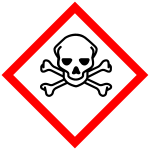 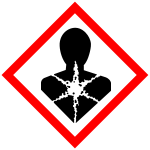 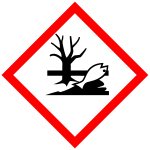 |
|---|---|
| Signal word | Danger |
| Hazard statement(s) | H301 Toxic if swallowed H311 Toxic in contact with skin H319 Causes serious eye irritation H317 May cause an allergic skin reaction H331 Toxic if inhaled H341 Suspected of causing genetic defects H410 Very toxic to aquatic life with long lasting effects |
| Precautionary statement(s) | |
| Prevention | P264 Wash ... thoroughly after handling. P270 Do not eat, drink or smoke when using this product. P280 Wear protective gloves/protective clothing/eye protection/face protection/hearing protection/... P261 Avoid breathing dust/fume/gas/mist/vapours/spray. P272 Contaminated work clothing should not be allowed out of the workplace. P271 Use only outdoors or in a well-ventilated area. P203 Obtain, read and follow all safety instructions before use. P273 Avoid release to the environment. |
| Response | P301+P316 IF SWALLOWED: Get emergency medical help immediately. P321 Specific treatment (see ... on this label). P330 Rinse mouth. P302+P352 IF ON SKIN: Wash with plenty of water/... P316 Get emergency medical help immediately. P361+P364 Take off immediately all contaminated clothing and wash it before reuse. P305+P351+P338 IF IN EYES: Rinse cautiously with water for several minutes. Remove contact lenses, if present and easy to do. Continue rinsing. P333+P317 If skin irritation or rash occurs: Get medical help. P362+P364 Take off contaminated clothing and wash it before reuse. P304+P340 IF INHALED: Remove person to fresh air and keep comfortable for breathing. P318 IF exposed or concerned, get medical advice. P391 Collect spillage. |
| Storage | P405 Store locked up. P403+P233 Store in a well-ventilated place. Keep container tightly closed. |
| Disposal | P501 Dispose of contents/container to an appropriate treatment and disposal facility in accordance with applicable laws and regulations, and product characteristics at time of disposal. |
2.3 Other hazards which do not result in classification
no data available
SECTION 3: Composition/information on ingredients
3.1 Substances
| Chemical name | Common names and synonyms | CAS number | EC number | Concentration |
|---|---|---|---|---|
| m-phenylenediamine | m-phenylenediamine | 108-45-2 | 203-584-7 | 100% |
SECTION 4: First-aid measures
4.1 Description of necessary first-aid measures
If inhaled
Fresh air, rest. Refer for medical attention.
Following skin contact
Remove contaminated clothes. Rinse and then wash skin with water and soap. Refer for medical attention .
Following eye contact
First rinse with plenty of water for several minutes (remove contact lenses if easily possible), then refer for medical attention.
Following ingestion
Rinse mouth. Refer for medical attention .
4.2 Most important symptoms/effects, acute and delayed
SYMPTOMS: Symptoms of exposure to this chemical may include skin sensitization reactions, eye irritation and injury, skin irritation, dermatitis, blackened skin and bronchial asthma. Other symptoms may include allergic skin reactions, irritation of the mucous membranes, nose, throat and lungs, coughing, burning sensation, runny nose, sore throat, methemoglobinemia, cyanosis, headache, dizziness, drowsiness, mental confusion, pulmonary edema, kidney and liver damage, central nervous system effects and conjunctivitis. Eye contact may cause discomfort, tearing, blurring of vision, reddening, partial clouding of the cornea and swelling of the eye and surrounding tissue. Dysuria and eosinophiluria may also occur. Exposure may also result in respiratory tract irritation. ACUTE/CHRONIC HAZARDS: This compound is harmful if inhaled, swallowed or absorbed through the skin. It causes irritation of the eyes, skin, mucous membrane and respiratory tract. When heated to decomposition, this compound emits irritating and/or toxic gases and fumes of carbon monoxide, carbon dioxide and oxides of nitrogen. (NTP, 1992)
4.3 Indication of immediate medical attention and special treatment needed, if necessary
For immediate first aid: Ensure that adequate decontamination has been carried out. If victim is not breathing, start artificial respiration, preferably with a demand-valve resuscitator, bag-valve-mask device, or pocket mask as trained. Perform CPR if necessary. Immediately flush contaminated eyes with gently flowing water. Do not induce vomiting. If vomiting occurs, lean patient forward or place on left side (head-down position, if possible) to maintain an open airway and prevent aspiration. Keep victim quiet and maintain normal body temperature. Obtain medical attention. Organic bases, amines, and related compounds
SECTION 5: Fire-fighting measures
5.1 Suitable extinguishing media
Excerpt from ERG Guide 153 [Substances - Toxic and/or Corrosive (Combustible)]: SMALL FIRE: Dry chemical, CO2 or water spray. LARGE FIRE: Dry chemical, CO2, alcohol-resistant foam or water spray. Move containers from fire area if you can do it without risk. Dike fire-control water for later disposal; do not scatter the material. FIRE INVOLVING TANKS OR CAR/TRAILER LOADS: Fight fire from maximum distance or use unmanned hose holders or monitor nozzles. Do not get water inside containers. Cool containers with flooding quantities of water until well after fire is out. Withdraw immediately in case of rising sound from venting safety devices or discoloration of tank. ALWAYS stay away from tanks engulfed in fire. (ERG, 2016)
5.2 Specific hazards arising from the chemical
This chemical is combustible. Dust may form explosive mixtures in air (NTP, 1992)
5.3 Special protective actions for fire-fighters
Use water spray, powder.
SECTION 6: Accidental release measures
6.1 Personal precautions, protective equipment and emergency procedures
Personal protection: complete protective clothing including self-contained breathing apparatus. Do NOT let this chemical enter the environment. Sweep spilled substance into covered containers. If appropriate, moisten first to prevent dusting. Carefully collect remainder. Then store and dispose of according to local regulations.
6.2 Environmental precautions
Sweep spilled substance into covered containers. If appropriate, moisten first to prevent dusting. Carefully collect remainder. Then store and dispose of according to local regulations. Do NOT let this chemical enter the environment. Personal protection: complete protective clothing including self-contained breathing apparatus.
6.3 Methods and materials for containment and cleaning up
Collect and arrange disposal. Keep the chemical in suitable and closed containers for disposal. Remove all sources of ignition. Use spark-proof tools and explosion-proof equipment. Adhered or collected material should be promptly disposed of, in accordance with appropriate laws and regulations.
SECTION 7: Handling and storage
7.1 Precautions for safe handling
NO open flames. Handling in a well ventilated place. Wear suitable protective clothing. Avoid contact with skin and eyes. Avoid formation of dust and aerosols. Use non-sparking tools. Prevent fire caused by electrostatic discharge steam.
7.2 Conditions for safe storage, including any incompatibilities
Separated from strong oxidants and food and feedstuffs. Keep in the dark. Well closed.KEEP WELL CLOSED & PROTECTED FROM LIGHT.
SECTION 8: Exposure controls/personal protection
8.1 Control parameters
Occupational Exposure limit values
TLV: 0.1 mg/m3, as TWA; A4 (not classifiable as a human carcinogen).MAK: skin absorption (H); sensitization of skin (SH); carcinogen category: 3B
Biological limit values
no data available
8.2 Appropriate engineering controls
Ensure adequate ventilation. Handle in accordance with good industrial hygiene and safety practice. Set up emergency exits and the risk-elimination area.
8.3 Individual protection measures, such as personal protective equipment (PPE)
Eye/face protection
Wear safety goggles, face shield or eye protection in combination with breathing protection.
Skin protection
Protective gloves. Protective clothing.
Respiratory protection
Use local exhaust or breathing protection.
Thermal hazards
no data available
SECTION 9: Physical and chemical properties and safety characteristics
| Physical state | Solid. Flakes. |
|---|---|
| Colour | WHITE CRYSTALS BECOMING RED ON EXPOSURE TO AIR |
| Odour | no data available |
| Melting point/freezing point | 63.2 °C. Atm. press.:101.3 kPa. Remarks:63.2°C. |
| Boiling point or initial boiling point and boiling range | 284 °C. Atm. press.:101.3 kPa. Remarks:284°C. |
| Flammability | Combustible. Gives off irritating or toxic fumes (or gases) in a fire. |
| Lower and upper explosion limit/flammability limit | no data available |
| Flash point | 187 °C |
| Auto-ignition temperature | 1040° F (NTP, 1992) |
| Decomposition temperature | no data available |
| pH | no data available |
| Kinematic viscosity | no data available |
| Solubility | Miscible with water |
| Partition coefficient n-octanol/water | log Pow = -0.39. |
| Vapour pressure | 0.038 Pa. Temperature:20 °C. Remarks:At 20 ± 1°C, ± 1.73 x 10⁻⁴ Pa. |
| Density and/or relative density | 709 g/L. Temperature:22 °C. |
| Relative vapour density | 3.7 (vs air) |
| Particle characteristics | no data available |
SECTION 10: Stability and reactivity
10.1 Reactivity
Decomposes on burning. This produces toxic fumes including nitrogen oxides. Reacts with strong oxidants.
10.2 Chemical stability
Unstable in air
10.3 Possibility of hazardous reactions
FIRE POINT: 175 DEG C.1,3-PHENYLENEDIAMINE an aromatic amine, neutralizes acids, acid chlorides, acid anhydrides and chloroformates in exothermic reactions to form salts. May be incompatible with isocyanates, halogenated organics, peroxides, phenols (acidic), epoxides, anhydrides, and acid halides. Incompatible with oxidizing agents (NTP, 1992).
10.4 Conditions to avoid
no data available
10.5 Incompatible materials
STABILITY: This compound is sensitive to light. It turns red on exposure to air. This compound darkens on storage. Moist air and excess heat cause it to degrade. Solutions of this chemical in water, DMSO, 95% ethanol or acetone should be stable for 24 hours under normal lab conditions.REACTIVITY: This compound is incompatible with oxidizing agents. It is also incompatible with acids, acid chlorides, acid anhydrides and chloroformates. (NTP, 1992)
10.6 Hazardous decomposition products
When heated to decomp, it emits toxic fumes of nitrogen oxides.
SECTION 11: Toxicological information
Acute toxicity
- Oral: Approximate Lethal Dose (ALD) - rat (male) - 450 mg/kg bw.
- Inhalation: LC50 - rat (male) - 3.2 mg/L air (analytical).
- Dermal: Approximate Lethal Dose (ALD) - rabbit (male) - 1 500 mg/kg bw.
Skin corrosion/irritation
no data available
Serious eye damage/irritation
no data available
Respiratory or skin sensitization
no data available
Germ cell mutagenicity
no data available
Carcinogenicity
No data are available in humans. Inadequate evidence of carcinogenicity in animals. OVERALL EVALUATION: Group 3: The agent is not classifiable as to its carcinogenicity to humans.
Reproductive toxicity
no data available
STOT-single exposure
The substance is irritating to the eyes and skin. The substance may cause effects on the kidneys and blood. This may result in renal failure and the formation of methaemoglobin. The effects may be delayed. Medical observation is indicated.
STOT-repeated exposure
Repeated or prolonged contact may cause skin sensitization. The substance may have effects on the kidneys. This may result in renal failure.
Aspiration hazard
A harmful contamination of the air will not or will only very slowly be reached on evaporation of this substance at 20°C; on spraying or dispersing, however, much faster.
SECTION 12: Ecological information
12.1 Toxicity
- Toxicity to fish: LC50 - Oncorhynchus mykiss (previous name: Salmo gairdneri) - 512 mg/L - 96 h.
- Toxicity to daphnia and other aquatic invertebrates: LC50 - Gammarus fasciatus - 4.6 mg/L - 96 h.
- Toxicity to algae: NOEC - Pseudokirchneriella subcapitata (previous names: Raphidocelis subcapitata, Selenastrum capricornutum) - 0.915 mg/L - 96 h.
- Toxicity to microorganisms: 30% reduction in respiration rate - activated sludge of a predominantly industrial sewage - 100 mg/L - 30 min. Remarks:Respiration rate.
12.2 Persistence and degradability
1,3-Benzenediamine was observed to degrade 60% after 5 days at concn levels of 25 to 30 ppm using an acclimated activated sludge inoculum(1). However at 50 ppm 1,3-benzenediamine was reported to be toxic to 3 unacclimated activated sludges(2). Soil microflora did not cleave the benzene ring of 1,3-benzenediamine in 64 days(3). 1,3-Benzenediamine, present at an initial concn of 100 mg/l, reached 2% of its theoretical BOD in 4 weeks using an activated sludge inoculum(4).
12.3 Bioaccumulative potential
An estimated BCF value of 0.33 was calculated for 1,3-benzenediamine(SRC), using an estimated log Kow of -0.33(1) and a recommended regression-derived equation(2). BCF values of 1.3 to 4.6 and <1.6 to 24 were measured for 1,3-benzenediamine in carp at 2 and 0.2 mg/l, respectively(3). According to a classification scheme(4), these BCF values suggest that bioconcentration in aquatic organisms is low(SRC).
12.4 Mobility in soil
The Koc of 1,3-benzenediamine is estimated as approximately 16(SRC), using a measured log Kow of -0.33(1) and a regression-derived equation(2,SRC). According to a recommended classification scheme(3), this estimated Koc value suggests that 1,3-benzenediamine is expected to have very high mobility in soil(SRC). However, anilines are expected to bind strongly to humus or organic matter in soils due to the high reactivity of the aromatic amino group(4,5); therefore, mobility may be much lower in some soils(SRC).
12.5 Other adverse effects
no data available
SECTION 13: Disposal considerations
13.1 Disposal methods
Product
The material can be disposed of by removal to a licensed chemical destruction plant or by controlled incineration with flue gas scrubbing. Do not contaminate water, foodstuffs, feed or seed by storage or disposal. Do not discharge to sewer systems.
Contaminated packaging
Containers can be triply rinsed (or equivalent) and offered for recycling or reconditioning. Alternatively, the packaging can be punctured to make it unusable for other purposes and then be disposed of in a sanitary landfill. Controlled incineration with flue gas scrubbing is possible for combustible packaging materials.
SECTION 14: Transport information
14.1 UN Number
| ADR/RID: UN1673 (For reference only, please check.) | IMDG: UN1673 (For reference only, please check.) | IATA: UN1673 (For reference only, please check.) |
14.2 UN Proper Shipping Name
| ADR/RID: PHENYLENEDIAMINES (o-, m-, p-) (For reference only, please check.) | IMDG: PHENYLENEDIAMINES (o-, m-, p-) (For reference only, please check.) | IATA: PHENYLENEDIAMINES (o-, m-, p-) (For reference only, please check.) |
14.3 Transport hazard class(es)
| ADR/RID: 6.1 (For reference only, please check.) | IMDG: 6.1 (For reference only, please check.) | IATA: 6.1 (For reference only, please check.) |
14.4 Packing group, if applicable
| ADR/RID: III (For reference only, please check.) | IMDG: III (For reference only, please check.) | IATA: III (For reference only, please check.) |
14.5 Environmental hazards
| ADR/RID: Yes | IMDG: Yes | IATA: Yes |
14.6 Special precautions for user
no data available
14.7 Transport in bulk according to IMO instruments
no data available
SECTION 15: Regulatory information
15.1 Safety, health and environmental regulations specific for the product in question
| Chemical name | Common names and synonyms | CAS number | EC number |
|---|---|---|---|
| m-phenylenediamine | m-phenylenediamine | 108-45-2 | 203-584-7 |
| European Inventory of Existing Commercial Chemical Substances (EINECS) | Listed. | ||
| EC Inventory | Listed. | ||
| United States Toxic Substances Control Act (TSCA) Inventory | Listed. | ||
| China Catalog of Hazardous chemicals 2015 | Listed. | ||
| New Zealand Inventory of Chemicals (NZIoC) | Listed. | ||
| Philippines Inventory of Chemicals and Chemical Substances (PICCS) | Listed. | ||
| Vietnam National Chemical Inventory | Listed. | ||
| Chinese Chemical Inventory of Existing Chemical Substances (China IECSC) | Listed. | ||
| Korea Existing Chemicals List (KECL) | Listed. | ||
SECTION 16: Other information
Information on revision
| Creation Date | July 15, 2019 |
|---|---|
| Revision Date | July 15, 2019 |
Abbreviations and acronyms
- CAS: Chemical Abstracts Service
- ADR: European Agreement concerning the International Carriage of Dangerous Goods by Road
- RID: Regulation concerning the International Carriage of Dangerous Goods by Rail
- IMDG: International Maritime Dangerous Goods
- IATA: International Air Transportation Association
- TWA: Time Weighted Average
- STEL: Short term exposure limit
- LC50: Lethal Concentration 50%
- LD50: Lethal Dose 50%
- EC50: Effective Concentration 50%
References
- IPCS - The International Chemical Safety Cards (ICSC), website: http://www.ilo.org/dyn/icsc/showcard.home
- HSDB - Hazardous Substances Data Bank, website: https://toxnet.nlm.nih.gov/newtoxnet/hsdb.htm
- IARC - International Agency for Research on Cancer, website: http://www.iarc.fr/
- eChemPortal - The Global Portal to Information on Chemical Substances by OECD, website: http://www.echemportal.org/echemportal/index?pageID=0&request_locale=en
- CAMEO Chemicals, website: http://cameochemicals.noaa.gov/search/simple
- ChemIDplus, website: http://chem.sis.nlm.nih.gov/chemidplus/chemidlite.jsp
- ERG - Emergency Response Guidebook by U.S. Department of Transportation, website: http://www.phmsa.dot.gov/hazmat/library/erg
- Germany GESTIS-database on hazard substance, website: http://www.dguv.de/ifa/gestis/gestis-stoffdatenbank/index-2.jsp
- ECHA - European Chemicals Agency, website: https://echa.europa.eu/
Other Information
Depending on the degree of exposure, periodic medical examination is suggested.Specific treatment is necessary in case of poisoning with this substance; the appropriate means with instructions must be available.See ICSC 0805.
Disclaimer: The above information is believed to be correct but does not purport to be all inclusive and shall be used only as a guide. The information in this document is based on the present state of our knowledge and is applicable to the product with regard to appropriate safety precautions. It does not represent any guarantee of the properties of the product. We as supplier shall not be held liable for any damage resulting from handling or from contact with the above product.
m-Phenylenediamine is included in Hair Dyeing category.
Related Products
Industry News
More Safety Data Sheets