




Naphthalene Safety Data Sheets
SAFETY DATA SHEETS
According to the UN GHS revision 8
SECTION 1: Identification
1.1 GHS Product identifier
| Product name | Naphthalene |
|---|
1.2 Other means of identification
| Product number | - |
|---|---|
| Other names | Naphthalene, , scintillation grade; Albocarbon; NAPHTALENE |
1.3 Recommended use of the chemical and restrictions on use
| Identified uses | The primary use for naphthalene is in the production of phthalic anhydride. However, o-xylene is replacing naphthalene as the preferred raw material for phthalic anhydride production. Other uses of naphthalene include carbamate insecticides, surface active agents and resins, as a dye intermediate, as a synthetic tanning agent, as a moth repellent, and in miscellaneous organic chemicals. |
|---|---|
| Uses advised against | no data available |
1.4 Supplier's details
| Company | Echemi.com |
|---|---|
| Address | Echemi.com |
| Telephone | Echemi.com |
1.5 Emergency phone number
| Emergency phone number | Echemi.com |
|---|---|
| Service hours | Monday to Friday, 9am-5pm (Standard time zone: UTC/GMT +8 hours). |
SECTION 2: Hazard identification
2.1 Classification of the substance or mixture
Acute toxicity - Category 4, Oral
Carcinogenicity, Category 2
Hazardous to the aquatic environment, short-term (Acute) - Category Acute 1
Hazardous to the aquatic environment, long-term (Chronic) - Category Chronic 1
2.2 GHS label elements, including precautionary statements
| Pictogram(s) |  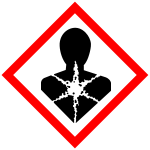 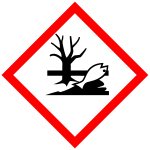 |
|---|---|
| Signal word | Warning |
| Hazard statement(s) | H302 Harmful if swallowed H351 Suspected of causing cancer H410 Very toxic to aquatic life with long lasting effects |
| Precautionary statement(s) | |
| Prevention | P264 Wash ... thoroughly after handling. P270 Do not eat, drink or smoke when using this product. P203 Obtain, read and follow all safety instructions before use. P280 Wear protective gloves/protective clothing/eye protection/face protection/hearing protection/... P273 Avoid release to the environment. |
| Response | P301+P317 IF SWALLOWED: Get medical help. P330 Rinse mouth. P318 IF exposed or concerned, get medical advice. P391 Collect spillage. |
| Storage | P405 Store locked up. |
| Disposal | P501 Dispose of contents/container to an appropriate treatment and disposal facility in accordance with applicable laws and regulations, and product characteristics at time of disposal. |
2.3 Other hazards which do not result in classification
no data available
SECTION 3: Composition/information on ingredients
3.1 Substances
| Chemical name | Common names and synonyms | CAS number | EC number | Concentration |
|---|---|---|---|---|
| Naphthalene | Naphthalene | 91-20-3 | 202-049-5 | 100% |
SECTION 4: First-aid measures
4.1 Description of necessary first-aid measures
If inhaled
Fresh air. Refer for medical attention.
Following skin contact
Remove contaminated clothes. Rinse and then wash skin with water and soap. Seek medical attention if you feel unwell.
Following eye contact
Rinse with plenty of water (remove contact lenses if easily possible).
Following ingestion
Rinse mouth. Do NOT induce vomiting. Refer immediately for medical attention.
4.2 Most important symptoms/effects, acute and delayed
Excerpt from ERG Guide 133 [Flammable Solids]: Fire may produce irritating and/or toxic gases. Contact may cause burns to skin and eyes. Contact with molten substance may cause severe burns to skin and eyes. Runoff from fire control may cause pollution. (ERG, 2016)
4.3 Indication of immediate medical attention and special treatment needed, if necessary
Emergency and supportive measures: Maintain an open airway and assist ventilation if necessary. Treat coma and seizures if they occur. Treat hemolysis and resulting hemoglobinuria if they occur, by intravenous hydration and urinary alkalinization. Naphthalene and paradichlorobenzene
SECTION 5: Fire-fighting measures
5.1 Suitable extinguishing media
If material on fire or involved in fire: Do not extinguish fire unless flow can be stopped. Use water in flooding quantities as fog. Cool all affected containers with flooding quantities of water. Apply water from as far a distance as possible. Solid streams of water may be ineffective. Use "alcohol" foam, dry chemical or carbon dioxide. Naphthalene, crude or refined
5.2 Specific hazards arising from the chemical
Excerpt from ERG Guide 133 [Flammable Solids]: Flammable/combustible material. May be ignited by friction, heat, sparks or flames. Some may burn rapidly with flare-burning effect. Powders, dusts, shavings, borings, turnings or cuttings may explode or burn with explosive violence. Substance may be transported in a molten form at a temperature that may be above its flash point. May re-ignite after fire is extinguished. (ERG, 2016)
5.3 Special protective actions for fire-fighters
Use water spray, powder, foam, carbon dioxide.
SECTION 6: Accidental release measures
6.1 Personal precautions, protective equipment and emergency procedures
Personal protection: filter respirator for organic gases and vapours adapted to the airborne concentration of the substance. Do NOT let this chemical enter the environment. Do NOT wash away into sewer. Sweep spilled substance into covered containers. If appropriate, moisten first to prevent dusting. Carefully collect remainder. Then store and dispose of according to local regulations.
6.2 Environmental precautions
Personal protection: filter respirator for organic gases and vapours adapted to the airborne concentration of the substance. Do NOT let this chemical enter the environment. Do NOT wash away into sewer. Sweep spilled substance into covered containers. If appropriate, moisten first to prevent dusting. Carefully collect remainder. Then store and dispose of according to local regulations.
6.3 Methods and materials for containment and cleaning up
Environmental considerations: Water spill: Use natural barriers or oil spill booms to limit spill travel. Use natural deep water pockets, excavated lagoons, or sand bag barriers to trap material at bottom. Remove trapped material with suction hoses. Use mechanical dredges or lifts to remove immobilized masses of pollutants and precipitates. Naphthalene, molten
SECTION 7: Handling and storage
7.1 Precautions for safe handling
NO open flames. Closed system, dust explosion-proof electrical equipment and lighting. Prevent deposition of dust. Handling in a well ventilated place. Wear suitable protective clothing. Avoid contact with skin and eyes. Avoid formation of dust and aerosols. Use non-sparking tools. Prevent fire caused by electrostatic discharge steam.
7.2 Conditions for safe storage, including any incompatibilities
Separated from strong oxidants and food and feedstuffs. Store in an area without drain or sewer access. Provision to contain effluent from fire extinguishing.Without inert-gas blanketing and at the temperature normally used for the storage of molten naphthalene, i.e., 90 deg C, the vapors above the liquid are within the flammability limits. Thus, storage tanks containing molten naphthalene have a combustible mixture in the vapor space and care must be taken to eliminate all sources of ignition around such systems. Naphthalene dust can form explosive mixtures with air which necessitates the design and operation of solid handling systems.
SECTION 8: Exposure controls/personal protection
8.1 Control parameters
Occupational Exposure limit values
TLV: 10 ppm as TWA; (skin); A3 (confirmed animal carcinogen with unknown relevance to humans).EU-OEL: 50 mg/m3, 10 ppm as TWA.MAK: skin absorption (H); carcinogen category: 2; germ cell mutagen group: 3B
Biological limit values
no data available
8.2 Appropriate engineering controls
Ensure adequate ventilation. Handle in accordance with good industrial hygiene and safety practice. Set up emergency exits and the risk-elimination area.
8.3 Individual protection measures, such as personal protective equipment (PPE)
Eye/face protection
Wear safety spectacles.
Skin protection
Protective gloves. Protective clothing.
Respiratory protection
Use ventilation (not if powder), local exhaust or breathing protection.
Thermal hazards
no data available
SECTION 9: Physical and chemical properties and safety characteristics
| Physical state | Solid. Flakes, granules. |
|---|---|
| Colour | White as solid. |
| Odour | Aromatic odor |
| Melting point/freezing point | 80.3 °C. Atm. press.:Ca. 101 kPa. Remarks:Pure naphthalene.;78.9 °C. Atm. press.:Ca. 101 kPa. |
| Boiling point or initial boiling point and boiling range | 218.1 °C. Atm. press.:101.3 kPa. Remarks:Naphthalene (pure).;218.2 °C. Atm. press.:101.3 kPa. Remarks:Naphthalene (techn.). |
| Flammability | Combustible Solid, but will take some effort to ignite. |
| Lower and upper explosion limit/flammability limit | Lower flammable limit: 0.9% by volume; Upper flammable limit: 5.9% by volume |
| Flash point | 78.5 °C. Atm. press.:99 kPa. |
| Auto-ignition temperature | >= 526 - <= 587 °C. Atm. press.:1 013 hPa. Remarks:Range of literature data.;540 °C. Atm. press.:1 013 hPa. Remarks:Nabert and Schon 1963: DIN 51794. |
| Decomposition temperature | no data available |
| pH | no data available |
| Kinematic viscosity | kinematic viscosity (in mm²/s) = 1.05. Temperature:81.5°C. Remarks:Naphthalene, pure.;kinematic viscosity (in mm²/s) = 1.03. Temperature:85.0°C. Remarks:Naphthalene, pure.;kinematic viscosity (in mm²/s) = 1. Temperature:80.0°C. Remarks:Naphthalene, technical quality. |
| Solubility | Insoluble in water |
| Partition coefficient n-octanol/water | log Pow = 3.4. Temperature:25 °C. |
| Vapour pressure | 7.2 Pa. Temperature:20 °C.;10.5 Pa. Temperature:25 °C. |
| Density and/or relative density | 1.085. Temperature:24.7 °C.;1.085. Temperature:20 °C.;1.069 g/cm³. Temperature:24.7 °C. |
| Relative vapour density | 4.4 (vs air) |
| Particle characteristics | no data available |
SECTION 10: Stability and reactivity
10.1 Reactivity
On combustion, forms irritating and toxic gases. Reacts with strong oxidants. This generates fire and explosion hazard.
10.2 Chemical stability
Stable under recommended storage conditions.
10.3 Possibility of hazardous reactions
Flammable in the presence of a source of ignition, through friction or retained heat.Dust explosion possible if in powder or granular form, mixed with air.Vigorous reactions, sometimes amounting to explosions, can result from the contact between aromatic hydrocarbons, such as NAPHTHALENE, and strong oxidizing agents. They can react exothermically with bases and with diazo compounds. Substitution at the benzene nucleus occurs by halogenation (acid catalyst), nitration, sulfonation, and the Friedel-Crafts reaction. Naphthalene, camphor, glycerol, or turpentine will react violently with chromic anhydride [Haz. Chem. Data 1967. p 68]. Friedel-Crafts acylation of naphthalene using benzoyl chloride, catalyzed by AlCl3, must be conducted above the melting point of the mixture, or the reaction may be violent [Clar, E. et al., Tetrahedron, 1974, 30, 3296].
10.4 Conditions to avoid
no data available
10.5 Incompatible materials
Naphthalene ...will react violently with chromic anhydride.
10.6 Hazardous decomposition products
When heated to decomposition it emits acrid smoke and irritating fumes.
SECTION 11: Toxicological information
Acute toxicity
- Oral: LD50 - mouse (female) - 710 mg/kg bw.
- Inhalation: LC50 - rat (male/female) - > 77.7 ppm.
- Dermal: LD50 - rat (male/female) - > 16 000 mg/kg bw.
Skin corrosion/irritation
no data available
Serious eye damage/irritation
no data available
Respiratory or skin sensitization
no data available
Germ cell mutagenicity
no data available
Carcinogenicity
WEIGHT-OF-EVIDENCE CHARACTERIZATION: Using criteria of the 1986 Guidelines for Carcinogen Risk Assessment, naphthalene is classified in group C, a possible human carcinogen. This is based on the inadequate data of carcinogenicity in humans exposed to naphthalene via the oral and inhalation routes, and the limited evidence of carcinogenicity in animals via the inhalation route. Using the 1996 Proposed Guidelines for Carcinogen Risk Assessment, the human carcinogenic potential of naphthalene via the oral or inhalation routes "cannot be determined" at this time based on human and animal data; however, there is suggestive evidence (observations of benign respiratory tumors and one carcinoma in female mice only exposed to naphthalene by inhalation). Additional support includes increase in respiratory tumors associated with exposure to 1-methylnaphthalene. At the present time the mechanism whereby naphthalene produces benign respiratory tract tumors are not fully understood, but are hypothesized to involve oxygenated reactive metabolites produced via the cytochrome P-450 monooxygenase system. However, based on the many negative results obtained in genotoxicity tests, a genotoxic mechanism appears unlikely. HUMAN CARCINOGENICITY DATA: Available data are inadequate to establish a causal association between exposure to naphthalene and cancer in humans. Adequately scaled epidemiological studies designed to examine a possible association between naphthalene exposure and cancer were not located. Overall, no data are available to evaluate the carcinogenic potential in exposed human populations.
Reproductive toxicity
Hemolytic anemia has been reported in infants born to mothers who "sniffed" and ingested naphthalene (as mothballs) during pregnancy. The mothers themselves were anemic, but to a lesser extent than the infants. Signs of maternal toxicity (e.g., decreased body weight and lethargy) but no fetal effects were reported in rats and rabbits exposed to naphthalene via gavage. Maternal toxicity (increased mortality and reduced weight gain) and fetotoxicity (reduced number of live pups per litter) were observed in mice exposed via gavage.
STOT-single exposure
The substance may cause effects on the blood. This may result in lesions of blood cells (haemolysis). See Notes. The effects may be delayed. Ingestion could cause death. Medical observation is indicated.
STOT-repeated exposure
The substance may have effects on the blood. This may result in chronic haemolytic anaemia. The substance may have effects on the eyes. This may result in development of cataract. This substance is possibly carcinogenic to humans.
Aspiration hazard
A harmful contamination of the air will be reached rather slowly on evaporation of this substance at 20°C.
SECTION 12: Ecological information
12.1 Toxicity
- Toxicity to fish: LC50 - Oncorhynchus mykiss (previous name: Salmo gairdneri) - 1.6 mg/L - 96 h. Remarks:Naphthalene.
- Toxicity to daphnia and other aquatic invertebrates: EC50 - Daphnia magna - 2.16 mg/L - 48 h.
- Toxicity to algae: EC50 - Pseudokirchneriella subcapitata (previous names: Raphidocelis subcapitata, Selenastrum capricornutum) - 2.96 mg/L - 4 h.
- Toxicity to microorganisms: IC50 for Nitrosomonas - Nitrosomonas and aerobic heterotrophs - 29 mg/L - 24 h.
12.2 Persistence and degradability
AEROBIC: Although there are some conflicting data, data suggest that naphthalene degrades after a relatively short period of acclimation and that degradation can be rapid in oil polluted water, slow in unpolluted water and that the rate of degradation increases with the concentration of naphthalene(1). In laboratory tests with sewage or sludge inoculums, 100% degradation was obtained in 7 days(2-3) while others got 0% BOD in 5 days(4-5). The lag period for naphthalene degradation decreased as groundwater was more polluted with fuel oil; the lag period was 1.2 and 1.9 days in heavily polluted and slightly polluted water, respectively versus 12 days for unpolluted water(6). Approximately 70% of naphthalene was lost in a pilot-scale municipal wastewater treatment plant due to biodegradation(7). In water, bacteria can utilize naphthalene only when it is in the dissolved state(8). Naphthalene, present at 100 mg/L, reached 2% of its theoretical BOD in 4 weeks using an activated sludge inoculum at 30 mg/L and the Japanese MITI test(9).
12.3 Bioaccumulative potential
The BCF of naphthalene at a water concentration of 0.15 mg/L ranged from 36.5 to 168 in carp, over an 8 week exposure period(1). BCF values in sheepshead minnows (Cyprinodon variegatus) exposed for 36 days to 1.34 and 12.5 ug/L of naphthalene were 692 and 714, respectively(2). According to a classification scheme(3), these BCF values suggest for bioconcentration in aquatic organisms is low to high(SRC). BCF values in amphipods (Diporeia spp) exposed for 28 days to 453.2 to 2201.1 ug/L of naphthalene were 490 to 736(4).
12.4 Mobility in soil
The mean Koc value of naphthalene in 17 soils throughout the US was 871(1). The Koc of naphthalene in 5 different soils from Japan ranged from 440-830(2). In a long term field experiment in Uppsala, Sweden, soils were treated with 7 types of amendments and 1 untreated plot, Koc values were 112-680 for naphthalene(3). In a contaminated soil collected from a railway station in Spain, naphthalene had a log Koc of 3.97(4). The mean Koc value of naphthalene in sediment samples from 2 ponds and 1 river from north Georgia, US was 1,300(5). The log Koc value in sediment was 2.84(6). In 76 sediment samples from 7 sites in New York and 1 in North Carolina, naphthalene had log Koc values of 2.45-5.59(7). According to a classification scheme(8), these Koc values suggest that naphthalene is expected to have high to no mobility in soil(SRC).
12.5 Other adverse effects
no data available
SECTION 13: Disposal considerations
13.1 Disposal methods
Product
The material can be disposed of by removal to a licensed chemical destruction plant or by controlled incineration with flue gas scrubbing. Do not contaminate water, foodstuffs, feed or seed by storage or disposal. Do not discharge to sewer systems.
Contaminated packaging
Containers can be triply rinsed (or equivalent) and offered for recycling or reconditioning. Alternatively, the packaging can be punctured to make it unusable for other purposes and then be disposed of in a sanitary landfill. Controlled incineration with flue gas scrubbing is possible for combustible packaging materials.
SECTION 14: Transport information
14.1 UN Number
| ADR/RID: UN1334 (For reference only, please check.) | IMDG: UN1334 (For reference only, please check.) | IATA: UN1334 (For reference only, please check.) |
14.2 UN Proper Shipping Name
| ADR/RID: NAPHTHALENE, CRUDE or NAPHTHALENE, REFINED (For reference only, please check.) | IMDG: NAPHTHALENE, CRUDE or NAPHTHALENE, REFINED (For reference only, please check.) | IATA: NAPHTHALENE, CRUDE or NAPHTHALENE, REFINED (For reference only, please check.) |
14.3 Transport hazard class(es)
| ADR/RID: 4.1 (For reference only, please check.) | IMDG: 4.1 (For reference only, please check.) | IATA: 4.1 (For reference only, please check.) |
14.4 Packing group, if applicable
| ADR/RID: III (For reference only, please check.) | IMDG: III (For reference only, please check.) | IATA: III (For reference only, please check.) |
14.5 Environmental hazards
| ADR/RID: Yes | IMDG: Yes | IATA: Yes |
14.6 Special precautions for user
no data available
14.7 Transport in bulk according to IMO instruments
no data available
SECTION 15: Regulatory information
15.1 Safety, health and environmental regulations specific for the product in question
| Chemical name | Common names and synonyms | CAS number | EC number |
|---|---|---|---|
| Naphthalene | Naphthalene | 91-20-3 | 202-049-5 |
| European Inventory of Existing Commercial Chemical Substances (EINECS) | Listed. | ||
| EC Inventory | Listed. | ||
| United States Toxic Substances Control Act (TSCA) Inventory | Listed. | ||
| China Catalog of Hazardous chemicals 2015 | Listed. | ||
| New Zealand Inventory of Chemicals (NZIoC) | Listed. | ||
| Philippines Inventory of Chemicals and Chemical Substances (PICCS) | Listed. | ||
| Vietnam National Chemical Inventory | Listed. | ||
| Chinese Chemical Inventory of Existing Chemical Substances (China IECSC) | Listed. | ||
| Korea Existing Chemicals List (KECL) | Listed. | ||
SECTION 16: Other information
Information on revision
| Creation Date | July 15, 2019 |
|---|---|
| Revision Date | July 15, 2019 |
Abbreviations and acronyms
- CAS: Chemical Abstracts Service
- ADR: European Agreement concerning the International Carriage of Dangerous Goods by Road
- RID: Regulation concerning the International Carriage of Dangerous Goods by Rail
- IMDG: International Maritime Dangerous Goods
- IATA: International Air Transportation Association
- TWA: Time Weighted Average
- STEL: Short term exposure limit
- LC50: Lethal Concentration 50%
- LD50: Lethal Dose 50%
- EC50: Effective Concentration 50%
References
- IPCS - The International Chemical Safety Cards (ICSC), website: http://www.ilo.org/dyn/icsc/showcard.home
- HSDB - Hazardous Substances Data Bank, website: https://toxnet.nlm.nih.gov/newtoxnet/hsdb.htm
- IARC - International Agency for Research on Cancer, website: http://www.iarc.fr/
- eChemPortal - The Global Portal to Information on Chemical Substances by OECD, website: http://www.echemportal.org/echemportal/index?pageID=0&request_locale=en
- CAMEO Chemicals, website: http://cameochemicals.noaa.gov/search/simple
- ChemIDplus, website: http://chem.sis.nlm.nih.gov/chemidplus/chemidlite.jsp
- ERG - Emergency Response Guidebook by U.S. Department of Transportation, website: http://www.phmsa.dot.gov/hazmat/library/erg
- Germany GESTIS-database on hazard substance, website: http://www.dguv.de/ifa/gestis/gestis-stoffdatenbank/index-2.jsp
- ECHA - European Chemicals Agency, website: https://echa.europa.eu/
Disclaimer: The above information is believed to be correct but does not purport to be all inclusive and shall be used only as a guide. The information in this document is based on the present state of our knowledge and is applicable to the product with regard to appropriate safety precautions. It does not represent any guarantee of the properties of the product. We as supplier shall not be held liable for any damage resulting from handling or from contact with the above product.
Naphthalene is included in Hydrocarbons and Derivatives category. See more Naphthalene price and marketing trends
Buy Naphthalene of different grades for your demands from various manufactures and traders.
Related Products
Industry News
More Safety Data Sheets