




Organic Chemistry
- • Amides (2636)
- • Alcohols, Phenols, Phenol Alcohols (334)
- • Nitrogen Compounds (269)
- • Nitrile Compound (96)
- • Hydrazine or Hydroxylamine Derivatives (213)
- • Quinones (38)
- • Ethers and Derivatives (191)
- • Aldehydes (122)
- • Carboxylic Acids and Derivatives (841)
- • Hydrocarbons and Derivatives (2329)
- • Ketones (94)
- • Inorganic Acid Esters (172)
- • Heterocyclic Ring (413)
- • Organometallic Compounds (981)
- • Organosulfur Compounds (87)
- • Phosphines (734)
- • Organometalate (290)
- • Organic Fluorine Compound (2129)
- • Triazenes (18)
- • Semicarbazides (33)
- • Organoselenium Compounds (28)
- • Nitro Compounds (96)
- • Nitrates (15)
- • Lactones (240)
- • Imines (24)
- • Free Radicals (48)
- • Dioxins and Dioxin-like Compounds (31)
- • Cyanates (32)
- • Coordination Complexes (3065)
- • Boron Compounds (104)
- • Azides (67)
- • Arsenicals (56)
Related News
-
Premium Global Chemical Sourcing Requests (24-26Aug, 2026)
2026-08-27 -
U.S. Formally Publishes India PFA Trade Cases, Raising New Barriers for Fluoropolymer Supply
2026-09-02 -
Premium Global Chemical Sourcing Requests (27-30Aug, 2026)
2026-08-31 -
Rising Raw Material Costs Drive Slight Increase in August Polyester Filament Market Prices
2026-09-01 -
Costs and Production Cuts Resonate: Polyester Staple Fiber Prices Fluctuate and Rise in August
2026-09-01 -
Multiple Positive Factors Support PTA Price Increase of Over 8% in August
2026-08-26


Coordination Complexes
Sort Coordination Complexes Alphabetically
Coordination Complexes
cobalt tetra-3-aminophthalocyanine
(77135-78-5)-
 1,8,15,22-tetra(amino)phthalocyanine CAS number: 77135-78-5 99% kanbei")
- / 99%

Request for quotation , get quotes from more suppliers.
1-butyl-3-methyl-imidazolium FSI
(1235234-58-8)
Request for quotation , get quotes from more suppliers.
4,4'-bis(n-tetradecyl)-2,2'-bithiophene
(1327275-63-7)-

- / 99%
Request for quotation , get quotes from more suppliers.
1-allyl-2,3-dimethylimidazolium bis(trifluoromethanesulfonyl)imide
(1005757-37-8)![buy 1H-Imidazolium, 1,2-dimethyl-3-(2-propen-1-yl)-, salt with 1,1,1-trifluoro-N-[(trifluoromethyl)sulfonyl]methanesulfonamide (1:1)](https://static-www.echemi.com/static_v3/images/common/defaultGoodsPicSize200_vb7108c.jpg "1H-Imidazolium, 1,2-dimethyl-3-(2-propen-1-yl)-, salt with 1,1,1-trifluoro-N-[(trifluoromethyl)sulfonyl]methanesulfonamide (1:1)")
Request for quotation , get quotes from more suppliers.
2-(3-methylphenyl)-5-methylpyridine
(851775-42-3)-

- / 99%
Request for quotation , get quotes from more suppliers.
[N-methyl-N-propylpyrrolidinium][trifluoromethanesulfonate]
(1224852-54-3)-

- / 99%
Request for quotation , get quotes from more suppliers.
2,3-dibromo-1,4-diphenylnaphthalene
(127257-79-8)-

Industrial Grade / 99%
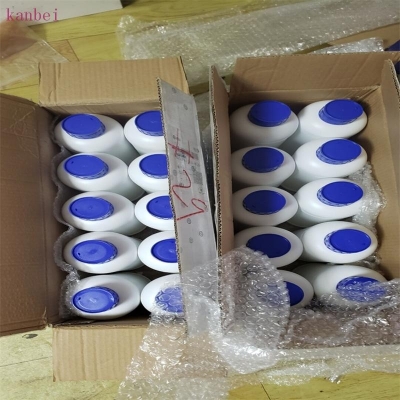
Request for quotation , get quotes from more suppliers.
3,6-bis(5-hexylthiophen-2-yl)-1,2,4,5-tetrazine
(1279083-55-4)-

- / 99%
Request for quotation , get quotes from more suppliers.
5,10,15,20-tetrakis(trimethylsilylethynyl)-21H,23H-porphyrin
(140702-08-5)-
porphyrin 99% a white or almost white crystalline powder kanbei")
- / 99%
Request for quotation , get quotes from more suppliers.
-
![buy 2-Amino-1-[4-(trifluoromethyl)phenyl]propane 99% see COA kanbei]( "2-Amino-1-[4-(trifluoromethyl)phenyl]propane 99% see COA kanbei")
- / 99%
Request for quotation , get quotes from more suppliers.
Source Coordination Complexes Raw Materials by Region


Frequently Asked Questions
Coordination complexes are chemical compounds consisting of a central metal atom or ion bonded to surrounding molecules or ions, known as ligands, through coordinate covalent bonds. These structures play essential roles in catalysis, bioinorganic chemistry, materials science, and pharmaceutical applications. Common examples include hemoglobin (with iron) and chlorophyll (with magnesium).
Coordination complexes are widely used across multiple industries:1. In catalysis—many industrial chemical reactions rely on metal complexes as catalysts (e.g., Wilkinson’s catalyst for hydrogenation).2. In medicine—they serve as contrast agents in MRI (e.g., gadolinium complexes) or as anticancer drugs (e.g., cisplatin).3. In materials science—for producing pigments, dyes, and luminescent materials.4. In environmental chemistry—for metal ion sensing and wastewater treatment.
Quality assessment of coordination complexes involves several key parameters:1. Purity—verified via techniques like HPLC, NMR, or elemental analysis.2. Structural confirmation—using X-ray crystallography or spectroscopic methods (IR, UV-Vis, EPR).3. Stability—evaluated under storage and operational conditions (e.g., thermal, light, or moisture stability).4. Batch-to-batch consistency—critical for reproducibility in research or manufacturing. Always source from suppliers with ISO or GMP certifications when intended for regulated applications.
When choosing a supplier for coordination complexes, consider:1. Technical expertise—their ability to synthesize complex or custom ligands and metal centers.2. Analytical documentation—availability of certificates of analysis (CoA), spectral data, and safety data sheets (SDS).3. Regulatory compliance—especially if used in pharmaceuticals or diagnostics (e.g., REACH, RoHS, or FDA compliance).4. Scalability—from milligram research quantities to kilogram-scale production.5. Global logistics and customer support for timely delivery and technical assistance.
While many coordination complexes are safe when handled properly, some may pose health or environmental hazards—especially those containing heavy metals (e.g., cadmium, lead, or chromium(VI)). Always consult the Safety Data Sheet (SDS) before use. Standard precautions include wearing PPE (gloves, goggles, lab coat), working in a fume hood for volatile or toxic compounds, and following proper disposal protocols. Stability under air or moisture should also be checked, as some complexes are air- or water-sensitive.