




Chemical Reagents
- • Deuterated Reagents (124)
- • Organic Reagents (10144)
- • Silane Reagent (853)
- • Chiral Chemicals (26)
- • Grignard Reagent (5)
- • Desulfurizer (22)
Related News
-
What Reagent Is Used To Test For Starch
2022-03-03 -
Meditex Bangladesh2019
2018-11-09 -
International Exhibition for Laboratory Equipment and Chemical Reagents
2017-06-20


Desulfurizer
Desulfurizer
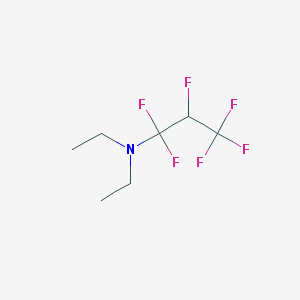
N,N-Diethyl-1,1,2,3,3,3-hexafluoropropylamine
(309-88-6)-

- / 99.00%
-

- / 99%
-

-



Request for quotation , get quotes from more suppliers.
N-FLUOROPYRIDINIUM PYRIDINE HEPTAFLUORODIBORATE
(131307-35-2)-

Industrial Grade / 99.0%
-

-

Industrial Grade / 99%
-

Different Grade / 99.9%

Request for quotation , get quotes from more suppliers.
Frequently Asked Questions
A desulfurizer is a chemical agent or material used to remove sulfur or sulfur compounds—such as hydrogen sulfide (H₂S) or sulfur dioxide (SO₂)—from gases, liquids, or industrial byproducts. It works through chemical absorption, adsorption, or catalytic conversion, depending on the application. Desulfurizers are essential in industries like oil refining, natural gas processing, and power generation to meet environmental regulations and protect equipment from corrosion.
Common types of desulfurizers include:1. **Zinc oxide (ZnO)** – widely used for deep desulfurization in syngas and hydrogen streams.2. **Iron-based sorbents** – cost-effective for removing H₂S from biogas or natural gas.3. **Activated carbon** – effective for low-concentration sulfur removal and odor control.4. **Amine solutions** – used in wet scrubbing processes for flue gas or natural gas desulfurization.Each type is selected based on sulfur concentration, operating conditions, and required purity levels.
Choosing the right desulfurizer depends on several factors:1. **Type of sulfur compound** present (e.g., H₂S, mercaptans, SO₂).2. **Concentration level** of sulfur in the feed stream.3. **Operating conditions**, including temperature, pressure, and flow rate.4. **Required sulfur removal efficiency** and regulatory compliance standards.5. **Regeneration capability**—whether a disposable or regenerable desulfurizer is preferred.Consulting with a qualified supplier or engineer ensures optimal performance and cost-efficiency.
Desulfurizers are critical in multiple industries, including:1. **Oil and gas** – for sweetening natural gas and refining crude oil.2. **Chemical manufacturing** – to purify feedstocks like hydrogen and syngas.3. **Power generation** – to reduce SO₂ emissions from coal- or oil-fired plants.4. **Biogas and renewable energy** – to clean raw biogas for use as vehicle fuel or grid injection.5. **Metallurgy** – in metal smelting processes to control sulfur content in alloys.
Desulfurizers can be either disposable or regenerable, depending on their composition and application. For example, zinc oxide and some iron oxide-based desulfurizers are typically single-use and replaced once saturated. In contrast, amine-based systems and certain activated carbons can be regenerated through thermal or chemical processes, allowing repeated use. The choice impacts operational costs, waste management, and system design—making it important to evaluate lifecycle requirements when selecting a desulfurization solution.