




Catalyst and Auxiliary
- • Antioxidants (112)
- • UV Absorbers (93)
- • Polyethylene Glycol Derivatives (67)
- • Fluorescent Brightener (62)
- • Plastic Rubber Chemicals (91)
- • Polymer (472)
- • Precious Metal Catalysts (242)
- • Coupling Agent (8)
- • Zeolite (5)
- • Flame Retardants (11)
- • Petrochemical (28)
Related News


Fluorescent Brightener
Fluorescent Brightener
-

- / 99.00%
-

-

Chemical Grade / 99%
-

Industrial Grade / 99.0%
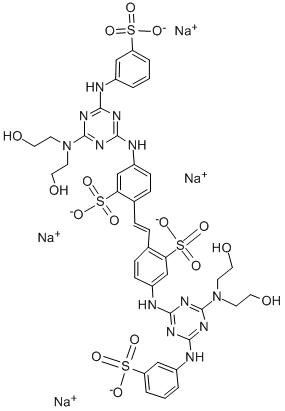

Request for quotation , get quotes from more suppliers.
C.I. Fluorescent Brightener 28
(4193-55-9)-

Industrial Grade / 99.9%
-

Industrial Grade / -
-
![buy disodium 4,4'-bis[6-anilino-[4-[bis(2-hydroxyethyl)amino]-1,3,5-triazin-2-yl]amino]stilbene-2,2'-disulphonate]( "disodium 4,4'-bis[6-anilino-[4-[bis(2-hydroxyethyl)amino]-1,3,5-triazin-2-yl]amino]stilbene-2,2'-disulphonate")
Industrial Grade / 99%
-


![buy disodium 4,4'-bis[6-anilino-[4-[bis(2-hydroxyethyl)amino]-1,3,5-triazin-2-yl]amino]stilbene-2,2'-disulphonate](https://file.echemi.com/fileManage/upload/canonicalSmiles/20220811/a90bd399682d4e2a85223e5e5c5db62c.png "disodium 4,4'-bis[6-anilino-[4-[bis(2-hydroxyethyl)amino]-1,3,5-triazin-2-yl]amino]stilbene-2,2'-disulphonate")
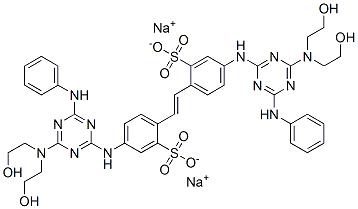
Request for quotation , get quotes from more suppliers.
C.I. Fluorescent Brightener 33
(61902-19-0)-

Cosmetics Grade / 95%
$200-250/MT FOB
-

Chemical Grade / 99%
-

Industrial Grade / 99%
-


Request for quotation , get quotes from more suppliers.
-
![buy Disodium 4,4'-bis[(4-anilino-6-methoxy-1,3,5-triazin-2-yl)amino]stilbene-2,2'-disulphonate]( "Disodium 4,4'-bis[(4-anilino-6-methoxy-1,3,5-triazin-2-yl)amino]stilbene-2,2'-disulphonate")
-
![buy Disodium 4,4'-bis[(4-anilino-6-methoxy-1,3,5-triazin-2-yl)amino]stilbene-2,2'-disulphonate]( "Disodium 4,4'-bis[(4-anilino-6-methoxy-1,3,5-triazin-2-yl)amino]stilbene-2,2'-disulphonate")
-
![buy Disodium 4,4'-bis[(4-anilino-6-methoxy-1,3,5-triazin-2-yl)amino]stilbene-2,2'-disulphonate]( "Disodium 4,4'-bis[(4-anilino-6-methoxy-1,3,5-triazin-2-yl)amino]stilbene-2,2'-disulphonate")
Industrial Grade / 99%
-

![buy Disodium 4,4'-bis[(4-anilino-6-methoxy-1,3,5-triazin-2-yl)amino]stilbene-2,2'-disulphonate](https://file.echemi.com/fileManage/upload/cas/50/f1a53ddb-f297-471c-82f6-ffc52c629ada.gif "Disodium 4,4'-bis[(4-anilino-6-methoxy-1,3,5-triazin-2-yl)amino]stilbene-2,2'-disulphonate")
![buy Disodium 4,4'-bis[(4-anilino-6-methoxy-1,3,5-triazin-2-yl)amino]stilbene-2,2'-disulphonate](https://file.echemi.com/fileManage/upload/canonicalSmiles/20220812/d404d158b7a040649611532a641ec205.png "Disodium 4,4'-bis[(4-anilino-6-methoxy-1,3,5-triazin-2-yl)amino]stilbene-2,2'-disulphonate")
Request for quotation , get quotes from more suppliers.
C.I. Fluorescent Brightener 363
(95078-19-6)-

Industrial Grade / 99%
-

-

Industrial Grade / 99%
-

Request for quotation , get quotes from more suppliers.
-

- / 99.00%
-

Industrial Grade / 99%
-

-

Request for quotation , get quotes from more suppliers.
-

-

-
![buy 4-[3-(4-chlorophenyl)-4,5-dihydro-1H-pyrazol-1-yl]benzenesulphonamide]( "4-[3-(4-chlorophenyl)-4,5-dihydro-1H-pyrazol-1-yl]benzenesulphonamide")
-
![buy 4-[3-(4-chlorophenyl)-4,5-dihydro-1H-pyrazol-1-yl]benzenesulphonamide]( "4-[3-(4-chlorophenyl)-4,5-dihydro-1H-pyrazol-1-yl]benzenesulphonamide")
Industrial Grade / 99%

![buy 4-[3-(4-chlorophenyl)-4,5-dihydro-1H-pyrazol-1-yl]benzenesulphonamide](https://file.echemi.com/fileManage/upload/canonicalSmiles/20220812/ea7b0378f5b143f3948abeb703bef303.png "4-[3-(4-chlorophenyl)-4,5-dihydro-1H-pyrazol-1-yl]benzenesulphonamide")
Request for quotation , get quotes from more suppliers.
-
![buy hexasodium 2,2'-[vinylenebis[(3-sulphonato-4,1-phenylene)imino[6-(diethylamino)-1,3,5-triazine-4,2-diyl]imino]]bis(benzene-1,4-disulphonate)]( "hexasodium 2,2'-[vinylenebis[(3-sulphonato-4,1-phenylene)imino[6-(diethylamino)-1,3,5-triazine-4,2-diyl]imino]]bis(benzene-1,4-disulphonate)")
Industrial Grade / 99%
-

-

Industrial Grade / 99%
-
 fluorescent brightener 357")
![buy hexasodium 2,2'-[vinylenebis[(3-sulphonato-4,1-phenylene)imino[6-(diethylamino)-1,3,5-triazine-4,2-diyl]imino]]bis(benzene-1,4-disulphonate)](https://file.echemi.com/fileManage/upload/canonicalSmiles/20220811/aba5f52f0c2f4fbf9f6b5506639c50e6.png "hexasodium 2,2'-[vinylenebis[(3-sulphonato-4,1-phenylene)imino[6-(diethylamino)-1,3,5-triazine-4,2-diyl]imino]]bis(benzene-1,4-disulphonate)")

Request for quotation , get quotes from more suppliers.
-

Industrial Grade, Feed Grade, Food Grade, Pharma Grade / 99%
-

-

-

Industrial Grade / 99%


Request for quotation , get quotes from more suppliers.
-

Industrial Grade / 99.9%
-

Industrial Grade / 99.0%
-

-

Request for quotation , get quotes from more suppliers.
Source Fluorescent Brightener Raw Materials by Region

Frequently Asked Questions
A Fluorescent Brightener, also known as an optical brightening agent (OBA) or fluorescent whitening agent (FWA), is a chemical compound that absorbs ultraviolet light and re-emits it as visible blue light. This process counteracts yellowing in materials like textiles, paper, and plastics, making them appear brighter and whiter to the human eye. These additives are widely used in detergents, cosmetics, and industrial applications to enhance visual appeal without altering the material’s physical properties.
The most commonly used Fluorescent Brighteners include stilbene derivatives (e.g., DSB and DAS1), coumarin-based compounds, and benzoxazole types. Each type offers specific performance characteristics depending on the application—such as solubility in water or organic solvents, thermal stability, and compatibility with substrates like cotton, polyester, or paper pulp. Selecting the right type depends on factors like pH tolerance, processing temperature, and end-use requirements.
Choosing the right Fluorescent Brightener involves evaluating several key factors:1. Substrate compatibility—ensure the brightener works effectively with your base material (e.g., fabric, plastic, or paper).2. Processing conditions—consider temperature, pH, and exposure to UV light during manufacturing.3. Regulatory compliance—verify that the compound meets safety and environmental standards for your target market (e.g., REACH, FDA, or OEKO-TEX).4. Performance metrics—assess brightness gain, wash fastness, and photostability.Consulting technical data sheets and requesting samples from reputable suppliers can help validate suitability before large-scale use.
When used within regulatory limits, Fluorescent Brighteners are generally considered safe for consumer products such as laundry detergents, cosmetics, and food packaging materials. However, certain types may cause skin sensitization in sensitive individuals or degrade into potentially harmful byproducts under prolonged UV exposure. It’s essential to select brighteners certified by recognized standards (e.g., EPA, EU Ecolabel, or ISO 14001) and follow recommended usage concentrations to ensure safety and compliance.
Fluorescent Brighteners are used across multiple industries:1. Textiles—enhancing whiteness and brightness in fabrics and garments.2. Paper manufacturing—improving the visual quality of printing paper and packaging.3. Plastics—adding luminance to white or light-colored polymers.4. Detergents—boosting the perceived cleanliness of washed clothes.5. Cosmetics—used in some toothpastes and shampoos for a 'brightening' effect.Their versatility stems from their ability to optically enhance appearance without chemical bleaching, making them cost-effective and widely adopted.