New fluorescent nanomaterials whose inspiration was taken from plant antenna
Material combines silicon oxycarbide’s large capacity for storing lithium and graphene’s high electrical conductivity.
Replacing the graphite anode commonly used in lithium-ion batteries with ones made of silicon or graphene, which have high lithium uptake capacities, could substantially boost the batteries’ charge capacity, in principle. In practice, however, silicon electrodes swell and shrink with each charging cycle, causing them to crack and fail quickly. Graphene electrodes also quickly lose their capacity to store and release lithium ions.
By combining the two candidate electrode materials Gurpreet Singh and coworkers at Kansas State University may have hit upon a solution ( Nat. Commun.2016, DOI:10.1038/ncomms10998 ).
Starting with a siloxane precursor, the team used a simple heat treatment to form micrometer-sized particles of silicon oxycarbide (SiOC), a glass-ceramic with an open polymer-network-like structure. They then used a standard method to prepare a form of graphene known as reduced graphene oxide (rGO) and finally formed free-standing sheets of an SiOC-rGO composite “paper” via vacuum filtration.
Battery tests show that the low-cost, lightweight paper electrode exhibits a high charge capacity and stands up to repeated cycling. The electrode showed nearly no loss of charge capacity and no sign of mechanical failure even after 1,020 charging cycles, the team reports.
Mitch Jacoby

You May Interested In


High Quality β-Nicotinamide adenine dinucleotide CAS 53-84-9 NADwith ready stock and best price
$3E+1/UNIT FOB


2026-10-25
Trade Alert
Delivering the latest product trends and industry news straight to your inbox.
(We'll never share your email address with a third-party.)

Related News
-
Triple Shield, Zero Risk: EFSA Declares Stacked GM Cotton Safe for Food, Feed, and Environment
-
Red Algae, Golden Promise—With a Daily Dose Warning: EFSA Clears Astaxanthin-Rich Algal Meal for New Foods
-
Arkema Divests PVC Additives Business to Focus Resources on High-Performance Materials Market
-
From Kitchen Herb to Feed Additive: EFSA Gives Green Light to Marjoram Oil—With a Caution for Handlers
-
From Fungus to Food: EFSA Greenlights Rhizomucor pusillus Biomass as Safe Novel Ingredient
-
Sun-Kissed Insect Oil? EFSA Approves UV-Treated Mealworm Fat as Safe—and Vitamin D-Rich—Novel Food
-
What Can $3.4 Billion Buy? Shin-Etsu Chemical’s Answer: Upstream Control of PVC
-
Alipay, Baidu, and iFlytek Win Big—As the Government Spends $1.1 Billion on AI Healthcare, Is This a Lifeline or a Feeding Frenzy for Tech Giants?
-
From Ancient Volcanoes to Modern Feed Mills: EFSA Validates Volcanic Zeolite as Safe and Effective Feed Additive
-
Probiotic Promise, Safety Snag: EFSA Gives Mixed Verdict on Multi-Strain Dog Feed Additive
Recommend Reading
-
![$530 Million Lawsuit Unheard, $76 Million Counterclaim Filed: Is Qicai Chemical’s ‘Reputation Defense’ a Desperate Last Stand or a Calculated PR Gambit?]()
$530 Million Lawsuit Unheard, $76 Million Counterclaim Filed: Is Qicai Chemical’s ‘Reputation Defense’ a Desperate Last Stand or a Calculated PR Gambit?
-
![The Cold Cycle: PVC Market’s Chill and Faint Light Ahead]()
The Cold Cycle: PVC Market’s Chill and Faint Light Ahead
-
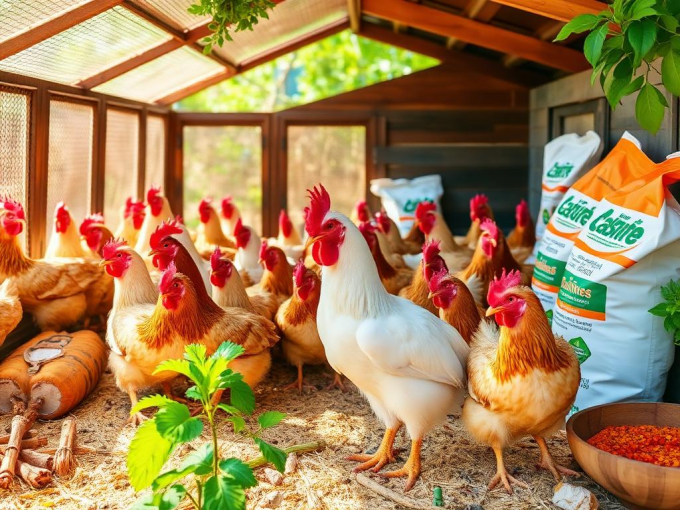
![Spice Up the Coop: EFSA Reaffirms Safety of Botanical Blend for Broiler Feed—With a Warning for Handlers]()
Spice Up the Coop: EFSA Reaffirms Safety of Botanical Blend for Broiler Feed—With a Warning for Handlers
-
![Echoes of Overcapacity: The Structural Anxiety of China’s EVA Industry Chain]()
Echoes of Overcapacity: The Structural Anxiety of China’s EVA Industry Chain
-
![From Eggshell to Elixir: EFSA Declares Egg Membrane Collagen Peptides Safe for Adult Supplements]()
From Eggshell to Elixir: EFSA Declares Egg Membrane Collagen Peptides Safe for Adult Supplements
-
![2026 Outlook Report for the General Plastics Industry]()
2026 Outlook Report for the General Plastics Industry
-
![Business Society October 21, 2026 Acrylic Acid Trend Analysis: Clear Downtrend]()
Business Society October 21, 2026 Acrylic Acid Trend Analysis: Clear Downtrend
-
![Pure Benzene Market Prices Fell First, Then Rose This Week (11.17–11.21)]()
Pure Benzene Market Prices Fell First, Then Rose This Week (11.17–11.21)
-
![A Fake Email Drains RMB 12 Million: Asia’s Waterproof Giant’s Overseas ‘Payment Heist’ Exposes the Fatal Blind Spot of Chinese Corporate Globalization]()
A Fake Email Drains RMB 12 Million: Asia’s Waterproof Giant’s Overseas ‘Payment Heist’ Exposes the Fatal Blind Spot of Chinese Corporate Globalization
-
![Business Society October 20, 2026 Adipic Acid Trend Analysis: Volatility]()
Business Society October 20, 2026 Adipic Acid Trend Analysis: Volatility