




Cosmetic Ingredient
- • Abrasive (124)
- • Absorbent (84)
- • Anticaking (66)
- • Anticorrosive (25)
- • Antifoaming (19)
- • Antimicrobials (291)
- • Antioxidant Ingredient (393)
- • Antiperspirant (20)
- • Antiplaque (48)
- • Anti-seborrheic (38)
- • Anti-sebum (38)
- • Antistatic (457)
- • Astringent (162)
- • Binding Agent (171)
- • Bleaching Agent (53)
- • Buffering (190)
- • Bulking (109)
- • Chelating (122)
- • Cleansing (680)
- • Cosmetic Colorant (212)
- • Cosmetic Preservative (158)
- • Denaturant (45)
- • Deodorant (98)
- • Depilatory (27)
- • Dissolving Agent (297)
- • Emollient (795)
- • Emulsifying Agent (481)
- • Emulsion Stabilising (153)
- • Exfoliating (19)
- • Film Forming (299)
- • Flavouring (72)
- • Foam Boosting (161)
- • Foaming (101)
- • Fragrance Ingredient (732)
- • Gel Forming (19)
- • Hair Conditioning (672)
- • Hair Dyeing (363)
- • Hair Fixing (36)
- • Hair Waving or Straightening (45)
- • Humectant (281)
- • Hydrotrope (92)
- • Keratolytic (20)
- • Light Stabilizer (77)
- • Moisturising Agent (50)
- • Nail Conditioning (42)
- • Occlusive (20)
- • Opacifying (119)
- • Oral Care (123)
- • Oxidising (19)
- • Perfuming (2106)
- • Plasticiser (98)
- • Propellant (19)
- • Reducing (51)
- • Refatting (12)
- • Refreshing (27)
- • Skin Cleansing (387)
- • Skin Conditioning (1747)
- • Skin Humectant (21)
- • Skin Protecting (281)
- • Smoothing (32)
- • Soothing (72)
- • Tonics (155)
- • UV Filter (33)
- • Viscosity Controlling (530)
Chemicals as Skincare Ingredients
Related News
-
EAEU Initiates Review of Anti-Dumping Measures on Chinese Titanium Dioxide, Suspends Duties During Investigation
2026-08-14 -
Pakistan Launches Successive Anti-dumping Investigations against Chinese Products, Involving Soda Ash, Ibuprofen and Other Raw Materials
2026-08-10 -
Premium Global Chemical Sourcing Requests (6-9Aug, 2026)
2026-08-10 -
Premium Global Chemical Sourcing Requests (17-19Aug, 2026)
2026-08-20 -
Premium Global Chemical Sourcing Requests (13-16Aug, 2026)
2026-08-17 -
US Tariff Pressure on Canada Raises Risks for North American Chemical Supply Chains
2026-08-22


Opacifying
Opacifying
Zirconium silicate (Zr(SiO4))
(10101-52-7)-
SILICATE 65%")
- / 65%
-

Industrial Grade / 40%
-

Pharmaceutical Grade / 99%
-

Industrial Grade / 99%
$20/KG FOB



Request for quotation , get quotes from more suppliers.
Diatomite
(61790-53-2)-

-

Food Grade / -
-

Food Grade / 99.9%
-

Top Product / 99%



Request for quotation , get quotes from more suppliers.
-

Industrial Grade / 98%
-

- / 0.00%
-

-

Pharmaceutical Grade / 99%


Request for quotation , get quotes from more suppliers.
Calcium silicate
(1344-95-2)-

Chemical Grade / 99%
$1/KG FOB
-

Pharmaceutical Grade / 99%
-

-

Pharmaceutical Grade / 99%


Request for quotation , get quotes from more suppliers.
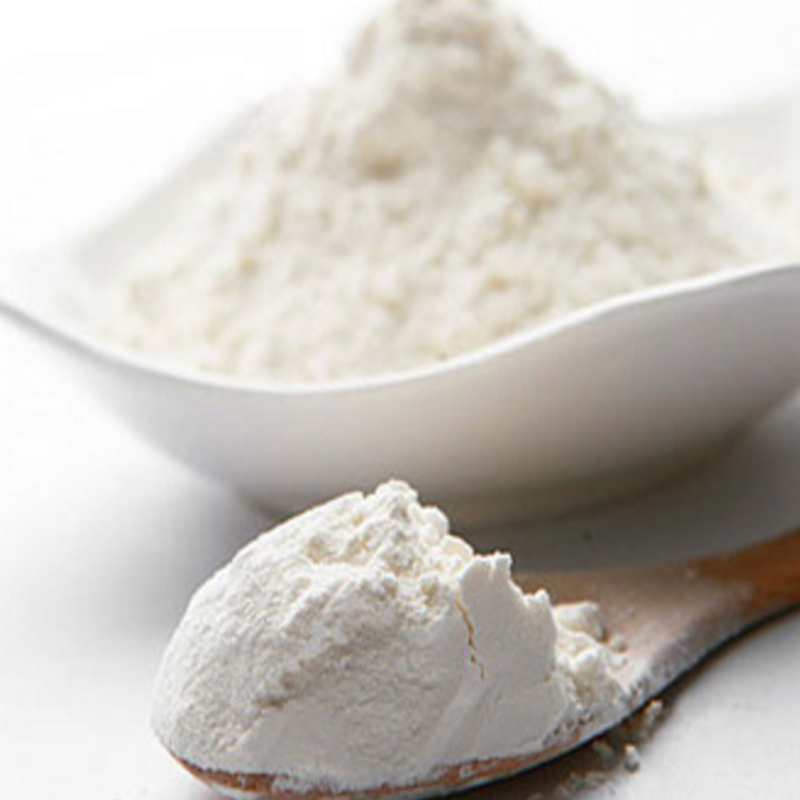
Aluminatesilicate
(1327-36-2)-

Industrial Grade / 65%
-

Industrial Grade / 99%
$10-13/KG FOB
-
")
top / 99%
$3100-3200/MT FOB
-



Request for quotation , get quotes from more suppliers.
Erucamide
(112-84-5)-

Food Grade / 99%
-

Pharmaceutical Grade / 99%
-

- / 0.00%
-

- / 99.00%


Request for quotation , get quotes from more suppliers.
Bismuth subnitrate
(1304-85-4)-

$1-1.2/KG FOB
-

- / 99.00%
-

- / 99%
-



Request for quotation , get quotes from more suppliers.
Glycol distearate
(627-83-8)-

Cosmetics Grade / 99%
-

Cosmetics Grade / -
-
")
Cosmetic grade / -
-

- / 0.00%


Request for quotation , get quotes from more suppliers.
Nylon 66
(32131-17-2)-

Industrial Grade / -
-

Chemical Grade / 99%
$1/KG FOB
-

Industrial Grade / 100%
-

Industrial Grade / 99%
$1650-2000/MT FOB


Docosanoic acid
(112-85-6)-

Industrial Grade / 99%
-

- / 99.00%
-

Pharmaceutical Grade / 92%
-

Pharmaceutical Grade / 99%


Request for quotation , get quotes from more suppliers.
More Information
Opacifying agents are fundamental components in cosmetic formulations, especially in products like foundations and lotions, where achieving an opaque appearance is desired. These agents work by scattering and diffusing light, thereby reducing transparency and creating a visually opaque appearance.
When opacifying agents are added to formulations, they interact with light to minimize the transmission of light through the product. This scattering of light particles helps to conceal imperfections and even out the skin tone, resulting in a smoother and more uniform appearance. Additionally, opacifying agents can also enhance the coverage and longevity of makeup products.
In cosmetic formulations, opacifying agents are commonly used in:
•Foundations
•Lotions
•Creams
Frequently Asked Questions
An opacifying agent is a substance added to materials such as coatings, plastics, or cosmetics to reduce transparency and increase opacity. It works by scattering or absorbing light, preventing it from passing through the material. Common opacifying agents include titanium dioxide, zinc oxide, and certain clays. These ingredients are essential in applications where visual coverage, UV protection, or aesthetic finish is required.
Opacifying agents are widely used across multiple industries:1. In paints and coatings to provide hiding power and uniform color coverage.2. In personal care products like sunscreens and foundations for opacity and UV protection.3. In plastics and packaging to block light and protect contents from degradation.4. In pharmaceuticals to mask the appearance of active ingredients in tablets or capsules.Their versatility makes them critical in product formulation where appearance and performance matter.
Selecting the right opacifying agent depends on several factors:1. The base matrix (e.g., water-based vs. oil-based systems).2. Desired opacity level and whiteness.3. Regulatory compliance (e.g., FDA approval for food, drug, or cosmetic use).4. Particle size and dispersion stability, which affect performance and texture.5. Cost-effectiveness and environmental impact.Titanium dioxide remains the most effective and widely used option, but alternatives like calcium carbonate or silica may be suitable for specific applications.
Titanium dioxide is generally recognized as safe (GRAS) by regulatory agencies like the FDA when used in approved concentrations in cosmetics, food, and pharmaceuticals. However, recent studies have raised questions about nanoparticle forms and inhalation risks in industrial settings. To ensure safety, always use opacifying agents according to recommended guidelines, verify supplier certifications (e.g., REACH, ISO), and consider particle size specifications based on your application method (e.g., topical vs. spray).
Yes, natural alternatives such as kaolin clay, talc (where permitted), and certain mineral blends can serve as eco-friendly opacifying agents, especially in clean-label cosmetics and sustainable packaging. While they may offer lower opacity compared to titanium dioxide, advances in formulation technology are improving their performance. When switching to natural options, evaluate compatibility, stability, and regulatory status to maintain product quality and compliance.