




Organic Chemistry
- • Amides (2626)
- • Alcohols, Phenols, Phenol Alcohols (331)
- • Nitrogen Compounds (260)
- • Nitrile Compound (91)
- • Hydrazine or Hydroxylamine Derivatives (213)
- • Quinones (38)
- • Ethers and Derivatives (188)
- • Aldehydes (117)
- • Carboxylic Acids and Derivatives (797)
- • Hydrocarbons and Derivatives (2317)
- • Ketones (78)
- • Inorganic Acid Esters (172)
- • Heterocyclic Ring (357)
- • Organometallic Compounds (977)
- • Organosulfur Compounds (73)
- • Phosphines (726)
- • Organometalate (285)
- • Organic Fluorine Compound (2126)
- • Triazenes (18)
- • Semicarbazides (33)
- • Organoselenium Compounds (28)
- • Nitro Compounds (96)
- • Nitrates (15)
- • Lactones (240)
- • Imines (24)
- • Free Radicals (48)
- • Dioxins and Dioxin-like Compounds (31)
- • Cyanates (31)
- • Coordination Complexes (3059)
- • Boron Compounds (84)
- • Azides (67)
- • Arsenicals (56)
Related News
-
EAEU Initiates Review of Anti-Dumping Measures on Chinese Titanium Dioxide, Suspends Duties During Investigation
2026-08-14 -
US Tariff Pressure on Canada Raises Risks for North American Chemical Supply Chains
2026-08-22 -
Premium Global Chemical Sourcing Requests (17-19Aug, 2026)
2026-08-20 -
Premium Global Chemical Sourcing Requests (13-16Aug, 2026)
2026-08-17 -
Premium Global Chemical Sourcing Requests (10-12Aug, 2026)
2026-08-13 -
Business Society’s Market Outlook for Acrylic Acid on August 19, 2026: Weak Rebound
2026-08-19


Triazene Compounds
Triazenes
3,3-Dimethyl-1-(4-nitrophenyl)-1-triazene
(7227-92-1)-
-3,3-dimethyltriazene")
Industrial Grade / 99%
-
![buy N-methyl-N-[(4-nitrophenyl)diazenyl]methanamine]( "N-methyl-N-[(4-nitrophenyl)diazenyl]methanamine")
-
-3,3-dimethyltriazene")
-
-")

Request for quotation , get quotes from more suppliers.
-
-3,3-dimethyltriazene")
Industrial Grade / 99.0%
-
methanamine")
-
-3,3-dimethyltriazene")
-
-3,3-DIMETHYL TRIAZENE")



Request for quotation , get quotes from more suppliers.
-

Industrial Grade / 99%
-
![buy N-methyl-N-[(4-methylphenyl)diazenyl]methanamine]( "N-methyl-N-[(4-methylphenyl)diazenyl]methanamine")
-

-
-")
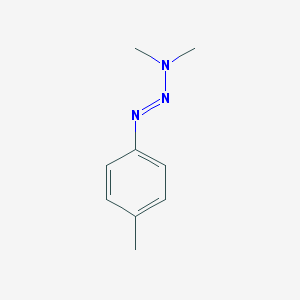

Request for quotation , get quotes from more suppliers.
Frequently Asked Questions
Triazenes are organic compounds containing a chain of three nitrogen atoms, typically with the general structure R1–N=N–NR2R3. They are widely used in chemical synthesis as versatile intermediates, particularly in the preparation of diazonium salts, heterocyclic compounds, and functionalized aromatic systems. Their stability and reactivity make them valuable in pharmaceutical and agrochemical research.
Triazenes exhibit moderate stability under controlled conditions but can be sensitive to heat, light, and acidic environments. For industrial applications—especially in pharmaceutical manufacturing—their handling requires strict temperature and pH control. Many triazene derivatives are synthesized and used in situ to minimize decomposition risks while maintaining reaction efficiency and product purity.
In pharmaceutical development, triazenes serve as key building blocks for synthesizing bioactive molecules, including anticancer agents and antimicrobial compounds. Certain triazene-based drugs, such as dacarbazine, are clinically used in chemotherapy. Their ability to act as alkylating agents or precursors to reactive nitrogen species contributes to their therapeutic relevance and ongoing research interest.
Triazenes should be stored in a cool, dry, and dark environment, preferably under inert gas (e.g., nitrogen or argon) to prevent degradation. They must be kept away from strong acids, oxidizing agents, and sources of ignition. Proper personal protective equipment (PPE)—including gloves, goggles, and lab coats—is essential during handling. Always consult the Safety Data Sheet (SDS) for specific storage and handling guidelines based on the triazene derivative in use.
High-purity triazenes can be sourced from specialized chemical suppliers that comply with ISO, GMP, or REACH standards. Look for vendors offering certificates of analysis (CoA), batch-specific quality documentation, and scalable synthesis capabilities. Reputable suppliers often provide custom synthesis services and technical support to ensure the triazene meets your application requirements—whether for academic research, drug discovery, or industrial-scale production.