Is PbCl2 Soluble in Water? - PbCl2 Uses and Water Solubility
Is PbCl2 soluble in water and why? Under normal circumstances, the inorganic compound PbCl2 is a white solid. The usage of PbCl2 and its solubility in water will be discussed in this blog.
What is PbCl2?
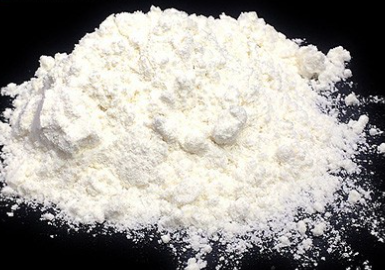
Lead chloride, sometimes referred to as PbCl2, is an inorganic substance that is a white solid at room temperature and is a lead chloride that naturally occurs as the mineral cotunnite.
One sort of atom makes up the entire substance of lead, which is a chemical element. Its atomic number is 82 and its formal chemical symbol is Pb. This indicates that the lead atom's nucleus contains 82 protons. The atomic number of lead is the greatest of any stable (non-radioactive) element. Lead is a dense, ductile, soft, and malleable metallic element. It can be discovered in ores that also contain zinc, silver, and copper and is mostly formed from the mineral galena.
When chlorine acquires an electron to create an anion, chloride is a halogenated anion. It functions as a cofactor, human metabolite, and E. coli metabolite. Monatomic chlorine and the halide anion. It is the hydrogen chloride conjugate base.
Lead chloride appears to be a white solid when exposed to ambient light. This compound is not very soluble in water. The primary reagent containing lead is lead chloride. It is found naturally as the mineral cotunnite. Lead chloride serves as the primary precursor for numerous organometallic lead derivatives, including plumbocene. Lead oxide is created when lead chloride and molten sodium nitrite mix.
Uses of PbCl2
- Experts utilize lead chloride to create infrared transmissive glass. They claim that this chemical is also employed in aura glass and glass that is attractive. Spraying Lead (II) Chloride on a certain type of glass and then heating it under carefully controlled conditions gives it an iridescent appearance.
- Lead chloride II is used as an intermediary during the refinement of bismuth (Bi) ore. In order to get rid of any remaining trace levels of acidic elements, Bi, Pb, and Zn ores are first treated with molten caustic soda. After that, the Parks desilvering procedure can remove any remaining silver and gold.
- The ore contains the elements Bi, Pb, and Zn. Cl2 gas is used in professional processes at a temperature of 500 ° C. First ZnCl2 is created, then it is expelled. Finally, BiCl3 is created after PbCl2 has evolved and been eliminated, leaving only pure Bi.
Water solubility
The quantity of a chemical that can dissolve in water at a particular temperature is known as its water solubility. Milligrammes per litre (mg/L) or parts per million (ppm) are typically used as the units of solubility.
One of the most crucial factors regulating the bioavailability and environmental fate of chemical compounds is their water solubility. Aquatic animals like algae and fish are more likely to absorb chemicals that are water soluble. Such substances bioconcentrate poorly in aquatic species and have comparatively low soil and sediment adsorption coefficients. Highly water-soluble materials typically deteriorate more quickly through procedures like photolysis or hydrolysis.
Is PbCl2 soluble in water?
So, is PbCl2 soluble in water? Water molecules start to disrupt the Pb-Cl bonds when they come into touch with solid PbCl2. Hydrolysis is the name of this process. Before becoming saturated with PbCl2 molecules, the water molecules can only break so many bonds before the PbCl2 stops dissolving in the water.
Due to the presence of PbCl2, it is also known as Lead (II) Chloride or Lead Dichloride. It is naturally occurring as the inorganic mineral contunnite. Lead nitrate can be combined with hydrochloric acid or sodium chloride to create lead chloride, among other things. Because lead ions are made up of both hard and soft acids, they have bigger diameters and lower charge densities than hard acids.
Even though water is a hard acid and lead is a borderline acid, lead ions do not degrade in water molecules. PbCl2 can be thought of as being only slightly soluble in water. Water cannot separate lead and chlorine ions because they are electrostatically attracted to one another. At 20 ℃, PbCl2 dissolves in 1000 mL of water in less than 11 g, and in hotter water, more can dissolve.
Looking for chemical products? Let suppliers reach out to you!
You May Interested In


2026-10-08
Trade Alert
Delivering the latest product trends and industry news straight to your inbox.
(We'll never share your email address with a third-party.)

Related News
-
Is MgSO4 Soluble in Water? Everything You Need to Know!
-
Is Agbr Soluble or Insoluble? Here is What You Should Know
-
What Color Should a Zinc-Copper Couple Be?
-
Understanding the Arsenate Symbol and Its Uses
-
Why You Should Never Mix Bleach and Vinegar
-
Benzoylecgonine: Detection and Testing Methods
-
Anastrozole Side Effects: What You Need to Know
-
Zoledronic Acid: Uses, Mechanism, and Side Effects
Recommend Reading
-
![Applications of Caesium Iodide]()
Applications of Caesium Iodide
-
![Strong Supply and Weak Demand Continues, PP Fluctuates and Falls in November]()
Strong Supply and Weak Demand Continues, PP Fluctuates and Falls in November
-
![The domestic butadiene rubber market shows a slight weakening]()
The domestic butadiene rubber market shows a slight weakening
-
![The End of Hype: Europe’s Bio-stimulant Industry Faces a Science-First Reckoning by 2030]()
The End of Hype: Europe’s Bio-stimulant Industry Faces a Science-First Reckoning by 2030
-
![Styrene-butadiene rubber market conditions remain weak]()
Styrene-butadiene rubber market conditions remain weak